There is a version of this story that plays out thousands of times a day across the United States.
Someone needs a mask.
They open a browser, search for N95, sort by price, pick the cheapest option with a decent number of reviews, and click buy. The mask arrives two days later in a plastic sleeve.
It looks fine.
It says 95% filtration on the label. They put it on and feel like they have done the responsible thing.
They have not. In many cases, they have paid money for something that does not work as described and has no way of being verified.
This is not a niche problem. It is the default experience for most online mask buyers, and the gap between what people think they are getting and what they are actually getting is significant enough to matter.
Why Cheap Masks Are a Different Kind of Bad Deal
When you buy a cheap t-shirt, and it falls apart after three washes, you are out a few dollars and mildly annoyed. The cost of being wrong is low.
Respiratory protection does not work that way. The entire point of wearing a mask in a high-risk situation is that it filters out what would otherwise reach your lungs.
A mask that looks right but does not perform is not a slightly worse version of protection.
It is essentially no protection at all, with the added problem that it makes you feel protected when you are not.
That is the hidden cost of the cheap mask. It is not just the money. It is the false confidence.
What Most Buyers Do Not Know About N95 Labeling
Here is the part that surprises most people.
In the United States, the label “N95” on a mask does not automatically mean anything. The term is only meaningful when it comes with a NIOSH certification, which stands for the National Institute for Occupational Safety and Health.
NIOSH is a division of the CDC, and it independently tests respirators before approving them.
The proof of that certification is a TC approval number, formatted as TC-84A-XXXX, printed directly on the mask or its packaging. Without that number, the 95% claim is just text. There is no government testing behind it.
No independent verification.
Nothing is stopping a manufacturer from printing whatever they want on a box.
The CDC has a publicly searchable database of every NIOSH-approved respirator. It takes less than a minute to check. Most buyers have never heard of it.
This is not a small loophole. During the COVID-19 pandemic, the CDC identified tens of millions of counterfeit and non-compliant masks in circulation across the US.
Many were sold through major online platforms by third-party sellers with hundreds of positive reviews. The reviews were real. The certification was not.
The Price Gap Is Not What You Think
One reason people default to cheaper masks is the assumption that certified masks must cost significantly more. This is often not true.
Certified N95 respirators are available at reasonable prices when bought from a reliable source. The price premium for genuine certification over an uncertified product claiming the same specification is often smaller than buyers expect, and sometimes nonexistent. What you are actually paying a premium for on discount platforms is fast shipping and convincing packaging, not better protection.
WellBefore is a good example of how the economics actually work. As a US-based home medical supply company that has served over 900,000 customers, they have built their catalog around certified products with transparent pricing.
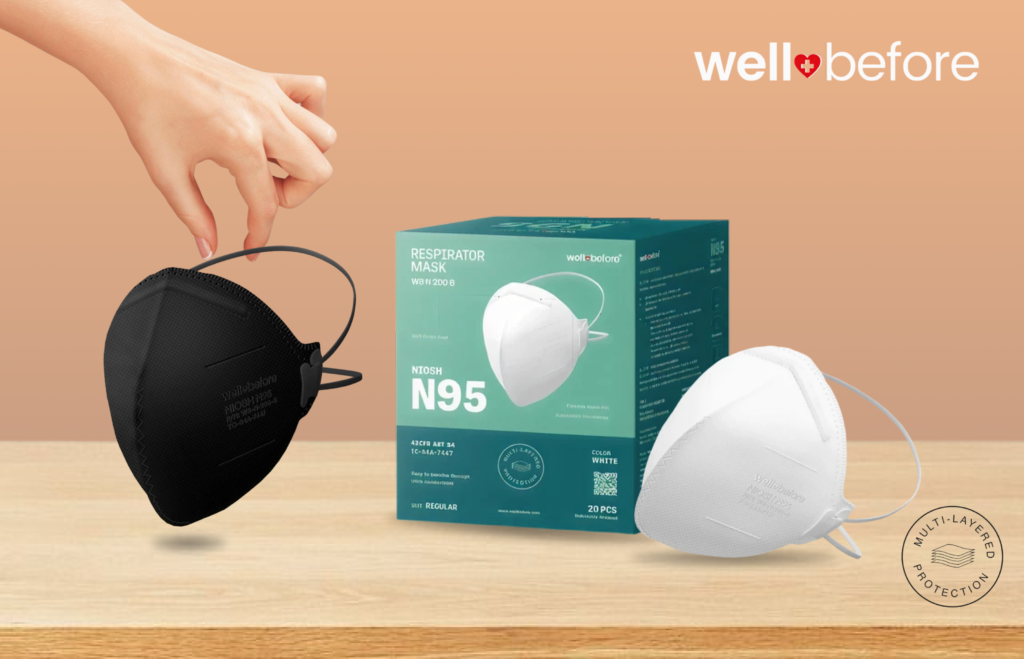
Their N95 masks carry NIOSH approval with verifiable TC numbers, and prices start at accessible levels that compare favorably to uncertified alternatives on discount platforms.
The company was founded on a specific frustration with the pandemic-era mask market: too many products making claims they could not back up, and too little information for buyers to tell the difference.
Shahzil Amin, Founder of WellBefore, explains the thinking behind it directly:
“When we launched WellBefore, the market was full of masks making claims they could not back up. We made a decision early on that every product we sold would have documented credentials, and we would show any customer exactly what testing it passed. That commitment has not changed as we have grown.”
That founding philosophy is reflected in how WellBefore’s product pages are structured, with certification details and filtration information listed upfront rather than buried or absent entirely.
What to Actually Do Before Your Next Purchase
This does not require becoming an expert. It requires building one habit.
Before buying any mask labeled N95, find the TC number. It should be printed on the product description if you are buying online, or on the packaging if you are buying in a store. If it is not there, stop.
A legitimate certified product will always have this number visible because it is part of the NIOSH certification requirement.
Take that TC number to the NIOSH Certified Equipment List on the CDC website. Search it. Match the manufacturer name. That is the entire process. Two minutes. Done.
If the number does not appear, or if the manufacturer listed in the NIOSH database does not match the product you are looking at, do not buy it. Move on.
For buyers who prefer to skip that step, the simpler approach is to purchase from a retailer that lists TC numbers directly on product pages and can provide lab documentation on request. WellBefore operates this way, making the verification process straightforward rather than something the buyer has to chase down independently.
That shifts the verification responsibility to the seller, where it belongs.
A Final Thought on What You Are Actually Buying
A mask is not a fashion accessory or a comfort item. It is a piece of respiratory protection equipment. When you put one on in a situation that warrants it, you are making a decision that affects what enters your lungs.
The cheap mask on a discount platform might be fine. It also might be a non-compliant product with a convincing label. Without a TC number and a database check, you have no way to tell which one you bought.
Spending a little more attention before you buy costs nothing. Spending money on a mask that does not work costs you the money and the protection you thought you had.
That is a bad deal by any measure.