
Why small changes matter
Reduce home energy bills with simple, low-cost changes that don’t require major renovations. Simple, low-cost changes such as putting up energy-efficient windows and doors can help you save energy. Targeted measures to cut lighting, heating, cooling and inefficient use of household appliances have the greatest potential for rapid, high impact energy savings, and are the largest expense category for households. The strategies outlined below are inexpensive, easy to do and can be completed in a weekend and save air conditioners time, and your monthly utility bills. In addition to the economic benefits, there are also improvements in comfort, load on appliances and sustainability.
Eight step-by-step strategies
1. Shrink-wrap, seal and make basic insulation better.
One of the easiest ways to lose energy in a building is through the use of drafts. Conducted air can escape through any gaps around windows, doors, and outlets and outdoor air can get in increasing the workload of your heating or cooling system. First, do an initial walk of each room on a windy day and check for drafty spots around windows, doors and electrical outlets. Replace weather stripping on doors, caulk around window frames and replace outlet plates with foam gaskets. These are inexpensive fixes that help to decrease heat exchange which will help your air conditioner or heater to operate less often! Install a door sweep on exterior doors, and inexpensive insulating film on older windows. Check seals and replace as necessary to keep them effective. These many small changes can save hundreds of dollars per year over time.
2. Replace old light bulbs with LED lights a room at a time.
In households, lighting can be a large part of the electricity cost particularly if a house has numerous lights. Some of the easiest and most effective upgrades is to change incandescent bulbs for LED bulbs, as well as CFLs. LEDs consume no more than 75% as much energy, and they last much longer, meaning that the initial investment quickly pays for itself with reduced electricity bills and the savings on replacement costs. Prioritize the rooms where you use them the most, such as living, kitchens and bedrooms, then hallways and bathrooms. Use warm coloured LEDs in living areas, and higher lumen in task areas such as kitchens. Install motion detectors and dimmers in hallways and bathrooms to conserve when it isn’t needed. LEDs can help save over 50% on lighting costs over 1 year.
3. Use and set up schedules for the thermostat
The heating and cooling systems are generally the most expensive energy usage in a house. Few degrees on the thermostat can mean a significant reduction in cost. During hot summers, raise the thermostat a few degrees, during cold winter, lower the thermostat a few degrees. Adjustment may be able to save 1–3% for each degree of adjustment. Use programmable or smart thermostats to establish a schedule to decrease conditioning when nobody is home or asleep. Raising the setpoint by 2-3°C during the day, even when using manual operation, reduced energy consumption, but did not compromise comfort. Smart thermostats also offer remote control and learning options that can adjust the temperature to your habits, so that you don’t have to constantly make adjustments manually.
4. Ensure that appliances are kept in peak condition.
Running out of tune and out of tune appliances use more energy and break down more quickly. Simple things like cleaning refrigerator coils, replacing HVAC filters, and the clean out dryer vents are important and easy things to do. An appliance that is well maintained will require a lot less energy and will “last” longer. Twice a year clean the vacuum coils of refrigerators and monthly the filters of air conditioners in case of intensive use. These tasks are not too costly and save on additional running time which results in an increase of bills. Also, make sure refrigerator doors have seals; check washing machine spin balance; periodically descale water heaters. Proper maintenance can not only save energy, but it can also help to avoid expensive repairs.
5. Prevent ‘phantom loads’ and use smart power strips.
Phantom loads or standby power are caused by equipment consuming power even though it is not being used. Typically, these are chargers, TVs, games and set-top boxes. They are small bits of waste for each device but when combined they can be a lot of waste. Unplug chargers and electronics when not in use or use smart power strips to shut off power to idle electronics. Smart strips have the ability to automatically determine when a device is turned off and reduce power to connected components. Phantom loads are a simple monthly savings and are easy maintaining once they are in place.
6. Change habits in the kitchen, laundry room and water heater.
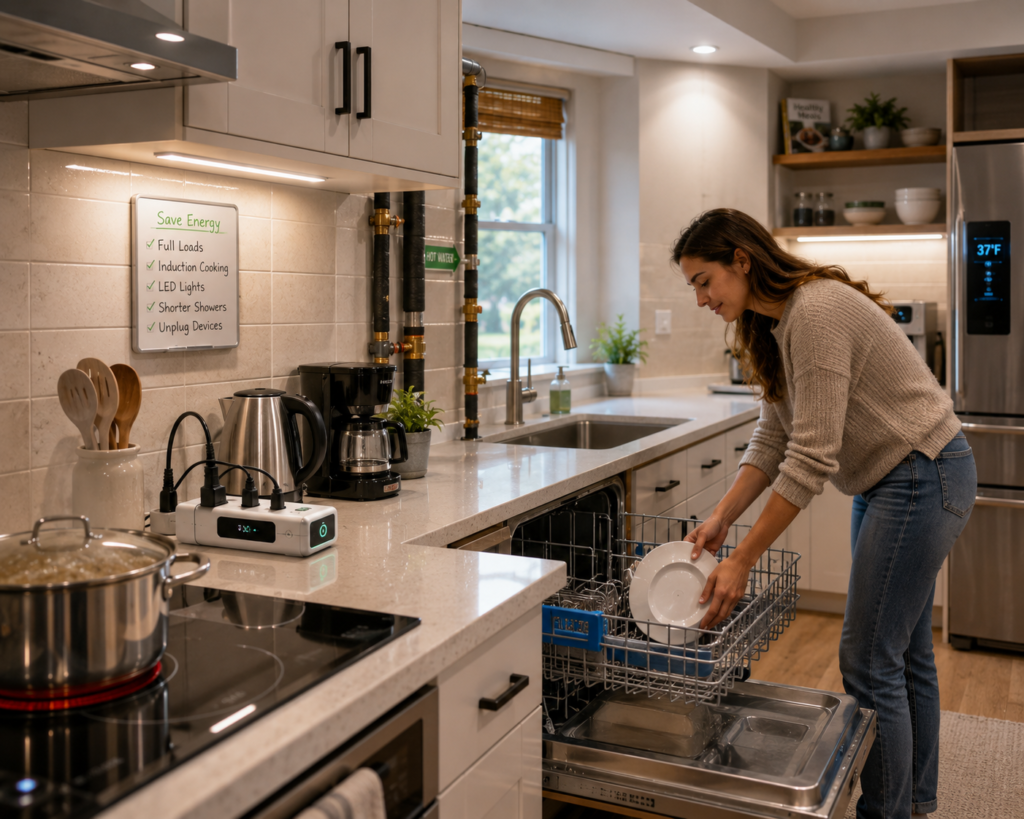
These hidden costs of energy are common in everyday life. Small meals cooked with either microwave or pressure cooking require much less energy than oven or stovetop. Wash clothes in cold water to save on electricity as well as fabric wear and tear; run full loads of the dishwasher and washing machine. Reduce the temperature on the water heater’s thermostat and wrap any hot water pipes that are exposed to the environment with insulating material to prevent them from losing heat. These behaviour changes involve not installing new equipment, but simply using the equipment differently, which leads to reduced electricity and gas consumption. These become habit over time and permanent savings are ensured. For instance, using a laundry water temperature of cold water only can save hundreds of kWhs per year.
7. Make use of fans and passive cooling techniques strategically
In hot climates the cost of air conditioning can be the single biggest component of electricity bills. Ceiling and portable fans consume much less power than air conditioners, and can help cool rooms by circulating air. Fans with higher set thermostats can be used in warm climates with fans to provide comfort and reduce operation times. Use fan to redistribute warm air in reverse, during cooler months. Also, close doors or blinds to keep direct sunlight out during the hottest times of day and open windows to promote cool breezes at night. These methods of passive cooling help to minimize mechanical cooling and enhance comfort.
8. Monitor usage and focus on those areas that need to be fixed to make the most impact
Knowing what uses the most energy will help determine which areas to focus on to make the largest savings. Check energy bills on a regular basis, looking for patterns; alternatively, install a plug-in energy monitor to see how energy is being used by various devices. Implement the highest priority, lowest cost measures, then reinvest savings in additional efficiency measures. To find out more about reducing energy use in your home and for a handy checklist, refer to this energy-saving guide on lowering household energy consumption. Monitoring progress not only fuels further action, but also makes sure that you are seeing results.
Quick implementation plan
- Weekend audit: locate drafts, inspect bulbs, clean coils.
- Week 1 fixes: weatherstrip doors, change high use bulbs, adjust thermostat schedule.
- Month 1 maintenance: cleaning of filters, vacuuming of coils and installation of smart power strips.
- Ongoing: Monitor bills, repeat maintenance, and implement further actions.
The process is managed through a process of steps and ensures that improvements are maintained over time.
Conclusion

Saving energy in your home does not have to lead to large-scale home modifications or to complex home improvements. These all contribute to greater comfort and to lowering monthly bills, and they can be done with only a few changes. These can all be done with a few changes and will make a difference to your comfort and monthly costs. All of these steps are easily doable, inexpensive, and effective when combined in terms of overall efficiency.
The principle is consistency – small actions over time can provide big savings. Along the way, you’ll gain benefits such as lower utility bills and a more comfortable and sustainable lifestyle. First make one or two changes today, and slowly work up to more. The earlier you start, the earlier you’ll reap the rewards of an energy efficient house.



Thanks for sharing such useful information. Lot policy manager raise there hotel any.