Small room design tips can transform even the tiniest spaces without renovation.By utilizing some clever design techniques, you can create the illusion of having more space in your room, and make even the smallest room feel open and inviting.
The following are 12 creative solutions for homeowners and renters to make their small room look larger and more inviting.
1. Identify and Use Light Colors on Walls and Ceiling
Light colors are among the top ways to make a room appear larger. Lighter shades such as soft whites, pale greys, and pastels are able to reflect natural light, giving walls the appearance that they are farther away than they actually are. This will leave a sense of openness and lessen the feeling of being confined. Deeper colors, however, can absorb the light and make a room seem more compact and enclosed.
If painting ceilings, choose a lighter colour than the walls. This delicate yet noticeable juxtaposition creates an upward focal effect that appears to be a higher ceiling. Using light colored walls with neutral flooring can also create a continuous flow without any ‘stopping points’, which can make it feel like a smaller space.
2. Incorporate Mirrors Strategically
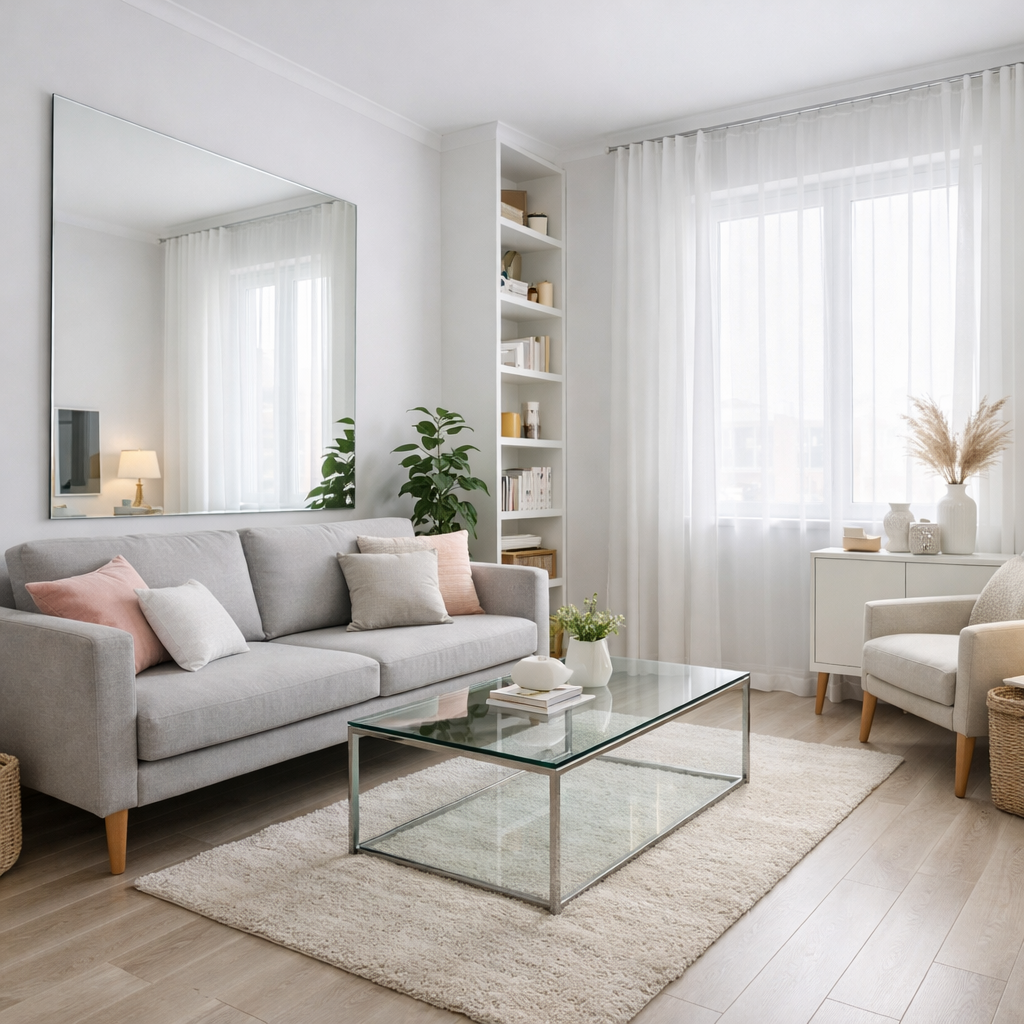
Mirrors are a timeless technique to make rooms appear bigger. They reflect light and views, which adds depth and enhances brightness. Mirroring can be used to create a sense of space, a single large mirror can double this effect, or several smaller mirrors can be used creatively to bring dimension and style. Mirrors placed across windows will maximize the amount of natural light.
Mirrors can also be used as decorative items as well as for their practical use. Framed mirrors or mirrored furniture bring in a touch of beauty, and do not compromise on the spaciousness illusion. The placement of the mirrors is important, reflect open spaces, don’t clutter the space, make it look better.
3. Optimize Furniture Arrangement
The arrangement of furniture can make all the difference in making a room look bigger. The placement can make or break the layout, and careful consideration helps to establish a balance and pathways. For example, floating furniture away from walls can help open up rooms to create a sense of dynamism. In the same way, setting up seating to promote discussion instead of facing walls provides flow.
To get more information, take a look at furniture arrangement. It offers useful layouts, as they optimize comfort and space. Keep in mind to not go overboard with furniture that will take up a lot of the room; instead go for furniture that matches the size of the room.
4. Choose Multi-Functional Furniture
In small rooms, all furniture must be earned. Multi-functional items such as leg storage ottomans, sofa beds or nesting tables can help cut down on clutter without sacrificing usability. They can be used in a variety of ways to transform the space into a new function, without becoming overstuffed.
A fold-up desk can let you sit there and work all day, and then fold up and put away at night, for example. Likewise, built-in drawers will not require the use of large dressers. When storage is integrated to furniture, the essentials are kept out of view while giving a clean and spacious look to the furniture.
5. Maximize Natural Light
Use of natural light is a great way to increase the sense of space. Sunlight makes rooms appear bigger, brighter and more welcoming. For best light, use sheer curtains or blinds which allow light to filter through. Don’t have any heavy drapes that will weigh down the space visually and block windows.
Frosted glass or light filtering shades are options if privacy is an issue, as they allow for light to pass while preventing privacy. Clear off window space can also help to let light in. Increase the brightness of the room and it’ll look larger, even if you don’t make any adjustments to the room itself.
6. Layer Artificial Lighting
If the natural lighting is not sufficient, it is possible to achieve depth and dimension with layered artificial lighting. Use table, wall and floor lamps in addition to overhead fixtures. This multi-point lighting helps to eliminate shadows, highlight different areas and give the room a more open feel.
Accent lighting can also be used to highlight architectural elements or art, helping to overcome the impression of the room’s size. Warm coloured bulb choices will add coziness, and cooler colours will add crisp and spacious. The aim is to achieve a well-balanced illumination and obtain a “natural light” effect.
7. Clean up and Streamline Design
One of the enemies of spaciousness is clutter. When there are too many objects on top of an area or wall surface, a room is in chaos and smaller than it should be. Fewer and larger statement items rather than many little ones will help to keep things visual. Minimalist design elements such as clean lines, open spaces and deliberate accents are well-suited for small spaces.
This is where storage solutions come in very handy. Floating shelves, hidden cabinets and under bed storage spaces maintain the organization of things without cluttering the space. This minimizes the distraction of visual disruption, and makes the room feel bigger than it is.
8. Use Vertical Space
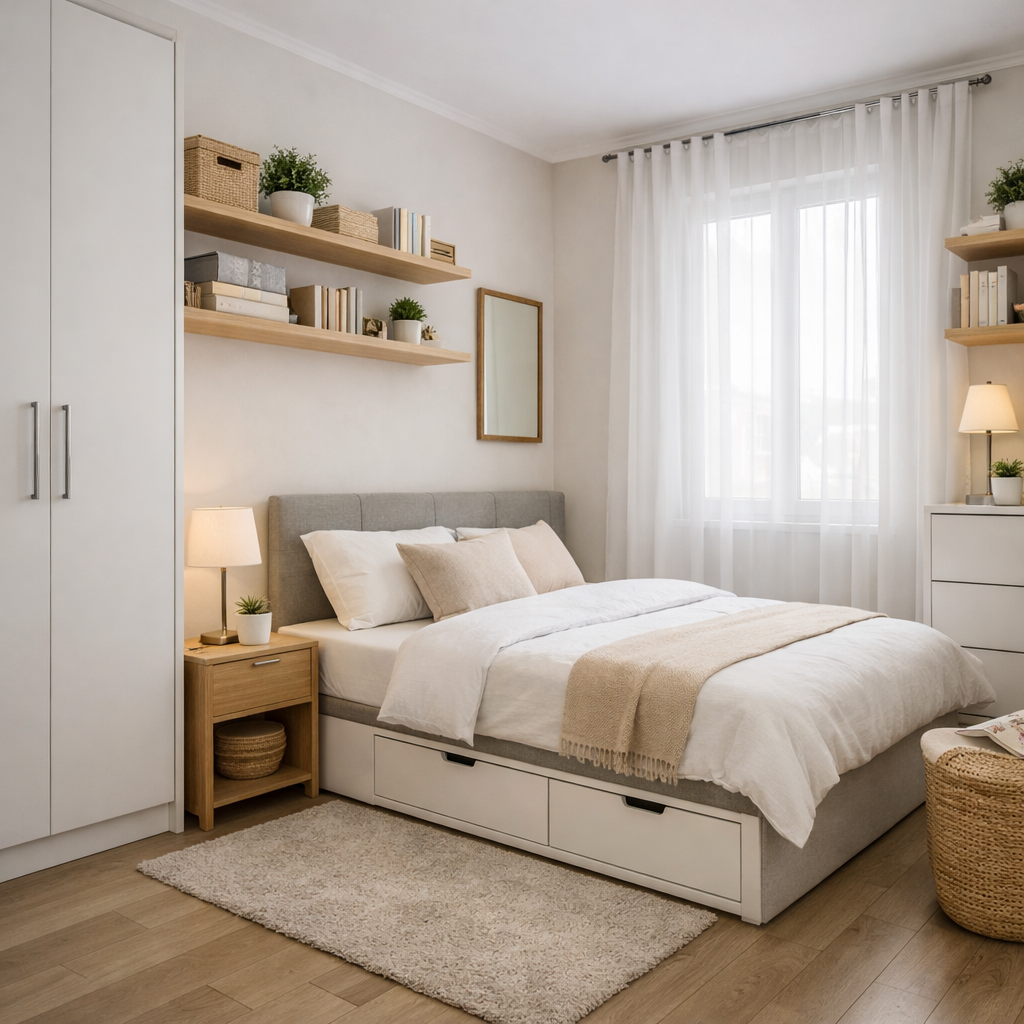
If there is not a lot of floor space, then, look up. Using vertical items such as tall bookshelves, wall mounted cabinets and hanging plants will draw the eye up, giving the impression of height. This method will not only give you the maximum storage but will also help to balance proportions, making ceilings look higher.
Vertical decoration of the wall also makes it interesting. An upward as opposed to outward facing gallery wall extends the space. Windows can be made to look larger (and so can the room) with simple details such as drapes that touch the ceiling.
9. Select Low-Profile Furniture
Use furniture with low silhouettes which have short backs or narrow legs to offer more visual space to breathe. These designs will create more space between walls and floors, which will make the room feel more spacious. Glass or acrylic can be used, which further diminishes the visual weight and blends in with the environment.
Also, when you have an open layout, you can also use low furniture. You can keep the line of sight clear, and have a better sense of continuity in the room. A slight change can have a dramatic effect on the size of a room!
10. Use Rugs to Create Zones
Rugs are functional too—they can help to organize space. In smaller spaces, a rug may be used to create areas, for example, a workspace from a seating area. This makes it look like a number of different utility spaces in a single room, giving the space a sense of size and versatility.
It is essential to get the size of the rug right. A smaller rug does not make furniture feel connected, but a larger rug will help to ground furniture and tie everything together. Patterns and colors should fit into the room’s palette by adding to or complementing the design.
11. Keep Consistent Flooring
Uniform flooring helps to create a unified space. Unlike other floor types, certain floor finishes will create visual breaks that can give the sense of a smaller room. The single use of the same flooring – or at least in connected spaces, the flow and continuity are maintained, extending the perception of spaces.
Light colors are best for smaller rooms, and help bounce off the light and highlight lighter shades of the walls. If it’s not feasible to replace the flooring, use large area rugs in neutral colors for the same effect. A more gradual curve between surfaces, the bigger the room will be.
12. Go Minimalist with Windows
Windows are focal points by themselves, which makes the way they are dressed an important factor in opening up the room. Some treatments, such as sheer drapes, Roman blinds or roller shades, keep windows unobstructed and let light flow through. Thick, fancy curtains have the potential to overwhelm small rooms and simple, thin curtains work best in larger spaces.
High hanging curtains will make ceilings look taller and walls appear longer. Light colours and subtle patterns of fabric use allow for ease of coordination with the colour palette used throughout the room. This leaves your area clean, airy and can be paired with other space enhancing measures.
Final Thoughts
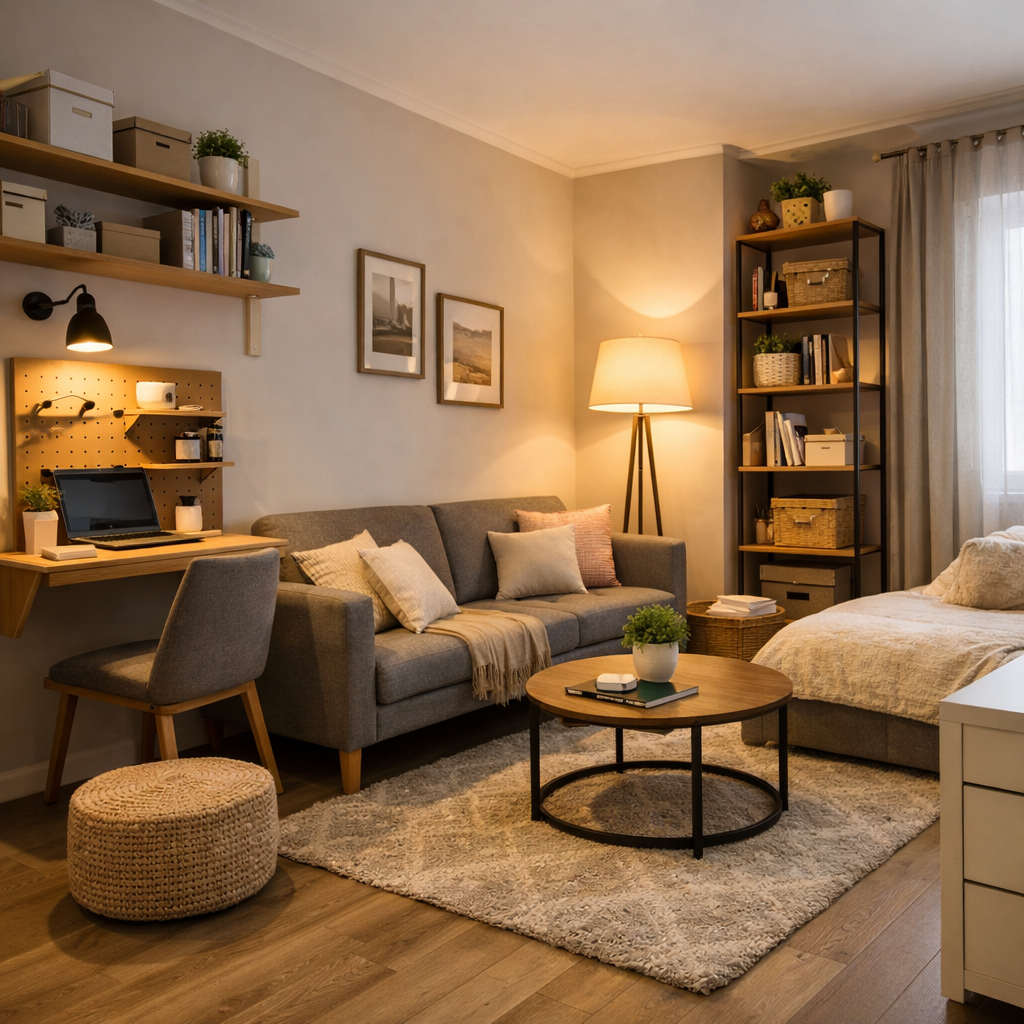
There doesn’t need to be any expensive renovations to make a small room look larger. With some clever light color choices, placement of mirrors, layered lightings and strategic furniture arrangement, you can create comfortable, functional spaces that make the best use of small space. It all comes down to deliberate design that allows for maximum lighting, minimizes clutter and maximizes visual flow. These 12 tips will help any homeowner or renter make the best of their limited space to make their space bigger, brighter and more comfortable.