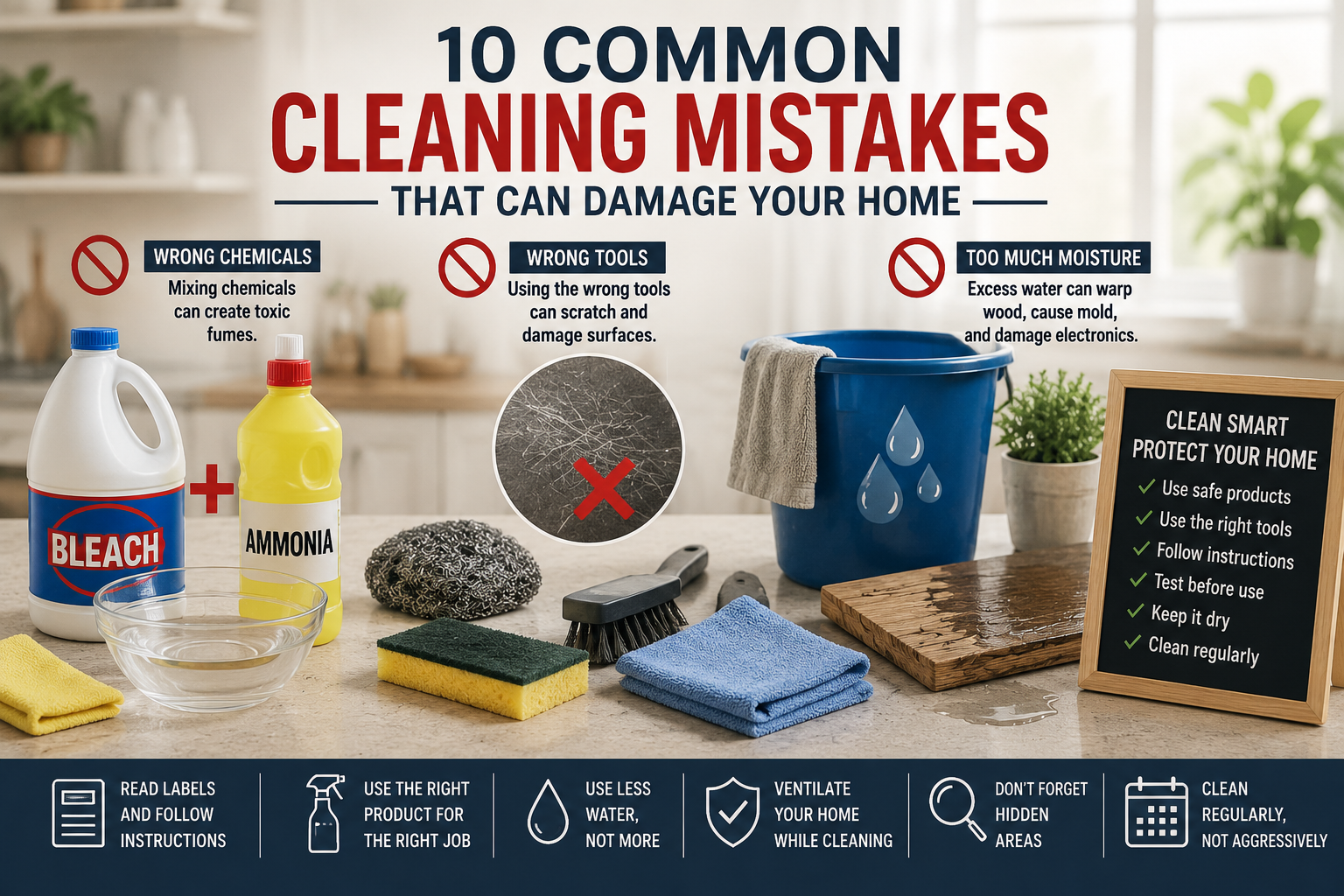
Cleaning Mistakes can quietly damage your home if they are repeated over time. Maintaining cleanliness in the home is a must for comfort, health and longevity of household items. Besides being an attractive home, the well-maintained home environment leads to a healthier living environment for all who are in it. Cleaning is not just a job of the hand, though, it’s a technique. There are many things that many homeowners do without realizing it, which can cause damage to their furniture, flooring and appliances over the long-term. These mistakes are frequently caused by misinformation, haste, and a lack of understanding about ‘more cleaning’ equating to ‘better cleaning’. In fact, improper cleaning can result in expensive repairs and replacements which can be prevented with a little knowledge and care.
If you know what these cleaning errors are, then you can avoid them. You will be able to avoid your home being damaged by using the wrong chemicals, equipment or moisture. In this article, we’ll discuss 10 of the most common mistakes people make while cleaning their homes, and how they can be detrimental. By following these tips, cleaning can be a task that’s done with pleasure and even joy, and will help maintain the value, safety and beauty of your home for years to come.
1. Mixing Incompatible Cleaning Chemicals
Homeowners can make deadly errors by mixing cleaning products without knowing what happens when they do. For instance, when bleach and ammonia are combined, toxic chloramine vapors are created; these can affect the lungs and eyes. Likewise, a mixture of bleach and vinegar generates chlorine gas, which is a toxic gas that can lead to a serious respiratory problem. These combinations will not increase the cleaning efficacy, but will provide a potentially dangerous situation that may lead to surface damage and health hazards.
Chemical combinations will reduce the potency of the products as well as pose health risks. Cleaners are designed to work for certain specific purposes and mixing them together will often destroy the purpose they are used for. For this reason, always adhere to the labels on the products and use cleaners according to instructions. When in doubt use one product at a time and rinse before using another. This is a simple measure to avoid surface damage and possible health emergency.
2. Using the Wrong Cleaning Tools
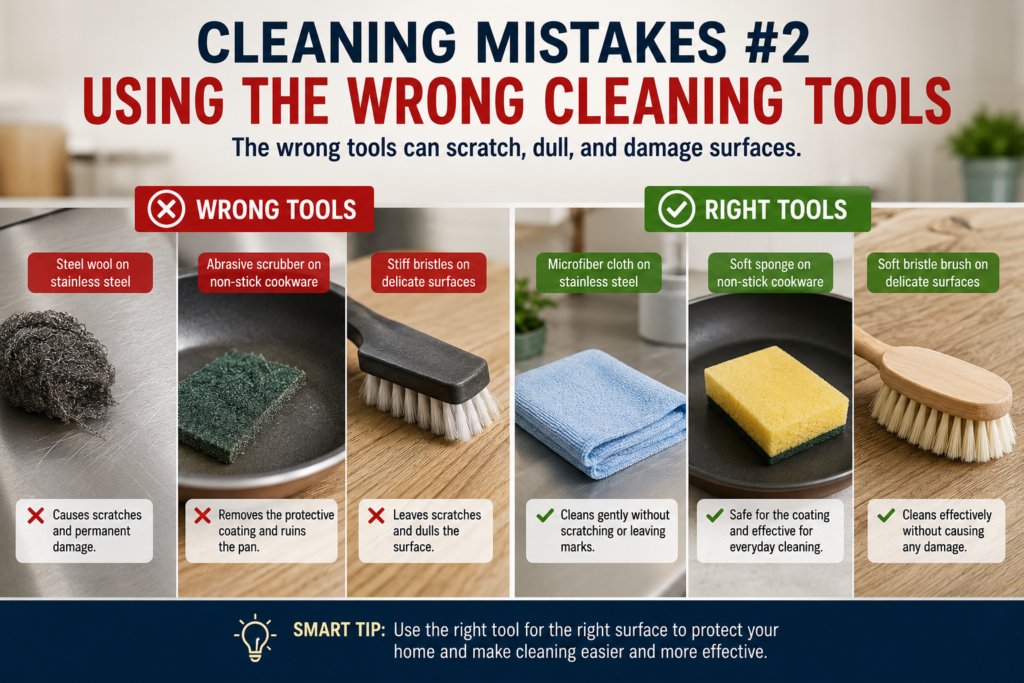
The improper use of the wrong tool in a cleaning operation can cause scratching, dulling and permanent damage to surfaces. For example, if you use steel wool on stainless steel appliances, it will cause unsightly scratches and if you use an abrasive scrubber on non-stick cookware, it will remove the protective layers. Grit can be trapped by microfiber cloths, if they are not cleaned properly, and can scratch delicate surfaces such as glass or polished wood.
Rather, use the right tools for the job when cleaning items. Most surfaces are best cleared by using soft cloths, non-abrasive sponges or brushes with soft bristles. Use hard tools only for heavy use such as grills outside or concrete. By choosing suitable equipment, you can prolong the useful life of your equipment and prevent expensive replacements.
3. Applying Excessive Moisture to Delicate Surfaces
Water is a good cleanser, but can be detrimental if used in excess. Excess moisture can be detrimental to wood furniture, hardwood floors and electronics. Water can cause the wood to become swollen, warped or moldy. If electronics come into contact with moisture, they can short out or be permanently damaged.
To avoid this, clean wood or electronics with moist rather than soaking wet cloths. Make sure surfaces are dried down as soon as they are wiped. When cleaning floors, use a hardwood floor specific cleaner that will reduce the amount of water touching the floor. When you control the moisture you will not have to worry about any damage to the structure of your home, as well as having a clean home.
4. Ignoring Manufacturer Instructions
When it comes to cleaning, many homeowners assume that they know what is best for their carpet, but failing to follow manufacturer’s instructions can damage the carpet. Furniture, flooring and appliances may be accompanied with special instructions for care which are specific to materials. Some vacuum cleaners will not work on thick carpets, for instance, or certain vacuums have a detergent which will bleach upholstery fabrics.
Making sure that you follow the instructions is not only to keep warranties intact, but to ensure you protect your investment. Manufacturers test products extensively, and make recommendations based on proven results. A little time spent reading and following these rules can save you a lot of money in costly repairs, and mistakes.
5. Overusing Cleaning Products
More cleaners doesn’t always mean better results – overuse can have the opposite effect. Too much detergent will leave behind sticky film on surfaces that will pick up dirt and dust more readily. Excessive polish can lead to polish build-up, that weakens finishes instead of strengthening them. Spills of soap can cause fabrics to stiffen and may jam washing machines in laundry.
Remember, it’s all about moderation. Apply the recommended amount of product and rely upon the product’s formulation to perform the task. Don’t double the dose if you think a surface is not clean enough, repeat the cleaning process. This will help you to clean without harming your house.
6. Neglecting Ventilation During Cleaning
It is important to make sure that first of all the cleaning product is used in a well-ventilated room, and particularly strong chemical cleaning products are used in such a room. When not ventilated, fumes can accumulate in the house causing headache, dizziness, or irritation to the respiratory tract. Another mold contributing factor is poor air circulation over time, especially in humid spaces, such as bathrooms and kitchens.
Open windows or use exhaust fans when using chemicals for cleaning. If the fume is not allowed to build up, the risk of damage to surfaces and a decrease in the air quality inside the building is reduced. Ventilation is an easy, yet effective, protection measure for your home and your health.
7. Using Vinegar on the Wrong Surfaces
Vinegar is a popular natural cleaning solution but isn’t appropriate for all. It can cause dull spots or permanent marks on natural stone surfaces, such as marble, granite, and limestone. Repeatedly using vinegar can also eat away at some metals, such as aluminum and copper.
Use vinegar on safe materials, such as glass, ceramic or plastic. If using a stone or metal cleaner, use cleaners that are designed for stone or metal. The knowledge of where vinegar can and can’t be used helps to avoid accidental damage, but allows vinegar’s cleansing properties to take effect.
8. Forgetting to Test Cleaners First
It can be disastrous to apply a new cleaner without testing on a large surface area. Certain products can discolor fabrics and remove finishes, and may interact with some fabrics. Damage, if it happens, may be permanent.
Test cleaners on a small, inconspicuous area before using them on a large area. This is a safety measure to prevent expensive errors of compatibility. Additional time invested in testing can save hours of remorse and hundreds of dollars in repair costs.
9. Cleaning Too Aggressively
Over scrubbing may appear to be effective, but it will actually cause more damage. Overaggressive cleaning methods can cause scratches, deterioration of protective coatings and even removal of grout or paint. Rough handling may be disastrous for fragile items, such as antiques or electronics.
In long term, gentle and regular cleaning is more effective. Allow the cleaner to do the work; use the right pressure. It’s better to take your time and care for your home than to use force to keep it beautiful and functional.
10. Overlooking Hidden Areas
Although many homeowners pay attention to the visible parts of their home, they often ignore other areas where mold may grow, such as behind appliances, under furniture or inside vents. These are places where dust, grease and moisture can build-up, which can cause appliances to suffer from less efficiency or lead to mold growth or pest infestation. Failure to attend to them can lead to reduced lifespan of your home’s systems and impact indoor air quality.
It’s important to tackle these hidden spaces on a regular basis if you want your home to be as clean as possible. Your deep cleaning checklist includes moving furniture, cleaning behind appliances and vacuuming vents. These unnoticed areas can be a source of allergens and bacteria and impact your family’s health. You can use them as part of your home cleaning routine to help prolong the lifespan of your home’s systems while also making your home healthier.
Conclusion: Cleaning Smarter, Not Harder

To not make these mistakes while cleaning is a matter of awareness and discipline. Knowing the dangers of mixing chemicals, using the wrong tools and applying too much moisture will help prevent unnecessary damage to your home. Cleaning shouldn’t detract from your living environment. With careful practices, your home will remain safe, beautiful and long lasting.
The bottom line is not to work harder, it is to work smarter. You’ll save time, money and effort by taking safe steps, following manufacturer instructions and attending to hidden places. When cleaning, it’s important to do so with mindfulness to keep your home a place of peace, not stress. These strategies can help you create a healthier, cleaner, more resilient home for years of enjoyment.