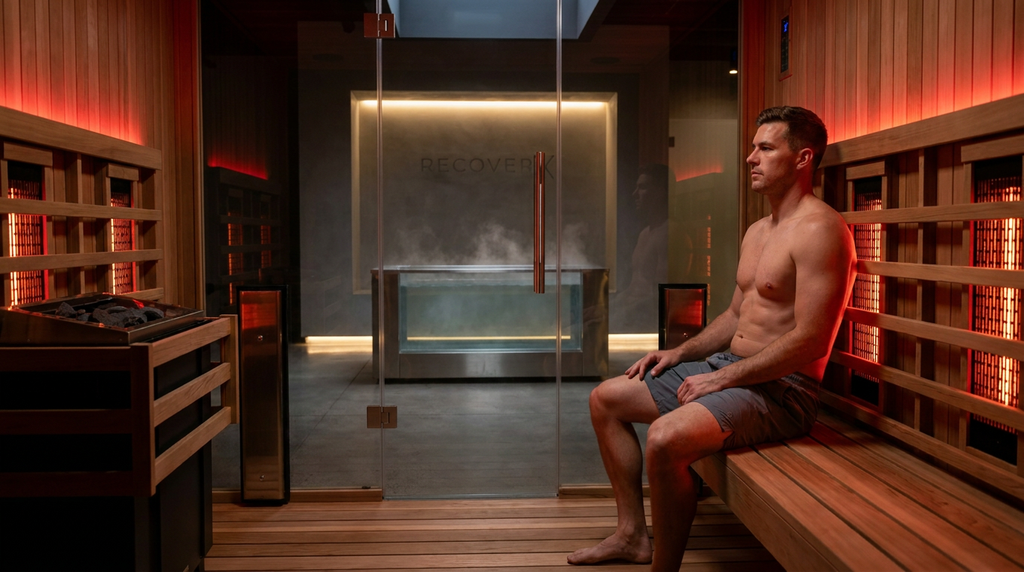
Recovery used to mean a spa day or a trip to a specialist clinic. Now it increasingly happens at home, and many people are combining heat, light and cold instead of relying on a single tool. That approach has a name: therapy stacking, which simply means pairing two or more wellness practices in one session or routine. Done well, it turns 30 to 45 minutes into a structured home recovery routine you can repeat a few times a week. This guide explains what each tool adds, the order most people use, sample stacks for different goals and the safety basics to know before you start.
What Is Therapy Stacking?
Therapy stacking is the practice of combining two or more wellness modalities, such as an infrared sauna, red light therapy and a cold plunge, in a single session or a regular routine. You may also see it called therapy layering or wellness layering. The idea is practical rather than magical: if you are already setting aside time for one tool, adding a second can make that time more varied and easier to stick with.
It is not the same as habit stacking, which means attaching a new habit to an existing one, like stretching right after you brush your teeth. Therapy stacking is about combining the tools themselves.
The Three Core Tools and What Each AddsInfrared sauna
An infrared sauna warms your body directly with infrared heaters, so the cabin stays at a gentler 115–130°F compared with a traditional sauna. Many people use it for relaxation, circulation and a steady sweat. Mayo Clinic notes that some research suggests saunas may offer health benefits, but larger and more rigorous studies are still needed.
Red light therapy
Red light devices typically use red light around 650 nm and near-infrared light around 850 nm. The research field is called photobiomodulation. A review by Harvard photomedicine researcher Michael Hamblin describes reduced inflammation as one of its most consistently reported effects, though much of the evidence comes from animal and small clinical studies. Many people add it to skin and muscle-recovery routines.
Cold plunge
Cold water immersion, usually around 50–60°F at home, delivers a sharp contrast with heat and a quick jolt of alertness. A 2023 meta-analysis in Frontiers in Physiology found post-exercise cold water immersion was associated with less muscle soreness and lower perceived exertion immediately afterwards, though the effects were not significant at 24 or 48 hours and the overall evidence was rated low to moderate.
How to Stack Them: A Simple Order
There is no single proven protocol, but this sauna and cold plunge routine, with red light added, is a sensible starting point:
- Warm up the sauna (10–15 minutes). Turn it on while you change, fill a water bottle and get your towel ready.
- Sauna for 15–30 minutes, with red light during or right after (15–30 minutes). Red light sessions depend on distance: closer to the panel means a shorter session. Only use a red light device inside the sauna if the manufacturer says it is built for that heat; otherwise, use it right after.
- Cold plunge for 30 seconds to 3 minutes. Beginners should start with 30–60 seconds. Lower yourself in slowly and focus on slow, steady breathing.
- Optional: repeat heat and cold for 2–3 rounds. Finish on cold if you want energy, or on heat if you want to relax.
- Rehydrate and rewarm naturally. Drink water, dry off, dress warmly and let your body warm up on its own rather than jumping straight into a hot shower.
Sample Stacks for Different Goals
Your recovery stack should match your goal for the day. These four are easy starting points:
| Goal | Stack | Example session | How often |
| Post-workout recovery | Sauna + red light + short cold plunge | 20 minutes sauna with red light, then a 1–2 minute plunge | 2–3 times a week |
| Evening wind-down | Sauna + red light + aromatherapy (skip cold) | 20–30 minutes sauna with red light and a calming scent | Evenings, as often as you like |
| Morning energy | Short sauna + cold finish | 10–15 minutes sauna, then a 1–2 minute plunge to finish | 2–3 mornings a week |
| Beginner | Sauna + red light only | 15–20 minutes sauna with red light during or after | 2–3 times a week |
If you lift weights for strength or muscle gain, note that Cleveland Clinic says a cold plunge within about four hours of strength training may blunt muscle gains. Save the plunge for rest days or a separate time of day.
Setting Up a Stacking Space at Home
You do not need a dedicated spa room. A spare room, basement, garage or covered patio can work if you plan for a few basics:
- Space: room for the sauna, a plunge beside it and a short, dry path between them, plus space to towel off
- Power: many plug-in plunges run on a standard 120V outlet, while saunas range from standard outlets for smaller models to a dedicated 20–30 amp circuit for larger ones. Check each spec sheet and use a licensed electrician for any new circuit.
- Ventilation: plunge chillers need open space around the fan, and a room that holds heat and humidity will feel stuffy fast
- Indoor or outdoor: indoors is simpler; outdoors needs weather covers and suits milder climates.
- Budget priorities: start with the sauna, then add one tool at a time as your routine settles
Clearlight, for example, makes a cold plunge that plugs into a standard 120V outlet and needs no plumbing, just a hose to fill and drain it. Clearlight’s guide to therapy stacking also suggests starting with one or two modalities and adding more over time, which is sound advice for any setup.
Products Designed to Work Together
Some brands now design their tools to work as one system. Berkeley, California-based Clearlight®, which in 2019 became the first infrared sauna company to bring red light therapy into the sauna, pairs its Clearlight® Sanctuary™ infrared saunas with the CORE Red Light Therapy Tower, which mounts on the door of compatible saunas. The Clearlight Plunge completes the setup, giving you heat, light and cold in one connected space.
Safety First
Heat and cold both put real demands on your body, so take the safety basics seriously:
- Check with your doctor first if you are pregnant, have a heart or blood pressure condition, have Raynaud’s or another circulation problem, or take medication that affects how you tolerate heat or cold
- Hydrate before and after every session, and skip alcohol beforehand
- Don’t plunge alone at first. Cold water can trigger rapid, uncontrolled breathing, so have someone nearby until you know how your body responds.
- Keep plunges short. Cleveland Clinic advises against water colder than 40°F and says a session should never go beyond five minutes.
- Protect your eyes with red light. Don’t stare into the LEDs, and wear goggles or sunglasses if the brightness bothers you.
- Get out if you feel dizzy, lightheaded or unwell at any stage
FAQ
Should I do red light before or after the sauna?
Either can work, and no research shows one order is better. Some people use red light during the sauna with a device built for the heat, while others use it before to warm up or straight after while still relaxed. Pick the order that fits your setup and stay consistent.
How long should I wait between the sauna and cold plunge?
Many people move straight from the sauna to the plunge, while others pause for a minute or two to slow their breathing first. Beginners may prefer the short pause. Either way, enter the water slowly and calmly rather than jumping in, and get out if you feel unwell.
How often should I stack?
Two to four sessions a week suits most people. Sauna and red light are often used more frequently, while cold plunges are commonly done two to four times a week. If you strength train, keep the plunge on rest days or several hours away from your workout.
Do I need all three tools?
No. A sauna with red light is a complete stack on its own, and many people never add cold. Start with the tool you will use most, usually the sauna, and add a second when your routine feels settled. Consistency matters more than how many tools you own.
Is therapy stacking safe for beginners?
It can be, if you start gently. Keep sauna sessions to 15–20 minutes, plunges to 30–60 seconds in water around 50–60°F, and try only two tools at first. Hydrate well, don’t plunge alone, and check with your doctor if you have any health conditions.
Start Simple and Build
Therapy stacking works best as a routine you enjoy, not a test of endurance. Begin with two tools, most often a sauna and red light, and use them consistently for a few weeks. Once that feels natural, add a short cold plunge or a second round. Listen to your body, keep sessions sensible and let your recovery stack grow with you over time.
Contact Clearlight® Saunas
Phone (toll-free): 800.798.1779
International: +1.510.601.1775
Email: info@infraredsauna.com
Address: 1077 Eastshore Hwy, Berkeley, CA 94710 (administrative offices)
Website: infraredsauna.com