While breathing is one of the most ongoing and vital functions in human life, few people ever consider the incredible biological functions that occur in their body every second. The lungs initiate a series of events from the time a person breathes in to provide oxygen to blood and expel CO₂ from the body. The continuing exchange maintains the function of the organs, enables energy to be produced, regulates the blood chemistry and enables cells to survive. The lungs function automatically all day, all night, without effort, and instantly change their function according to the circumstances, whether exercising, stressed out, asleep, or active. The respiratory system is constantly active, even when we are at rest, and is responsible for taking in thousands of breaths each day in order to maintain balance in the body.
Breathing is an active process that consists of much more than simply moving air in and out of the lungs. It relies on the synchronised function of muscles, nerves, blood vessels, airways and the smallest structures, called alveoli. Every inhale is dependent on changes in pressure within the chest cavity that bring fresh oxygen-rich air into the lungs, and carbon dioxide-rich air out of the body. Breathing mechanics is a combination of inhalation and exhalation coordinated in an intricate and controlled manner as taught in the educational resources, physiological process of breathing. This makes the science of respiration easier to understand and shows how the lungs work round-the-clock to keep us alive, fuel our bodies, and help us feel our best.
The Anatomy of breathing
There are various specialized structures that make up the respiratory system which transport air in and out of the body. Breathing starts at the nose and mouth, the place where air initially enters the respiratory system. The nose is particularly significant as it filters out dust, bacteria and any pollutants of the air, warms and moistens the air as it is brought into the lungs. The tiny hairs and the mucus in the nose catch harmful particles and keeps the delicate tissues of the respiratory system safe. The air passes through the pharynx and larynx into the windpipe (trachea). Rings of cartilage provide support for the trachea and allow it flexibility when it moves and inhales or exhales.
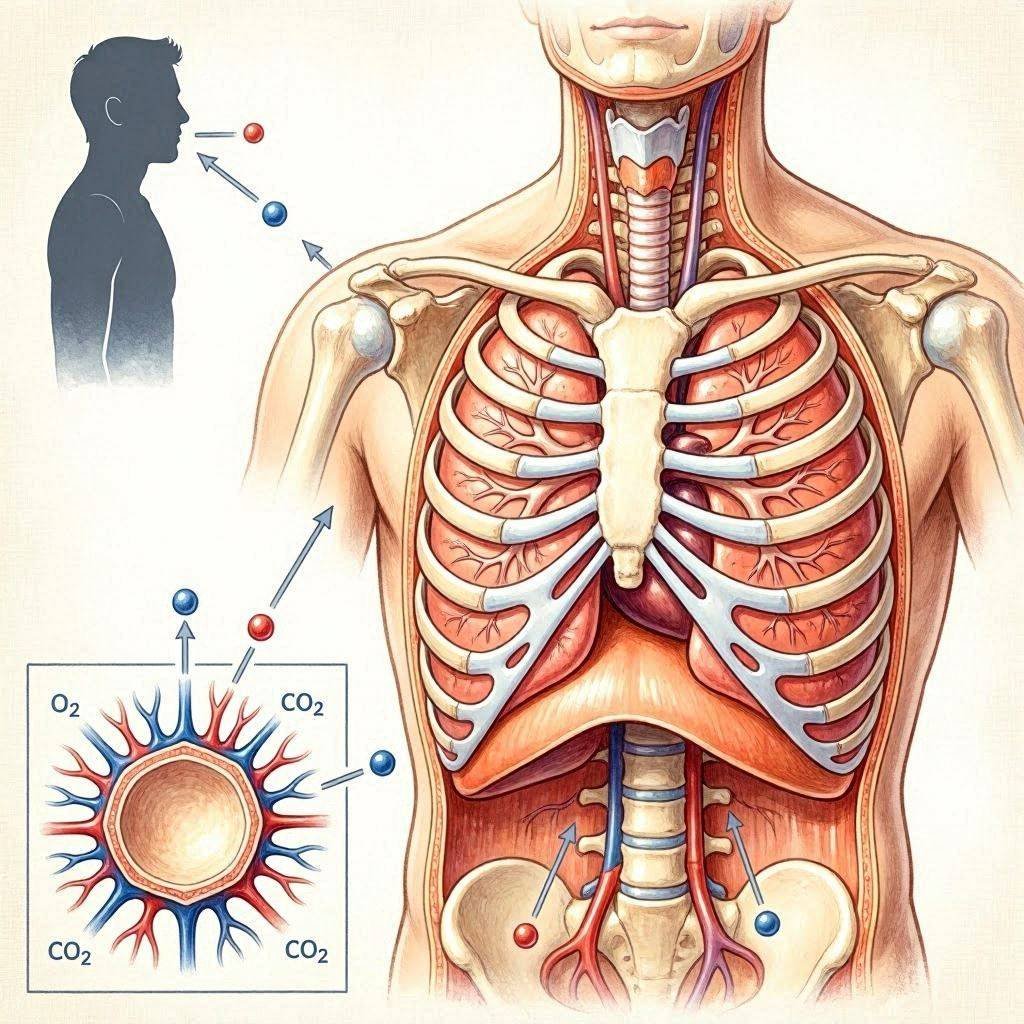
The trachea splits into two bronchi, one to each lung, as the air flows downward. These bronchi divide repeatedly into smaller bronchioles, forming a very large network of airways which carry air into the lungs. Millions of small air sacs called alveoli occur at the ends of the bronchioles. These structures are where gas exchange occurs, and are encircled by small blood vessels called capillaries. The walls of the alveoli are very thin so that O2 and CO2 can diffuse easily from air to blood. The lungs’ massive surface area enables it to efficiently absorb oxygen and to remove waste gases continuously.
The lungs are soft, elastic organs that are covered and protected by the rib cage and covered by a thin membrane called pleura. Lung tissue elasticity allows the lungs to expand while breathing in, and to recoil when breathing out. Another important muscle involved in the mechanics of breathing is the diaphragm, a dome-shaped muscle under the lungs. The diaphragm is paired with muscles between the ribs that help change the size of the chest cavity, allowing for breathing. If these coordinated structures and movements were not present the body would not be able to maintain the constant airflow to sustain life.
Inhalation is the process of air entering the lungs
The taking in of air into the lungs is called INHALATION or INSPIRATION. It starts when the diaphragm flattens and goes downwards, and the intercostal muscles pull the ribs upwards and outwards. These actions increase the chest cavity and decrease the pressure in the lungs compared to the outside air. Oxygen-rich air can enter the respiratory tract and then proceed into the lungs since the air always moves from high to low pressure. This is something that is in motion, automatic, and continuous because of pressure and doesn’t need to be done consciously.
There are important conditioning processes that occur as air passes through the respiratory passages. Nasal passages warm and humidify the air that comes into the lungs to prevent dryness or irritation to tissues in the lung. The airways are lined with mucus and cilia which catch dust, bacteria and pollutants before they can enter deeper parts of the lung. Air reaches the bronchioles and alveoli and oxygen molecules are ready for gas exchange. Lungs can change the depth and rate of breathing in response to demands of the body. Breathing gets deeper and increases in rate during exercise, for example, to provide the muscle with increased oxygen to make energy.
Inhalation is tightly controlled by the nervous system and is controlled by signals from the brainstem. There are specialized receptors that detect the level of oxygen and carbon dioxide in the blood and control breathing rate. If the amount of carbon dioxide increases or oxygen decreases, the brain will try to increase the amplitude and frequency of breathing to restore balance. This automatic control helps provide tissues with adequate amounts of oxygen even during exercise or stress. Inhalation is therefore more than just breathing in air, it is a dynamic physiological process which adapts in response to the ongoing metabolic needs of the body.
Gas Exchange in the Alveoli
A key part of the breathing cycle is the exchange of oxygen and carbon dioxide in and out of the blood stream in the alveoli. Alveoli are very small air sacs with very thin walls that permit gases to diffuse easily. Capillaries with low oxygen and high carbon dioxide surround each alveolus. Oxygen concentration is higher inside alveoli than in blood and oxygen will therefore diffuses naturally through the alveolar wall into the capillaries. Meanwhile, carbon dioxide passes from the blood into the alveoli since the blood has a higher concentration of carbon dioxide.
After the oxygen gets into the blood, it combines with the hemoglobin molecules in the red blood cells. The function of hemoglobin is to transport O2 in the blood to tissues and organs which require O2 for cellular respiration. The cells use oxygen to break down food molecules for their use, such as in the muscles, brain, etc. to make energy, and repair tissues. In the meantime, CO2 produced during metabolism is sent back via the blood to the lungs where it can be expelled during respiration. The exchange occurs continually and very efficiently because there are millions of alveoli which create a very large surface area.
The alveoli are important because they provide for efficient gas exchange and are destroyed in disease. Smoking, infections, chronic obstructive pulmonary disease, or environmental pollution may result in damage to the alveolar walls and lead to less elasticity. Damage to alveoli reduces the amount of oxygen transferred and breathing is less efficient. This may cause tiredness, breathlessness and decreased exercising performance. The efficiency of alveolar gas exchange illustrates how important even the tiniest structures in the lungs are for the body’s energy supply and health.
The process of getting rid of Carbon Dioxide through respiration
Exhalation (expiration) refers to the process of air and waste gases being expelled from the lungs. Exhalation during relaxed breathing is typically passive, unlike inhalation. Once the air is breathed in, the diaphragm and intercostal muscles relax, which causes the chest cavity to decrease in size. Lung elastic tissues normally recoil to increase lung pressure and expel CO₂ rich air out of the airways. This pressure difference forces air out of the respiratory system and thus finishes the breathing cycle.
The need for carbon dioxide removal is due to its role in maintaining acid base balance. The carbon dioxide dissolved in the bloodstream can react with the blood to form carbonic acid, and when the amount of carbon dioxide is too great in the blood, it can raise the pH level to dangerous levels. This balance is regulated by the respiratory system, which responds to the body’s needs by changing the rate and depth of breathing. Cells generate more carbon dioxide because they are more active during exercise or during periods of stress. As a response, breathing accelerates to eliminate excess carbon dioxide, and to regulate blood chemistry.
A forced expiration – when you cough, exercise or talk – is when extra muscles are involved. Abdominal muscles and internal intercostal muscles contract to push air out more forcefully when necessary. Coughing is an effective defense reflex that eliminates mucus, irritants and pathogens from the airways. Thus, exhalation is not a mere inverse of inhalation but plays a significant role in the elimination of waste products, protection of the airways and maintaining balance in the respiratory system.
The importance of breathing to energy and survival
All cells in the body require oxygen to generate energy in a productive manner. The production of ATP (adenosine triphosphate) the usable energy produced by cells using cellular respiration, needs oxygen. ATP is used in almost every biological process such as digestion, tissue repair, circulation, nerve signaling and muscle movement. If cells don’t receive enough oxygen, they use alternative methods of energy production, which are less efficient, and fatigue more quickly. This is how this is linked to one’s vitality and endurance.
Considering that the brain only accounts for a small percentage of body weight, yet consumes a large percentage of body oxygen, the brain is particularly vulnerable to constant oxygen supply. Short periods of oxygen deprivation can affect concentration, memory, coordination and consciousness. Muscles also need a lot of oxygen during exercise as the demand for energy increases with the increased movement. The respiratory system adapts by increasing the rate and depth of breathing and the uptake of oxygen, to meet these demands. This intimate link between respiration and metabolism illustrates the relationship of breathing to virtually all human activities.
Breathing is also a way to regulate the emotional and nervous system. Breathe slowly and deliberately and activate the parasympathetic nervous system for relaxation and to lessen responses to stress. Shallow or rapid breathing, however, is more likely to be associated with anxiety or panic and could help lead to tension. Some of the techniques include deep breathing exercises and mindfulness, which involve breath control to maintain emotional stability and minimize the physiological impact of stress. This link between breathing and mental well-being illustrates the interconnectedness of breathing and overall health and well-being.
Breathing efficiency is influenced by many factors
Life habits, environment, and health can all affect the efficiency of breathing. Smoking is one of the most damaging factors since it causes damage to the tissue of the airways, decreases the elasticity of the lungs and eventually damages the alveoli. Airway inflammation and a decrease in respiratory function can also occur from pollutants and airborne irritants, particularly for people with asthma and allergies. Chronic respiratory diseases can be more likely because of long-term exposure to bad air quality, and gas exchange can be affected.
Exercise is important in building up the strength of respiration muscles and making the lungs more efficient. Exercise improves the use of oxygen, improves endurance and maintains good circulation between the lungs and cardiovascular system. It is also important to drink plenty of fluids since this will help keep your mucus thin and easier to expel from your airways. Staying hydrated aids in easier breathing and lessens discomfort in the respiratory system.
Stress and poor posture also have a negative impact on breathing patterns. Shallow breathing is a common symptom of chronic stress that can decrease the amount of oxygen available and increase muscle tension. When the body isn’t properly positioned, it won’t allow the chest to expand fully, which decreases lung capacity. Proper breathing practices during exercise, relaxation and posture can therefore enhance the performance of the respiratory system and well-being.
Conclusion
Science of breathing shows us an incredible process that takes place continuously inside the human body, second-by-second throughout life. The respiratory system has to carry out a multitude of closely coordinated functions related to breathing, gas exchange within the alveoli, and internal balance in the body, including the transport of oxygen and the removal of carbon dioxide from the body. Together with the nervous and the cardiovascular systems, the lungs, the diaphragm, bronchi, and alveoli contribute to delivering oxygen to each and every cell to produce energy and sustain life.
With breathing knowledge the physiological process of breathing becomes easier to understand and the role taken by the respiratory system in the overall well being of the individual becomes more clear. Good breathing plays a vital role in the function of body systems including physical endurance, brain function, emotional stability and metabolic systems; on the other hand, poor breathing can have a negative impact on almost every body system. Taking care of one’s lungs through exercise, staying hydrated, managing stress and avoiding habits like smoking will help to support lung health and improve overall quality of life in the long run.