The Internet functions because of which we have billions of devices that play by the same rules while communicating. These rules are what we call networking protocols which in turn form the base of all digital communication. Without them devices wouldn’t be able to understand each other and the internet would break down. Protocols which is what we may call the basic rules of the road in terms of data — they detail how it is to be sent out, received in and interpreted by different nodes in a network. Also we depend on these protocols to function behind the scenes for everything we do online from surfing sites to sending email to streaming video.
In this article we will go over what networking protocols are, what they do, and also why the TCP/IP model is the base of today’s internet communication.
What Are Networking Protocols?
Networking protocols are a set of standards which control how data travels between devices on a network. They see to it that info is put out in the right format, sent out properly, and is understood at the receiving end.
When you open a site, your device is connected to a server. Systems in question must play by the same rules for this to work, which is to say that the content between the request of the client and the reply from the server has to be in a form they can process. If it was not the case the connection would break down.
Networking protocols which are present in real systems.
Protocols generally handle three major tasks: Protocols usually cover these three areas:
• Defining how data is formatted
• Managing how data is transmitted
• Ensuring data is received correctly
Thus they create structure in complex digital communication systems.
Why Networking Protocols Are Important
Protocols are key to which communication is consistent, reliable, and scalable.
First, they provide a platform for devices of various manufacturers and operating systems to communicate which means that a phone may connect to a server with different software.
Also they do so which is to say many of these protocols have error checking which identifies missing or damaged data. If issues arise the data may be resent.
Third they improve security. Some protocols which is to say do not put sensitive info like passwords and bank details in plain which can be easily intercepted.
In the end protocols support for global communication. As a result of the fact that we have billions of devices on the net, we require standard rules to handle traffic efficiently.
Common Examples of Networking Protocols
At present many protocols are used daily which go unnoticed by the user:
• Web protocols for website access
• File Transfer Protocol (FTP) for transferring files
• SMTP (Simple Mail Transfer Protocol) for email transmission
• DNS (Domain Name System) Translates domain names into IP addresses
• TCP/IP which are the primary protocols that run the internet
In each case the role is that of a player which makes online communication possible.
Understanding the TCP/IP Model
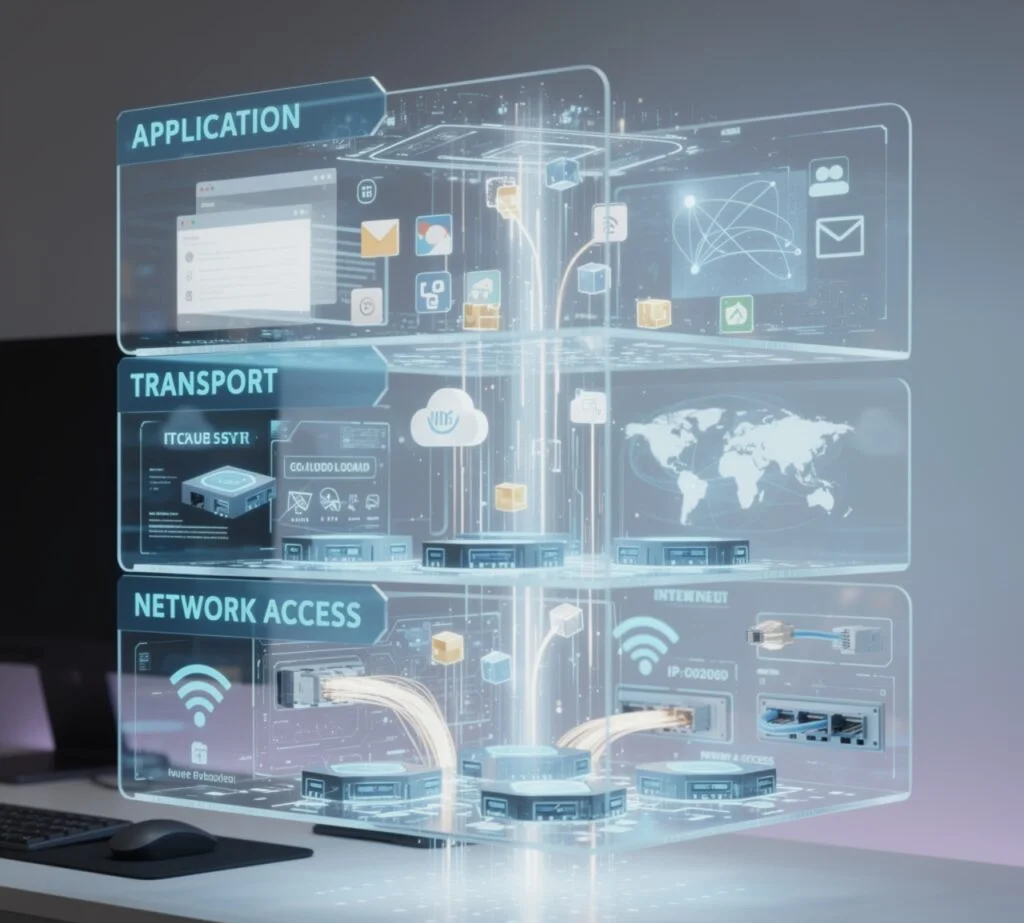
The Internet protocol suite which is what we know as TCP/IP is the base of what we have for internet communication. It lays out how data is to be packaged, sent out, routed and received across networks.
It consists of two main protocols:
• Transmission Control Protocol (TCP)
• Internet Protocol (IP)
These two components work to present accurate and efficient delivery of data.
The model has four layers:
• Application Layer
• Transport Layer
• Internet Layer
• Network Access Layer
Each layer has a role in which it plays a part in successful communication.
Application Layer
At the top level of the stack which is what we refer to as the Application Layer this is where we see the user’s interaction. This layer is what applications use to present information and to request services which in turn enable communication over the network.
It supports activities such as:
• Web browsing
• Email communication
• File transfers
• Online services
In this area we see protocols like HTTP, HTTPS, SMTP, and FTP.
For instance when you input a website address into your browser the Application Layer puts that request together and sends it out.
Also this layer of the system is to report to the user applications that which the lower level networking details are handled.
Transport Layer
The Transport layer is in charge of end to end communication between devices. Also it see to it that data is delivered reliably and in proper order.
This layer uses two main protocols:
Transmission Control Protocol (TCP)
TCP is also what we use for reliable communication. It takes data and divides it into smaller parts, which it checks for errors and puts back in the right order at the destination.
If at any point a packet is lost TCP will resend it. In that regard it is best for very accurate tasks like web browsing and file transfers.
User Datagram Protocol (UDP)
UDP is focused on speed instead of reliability. It transmits data without confirmation of packet delivery.
As of now it is used in real time applications like video streaming, online gaming, and voice calls which report speed over perfect accuracy.
Internet Layer
At the network layer we deal with addressing and routing data.
It’s the base protocol of which is the Internet Protocol (IP). IP gives each device a unique address for its data to reach the right destination.
For example:
• IPv4 uses 32-bit addresses
• IPv6 which has 128 bit addresses and supports a larger number of devices
This also what that layer does is determine the best path for data as it travels between many networks. Also it is key in global communication.
Network Access Layer
The Network Access Layer is in charge of data physical transmission. We see it in the use of hardware that includes:
• Wi-Fi
• Ethernet cables
• Fiber optic systems
This layer transforms digital information into electrical or wireless signals which travel across physical media.
Without that which enables it, devices would not be able to transfer information.
How TCP/IP Works in Real Life
To get a better grasp of TCP/IP let’s see what happens when you access a site.
First, you input a website address in your browser. Also, the DNS system changes that name to an IP address. Then, TCP sets up a connection between your device and the server.
Then what we do is break up the data into packets. IP routes those packets across the network via the best paths.
Once the packets arrive TCP takes them in, puts them in the right order and sees that all of them got through. Then your browser displays the full webpage.
In that which is a series of many steps it happens in seconds.
How Protocols Ensure Reliable Communication
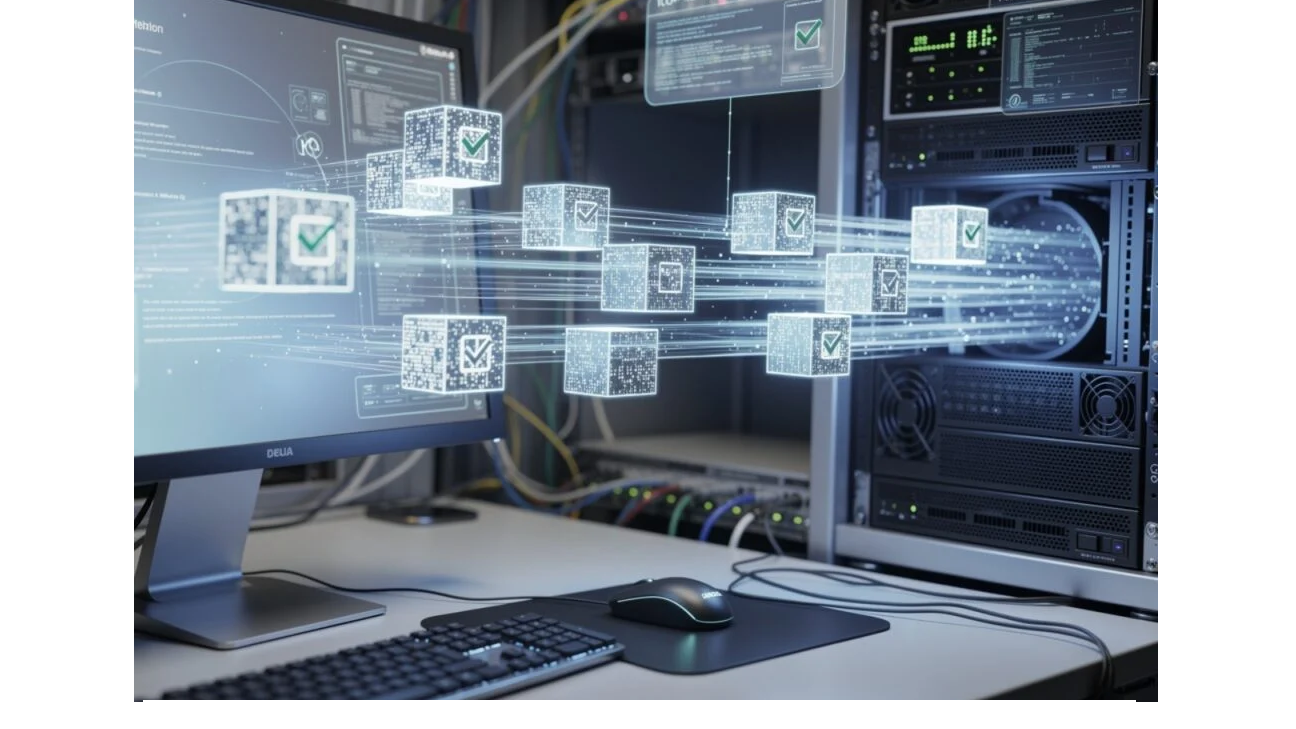
Protocols have put in place many features which guarantee accuracy and stability in communication.
First out of which they identify errors in the transmitted data. If corruption is present then packets are retransmitted.
Second, what they do is they see that the data comes in the right order. Which is very much so for large files and web pages.
Third also they use acknowledgments for delivery confirmation. Should there be no response data is resent.
Also which out to fast devices that they don’t overwhelm slow ones. Also communication is balanced and stable.
Advantages of TCP/IP
The TCP/IP model provides many benefits:
• It is for a wide range of devices and systems
• It supports global scalability
• It ensures reliable data delivery
• It provides for the smooth flow of information
• It is an open standard which any may implement
Thus it is the foundation of the present day internet.
Conclusion
Networking protocols are a must for device communication across networks. They see to it that data is transmitted in a structured, reliable and secure manner.
Among all protocols which ones are the most important TCP/IP is at the top of the list it is the base of the internet. It structures communication into layers and also sees to it that data is transferred properly from one device to another.
In a word, were it not for networking protocols and the TCP/IP model the internet as we know it would not be.