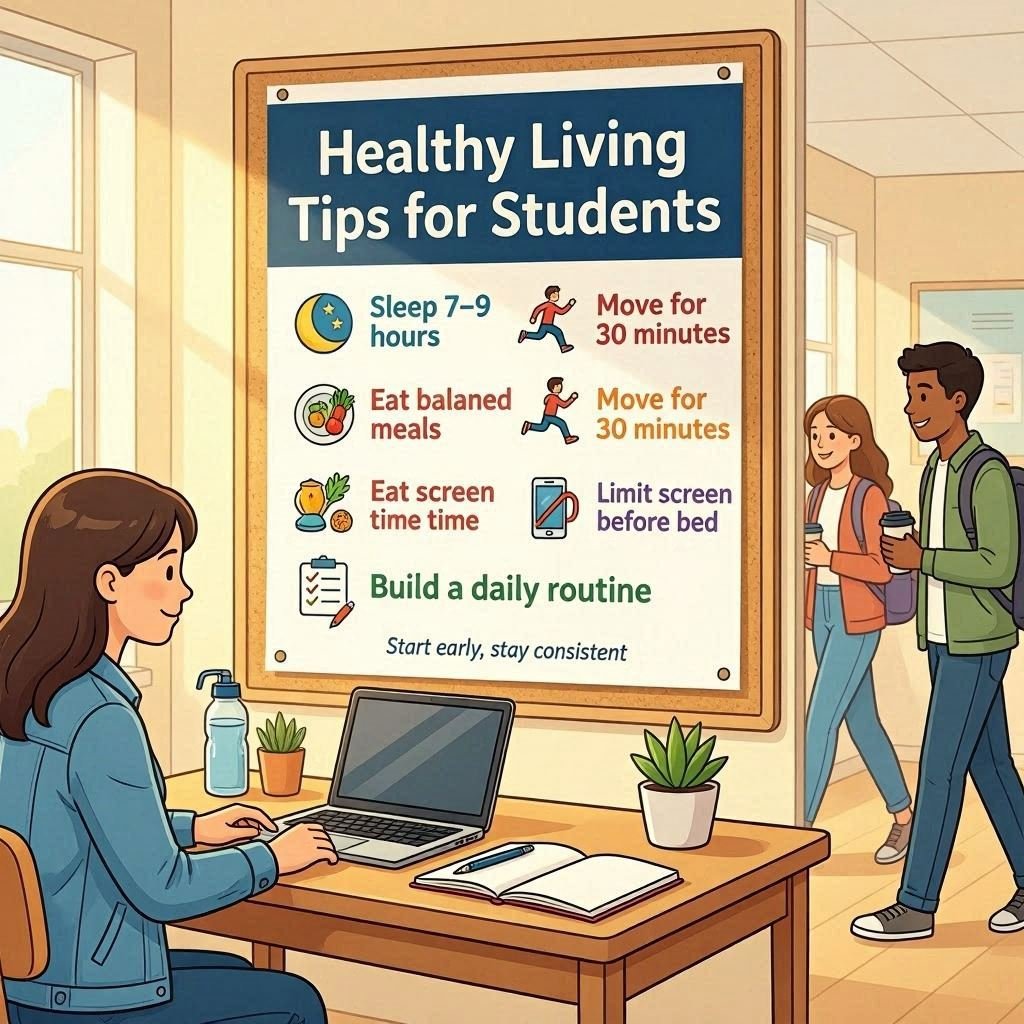
The years between the ages of 18 and 25 can be busy and stressful with work, socializing, deadlines, and personal development. Health and wellbeing are very important during these years. Encouraging healthy habits from an early age can promote students’ long-term wellbeing, emotional wellbeing, concentration and energy levels. There are lots of students that face stress due to their studies, irregular eating habits, low activity level, and bad sleeping habits because of their busy schedule sometimes it makes it difficult to maintain a healthy life. But, regular and minor behaviors can lead to significant physical and mental health benefits in the long run.
To maintaining balanced nutrition and Other Healthy Habits brochure can provide students with the information they need to make healthful choices in their lifetime. By cultivating healthy habits like good nutrition, regular exercise, stress management, personal hygiene, and adequate rest, one can optimize daily functioning and maintain a healthy lifestyle. A student with a healthy lifestyle, tends to be more productive, focused in learning and better able to manage responsibilities. The development of these habits as children also sets them up for healthier adult life.
Experts say that healthy habits pay off for students’ health
Routine is a critical period during student years that can carry over into adulthood. This time period is characterized by increased independence and making individual choices in eating, sleeping, exercise and time management. The body and mind need healthy habits to function well and these decisions can have a big impact on good health, emotional well-being and academic success.
Good nutrition helps the brain function, focus and energize, which are all important to learning and studying. Not eating, insufficient sleep, dehydration and over-excitement can impair attention and memory. Healthy students are more alert and better able to abide religiously with their academic duties.

Good habits also helps students to have discipline and personal responsibility. These are important time management skills, and the ability to “feed yourself” and keep yourself tidy and clean are skills that we need throughout our lives. Such practices help foster increased confidence and emotional well-being as good health can enhance self-esteem and everyday living.
Beyond immediate effects, early healthy actions can have long-term health impacts by promoting healthy lifestyles at an early age, thereby lowering chronic disease risk. Nutrition, exercise and hygiene are values that are taught and learned by students, which will help them to be better and better-off in the long term.
Balanced Nutrition for Better Energy
Nutrition is a significant factor in student health because students’ body and brain are in need of nourishment throughout the day to ensure they have enough energy, focus and body function. Students with packed schedules may find it challenging to eat enough meals, or only have processed food options, or drink too many sugary beverages, which can cause them to become tired and their attention to wane. Balanced nutrition can be important for sustaining regular energy levels and productivity during lessons, learning, and extracurricular activities.
Generally, a balanced diet combines the following nutrients: carbohydrates, proteins, healthy fats, fruits and vegetables – each plays a role in the body. Carbohydrates are used for energy and brain function and proteins are used to repair and build muscles. Whole grains are good fats for the brain and energy, and fruits and vegetables are good for vitamins and minerals to support overall health.

Students need breakfast more than any other time of day because it provides the energy they need after a night’s sleep and can help their concentration in the morning. Regularly missing breakfast can lead to difficulties with concentration during lessons and/or fatigue. Fruits, yoghurt, whole grain foods or nuts are good ways to help keep energy levels up between meals without causing them to have a ‘crash’.
Another aspect of nutrition is hydration because water is important to circulation, digestion and concentration. Dry mouth could lead to headaches and fatigue, decrease study performance and general comfort. Students have better concentration and comfort in their body during learning activities by increasing the amount of water consumed during the day.
Effective Management of Study Stress in a Healthy Way
Students are subject to stress as they are expected to perform well in school and take exams and do assignments and the social pressures can also cause stress. Stress, if not managed properly, can disrupt sleep, concentration, emotional health and well-being and physical health. Although temporary stress may help to spur motivation and focus, excessive or prolonged stress can have a negative impact. The creation of healthy stress management strategies keeps students balanced and do not allow them to become overwhelmed.
One of the best ways to alleviate the stress of studying is time management, in which the student has a well-performed schedule to follow and will not be under pressure to finish their assignments at the last minute. Tackling assignments one by one and making attainable study plans can help to boost productivity and lower anxiety. Plans that go well for students help them feel more confident and prepared when they are faced with academic challenges.

Some other relaxation techniques can also help to reduce stress in students, including deep breathing, stretching, listening to music, or spending time outdoors. Avoiding “burnout” by taking short breaks during study sessions will help to enhance concentration. Exercise also helps in stress control as the chemicals released during exercise contribute to better mood and relaxation.
Support systems are also essential, as they can help ease a student’s emotions during tough times by talking with friends, family members, teachers or counselors. Students should recognize that stress management is a way of living their healthy life and not just a school issue. Good emotional routines that are established in early childhood can be passed on to them as adults.
In this lesson students will learn why physical activity is essential for them
Exercise helps maintain good health both physically and mentally since it builds muscle, enhances circulation, and boosts energy levels. Regular movement is particularly important for students who have a tendency to sit for long periods during lessons, studying or using electronic devices as it can help with physical fitness and reduce stiffness or fatigue.
Walking, stretching, dancing, cycling or exercising in any sport can help to enhance endurance, flexibility and coordination for healthier functioning of the body. Exercise also helps the brain; when blood circulation rises, oxygen and nutrients are carried to the brain which aids concentration and alertness. Regular exercise is often associated with enhanced concentration and enhanced happiness by many students.

Exercise could also help to improve sleep quality as it can help to balance energy levels and reduce stress. Improved sleep leads to better memory, concentration, mood and emotional regulation, which are crucial for academic performance. Any amount of activity is worth doing on a regular basis, even if it is just moderate daily activity.
Highly strenuous exercise isn’t always required to get active. Engaging in small activities like walking between classes, movement breaks during study times or recreation can make a huge impact on activity levels throughout the day. Establishing active lifestyles as a child can help to foster lifelong physical activity and lifestyle choices.
Personal Hygiene and Healthy Daily Routines
Another key factor of students’ health is good hygiene since schools and educational settings have a large number of individuals interacting with them on a daily basis. Good hygiene practices minimize contact with germs, and enhance personal confidence and comfort. Healthier daily living practices include simple routine measures like good hand hygiene, bathing, oral hygiene and wearing clean clothing.
Hand hygiene is particularly relevant as students are in contact with common surfaces like desks, books, keyboard and door handles. Hand washing before eating, after using the restroom, and after coming in from the public decreases the transmission of bacteria and viruses. Keeping living and study spaces clean can also make for a more comfortable and conducive environment for concentration.

Good oral hygiene can also boost your confidence and health as regular brushing and flossing can prevent dental issues and keep your mouth smelling fresh. The use of clean clothing and frequent bathing also contribute to a comfortable and positive peer experience. Good hygiene helps students to feel better confident and ready academically and socially.
Good living habits involve sufficient sleep and a good daily routine. Good sleeping habits enable students to have a better physical and mental recovery, concentration and emotional balance. A balanced lifestyle bringing together hygiene, rest, nutrition and physical activity, working together for a better academic performance and wellbeing.
Creating sustainable habits to sustain long-term wellbeing
It is better to make habits that are realistic and sustainable than it is to make habits that are too strict or temporary for living healthy. It is sometimes difficult for students to stick to unrealistic routines, though a gradual improvement is easier to sustain over time. Living a healthier lifestyle by making small lifestyle changes like drinking more water, eating better meals, walking more often, or sleeping earlier can make a big difference in the long run if done regularly.
Healthy habits are not about perfection but consistency, having to repeat and be aware of them. Routines that work comfortably with students’ schedules are more likely to be followed during a busy academic year. Achievable goals are also useful in developing motivation and confidence and minimising frustration.

Healthy choices can be further encouraged with supportive environments. Student lifestyles are shaped by a variety of social habits, education, and resources, all of which are available in the context of friends, families, schools, and communities. Supportive encouragement and availability of healthy choices help students to develop a healthy routine and increased wellbeing.
Early healthy habits can carry over into adulthood and impact health, productivity, and quality of life. Knowing how to focus on nutrition, cleanliness, exercise and emotional stability in the student years helps to lay the groundwork for healthier and more sustainable lives in the future.
Conclusion
Students’ health is vital to their well-being as relationships between health, emotional wellbeing and academic performance are interconnected. A healthy lifestyle—including eating a balanced diet, managing stress, being physically active, practicing good hygiene and getting enough sleep—helps to improve focus, energy and daily functioning. While there can be challenges and busy schedules to contend with while in school, small and consistent healthy actions can yield large and lasting positive impacts.
Establishing healthy habits at a young age will help students create a consistent routine that will help support their current and future wellness. A balanced lifestyle promotes increased productivity, emotional wellbeing, physical fitness and personal confidence as well as helping to avoid unhelpful patterns that can have a negative impact on long-term health. Educating students on the benefits of a healthy lifestyle and giving them actionable tips on making changes to their daily habits can help them develop healthy practices that will benefit their lives for years to come.