For many people, trading begins with charts, indicators and market predictions.
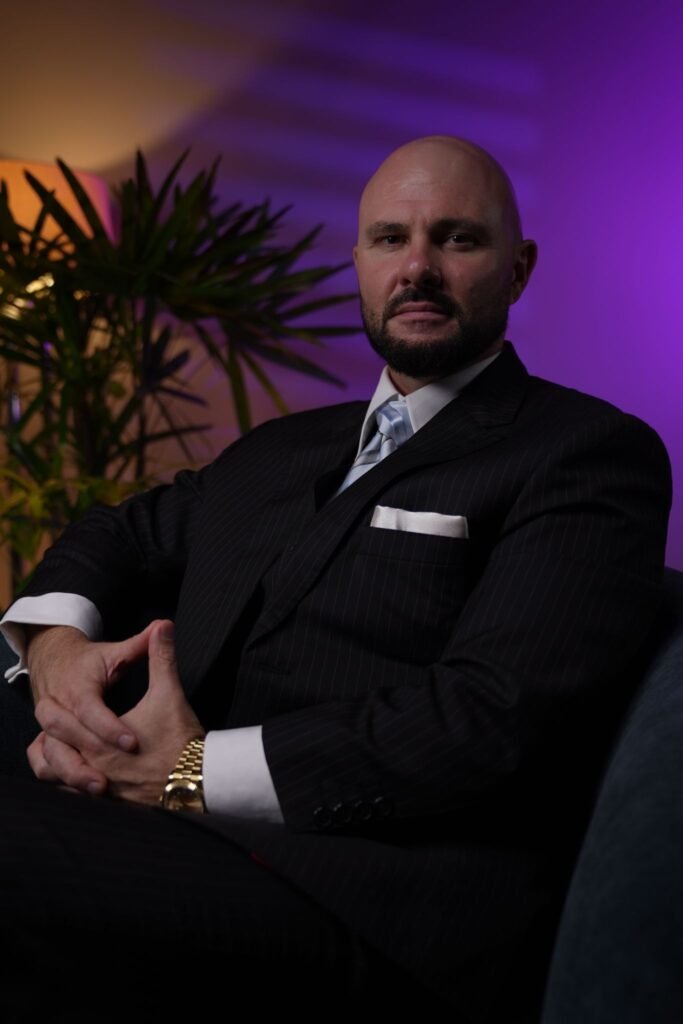
For Justin Harrison, it begins somewhere entirely different. “The biggest battle in trading isn’t against the market,” he says. “It’s against yourself.” After more than twenty-five years of actively participating in global financial markets, Harrison has come to believe that consistent trading performance is determined less by technical knowledge than by discipline, emotional control and the ability to execute a proven process under pressure. It is a philosophy that has shaped both his own career in the markets and the development of MoneyTribe21, where he now focuses on helping aspiring traders build the habits required for long-term participation in financial markets.
While public conversations around trading often focus on profits and market opportunities, Harrison believes those discussions rarely address the qualities that separate professionals from everyone else. “Anyone can have a profitable week,” he says. “The real question is whether you can repeat disciplined decisions over thousands of trades.”
Popular culture often portrays traders as individuals attempting to predict markets with absolute confidence.
Harrison rejects that narrative entirely. “No professional trader controls the market,” he explains. “Our responsibility isn’t to know what will happen next. It’s to manage uncertainty better than most people.”
That philosophy has become central to his approach. Rather than attempting to eliminate losses, Harrison believes successful traders learn to accept them as a natural cost of operating in financial markets.
“Losses aren’t the problem,” he says. “Undisciplined behaviour after a loss usually is.” He argues that traders who survive over decades develop systems designed to preserve capital first, allowing opportunities to compound over time rather than relying on isolated winning trades.
According to Harrison, most traders already know what they should do. The challenge is doing it consistently. “People assume trading is an information problem,” he says. “In reality it’s often an execution problem.” He compares trading to elite sport.
“The best athletes don’t win because they know more rules than everyone else. They win because they can execute consistently under pressure. Trading works the same way.” That mindset has influenced how Harrison mentors traders through MoneyTribe21.
Rather than encouraging dependence on signals or predictions, the emphasis is placed on developing independent decision-makers capable of managing their own risk and maintaining consistency through changing market conditions. “The objective isn’t to create followers,” Harrison says. “It’s to develop traders who can think for themselves.”
Technical analysis remains an important part of professional trading, but Harrison believes psychology ultimately determines whether knowledge translates into performance.
Fear encourages traders to exit positions too early. Greed encourages them to abandon risk management. Impatience encourages unnecessary trades. Confidence after a winning streak can become overconfidence.
“The market exposes every weakness you have,” Harrison says. “If your discipline isn’t stronger than your emotions, your emotions will eventually become part of your trading strategy.”
This belief has made trader psychology one of the recurring themes throughout Harrison’s educational work. He encourages traders to review not only market outcomes but also the quality of their decision-making process. “The goal isn’t simply asking whether you made money,” he says. “The better question is whether you followed your process.”
Although Harrison has developed a substantial online audience through interviews, podcasts and educational content, he insists that visibility should never be confused with expertise. “My social media presence didn’t create my experience,” he says. “It simply gave me a way to share what decades in the markets have already taught me.” He believes that distinction has become increasingly important in today’s digital economy, where popularity can sometimes be mistaken for authority. “Followers don’t make someone a trader. Markets do.”
MoneyTribe21 represents what Harrison describes as the practical extension of his philosophy. Its objective is not to offer shortcuts, guaranteed outcomes or simplified solutions, but to encourage disciplined market participation through education, structure and accountability. He believes that many aspiring traders underestimate the importance of preparation.
“Every professional develops routines,” Harrison says. “Preparation, journaling, reviewing trades, managing risk and continuous improvement become part of the process.” Over time, he says, these habits create consistency. Consistency builds confidence. And confidence built on process ultimately becomes resilience.
After decades in financial markets, Harrison believes his greatest lesson has remained remarkably simple.
“The market will always be uncertain.” “What you control is your preparation, your execution and your discipline.”
For Harrison, those principles extend well beyond trading itself. They influence decision-making, business, leadership and personal development because they require individuals to remain accountable for choices made under pressure rather than outcomes beyond their control. “Professional trading teaches you responsibility,” he says.
“You stop looking for certainty and start building discipline.”
And in Harrison’s view, that shift in mindset is what separates those who merely participate in markets from those capable of building long-term careers within them.