In the early days of the internet, managing IP addresses was a task often relegated to a simple spreadsheet or, in some chaotic environments, a shared text file. You had a handful of servers, a few dozen workstations, and a clear perimeter. Today, that simplicity is a relic of the past. The explosion of IoT devices, the shift toward multi-cloud architectures, and the rise of ephemeral containers have turned IP address management into a high-stakes game of digital Tetris.
Without a dedicated IPAM module, network administrators are essentially blind. IP Address Management (IPAM) is no longer just a “nice-to-have” utility; it is the fundamental infrastructure required to ensure connectivity, security, and scalability. In this deep dive, we will explore the evolution of IPAM, the critical features of a modern module, and why manual tracking is the single greatest risk to your network uptime.
Understanding the IPAM Ecosystem
At its core, IPAM is the methodology used to plan, track, and manage the IP address space used in a network. However, a modern IPAM module does far more than just list numbers. It acts as the “source of truth” for the entire network, integrating deeply with two other critical services: DHCP (Dynamic Host Configuration Protocol) and DNS (Domain Name System). Together, these three are often called DDI.
1. The Inventory Layer
The primary function of an IPAM module is to provide a real-time inventory of all IP addresses. This includes:
- Static IPs: Assigned to critical infrastructure like servers, routers, and printers.
- Dynamic IPs: Handled by DHCP for end-user devices.
- Reserved IPs: Set aside for future expansion or specific hardware.
2. The Visibility Layer
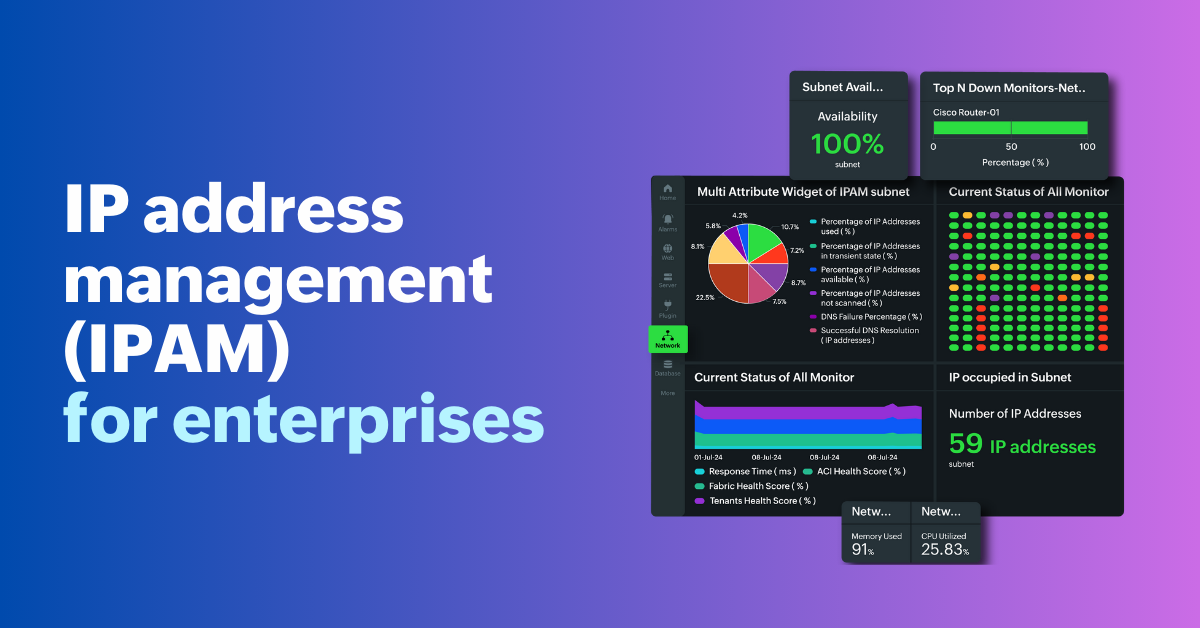
Modern modules provide a visual representation of address utilization. Instead of looking at a list of numbers, admins can see “heat maps” of their subnets. This allows them to identify when a specific VLAN is nearing capacity before it becomes a critical failure point
The Hidden Costs of Manual Management
Many organizations still cling to “spreadsheet-based IPAM.” While it may seem cost-effective initially, the hidden technical debt is staggering.
- Human Error: It only takes one typo in a spreadsheet to assign a duplicate IP address. This leads to IP conflicts, which can knock critical services offline and take hours of troubleshooting to resolve.
- Stale Data: Spreadsheets are static. If a device is decommissioned but the spreadsheet isn’t updated, that IP remains “taken” in the records, leading to artificial IP exhaustion.
- Security Gaps: If you don’t know what is on your network, you can’t secure it. An IPAM module provides the forensic trail needed to track which device held a specific IP at a specific time—crucial for incident response according to NIST standards.
Key Features to Look for in a Modern IPAM Module
When evaluating an IPAM solution, it’s easy to get lost in the jargon. To ensure your network is future-proof, focus on these five pillars:
1. Automated Discovery
The module should be proactive. Instead of waiting for an admin to type in an update, it should periodically scan the network using protocols like SNMP, ICMP, or neighbor discovery to find new devices and reclaim unused IPs.
2. Role-Based Access Control (RBAC)
In a large enterprise, you don’t want every junior technician having the power to delete an entire core subnet. A robust module allows for granular permissions, ensuring that users can only view or edit the specific ranges they are responsible for.
3. Cloud and Hybrid Integration
The modern network isn’t just in the basement; it’s in AWS, Azure, and Google Cloud. Your IPAM module must be able to bridge the gap between on-premise subnets and VPCs (Virtual Private Clouds). Managing cloud IPs in a separate silo from physical hardware is a recipe for disaster.
4. Historical Tracking and Auditing
Who changed the gateway address for the finance VLAN at 3:00 AM on a Sunday? An IPAM module maintains a comprehensive audit log, providing accountability and simplifying compliance audits (such as SOC2 or HIPAA).
5. API-First Architecture
In the era of Infrastructure as Code (IaC), your IPAM shouldn’t be a closed box. It should offer a robust API so that automation tools like Terraform or Ansible can “request” an IP address automatically when a new virtual machine is spun up.
The Transition from IPv4 to IPv6
We have been “running out” of IPv4 addresses for years, but the transition to IPv6 is finally reaching a tipping point. The sheer scale of IPv6 makes manual management impossible. While an IPv4 subnet might have 254 usable addresses, a single IPv6 /64 subnet contains $18,446,744,073,709,551,616$ addresses.
Trying to track IPv6 in a spreadsheet is like trying to count every grain of sand on a beach with a magnifying glass. An intelligent IPAM module handles the hexadecimal complexity of IPv6 automatically, allowing for seamless dual-stack environments where both protocols coexist.
Boosting Network Security through IPAM
Security is often an afterthought in IP management, but it should be at the forefront. A well-configured IPAM module serves as an early warning system.
- Rogue Device Detection: When the module discovers an IP address in use that hasn’t been officially assigned, it can trigger an alert. This is often the first sign of an unauthorized device—or a bad actor—plugging into the network.
- Quarantine Support: By integrating with Network Access Control (NAC) systems, an IPAM module can help isolate suspicious IPs until they can be inspected.
- DNS Security: Since IPAM is tightly coupled with DNS, it can help identify “shadow” DNS entries that might be used for data exfiltration or command-and-control (C2) communication.
Best Practices for Implementation
If you are ready to move away from manual tracking and implement a dedicated module, follow these steps to ensure a smooth rollout:
- Clean Your Data First: Don’t import a messy spreadsheet into a new system. Take the time to ping your ranges and verify what is actually live.
- Define Your Hierarchy: Organize your IP space by geography, department, or function. A logical hierarchy makes searching much faster.
- Standardize Naming Conventions: Ensure that your DNS records and IP descriptions follow a consistent format.
- Start with Core Infrastructure: Move your most critical subnets (Data Centers, Core Switches) into the module first before expanding to user LANs or guest Wi-Fi.
Conclusion: The Foundation of the Digital Future
As we move toward a world defined by 5G, edge computing, and billions of connected devices, the complexity of network management will only increase. You cannot build a modern digital enterprise on a shaky foundation of manual record-keeping.
Investing in a high-quality IPAM module is an investment in your organization’s uptime, security, and sanity. It turns a reactive, “fire-fighting” network culture into a proactive, data-driven operation. Stop guessing where your IP addresses are and start managing them with the precision that modern business demands.
The network is the lifeblood of your company—make sure you have the right tools to keep it flowing.
