Introduction
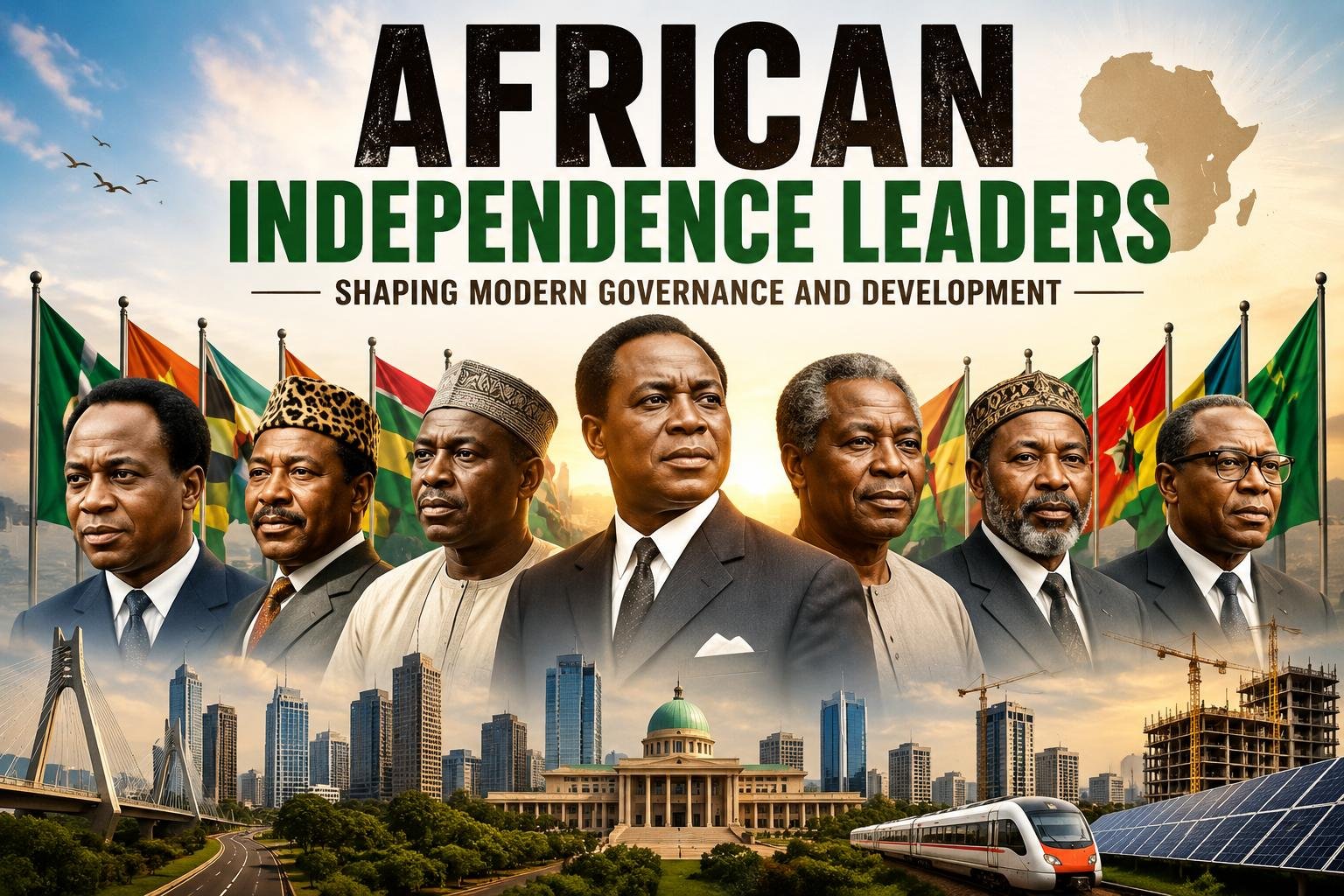
The Africa of past independence’s history is a story of great leaders which devoted themselves to the end of colonial rule and the achievement of self-government for their peoples. Out of a period of political awakening and social transformation these leaders came forward to guide their nations to sovereignty and national development. What they did went beyond the achievement of independence which they also did very well they also shaped political institutions, governance structures, economic policies and national identities that we still see to this day in African countries.
During the independent years’ which is past we see the results of what former leaders put in place all over the continent. Today’s governments, constitutions, regional groups, and development plans in many ways are a product of that early independence era thought and policy. By looking at what they did we also see the base from which modern African political systems grew and also the issues which are still very much a part of today’s political and social evolution in Africa.
The Rise of African Nationalism
Before independence Africa was a continent which saw great deals of European colonial intervention. Colonizing powers ran political institutions, economic policies, and administration. Also out of which came out the fact that in many areas Africans had no role in decision making processes and were left out of the political action.
During the 20th century we saw the rise of national movements across the continent. Educated Africans, labor unions, students, and community groups began to demand political freedom and self-determination. By the influence of global independent and human rights movements African leaders organized campaigns against colonial rule which in turn they got citizens to support the struggle for liberation.
These movements’ success saw the independence of many African countries between 1950s and 1970s which in turn brought in new sets of issues. Upon attaining freedom leaders had to bring together diverse populations, put in place governmental structures, found institutions, and develop economies which for a long time had been designed to benefit the colonizers.
Building Modern African Political Systems
One at which independence leaders excelled was in the formation of modern African political systems. At independence many countries found themselves with administrative structures which had been put in place almost solely to support colonial rule which in turn which did not support the growth of democracy or national development.
Independence leaders put forth the task of turning these structures into institutions which would serve newly sovereign nations. They put in place constitutions, established national legislatures, built up civil services, and put forward judicial systems which would support governance.
Many leaders saw strong central governments as the base for stability and national unity which they did and so they put in great effort into developing state institutions and administrative capacities. While the results of these efforts did not play out the same in each country, they did lay the foundations for the governance we see today.
During the time of independence institutions were put in place which still to date are at the core of political administration, law making, public service delivery and national development in Africa.
Kwame Nkrumah and the dream of African Unity
Kwame Nkrumah of Ghana is a key figure in the pan African struggle for independence. In 1957 he led Ghana to freedom which in turn was the first sub-Saharan African country to gain its freedom from colonial rule.
Nkrumah put forth that political independence was a start but not a finish line for Africa’s transformation. He put forward that economic development and continental unity were of equal importance in achieving what he considered true freedom. In his Pan-Africanism philosophy he promoted the idea of cooperation among African nations and the collective effort to face our common issues.
During Nkrumah’s tenure Ghana put great investment into infrastructure, education, and industrial growth. His administration worked to modernize the economy and also break away from foreign dependency.
Nkrumah put forth the idea of African unity which in turn inspired the founding of continental organizations that fostered cooperation between independent states. His thoughts still play a role today in the debate surrounding regional integration, economic partnerships, and collective security issues in Africa.
Julius Nyerere and the Process of Nation Building in Tanzania
Julius Nyerere was at the forefront in the formation of post-independence Tanzania. Known for his dedication to social equality and national unity he put effort into creating a unified nation which held within many different ethnic groups.
One of his major accomplishments was pushing for Swahili to become the national language. This policy which also saw to the betterment of communication and reduction of ethnic barriers did in fact play a large role in bringing the nation together.
Nyerere put great stock in education as a base for development. His administration expanded school access and introduced literacy programs which did better to include all segments of the population. Through his tenure which saw the development of a strong national identity which is still a defining element of today’s Tanzania. He pushed for unity which in turn has had a lasting impact on the country’s stability.
Jomo Kenyatta and Economic Development
Jomo Kenyatta became the first President at the time of Kenya’s independence in 1963. He put his effort into solidifying political power, promoting economic growth, and improving national institutions. Kenyatta saw to it that agriculture which is very important to Kenya’s economy did well and he pushed for policies that improved agricultural productivity. Also his government was into large scale infrastructure projects which included roads, schools and public facilities.
Also Kenya promoted private enterprise and foreign investment which in turn stimulated economic activity and created growth opportunities. These policies saw Kenya emerge as a leader in East African economy. During Kenyatta’s tenure we saw the development of what today still are key players in Kenya’s political structure.
Nelson Mandela and Democratic Transformation
Nelson Mandela is a figure that is very much looked up to in Africa. For over a decade he was at the forefront of the fight against apartheid in South Africa which saw him spend many years in prison. In 1994 he emerged from prison to become the country’s first black president.
Mandela’s approach as a leader was that of reconciliation which saw him promote national healing instead of revenge against what was past and also he put forward a platform for South Africans from all walks of life to come together.
His administration put forward constitutional democracy, human rights, and the rule of law as core values. These principles took root in South Africa’s political system. Mandela’s model of politics put forward the value of dialogue and forgiveness and inclusive governance in the task of bridging historical divides. His legacy is still very much at play in the style of political leadership we see in Africa and beyond.

Promoting National Identity and Unity
One of the great issues that newly independent African countries had was to create national unity between very different groups. Colonial borders which often didn’t take into account ethnic, cultural and linguistic differences put many diverse people in the same nations. Independence leaders saw that for political stability a shared national identity was required. Many governments put in place programs which promoted patriotism and strengthened social cohesion.
These efforts included:
- Displaying national symbols like flags and anthems.
- Establishing national education systems.
- Promoting use of common languages.
- Honoring independence anniversaries and national heroes.
- Supporting cultural initiatives which foster unity.
Such programs did indeed foster national identity which in turn contributed to political stability in many countries.
Economic Policies and Development Strategies
Economic growth was a primary goal of the independence movements. What we saw was colonial economies which had it that raw materials were the main export which in turn left many African countries with a heavy dependence on foreign markets and vulnerability to economic fluctuations. To that end governments put forth many development strategies which transformed their economies.
Industrialization
Many leaders put in place manufacturing industries which reduced our import dependency and created jobs.
Infrastructure Development
Governments put into place roads, railways, power generation and communication networks which in turn supported economic growth and improved connectivity.
Agricultural Modernization
Agronomy was the main source of income for many citizens. Also our leaders put in place policies which improved production, supported farmers, and increased food security.
Expansion of Social Services
Investment in health and education was identified as a key element for sustainable development. Many countries saw into effect greater access to schools, hospitals, and public welfare.
Although mixed results were seen, these measures set the stage for future economic growth.
The Development of Political Institutions
In the present day we see the legacy of independence leaders.
Many governments established:
- National constitutions.
- Legislative assemblies.
- Judicial systems.
- Civil service organizations.
- Electoral commissions.
These are the core elements of governance and public administration.
In some countries which experienced political instability, military coups, or authoritarian rule at the time of independence, we see that the institutional frameworks put in place at that time in fact served as a base for later democratic changes. Today in many cases we see African countries which are improving and updating these institutions which in turn is for the better accountabity, transparency and public input.
Challenges and Criticisms
Although at times of success independence leaders also saw great criticism. In some cases governments became very centralized which in turn put all power in the hands of the executive. Also in some countries political opposition was suppressed and democracy was a far cry.
Economic issues came to the fore. Many states had debt issues, high unemployment, and a large dependence on commodity exports. Also admin weak points and corruption played a role in stalling development.
These issues present that which nation building in post-colonial Africa is a complex process. Although independence leaders reported great success, they also faced what have become today’s governance issues.
Long-Term Influence on Modern Governance
Independence era leadership still leaves its mark in present day Africa.
- Constitutional Governance: At the turn of independence many of our laws and constitutions saw which changes were put in place.
- Regional Cooperation: Efforts at unity and cooperation between African states also continue via our regional and continental organizations.
- National Development Planning: Governments are still to this day developing from the ideas put forth by early leaders.
- Civic Identity: During the formative years of independence our national identities took root and they remain to this day key to social cohesion and political legitimacy.
These outlasting impacts show the great value which Africa’s political and developmental progress has had in the doings of its independence leaders.
Lessons for Contemporary Leadership
African independence leaders’ experiences report valuable lessons to present and next generation of policymakers. First out of which great leaders put forward a vision which in turn enlists public support for national aims. Also secondly it is the strong institutions that we see as the base for sustainable growth and development. Also in terms of politics which respect to social and political stability national unity is a key issue. Finally we see investment in education health and infrastructure as the basic forces which drive development.
Today’s leaders may study past leaders’ success and failure. Through the creation of inclusive institutions, pushing for accountability, and stimulating citizen input they may improve governance and promote sustainable growth.
Conclusion
African independence leaders were at the forefront in redefining the political, social, and economic structures of our continent. They saw an end to colonial rule which was replaced by sovereign states that took charge of their own destiny. What they put into play in terms of nation building, institutional growth, economic policy, and in the creation of national identity is very much a part of today’s Africa.
During the time of independence political structures which we see today were put in place and many of those institutions are still the base of our present day governance. Though some policies brought up issues and controversy, as a whole the role of those leaders was very large.
As Africa presses on with the quest for democratic rule, economic growth, and social development the legacies of its independence leaders put forth a guide for present and which may play a role in the future. What they did brings to mind that which comes of visionary leadership, strong institutions and dedication to national betterment is the foundation for sustainable development and good governance.
Get more well researched information about African Independence Leaders here.