Introduction
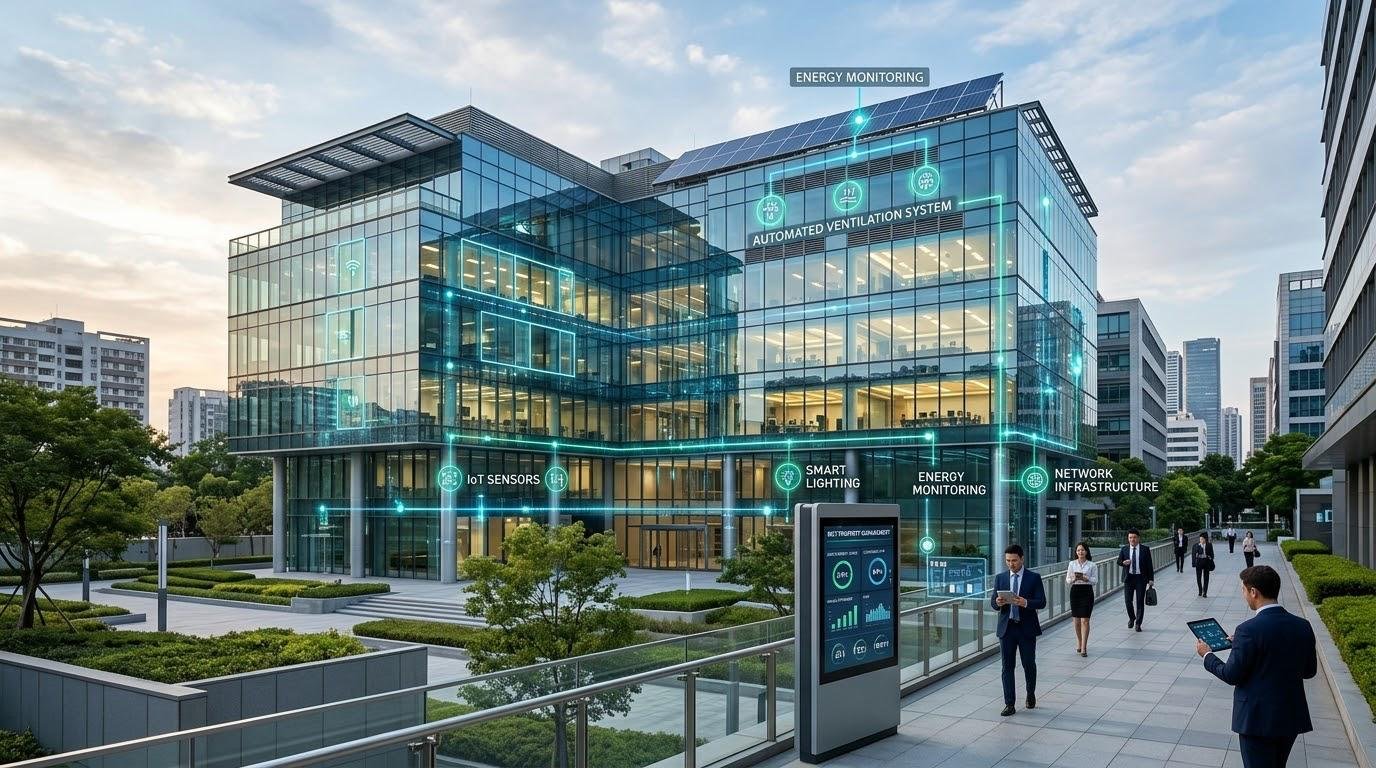
The Real Estate Investment Trusts (REITs) are encountering a changing landscape in relation to managing both commercial and residential property through technology. With increasingly complex property portfolios, REITs are increasingly using connected systems to monitor the building, manage energy consumption, enhance security, and optimize the building environment for tenants. The backbone of this shift is the Internet of Things (IoT) devices, which includes a system of physical devices, sensors, and software working together to gather and share data. Internet of Things (IoT) devices is the core of this transformation, where physical devices, sensors, and software communicate and share data. Property managers can use these technologies to keep tabs on their assets from a remote location, detect issues before they arise and make decisions based on real-time data, instead of relying solely on manual checks or tenant complaints. The smart-building technology provides REITs with a way to lower operating costs, enhance maintenance planning, help achieve sustainability objectives and help support the long-term success of their property investments.
The Concept of Smart Buildings and IoT Technology.
Smart buildings are equipped with interconnected devices, automated systems, and digital platforms that enable them to track and control key building functions. Such systems have the capability to gather data on temperature, lights, electricity use, water usage, air quality, occupancy, and equipment performance. This data is sent by devices to a central platform where property managers can see at a glance whether everything is going as it should or not, and take appropriate action based on the information collected. This provides REITs with a more uniform way to deal with several buildings in various locations. Managers aren’t relying on the periodic inspections alone, they can get information about equipment status and resource usage all day. While the specific systems needed and the extent to which smart technology can be implemented varies with each building, it can be applied to office buildings, shopping centres, apartment complexes, warehouses, hospitals, and hotels.
Smart Meters and Energy Monitoring
Many of the commercial and residential buildings have huge operating costs associated with energy usage. Because of the smart meter, the REIT can provide more frequent information about electricity, gas, heating and water usage than traditional meters, and can provide detailed information about when and where resources are being used. These readings can be analyzed by the property manager to check for unexpected usage, to determine if there are any leaks, or to check for equipment inefficiencies. If the office building, for instance, is a big consumer of electricity during the night, it might have unnecessary light, ventilation or cooling systems active. Such patterns can be identified by energy monitoring platforms and may be used to support managers to investigate the cause of these. Patterns of consumption can also be used to identify the buildings that are thriving and those in need of work, when comparing consumption between properties. While smart meters do not directly lower costs, they do give REITs the information they need to make smart decisions when it comes to equipment upgrades, operating schedules and energy-saving initiatives.
Developing Energy Efficiency all over Property Portfolios
REITs can integrate the information from the smart meter with the building-management software to set energy-performance goals and track them over time. Property managers may compare consumption with the number of people on site, weather, building size and previous performance to determine if the energy consumption is reasonable. For commercial buildings, these details can be used to fine-tune cooling plans to align with work hours, and for residential buildings, it can be more beneficial for them to monitor shared facilities and common-area electricity usage more accurately. Portfolio-wide reporting can help REITs pinpoint those properties that always consume a lot of energy and focus investments on making improvements where they can reap the most rewards. Energy management will help to lower utility costs, assist in environmental reporting and assist buildings to meet relevant efficiency requirements. But, savings will be affected by the accuracy of the information, the condition of the existing equipment and management’s response to the information.

The Use of Occupancy Sensors and Space Management
Smart buildings can use occupancy sensors to find out which areas are being occupied. The devices respond to change of activity, heat signatures or other signs of human presence, depending on the technology. Lighting, ventilation, and tenant usage patterns of various areas of a property are examples of controls that can be made using occupancy information that can be used with a REIT. For instance, in-office buildings, meeting rooms may sit empty for long periods of time, even if the building is full. The data collected by sensors can enable property managers to better understand which rooms are underutilized, how to better schedule those rooms, and how to decrease energy usage when it is not needed. An aggregated occupancy data can be used to learn about the foot traffic in shopping centres and suitable sensors deployed in shared facilities in residential property can be used to optimize operating schedule. Occupancy monitoring promotes better use of space and can be used without the need for managers to physically check each space.
Centralized Control / Building Management Systems
Building-management systems (BMS) enable management of building equipment, such as HVLS, lighting, pumps and mechanical equipment, at a central location. If combined with IoT sensors and connected devices, a BMS can provide a single platform for all the information. This enables REITs to keep track of the parameters of many buildings and respond accordingly when something goes out of bounds with equipment. For example, when the sensors determine that a floor is getting warmer than the parameters programmed range, the system can notify the facility operators or automatically adjust the cooling equipment that it knows is compatible with the floor. For REITs with large portfolios, centralized monitoring is especially beneficial as it can enhance uniformity in maintenance processes and reporting. However, the benefits of a BMS are only realized if it is installed correctly, is compatible with devices, there is good connectivity and employees are knowledgeable on how to read the information displayed.
AEC and Tenant Comfort Automation Systems
Comfort and wellbeing of the indoor environment is critical for tenants’ satisfaction and property performance. Smart environmental controls: Automatically change temperature, ventilation, lighting and in some cases humidity based on building conditions and sensor readings and programmed rules. Automated systems can adjust the cooling and lighting in buildings, such as offices, to match the building’s use and/or the building’s users may be able to control building permitted cooling and lighting settings using digital interfaces in residential buildings. These features can help to enhance comfort and avoid unnecessary equipment running when there is no one in the space. In addition to CO₂, indoor air-quality sensors can measure other parameters like PM2.5 which can alert building operators to the need for reviews or adjustments of ventilation. The goal is for REITs to strike a balance between tenant comfort, energy efficiency and equipment performance. While automation is welcome, there should be enough manual ability to accommodate scenarios that are unusual, such as changing occupancy or individual tenant needs, which may require a change of the normal rules.
Predicting Equipment Failure and Maintenance Needs.
The traditional approach to property maintenance is based on a set time frame, or starts once a tenant complains of a problem. Another way is predictive maintenance, which relies on connected sensors and information on equipment performance to detect signs of trouble before they happen. Various parameters of equipment condition, such as vibration, temperature, pressure, operating time and more can be monitored using sensors. If the readings indicate that there is some unusual behavior, maintenance teams can investigate and find out what is happening before it turns into a big failure. For instance, if the vibration in an air-conditioning unit is abnormal, then a part in that unit may need to be inspected, whereas if the pressure in a water-system is abnormal, that could mean that a fault is developing. These insights can help REITs plan their repairs, schedule technicians to best manage the process, and minimize unnecessary disruption. When predictive data and analytical tools are available, predictive maintenance is not a cure-all for equipment failures, but can help improve equipment planning and lessen reliance on emergency repairs.
Secure Connections between Buildings and Entry Points.
Another key application of connected technology in properties owned by a REIT is security. Connected cameras, electronic access controls, motion detectors, alarm systems and digital visitor-management platforms are examples of smart security systems that can be integrated. They can be used by authorized personnel to keep an eye on specific areas, control access and get alerts for any unusual activity. Digital access control can make commercial buildings easier for employees and other authorized people to get into, and allow managers to easily access the records for later review in the event of a problem. Alarms and controlled entry systems can be used for additional protection in common areas for residential properties. REITs can benefit from effective security management to help safeguard physical property, foster tenant trust and enhance response to incidents. But connected security equipment has to be set up with sophisticated authentication, limited access, software updates and data retention practices. Cameras and monitoring equipment should also comply with relevant privacy laws and the expectation of privacy of residents, staff and visitors.
Leveraging IoT Data for Improved Investment Decisions
In addition to daily use, connected building technology can aid REITs in assessing asset performance and make better decisions about investments. Energy meter data, maintenance data, occupancy data and environmental control data can all provide an answer to which buildings are efficient and which are not and need further capital expenditure. A REIT, for instance, that has several office buildings may come to the conclusion that one of the buildings tends to have higher cooling costs at the same level of occupancy. Additional investigations might reveal outmoded equipment, insufficient insulation or improperly programmed operating schedules. The results can be used for priorities for renovation, budget planning and long-term asset management strategies. Executives can also use portfolio dashboards to make comparisons between locations’ maintenance expenses, energy usage, equipment reliability, and tenant-service metrics. The addition of financial information and property-market analysis can enable REITs to make smarter decisions when it comes to enhancing their existing portfolios, assessing potential buyouts and safeguarding investment returns.
Difficulties in Implementing the Technology of Smart Building
While smart-building technology has its benefits, it’s important to carefully plan and invest in it. Up-front costs of installing sensors, upgrading existing equipment, software platforms, and ensuring consistent connectivity can be significant. Older properties might have incompatible systems which may need further upgrades to make them effective in being integrated. Cybersecurity risks are also a concern for REITs as connected devices can provide more opportunities for hackers to gain unauthorized access to systems if they aren’t properly secured. Another issue is data quality if sensor readings are incorrect, if the network goes down or if data is not reported, then incorrect decisions can be made. Additionally, there are privacy issues involved with the collection of occupancy or access data which must be addressed with policy and responsible practices. This means that it is more than just a matter of buying connected equipment to be successful. REITs should set measurable goals, evaluate current infrastructure, provide property teams with training, set security levels, and determine if the benefits of the increased operational efficiency are worth the cost.
Delivers Insights into the Future of Smart Buildings in the REIT Sector
As Artificial Intelligence, cloud computing, digital twins and advanced analytics improve, smart building technology will progress to be even more advanced. AI-driven systems can analyze vast amounts of sensor data to detect any unusual consumption trends, predict equipment issues, and recommend modifications to building usage. Digital twins can simulate the physical properties and enable managers to analyze buildings and evaluate potential changes in operations. Cloud-based platforms can also facilitate the monitoring of assets across the entire portfolio, allowing REITs to compare assets and coordinate management activities across multiple locations. All these can contribute to more responsive, efficient and transparent operations of these properties. But, the best results will be achieved by using the right technology in the right way and not for the sake of technology alone. REITs with a smart strategy for investing in secure, reliable and useful connected systems could be more likely to manage operating costs, enhance experience for tenants and keep their properties competitive.
Conclusion
The Internet of Things (IoT) and smart buildings are transforming the way REITs track, maintain and manage commercial and residential buildings. Smart meters enhance the ability to track how resources are being used, occupancy sensor can help the building manager manage space more efficiently, building-management systems can integrate and control all aspects of building operation from a single source and automatic environmental controls can help maintain a comfortable indoor environment. Predictive maintenance can help to detect potential equipment issues, and connected security systems can facilitate access control and incident response. These technologies also enable REITs to analyze data and make informed comparisons between assets, prioritize and invest in the most promising opportunities, and assess the performance of their operations in their portfolio. While there are operational challenges such as implementation costs, cybersecurity, privacy and system integration, these benefits can be meaningful with a well-planned approach. Good, responsible, connected technology can help REITs move towards building efficiency, enhance tenant relationships, and serve a positive long-term strategy which will add value to their real estate investments.
Get more well researched information about Smart Buildings and IoT here.