In the rapidly evolving landscape of global industrial manufacturing and infrastructure development, the traditional “stick-built” construction method—where every component is shipped and assembled on-site—is increasingly being viewed as a bottleneck. As project timelines tighten and the demand for precision grows, the industry has turned toward a more sophisticated solution: modular engineering. At the heart of this revolution is the skid mounted system.
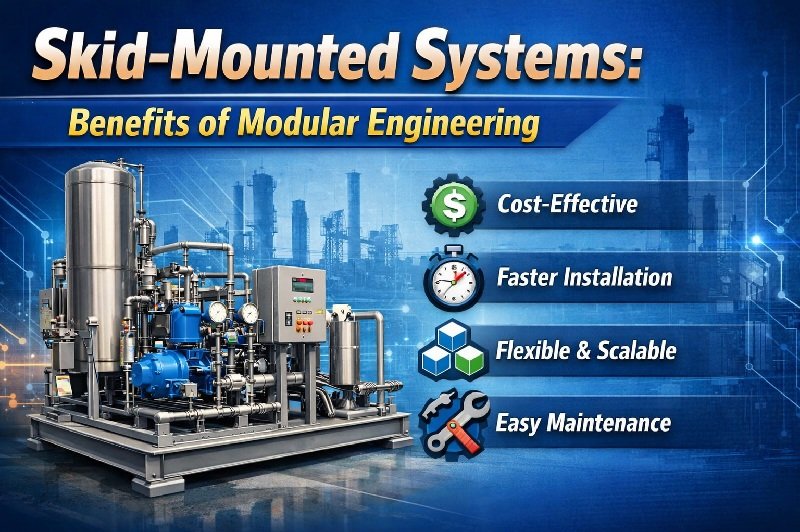
A skid-mounted system is a self-contained, modular unit where process equipment (such as pumps, heat exchangers, vessels, and control systems) is permanently mounted on a reinforced steel frame or “skid.” This approach offers a plug-and-play solution that is transforming sectors ranging from oil and gas to water treatment and chemical processing.
The Shift Toward Modularization
The move toward modularity isn’t just a trend; it’s a strategic response to the complexities of modern engineering. Conventional on-site construction is often plagued by weather delays, labor shortages, and logistical challenges. By contrast, a skid mounted system is engineered, fabricated, and tested in a controlled factory environment before being shipped as a complete package to the facility.
This shift represents a fundamental change in how we think about industrial procurement and construction (EPC). It prioritizes “off-site excellence” to ensure “on-site efficiency.”
Key Advantages of Skid-Mounted Solutions
1. Accelerated Project Timelines In the world of industrial EPC, time is literally money. One of the most significant benefits of modular systems is the ability to conduct parallel workflows. While civil engineering and site preparation are occurring at the final destination, the equipment is simultaneously being manufactured in a specialized facility. Once the site is ready, the pre-assembled unit is delivered and connected. This can reduce total project duration by 25% to 50% compared to traditional methods.
2. Enhanced Quality Control and Safety Fabricating equipment in a controlled shop environment allows for much higher standards of quality assurance. Specialized manufacturing facilities are equipped with precision tools, overhead cranes, and automated welding systems that are simply not available on most construction sites. Furthermore, safety risks are minimized because workers are in a familiar, stable environment rather than working at height or in confined spaces on a busy, unpredictable construction site.
3. Portability and Space Optimization Skid-mounted units are designed with logistics in mind. Their compact footprint makes them ideal for facilities where space is at a premium. Moreover, because they are built on a rigid frame, these systems are inherently portable. Should a facility need to relocate or should a specific process need to be moved to a different part of the plant, the entire unit can be disconnected and transported with minimal effort.
4. Reduced On-Site Disruption Constructing a large-scale industrial system on-site requires a massive influx of labor, equipment, and materials, which can disrupt existing operations. A modular approach minimizes this impact. The “installation” phase is often reduced to a few days of lifting the skid into place and making the final piping and electrical connections.
Technical Excellence in Modular Engineering
Creating a high-performance modular system requires more than just mounting equipment on a frame. It requires deep expertise in mechanical engineering and adherence to international standards. For instance, in heavy industries, complying with ASME (American Society of Mechanical Engineers) standards for pressure vessels is non-negotiable.
A well-engineered modular unit integrates several critical components:
- Structural Integrity: The skid base must be engineered to handle the dynamic loads during transportation and the vibration during operation.
- Process Integration: Every valve, sensor, and pump must be strategically placed for optimal flow and maintenance access.
- Control Systems: Modern units often come with integrated PLC (Programmable Logic Controller) systems, allowing for seamless integration into the plant’s wider automation network.
Applications Across Industries
The versatility of these systems means they are being adopted across a wide array of high-stakes environments:
- Petrochemical and Oil & Gas: From fuel filtration skids to chemical injection systems, modular units are essential for offshore platforms and remote refineries.
- Water Treatment: Containerized or skid-mounted reverse osmosis and filtration systems allow for rapid deployment of clean water solutions in industrial and municipal settings.
- Power Generation: Modular fuel gas conditioning skids ensure that gas turbines receive clean, stable fuel, maximizing energy output and equipment lifespan.
The Role of EPC Experts
Choosing the right partner for industrial infrastructure is crucial. Companies specializing in Engineering, Procurement, and Construction (EPC) services provide a holistic approach to modularity. They don’t just supply equipment; they manage the entire lifecycle—from the initial process design and 3D modeling to fabrication, factory acceptance testing (FAT), and final commissioning. This “one-stop-shop” model ensures that there are no gaps in communication between the designers and the builders, resulting in a superior final product.
Future Trends: The Digital Twin and Smart Skids
The future of modular industrial systems lies in digitalization. We are now seeing the rise of “Smart Skids,” which utilize IoT sensors to provide real-time data on performance, temperature, and pressure. By creating a “Digital Twin” of the physical unit, engineers can predict maintenance needs before a failure occurs, further enhancing the reliability of critical infrastructure.
Conclusion
As industries face increasing pressure to be more agile, sustainable, and cost-effective, the modular approach stands out as the clear path forward. The adoption of skid mounted technology allows companies to bypass the risks of traditional construction, ensuring that their facilities are safer, their projects are faster, and their operations are more resilient.
In an era where infrastructure is the backbone of economic security, investing in precision-engineered, modular solutions is not just an operational choice—it is a strategic imperative for any forward-thinking industrial enterprise.