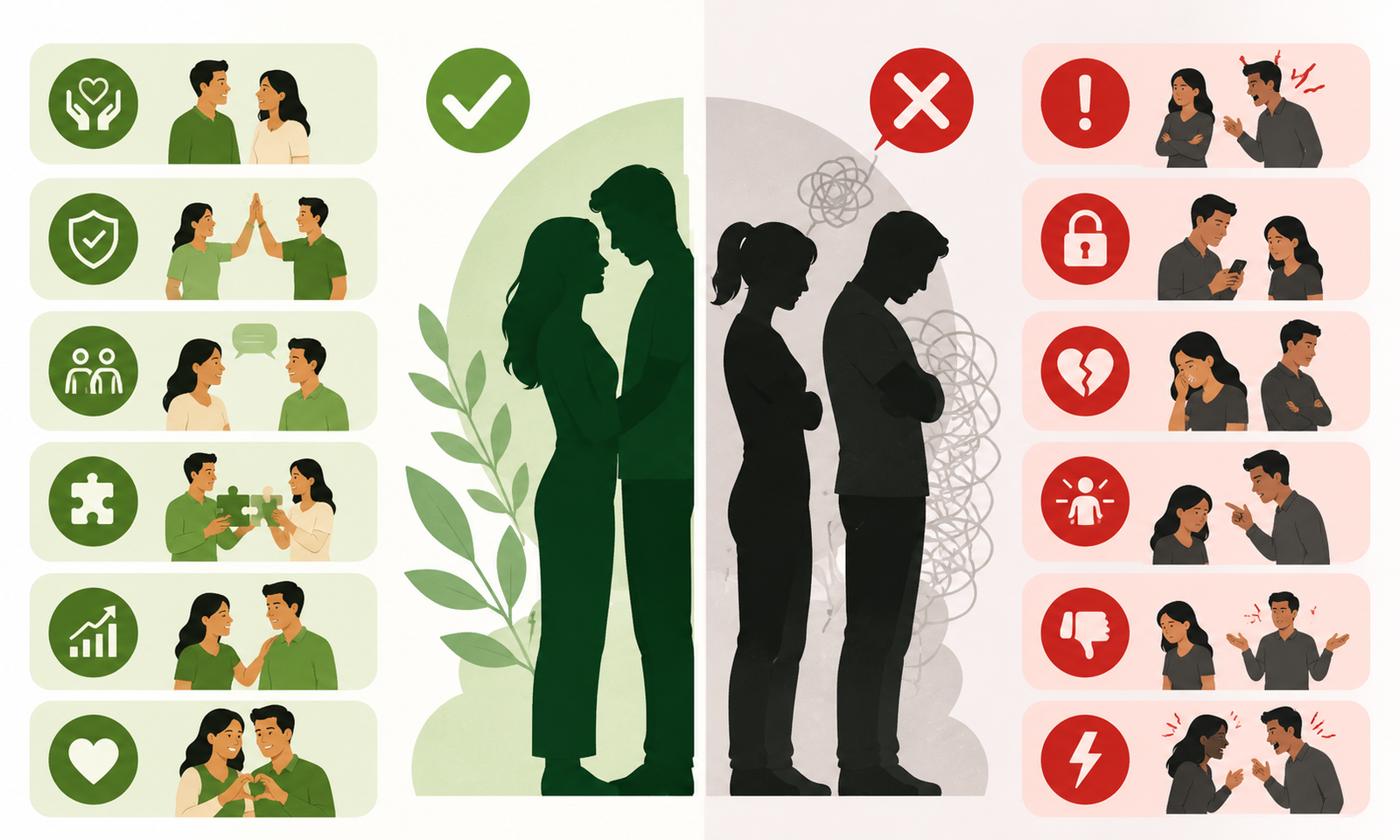
Healthy relationships are of fundamental importance in emotional health, personal growth and general happiness. Interactions, in any type of relationship (romantic, family, or friend) can impact mental and emotional well being. Unfortunately, many people have difficulty identifying unhealthy patterns because it takes time for unhealthy behaviors to take form. By identifying factors for healthy and unhealthy relationships, people can better make decisions, set boundaries and develop more supportive relationships in their lives.
A healthy relationship fosters trust, communication, respect and emotional safety. In a negative relationship, there might be manipulation and control, a negative and constant atmosphere and harm to the emotions. It is important to know the distinction so as to avoid confusion in the future, along with the potential for poor health, stress and an ongoing struggle with emotional health in the relationship. Knowing the signs of trouble early will allow individuals to take measures to keep their emotional health intact and find healthier relationships.
Find out more about this on this page:
key indicators of both healthy and toxic relationships
Foundation of a Healthy Relationship
Healthy relationships are mutually respectful, trustful, honest and supportive. These connections provide both the person and partner a sense of appreciation and understanding without fear of judgment or manipulation. Conflict is not an uncommon occurrence in a strong relationship. Rather, it involves disagreements being dealt with in a constructive way, where both people take time to understand and compromise, which may NOT be about creating arguments for winning, or causing emotional pain.
How people communicate during stressful times is one of the best places to look for signs of a healthy and unhealthy relationship. Communication is respectful, even when there is conflict in healthy relationships. Whether the communication is spoken, both people are able to voice or say their thoughts without fear of being ridiculed, threatened, or punished emotionally. Vulnerability, honesty and interpersonal listening are allowed for and will increase over time the level of emotional intimacy.
Personal independence is another aspect of healthy relationships. The partners develop their own individual identity, friendships, interests and goals and work on the partnership. Both parties promote growth in each other and cheer one another’s successes, in addition to controlling one another. This equilibrium results in emotional stability and diminishes feelings of being smothered or squandered within an unsuitable relationship arrangement.
Symptoms of a healthy relationship.
Treat each other with respect and appreciation.
Respect is patently one of the best indicators of a healthy relationship. When opinions, feelings and boundaries are different, partners respect and appreciate each other. In discussions they do not insult, belittle or slight each other. Both are looking for understanding and fairness, not domination and control. Respect also means having a good attitude to one another’s time, efforts, and emotions without assuming that the relationship is being taken for granted.
Appreciation is shown on a regular basis in healthy relations. Basic things such as thanking them for their work, acknowledging their efforts, or giving them emotional support have a positive effect on the bonding between two. When feeling valued emotional security is created and trust deeper. If both are esteemed, the relationship isn’t stressful and it’s not anxiety producing.
Some of these boundaries are personal, and should be respected. Healthy partners know that there are emotional limits, private thoughts, and personal space that must be respected. They will not push people into challenging experiences or invalidate needs when they have been expressed. This respect for others’ space shows maturity and concern for the wellbeing of others.
Communicate openly and honestly
Healthy relationships can flourish through good communication. Everyone can share their feelings, concerns and wishes openly. Fear, intimidation and manipulation do not stimulate conversation. Instead, a means of understanding and connection are used rather than escalating the conflict.
Active listening is an important aspect of healthy communication. Here it means to actually listen to what the other person has to say rather than formulating a counterattack or explaining away the other person’s feelings. In healthy relationships, one person helps another person validate that their experiences are real even if they don’t necessarily agree with them. This helps to build an emotionally safe space for both, where they feel valued and welcomed.
The level of accountability is also crucial to communication. Nonetheless, healthy partners will be prepared to be honest about errors and accept a sincere apology which will include actions taken to change the negative behaviour. They don’t lie to the other person for each and every issue in the relationship. Preventing the formation of resentment over time and promoting emotional development for individuals is a benefit of accountability.
Establish trust and emotional safety.
The development of trust is vital to emotional bonding and relationships stability. A healthy relationship is the one where neither person has to feel constantly secured and reassured in the relationship or controlled by the other. Honesty, reliability and consistency in words and deeds. Trust is a process that builds step-by-step, based on the ability to rely on each other and mutual openness, not on suspicion or fear.
Emotional safety is also a crucial aspect of a healthy relationship. Everyone should be able to express their thoughts, feelings and expose themselves to vulnerability without fear of humiliation or emotional punishment. Partners are supportive in a stressful situation and not use personal information as a weapon in disagreements.
Typewriter also implies giving the other person freedom and independence. In healthy relationships, there’s no need for lots of jealousy, monitoring or possessiveness. Rather, both realize that there cannot be a foundation of trust under continual suspicion or control. This emotional freedom helps the person to keep up relationships, hobbies, and desires without inner guilt or manipulation.
Understanding Toxic Relationships
Toxic relationships involve an unhealthy emotional pattern, which can be stressful, insecure, and depleting one’s emotional reserves. Toxic relationships tend to have emotional injuries, are imbalanced, manipulated, and disrespectful. Often, these relationships are bad from the start due to the fact that bad behaviors can take time to develop.
Sometimes toxicity in a relationship takes the form of a time where the relationship is good, loving, or apologizing; that is why it is hard to spot. Such good times do not make up for the bad behavior that follows. Toxicity is clearly manifested when the negative patterns frequently hurt emotional health and self-esteem.
Individuals in toxic relationships might feel drained of energy, feeling anxious, or even afraid about being around their partner. They don’t feel supported and fear conflict, criticism or rejection at all times. It is vital to be aware of these emotional indicators – prolonged exposure to this kind of behavior can have a detrimental impact on mental well-being, self-confidence, and recognizing that a relationship is unhealthy.
Manipulation and Control
One of the biggest signs of a toxic relationship is YOU do something to control it. The controlling partner might try to force the other person to make choices, cut off contact with friends and family or rule over someone’s actions, appearance or activities. This can be hard to initially recognise as destructive behaviour, disguised as caring, loving or protective.
Examples of manipulation include guilt-tripping, using emotional blackmail, or creating situations where you’re not responsible. A manipulative partner may make his or her partners feel as though they are to blame for issues that are not their own. This can lead to loss of confidence, over time, and emotional dependence.
Sometimes, toxic people will engage in emotional or behavioral withdrawals, threats, or silence to keep him and her under control. The strategies are intended to instill feelings of fear, confusion, or guilt, not to foster healthy communication. Healthy relationships give both people a voice, but unhealthy relationships often are a one-sided story, with one person feeling limited in their emotional or control in the relationship.
Ongoing criticism and emotional damage
Another very prominent red flag for toxicity is if they are constantly critical. One person in an unhealthy relationship might continually put the other down or attack his/her self-assurance. These comments can be about appearance, intelligence, achievements or emotion, and, over time, erode self-esteem.
Emotional injuries are not only and not necessarily insults. Toxic behavior can be seen as passive-aggressive remarks or being humiliated, and negative interactions and attitudes can happen continually. A toxic partner could deny the feelings, downplay concerns or even make the other person feel too sensitive for expressing the feelings. Confusion and an inability to communicate are fostered by this invalidation.
Unpredictability is another bad habit. Frequent mood swings or emotional instability, or explosive anger, can lead to a feeling of emotional insecurity in a relationship. If a person feels like they need “tactful care” when they’re around you, then it probably doesn’t sound like a healthy relationship. Relationships should be emotionally supportive and comforting, and not be associated with constant anxiety and/or fear.
Lack of trust and jealousy.
In relationships, it can occur occasionally, but if it’s going on too much then it is a sign of insecurity and control issues that need to be addressed earlier. Constantly questioning the other person’s honesty, requesting access to personal devices or keeping tabs on who the other person is interacting with, are all ways that maybe toxic partners seek to control the other. This causes stress, distrust and stress fatigue.
Lack of trust can also result in possessiveness and isolation. Toxic people can avoid friendships, cause fights with loved ones, or cause feelings of guilt between their significant other. Isolation breeds emotional dependency and makes it difficult for the person to see unhealthy patterns over a period of time.
Healthy Trust is trust combined with personal freedom of choice and emotional-connect. In toxic relationships, though, trust gives way to suspicion and control. Over jealousy can hurt the relationship that was intended to be strong, leading to a lack of emotional security and lingering tension between the two.
The effects of toxic relationships on emotional well-being.
Poisonous relationships can have a serious impact on emotions, far beyond the relationship. If consistently criticized, manipulated, or not steady emotionally, anxiety, depression, low self-esteem or stress may occur. People can start to doubt their value, skills, or decisions as a result of a pattern of emotional invalidation.
One of the other significant effects is emotional burnout. In harmful relationships, energy is spent a lot of times in regularly dealing with conflicts, avoiding confrontation, or trying to be accepted. This emotional stress can be observed in the relationship’s work, school, physical health and relationship with others.
The toxic environment can also foster some unhealthy relationship patterns that carry over to other relationships in the future. If a child learns to be “full of tricks” or make friends with disrespectful habits, it will be harder for them to distinguish healthy habits later on. That is why it is important for people to learn about and improve their relationship health to improve their emotional health and for a lifetime of growth.
Guidelines to develop healthier relationships.
Developing healthy relationships takes work, emotional tuning and good communication. An early point of discussion is the setting of limits. Boundaries assist individuals safeguard their emotional requirements and motivate mutual regard in the relationship. Healthy boundaries are not punishments; they are guidelines that promote emotional safety and balance.
One other important part of relationship health is with regards to self-awareness. People should check in with themselves about how they feel in relation to a person emotionally on a regular basis. If they seem feeling supported, respected, and valued, this is a positive sign whereas if they are continuously feeling anxious, feeling threatened, or their emotional exhaustion, this could be a red flag and should not be ignored.
Trusting friends and family members, counselors and therapists can also be helpful in providing light or guidance. Occasionally, individuals begin to turn into so identified with a relationship that the unhealthy patterns turn into regular and commonplace. When it comes to awareness of problem behaviours, and prompting healthier choices, an outside gaze is needed.
Healthy relationships are established through patience, honesty, empathy, and collaboration. All relationships are not ideal, but both should feel safe, valued, and supported to develop. Identifying unhealthy patterns in time can help individuals make choices that benefit their health and focus on physical and emotional wellness.
Conclusion
It’s important to recognize the traits of healthy and unhealthy relationships in order to prevent harm to their emotional well-being and grow strong relationships. Healthy relationships are based on trust, communication, respect and emotional support, whereas negative relationships are characterized by manipulation, criticism, control, and emotionality. People can avoid suffering emotionally in the long term and select healthier relationships if they are aware of these patterns.
Learning to recognize unhealthy behaviours gives people the power to put in place healthier boundaries and understand what positive relationships look like. Do not be deprived of emotional health to preserve an unhealthy relationship. Educating oneself on the indicators of healthy relationships, and the importance of cultivating healthy behaviors, will enable them to build relationships that are supportive, respectful and emotionally rewarding that will foster future happiness and health.lifestyle.