Introduction
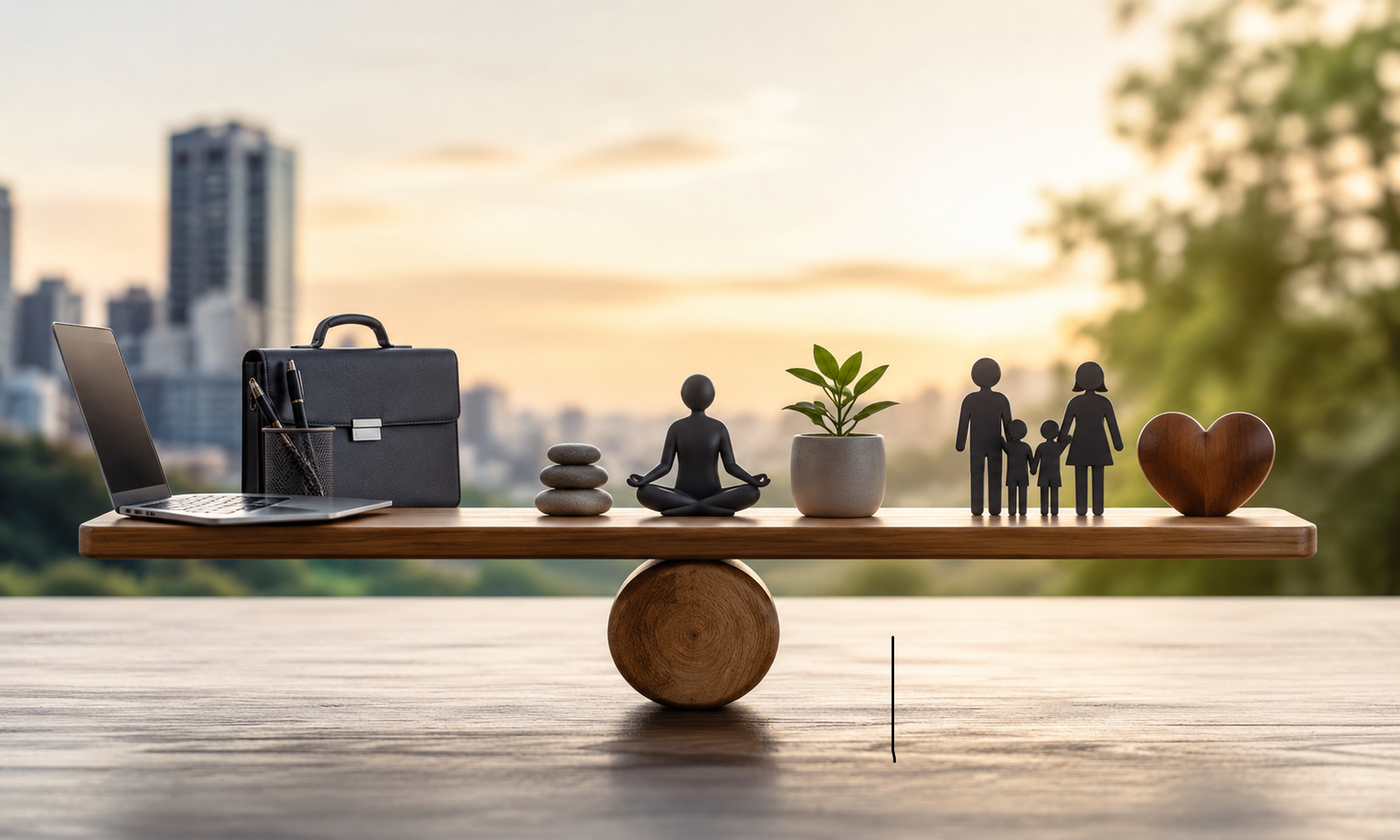
There has been an acceleration in our daily life with work commitments, money to cover expenses and people’s aspirations and dreams vying for the same number of hours in the day. Often, there is a high cost of either working obligations or personal commitments, with little time to rest and to be in relationship with others. This context can make it difficult to keep healthy relationships as a part of their regular lives. Relationships, however, play a key role in emotional health, emotional stability and long-term happiness. If stress is not acknowledged and reduced, it can continue to escalate and productivity levels can drop, making it hard to break the cycle. Therefore, it will be beneficial to learn how to create time and spend energies in certain patterns, and not in others, to thrive in this era of the world.
Work-life balance – a modern reality and challenge.
The line between corporate and on a personal level is increasingly becoming hard to draw. Using technology such as remote work, digital communication and systematic connection with mobile devices is hard for many individuals to fully disconnect from work even after the office closes. This means that there are frequent disruptions to personal time with emails, messages and deadlines. Meanwhile, there’s a constant need to balance demands from family and society, with the resulting feeling of being pulled between two centers. This imbalance over time can make you less emotionally available in relationships and feel exhausted. It is not only about being able to do so within a certain time frame, but also about acquiring an effective use of time that is suitable for personal values and priorities.
The Hidden Cost of Imbalance
A situation in which work is always more important than personal life will have a cumulative effect that can manifest itself over time. The bonds of relationships become cooled, communication decreases and shared experiences become less common. The lack of connection can result in miscommunications, frustration and eroded trust between partners, family members or close friends. But on an individual basis people can suffer from burnout, loss of motivation, physical problems like feeling tired, stressed etc. In addition to lost productivity, people who become imbalanced have to pay for the cost in lower quality of life. Men and women can get the job done well and not feel fulfilled in the emotional realm, so it is crucial to develop an intentional strategy to balance responsibilities in each aspect of life.
The art of time management for life’s balance.
Every good balance starts with sound and realistic planning. A very beneficial method is prioritization: ranking jobs according to their importance or urgency. This way people can concentrate on what is really important rather than attending to all requests as they come up. There are also some time-management strategies that can be implemented, such as time blocking, which involves dedicating specific blocks of time for work, family, rest and personal activities so each one gets time. Be consistent since the unstructured time can be used up by things that are less important. If someone wants more structure and guidance in better managing their time as a productive citizen, there are a number of accurate and workable ways of doing that and most of them can be adapted to life. If properly implemented, the strategies help establish regular habits that can minimize stress, enhance efficiency and quality of relationships by resolving the inevitability of important personal moments being constantly postponed and forgotten.
Creating Work-Personal Boundaries
Although boundaries are important, too many people find themselves unable to set limits because societal or organizational norms and/or their own behavior get in the way. A clear boundary starts with setting clear working hours and informing co-workers, clients or managers. This will prevent work from being endless and seeping into one’s personal time. Mental boundaries are also established, such as making sure to be in a “work mode” while working and in a “rest mode” when resting. This can be done through some transitional practices, like learning to walk after work or to turn off digital notifications. Consistent boundaries provide people with more control over their time and emotional resources. It enhances productivity while at work and makes sure that the relationship with others is not neglected when it is most important.
Managing Expectations in Relationships and Workplaces.
A related component of attaining balance is handling the expectations of others appropriately. People do not always share clear or mutually-agreed responsibilities and many conflicts are triggered as a result. At work, it can include being open and honest about workload levels and deadlines without over scheduling. It is about being honest about your availability and emotional abilities in personal relationships. Many mistakenly believe people will know what their boundaries are, but unless you communicate them, you can’t expect them to be known. Those who set realistic goals minimize stress on themselves and then they are better able to have others respond in an understanding and kind manner. This strategy helps build positive relationships and lowers unhelpful stress, which helps the professional and personal relationships to work more harmoniously.
Conducting lifestyle modifications that contribute to balance.
In addition to planning and boundaries, lifestyle habits also have a significant impact on balance. Energy levels and emotional resilience are directly impacted by the quality of sleep, food consumption and physical activity. Poor or nonexistent physical health can make it more challenging to be successful in work and relationship. It’s therefore critical to establish a routine that focuses on resting and recovering. Also, less screen time means more room for in-person interactions and soulful time. It may be something as simple as planning out meals ahead of time or planning short breaks throughout the day that will make a huge difference for overall well-being. While these alterations are little changes, over time they lead to a more stable and controllable lifestyle for an active life and relationships.
Connecting with others by purposeful time
Relationships need to be made and do not grow past neglected time. Despite a hectic schedule, investing dedicated time into relationships can make a huge impact for bonding emotionally. This does not mean working long hours but it does mean that unique and valued relationships are created, for example through one on one conversations, sitting for meals together, sharing in some activity. Quality of interaction is more important than quantity. You can increase trust and emotional connection with others when you are fully present, without distractions. This also includes being thankful on a frequent basis – small affirmations of connection are important. When everyone makes the time to spend intentionally with each other, that added investment in the relationship becomes more resilient to other pressures that might be coming at the relationship, like work stress or maybe a financial predicament.
Conclusion
In the fast-paced world it can be difficult to maintain a healthy balance between work, personal life and relationships, and it takes constant effort, awareness and flexibility to do so. There’s no like-for-like equality but there are systems and habits which will help achieve overall harmony. Structured time management, setting clear boundaries, and making conscious changes to a lifestyle can help people find a balance between productivity and making time for meaningful relationships.Structured time management, establishing boundaries, and making conscious lifestyle adjustments can help individuals carve out space for productivity and meaningful connection. But not to remove busyness, just to deal with busyness in a way that supports optimal psychological well-being rather than does the opposite. Once the systems are balanced, people are more likely to thrive in their work, in personal experiences, and in their relationships and contribute to happiness and long-term stability.