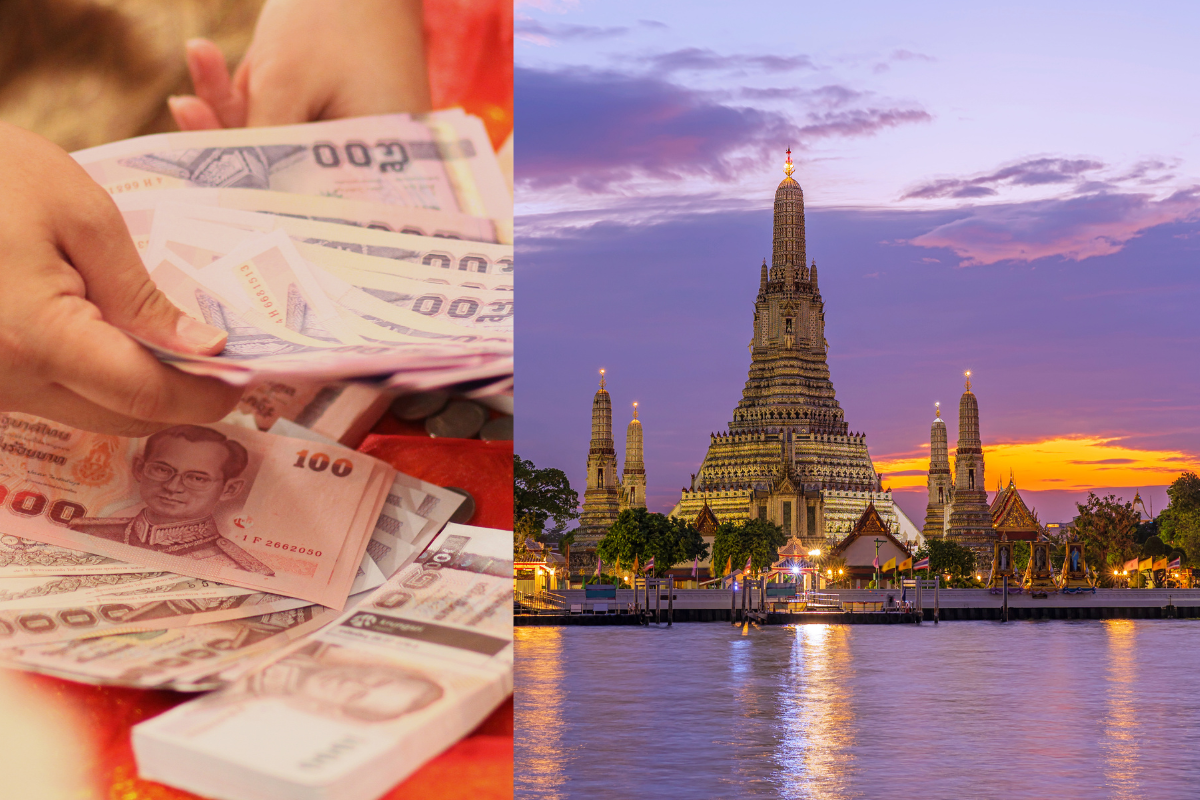
Thailand is a popular international destination for Indian travellers because of its visa benefits. Tourists love to explore tropical beaches, cultural heritage, and vibrant city experiences of the country.
However, the currency exchange is one of the major things to take care of before you travel to Thailand. The Thai Baht (THB) is the official currency and plays a central role in daily expenses across markets, restaurants, transport, and entertainment venues.
This guide addresses both international money transfer considerations and Thai to INR conversion aspects that travellers encounter when planning a Thailand trip. It covers exchange rates, transfer methods, practical cost insights, and strategies to optimise currency management throughout your journey.
Thai Baht (THB) and Its Role in Travel
The Thai Baht is the official currency widely used for local payments across the country. Most transactions at local markets, with taxi drivers, and at small vendors prefer cash over digital payment methods. While urban areas are established businesses that accept card payments, cash remains the preferred medium in many places.
THB to INR Exchange Rate: What Affects It?
Exchange rates between the Thai Baht and the Indian Rupee fluctuate daily based on multiple economic variables. Both global and domestic factors influence the conversion rates when exchanging currency or making international money transfer transactions.
- Market demand and supply of currencies
- Global economic conditions and currency trends
- Inflation and interest rates in India and Thailand
- Timing of exchange or transfer
- Conversion margins added by providers
Cost of a Thailand Trip from India
Planning a Thailand trip requires understanding the various expense categories that contribute to your overall budget. Currency conversion impacts how much you spend in INR terms for services priced in THB. The following table provides approximate ranges for major expense categories based on typical travel patterns.
| Expense Category | Approximate Range (INR) |
|---|---|
| Flights | 15,000 – 35,000 per person, depending on season and booking timing |
| Accommodation | 1,500 – 8,000 per night, ranging from budget hostels to premium hotels |
| Food & Dining | 500 – 2,000 per day covering street food to mid-range restaurants |
| Local Transport | 300 – 1,000 per day for taxis, tuk-tuks, and public transport |
| Activities | 2,000 – 10,000 depending on tours, water sports, and entertainment choices |
These cost estimates vary based on travel style, destination cities, and seasonal factors. Better exchange planning and selecting the right conversion method can help manage these costs more efficiently and reduce the impact of unfavourable exchange margins.
Ways to Convert THB to INR or Transfer Money
Travellers have several options for converting currency or transferring money when planning a Thailand trip. Each method has different advantages in terms of convenience, cost, and security. Let’s understand them in detail:
Currency Exchange
Physical currency exchange involves converting INR to THB before travel or exchanging leftover THB back to INR after your trip. The rates offered vary significantly depending on the location and type of exchange service provider you choose.
- Airport exchanges often include higher margins due to convenience
- City-based exchanges offer comparatively better rates
- Rates differ across providers, which makes comparison necessary
- Carrying large amounts of cash can be risky
Forex Cards
Prepaid forex cards allow you to load Thai Baht onto a card that can be used for payments and ATM withdrawals throughout Thailand. These cards work like debit cards but are specifically designed for foreign currency transactions.
- Locks exchange rate at the time of loading
- Reduces the need to carry large amounts of physical cash
- Widely accepted at POS terminals and ATMs
- Include withdrawal fees or conversion charges
International Money Transfer
International money transfer services enable you to send funds between countries for purposes such as remittances, paying for services abroad, or transferring money back to India. These services become increasingly relevant for travellers who need flexible access to funds across borders.
| Transfer Method | Speed | Cost Factors |
|---|---|---|
| Bank Transfer | Moderate (1–3 business days) | Transfer fee plus exchange margin applied by the bank |
| Online Platforms | Faster (same day to 1 business day) | Platform service fee plus currency markup |
| Wallet Transfers | Variable (instant to 2 business days) | Service charges and conversion fees |
Each international money transfer method is good for different scenarios. Bank transfers work well for larger amounts despite slower processing, while online platforms offer speed advantages for urgent transfers.
THB to INR Conversion: Practical Example
Understanding how the Thai to INR conversion works in practical terms helps you estimate the actual cost of your Thailand expenses in Indian Rupees.
Example Conversion Scenario:
- Amount: 10,000 THB
- Exchange Rate: 1 THB = 2.93 INR
- Converted Value: 29,300 INR
- After adding the margin or fee, a slightly lower net INR value was received
Tips to Get Better THB to INR Rates
- Compare rates across banks, authorised dealers, and online platforms
- Avoid last-minute currency exchange at airports
- Track THB to INR trends before your travel
- Use forex cards for planned spending
- Limit unnecessary currency conversions
- Transfer larger amounts in fewer transactions
Forex Card vs Cash vs Transfers for Thailand
Choosing the right payment method depends on your travel needs and spending patterns.
| Option | Cost Efficiency | Convenience | Risk |
|---|---|---|---|
| Forex Card | Moderate to high | High | Low |
| Cash | Depends on the rate | Moderate | High |
| International Transfer | Depends on fees | Moderate | Low |
Conclusion
Once you understand the conversion costs between Thai Baht and Indian Rupee, you can make a comfortable budget for the trip. Make sure to keep some backup funds in case the currency rates fluctuate drastically. Secondly, compare all the exchange rates carefully before you go for the conversion.
Thoughtful planning, combined with awareness of international money transfer options and Thai to INR conversion dynamics, helps ensure a smoother and more cost-effective travel experience.
FAQs
What is the best way to carry money in Thailand?
The most practical approach is to use a combination of cash and a Forex Card. A forex Card can be used for payments at hotels, restaurants, and larger stores, while cash is useful for taxis, local markets, small vendors, and entry tickets where cards may not be accepted.