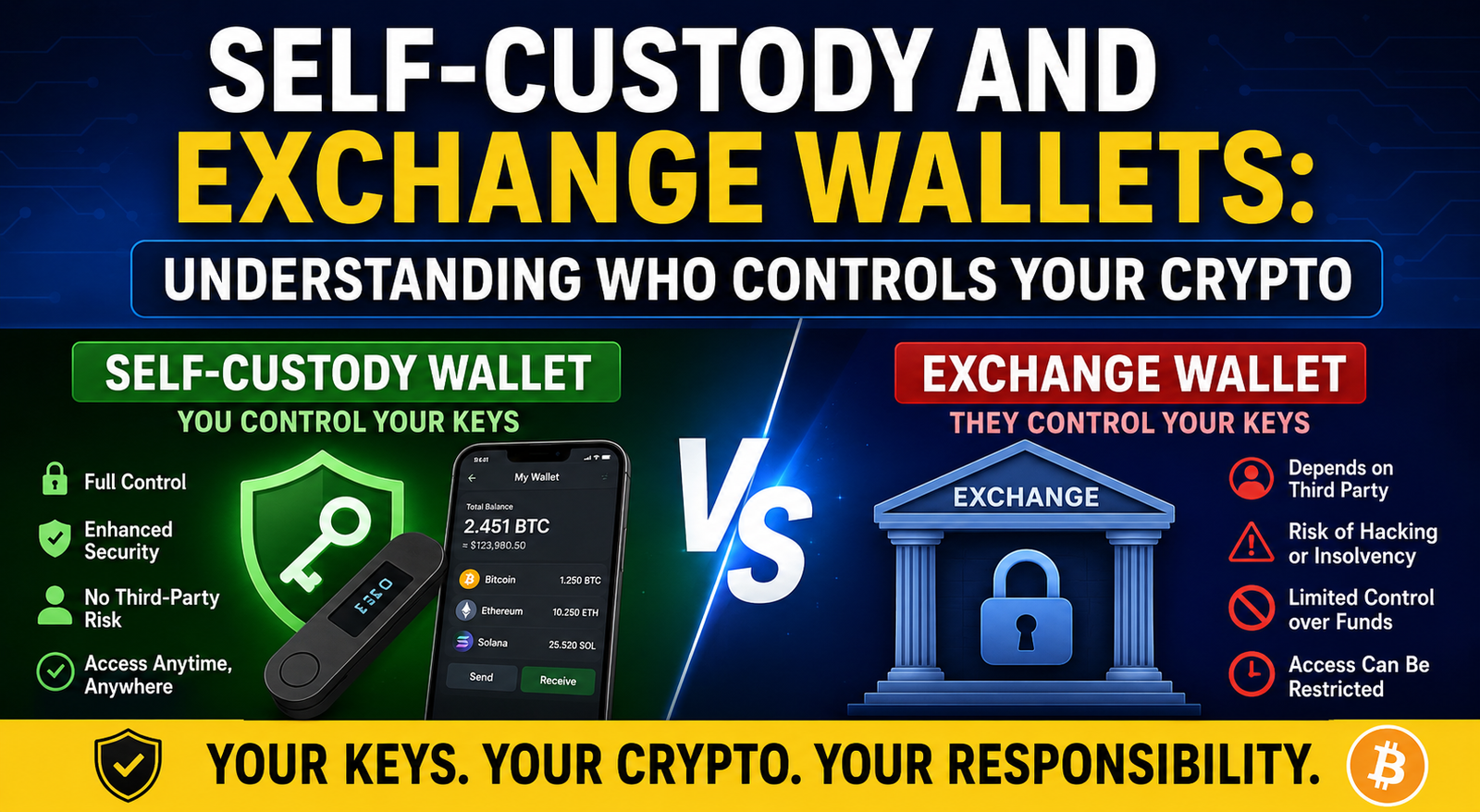
Cryptocurrency gives people a new way to own and transfer digital value, but ownership can become confusing when wallets and exchanges are involved. A person may see a balance and assume the crypto is fully under personal control. In reality, control depends on who holds the private keys needed to authorize transactions.
This difference matters for anyone buying digital assets. Some wallets place responsibility with a third-party provider, while others give users direct control over their keys. Both approaches can be useful, but they involve different levels of convenience and risk.
Understanding how self-custody and exchange wallets work can help crypto holders make better decisions about where to keep their assets and how to protect them.
What Does Crypto Ownership Really Mean?
Crypto does not sit inside a wallet like cash in a physical wallet. Digital assets remain recorded on a blockchain. A wallet provides access to keys that let the holder interact with those assets.
The private key is especially important. Anyone who controls it can usually authorize transactions from the associated wallet address. This is why the phrase “not your keys, not your coins” became popular in the crypto community.
The phrase highlights the technical difference between seeing an account balance and directly controlling the keys that can move cryptocurrency.
How Exchange Wallets Work
When you buy cryptocurrency through a centralized exchange, the platform often stores assets in wallets it controls. Your account shows your balance, but the exchange generally manages the private keys.
This setup is called custodial storage. The exchange acts as the custodian and handles much of the technical responsibility for you.
For beginners, this approach can feel familiar. Users sign in with an email, password, and security verification instead of managing private keys or recovery phrases.
Exchange wallets may offer useful benefits:
- Easy access for buying, selling, and trading
- Password recovery and account support
- Simple transfers between supported assets
- Integration with fiat deposits and withdrawals
- Security systems managed by the platform
These features make custodial wallets convenient, particularly for people who trade frequently or are still learning how cryptocurrency storage works.
The Risks of Leaving Crypto on an Exchange
Convenience comes with tradeoffs. When an exchange controls the private keys, users must trust the platform to safeguard assets and process withdrawals correctly.
Even reputable exchanges can face hacking, fraud, insolvency, frozen accounts, or internal failures. In serious cases, customers may lose access to funds.
If an exchange experiences technical problems during heavy market activity, users may be unable to withdraw or trade when they want.
For this reason, many holders avoid keeping more cryptocurrency on an exchange than they need for short-term activity.
What Is a Self-Custody Wallet?
A self-custody wallet gives the user direct control of private keys. Instead of relying on an exchange or another company to approve withdrawals, the wallet owner can sign transactions independently.
These wallets are also called non-custodial wallets. They can be mobile apps, browser extensions, desktop software, or hardware devices.
During setup, many self-custody wallets generate a recovery phrase, sometimes called a seed phrase. This phrase can restore access if the device is lost, damaged, or replaced.
Anyone who obtains the recovery phrase may be able to access the wallet and move the funds. Self-custody offers greater control, but also greater personal responsibility.
Custodial vs Non Custodial Wallets
The discussion around custodial vs non custodial wallets is about control, responsibility, and trust.
With a custodial wallet, a third party manages the private keys. The user relies on that provider for access, security, and transaction processing. With a non-custodial wallet, the user controls the keys and is responsible for protecting them.
Neither option is automatically right for everyone. A custodial wallet may suit someone who values simplicity, trades regularly, or does not feel comfortable managing recovery information. A self-custody wallet may better suit a long-term holder who wants direct control over digital assets.
The decision should depend on how the crypto will be used and how prepared the user is to manage security.
Why Self-Custody Appeals to Long-Term Holders
Self-custody reduces dependence on a centralized platform. With the correct private key or recovery phrase, assets can generally be accessed through compatible wallet software.
This can appeal to people who plan to hold cryptocurrency for years rather than trade frequently.
Self-custody may also let users interact directly with blockchain networks, including sending assets, using decentralized applications, staking tokens, or interacting with smart contracts.
Most importantly, the holder is not waiting for a company to approve a withdrawal. However, direct control should not be confused with automatic safety. A poorly protected self-custody wallet can be more vulnerable than a well-secured exchange account.
The Security Responsibilities of Self-Custody
Managing your own keys requires careful habits. There is usually no support team that can restore a lost recovery phrase or reverse a mistaken transaction.
Anyone using self-custody should follow basic precautions:
- Never share a recovery phrase with anyone
- Store backups somewhere secure and private
- Avoid saving seed phrases in screenshots or unsecured cloud storage
- Verify wallet addresses before sending funds
- Use official wallet software from trusted sources
- Be cautious of phishing links and fake support messages
- Consider a hardware wallet for larger long-term holdings
These practices reduce risk, but human error remains a challenge. A wrong address or exposed seed phrase can lead to irreversible loss.
Hardware Wallets and Cold Storage
Hardware wallets are physical devices designed to keep private keys isolated from internet-connected devices. They are used by people who want an added security layer.
When a transaction is created, the hardware wallet signs it without directly exposing the private key to the computer or phone being used.
Cold storage means keeping private keys offline. Hardware wallets are one popular form. This can reduce online exposure, but users must still protect recovery phrases and verify transactions.
Can You Use Both Types of Wallets?
Crypto users do not have to choose one system for everything. Many combine exchange wallets and self-custody.
For example, a person might keep a limited amount on an exchange for trading while storing long-term holdings in a self-custody wallet. This approach separates everyday activity from longer-term storage.
A balanced setup can provide convenience and control. Keeping every asset in one place simply because it is easier can create unnecessary concentration of risk.
Similarly, moving everything into self-custody without understanding backups, network fees, or transaction procedures can create different problems.
Questions to Ask Before Choosing a Wallet
Before deciding where to store cryptocurrency, users should consider their goals and ability to manage security.
Useful questions include:
- Do I need frequent access for trading?
- Am I comfortable protecting a recovery phrase?
- How much crypto am I storing?
- Would losing access create a serious financial problem?
- Do I understand how to test a small withdrawal first?
- Am I using a reputable wallet or exchange?
- Do I have a secure backup plan?
The answers can help determine which wallet setup is more practical.
Take Control Through Better Wallet Decisions
Crypto ownership involves more than watching a balance. It requires understanding who has the ability to move the assets.
Exchange wallets provide convenience and support, but they require trust in a third party. Self-custody provides direct control, but it places security and recovery responsibilities on the individual.
Learning the difference between custodial vs non custodial storage helps holders choose a setup that matches their goals instead of following trends or slogans.
For many people, the sensible approach is not to treat one wallet type as universally superior. Consider how each option fits a specific purpose. Use exchanges for convenience, use self-custody when direct control matters, and protect every wallet with disciplined security habits.
The better you understand who controls the keys, the better prepared you are to protect the crypto behind them more confidently.
