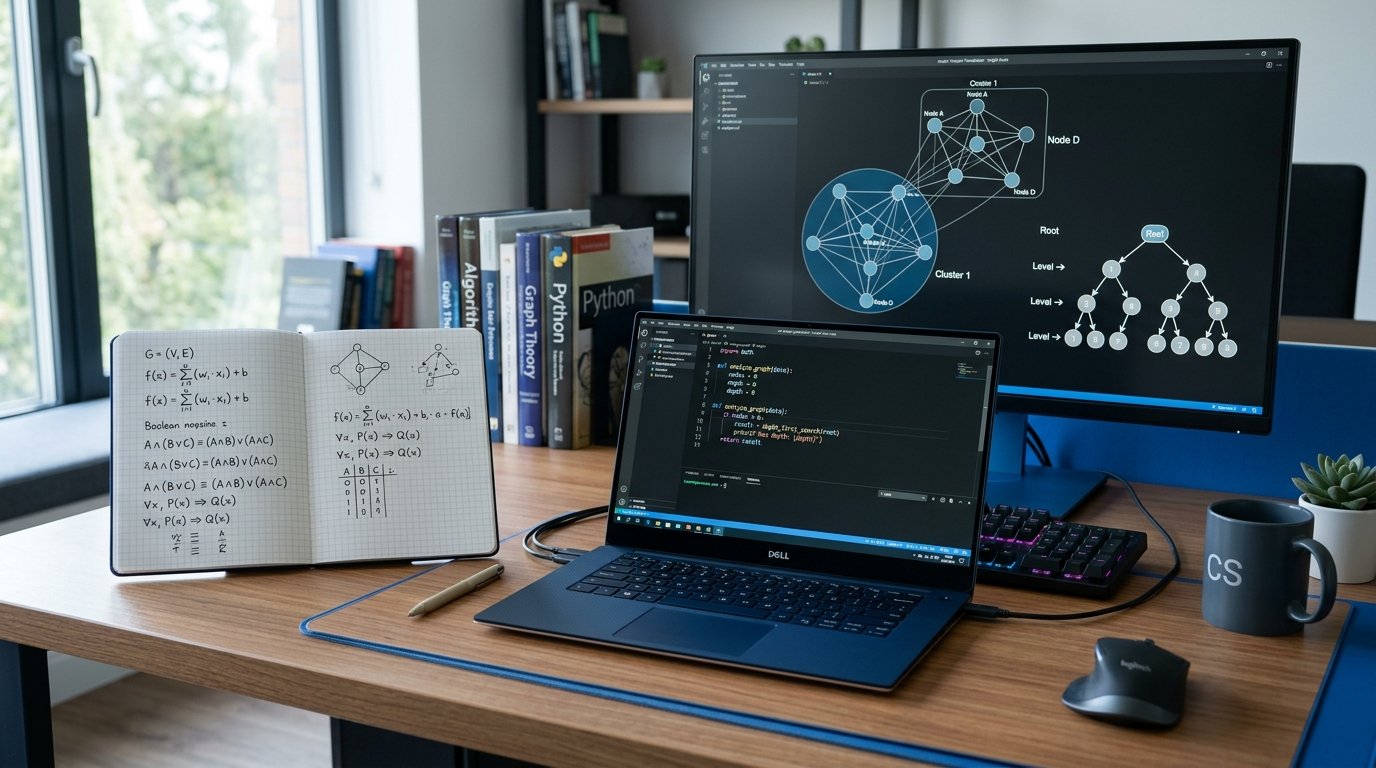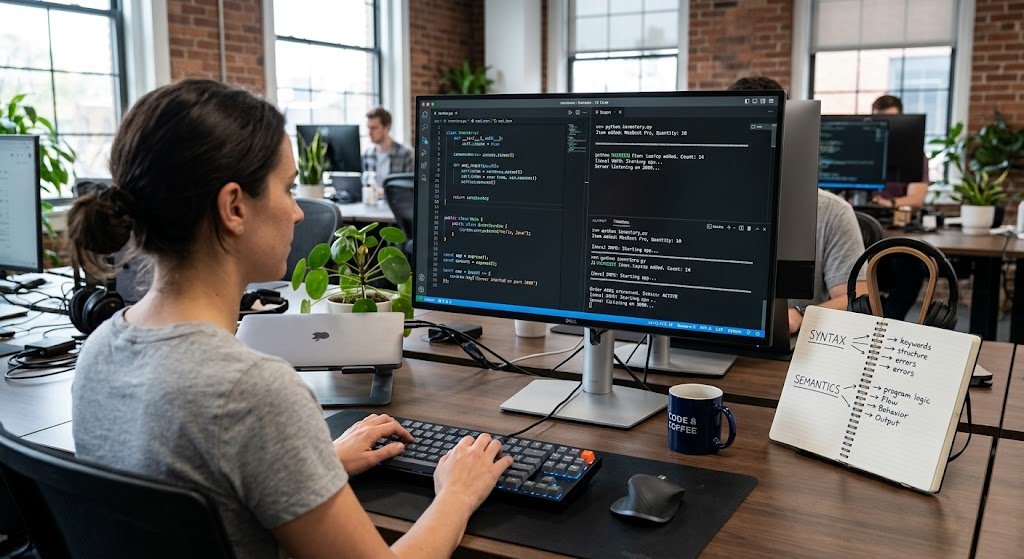
Understanding more than commands, keywords, and punctuation is required to learn to program. All programming languages have rules on how to write code, but these rules are just a piece of what makes a program work. The two concepts that provide explanations for this difference are syntax and semantics. Syntax refers to how the code is structured and arranged, and what it does, and semantics means how the code means and what happens if the computer executes the code.
A beginner might write a statement that is almost correct, but not, due to its syntax violation of the language. Sometimes the code might be correct from the language, but have an outcome that doesn’t match what the programmer was trying to write. The distinction between syntax and semantics assists the programmer to read errors, comprehend programming languages, troubleshoot, and discuss software more precisely.

What is Programming Language Syntax
Programming language syntax is the set of rules that govern the format and the structure of source code for a programming language, so that the language can identify it as a valid program. These rules can indicate where the keywords, operators, variables, parentheses, braces, commas, quotation marks, or other components can be used. While some rules may be common to a number of different programming languages, others differ, and therefore a program that can be compiled in one language may fail to compile in another.
For instance, in Python, indentation is essential for the structure of code, whereas other languages like Java and JavaScript typically use braces to enclose blocks of statements. Programmers have to not only be able to read the meaning of the instructions, they must know how to put them in the proper order. The idea can be learned in greater depth by studying the programming language syntax.
One good method to learn the syntax is to examine it in comparison to the grammar of a human language. In general, people who communicate organize words as per the grammar to be able to comprehend what they say. Programming languages operate in a similar fashion but their rules are more specific. Take a simple Python statement like print(“Hello”). The statement is similar to python’s syntax wherein the function name is followed by parentheses with the text to be displayed.
In a version of Python that doesn’t accept the syntax print”Hello”, the interpreter might give a syntax error if the programmer mistakenly types it in. The issue may not be the message itself but rather the organization of the teaching does not adhere to the grammar of the language. Syntax is thus a formal structure that informs the programming language about the arrangement of code.

What is Semantics in Programming?
Semantics is the meaning of valid code and the behaviour that results from interpreting, compiling and executing that code. Syntax refers to the question of whether or not a piece of code has been written in the correct structural structure of a language, while semantics refers to the question of what it represents or what it does. This is significant because sometimes the code is syntactically correct but will have an unintended effect.
In some programming languages, for example, 10 / 2 is a valid expression whose value is 5, meaning that the value 10 is divided by 2. If the programmer had intended to add the numbers, however, the code may be semantically incorrect for the desired operation even if it was syntactically correct. Semantics is thus tightly coupled with program behavior, expressions, data values, control flow, and meaning of various program constructs.
How Syntax and Semantics Work Together.
While syntax and semantics are different, programmers will always face them at the same time when programming or analyzing software. Syntax is the structure used to enable the language to recognize code, and semantics is the interpretation of the recognized code. A good comparison is a recipe. A recipe might need ingredients and instructions to be used in a specific order and format, similar to syntax. However, when you follow those instructions, you’re getting a certain style of cooking and a certain result, just like semantics.
A statement may be syntactically correct but not do what the programmer intended due to the misunderstanding of some of the operators, conditions, data types, or functions. On the other hand, an idea may be logically sound but may not be expressible in the syntax of any given language. Effective programming, then, must take both of these factors into account, not considering syntax to be the entire process of writing code.
Example of a Syntax Error
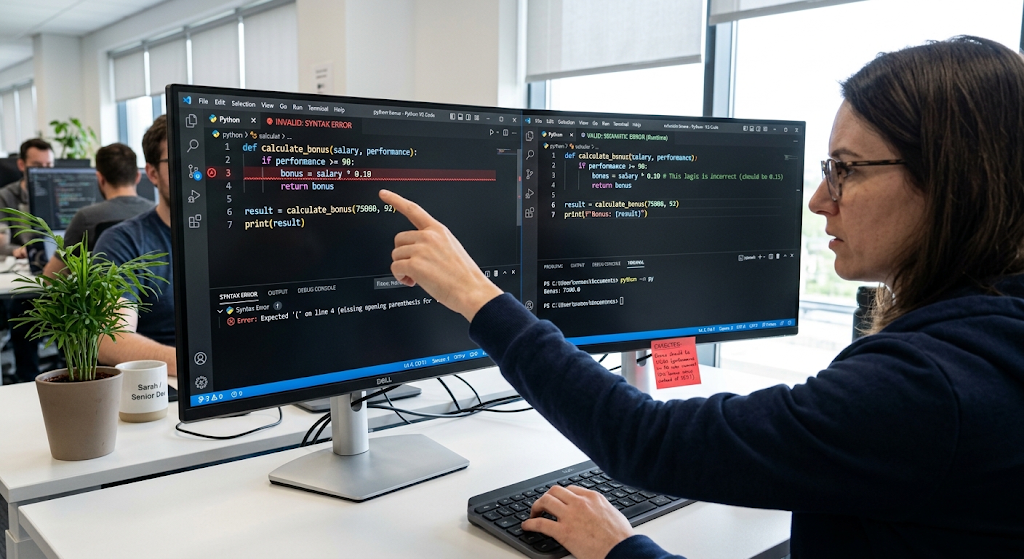
Among the simplest types of errors to detect in programming are syntax errors, which are errors made in the syntax of the language. For instance, in Python, you would have an indented statement in the conditional branch of an if statement, like if age >= 18: . . . It’s as if Python requires the colon at the end of the condition. In the program, if the programmer left the colon out of the if statement, Python would report that the statement is incomplete in its grammar, and thus produce a syntax error.
The same issues would arise if programmers were to forget to close parentheses, quotation marks, commas, etc. For instance, in the JavaScript language, braces or parentheses that are out of order can cause a program to fail to be parsed. These errors are an example of “syntax” errors, which is related to the format of the code. The computer must recognize the structure in order to understand what the instructions are meant to do.
Example of Simple Semantic Error
Semantic errors occur when the program is syntactically correct and can be executed, but the behavior is not as the programmer intended. Now suppose one of the three products has a different price and a programmer types in the wrong variable or performs an incorrect math operation in an expression to compute the total cost of the three products. That code may not have any reason to reject that language since the expression is obeying all structural rules.
The result can still be inaccurate though. Another trivial case would be when the programmer wanted to determine whether the student earned 50 or more points—score < 50 when score ≥ 50. It is syntactically correct but its meaning is not what it’s supposed to be. Semantic errors can thus be more difficult to detect as the computer could execute the instructions successfully but not realize that the programmer meant something other than what was stated.
Syntax vs Semantics in Python
The relationship between syntax and semantics is well illustrated in Python, as the language has structural rules that are clearly distinguished, and expressions are easily readable. In Python, indentation conveys blocks of code, and thus can have syntactic meaning and not just a formatting preference. The idea is that a conditional statement should have an indented block after its condition. The situation in which Python needs a block and doesn’t get it or doesn’t get it in a consistent way may lead to an error.
Meanwhile, syntactically correct Python may have weird semantics. A programmer may code x = 5, and then use x > 10 as the condition. That is not a bad expression, but it’s not true because of the value of x. Knowing both concepts will help a Python programmer novice differentiate between error in structure and error in logic/assumption.
Python Example
Let’s look at a basic program to determine if a person is allowed into an event because of his age. It might be possible to write a syntaxically correct Python statement like this: age >= 18: and an appropriate indented statement. The syntax consists of the if keyword, comparison expression, and the indentation of the block that is associated with it. The semantics are: If the value stored in age is greater than or equal to 18, then the code of the block to the right of the if statement is executed.
The programmer can make a mistake and write age <= 18, which would still be syntactically correct but would have a different meaning than what they intended. The computer executes the written instructions as written, even if they are not the programmer’s intended rule. This example illustrates the importance of not having correct syntax and yet still having incorrect program behavior.
Syntax vs Semantics in Java
The syntax of Java also contains a lot of elements that must be precisely organized by the programmer, such as braces, parentheses, semicolons, types, and method declarations, for which Java also offers useful examples. This is a very simple java statement: int age = 20; It declares an integer variable, assigns it the value 20, and ends the statement with a semicolon. Take out the appropriate punctuation at the wrong time and you may get a compilation error. But there can be semantic problems once the structure is accepted by the compiler.
For a program to store a person’s age in a variable, then use a comparison that is not appropriate when determining if a person is eligible to receive a certain service. While you may get a successful compilation, the program may make the wrong decision due to incorrect syntax and/or types. The same goes for Java: syntactic correctness means that the code can be executed by the computer, and semantic correctness means that the behavior is sensible for the purpose.

Syntax vs Semantics: Their differences in JavaScript
Another useful example is JavaScript which is used in websites, web applications, servers, and interactive interfaces. A statement in JavaScript can be correct in the syntax, but may result in unexpected behaviour if it is new to the beginner. An example of this is when an expression contains an operator that carries out an operation that is different to the one the programmer was aiming for. Likewise, there can be a condition that is syntactically correct in JavaScript but does not have the intended logic, resulting in the wrong part of a program being executed.
JavaScript might not be interpreted correctly due to syntax errors, and semantic or logical errors can let the program run without error with a wrong result. To do this, developers must examine not only punctuation and structure but also the meaning of expressions, comparisons, assignments, function calls and control-flow decisions. It helps with debugging as well since the programmer can find out if the language is rejecting the program or if the language is accepting the program, but it is not working as expected.
Simple Way to Understand Syntax and Semantics
The simplest way to grasp the distinction is to remember that syntax is about structure, and semantics about meaning. Python syntax is about whether the code is correct in terms of the formal rules of the programming language, and semantics is about what the code represents and how it works. Oftentimes, the syntax error can be identified at parsing or compilation time prior to the intended operation. A semantic problem could be left undetected by the language processor if the code is correct.
For instance, a missing parenthesis is a structural issue and a mismatch of the variable used in a calculation is typically a meaning/logic issue. Elements of syntax include keywords, punctuation, operators, expressions, statements and block structure. Semantics concerns how the elements are interpreted: values, operations, conditions, changes in state, etc. and program behavior. Knowing this difference helps programmers to learn about errors in a more systematic manner.
Why Understanding Syntax and Semantics is Important.
When learning a new programming language, syntax errors are easy to check and many novices tend to memorize syntax so much that they forget the meaning of the code. But to become a good programmer, it is necessary to go beyond recalling the syntax of statements and to grasp their meaning. Two different programming languages can represent the same concept in very different syntax, and still maintain a common theme in the programming concepts. If a programmer can grasp variables, conditions, loops, functions, data structures, and program behaviour, they will be better able to learn a new language because they are beginning to learn a new means of expressing concepts that they already possess. Likewise, semantics is important for programmers to be able to debug better. Rather than guessing and changing code until a bug goes away, they can ask themselves if the program is doing the operation that the requirements are really asking for.
Programmers will find it much easier to debug their programs if they first determine what type of problem they are having. If an unexpected symbol, missing delimiter, malformed expression, or mis-structured statement is reported by the interpreter/compiler, the programmer should check the syntax. If the program executes but does not return the desired answer, does not check the desired option, presents incorrect data, or has different behaviors than required, the semantics and logic need to be given greater emphasis.
This distinction will help save time since the programmer won’t have to see each problem as a punctuation or formatting problem. For instance, putting a missing parenthesis into an erroneous program will correct a syntax error, but will not correct a condition using the wrong comparison operator. Similarly, if the actual problem is an incorrect use of the assumption of what a function or operator does, then a re-written representation of a syntactically correct statement may be of no value.
Relationship between Syntax and Semantics with the Compilers and Interpreters.
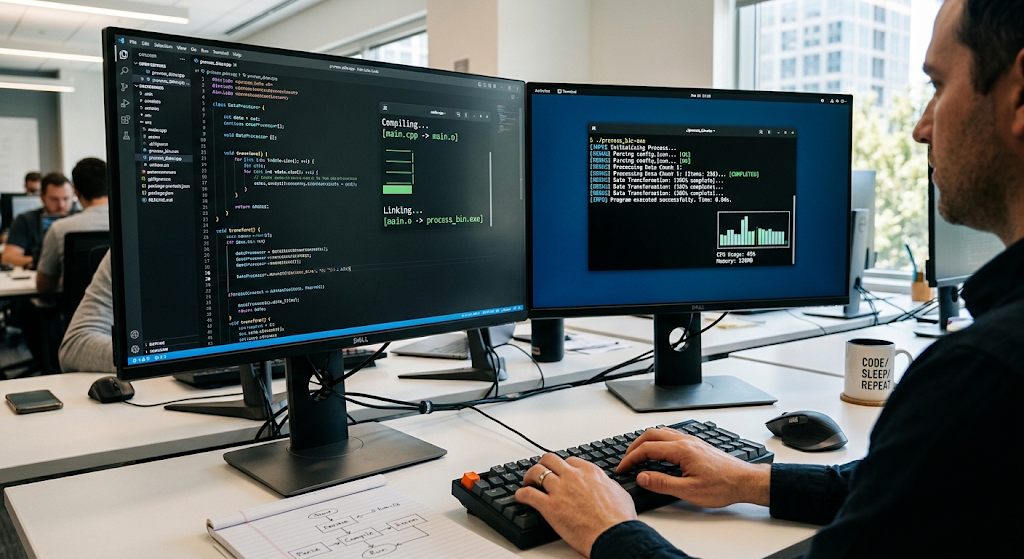
Compilers and interpreters use syntax to understand the rules of language to process the source code, and syntax is significant to this process. A compiler/interpreter typically must first figure out the organization of the pieces of source code before being able to make sense of the desired operations. This is because the code may be malformed, leading to parsing or syntax errors. After successfully recognising the code, the language implementation can interpret or translate the meaning of the code into an action that can be performed by the computer.
There are different programming languages and implementations, and they do various things at these stages, but it’s helpful to separate the structure from the meaning. For the novice, this process is important to understand because it will make it clear that a computer is not capable of making random guesses as to what a poorly structured statement was supposed to mean. Programming languages are structured like that because the instructions in software must be understood in the same way every time, not just as they are used in a given context.
How to Enhance Understanding of Syntax and Semantics
The most effective way to learn syntax and semantics is to learn how to recognise them while programming small programs. In the process of learning a new language, first observe the structure of statements, such as: keywords, punctuation, indentation, braces, operators, and declarations. Then explain what each of the correct statements does when the program executes. Make deliberate changes to the structure to see how this affects the error messages; also try some deliberately valid code that gives different results if the values or operators are changed.
It can also be helpful to read documentation, and to look at examples of similar concepts in Python, Java, JavaScript, or another language, to find ideas that are common to all languages and those that are specific to a language. The most important thing, though, is to get into the habit of asking two questions: “Is this code written correctly according to the language?” and “Does this code mean what I intend it to mean?” All those questions ground the programming and debugging in practice.
Conclusion
There are two basic terms that every programmer must understand: syntax and semantics that describe different aspects of how programming languages work. Syntax is the structure and formal rules of writing code that is correct; semantics is the meaning and behavior that the code represents. A syntax error may be caused by a missing parenthesis, incorrect indentation or an incorrect statement, while a semantic or logical error may be caused by an incorrect calculation, condition, or choice of operation even though the program is structurally correct.
The examples illustrate that the syntax of the different languages varies but that structure and meaning are overall important in programming. After beginners can get a handle on these ideas, they will be able to better understand error messages, understand how programs work, and will be better equipped to learn a new programming language.