
Introduction
Technical reports are essential tools for communicating information, reporting progress, explaining problems and presenting solutions in technology-related areas. Engineers, technical staff working in software development, cyber security and information technologies often have to deal with complex systems, data, processes and technical problems that need to be clearly explained to various audiences. A well written report enables readers to know the investigations carried out, how they were conducted, what results were achieved and what action should be taken.
Even if the technical info is accurate, it can be hard to understand or use, without proper organization. That’s why technical reports in the workplace must be well planned, logically organized, well supported with evidence, and written in clear language. A technical report should describe, explain, and convey with clarity and precision the purpose and results of a software testing project, a network failure, a cybersecurity risk, a computer engineering research, or any other purpose, to inform appropriate action.
What is a Technical Report?
A technical report is a formal document that provides technical information, research, observations, procedures, findings and recommendations about a given subject or project. In contrast to informal communication, a technical report tells a story about a process, the formal record of which will be consulted and referred to by readers for decisions. It can describe the operation of a system, describe a technical problem, analyze the performance of a product, record an experiment, or analyze the outcome of a project.
Technical reports are generally utilized by software developers, engineers, IT experts, cybersecurity analysts, project managers, and researchers. They can range from one to another, depending on the subject, but they have consistent purposes: to get the message across in a way that is reliable, understandable, traceable and useful to the intended audience.
The Need for Clear Technical Reporting
Technical info must be clear as sometimes technical decisions rely on accurate information and a proper understanding of the situation. A report can be used in software development to assist a development team to discover defects, monitor application performance, or to understand the results of a system upgrade. Reports in the cyber security space are used to relay vulnerabilities, security incidents, potential consequences, and recommended security measures. Engineering reports can help in design decisions, safety assessments, and project evaluations, whereas IT reports can record the performance of infrastructure, maintenance activities, and issues with the network.
Unorganized or jargon-filled reports can lead to a failure to capture important findings. By outlining information logically, separating facts from interpretations, and providing evidence to support conclusions, a professional report minimizes this risk. It also provides another handy record which can be read by other professionals at a later stage for aiding in the continuation of work, investigation of past decisions and future improvements.
Understanding the Structure of a Professional Technical Report
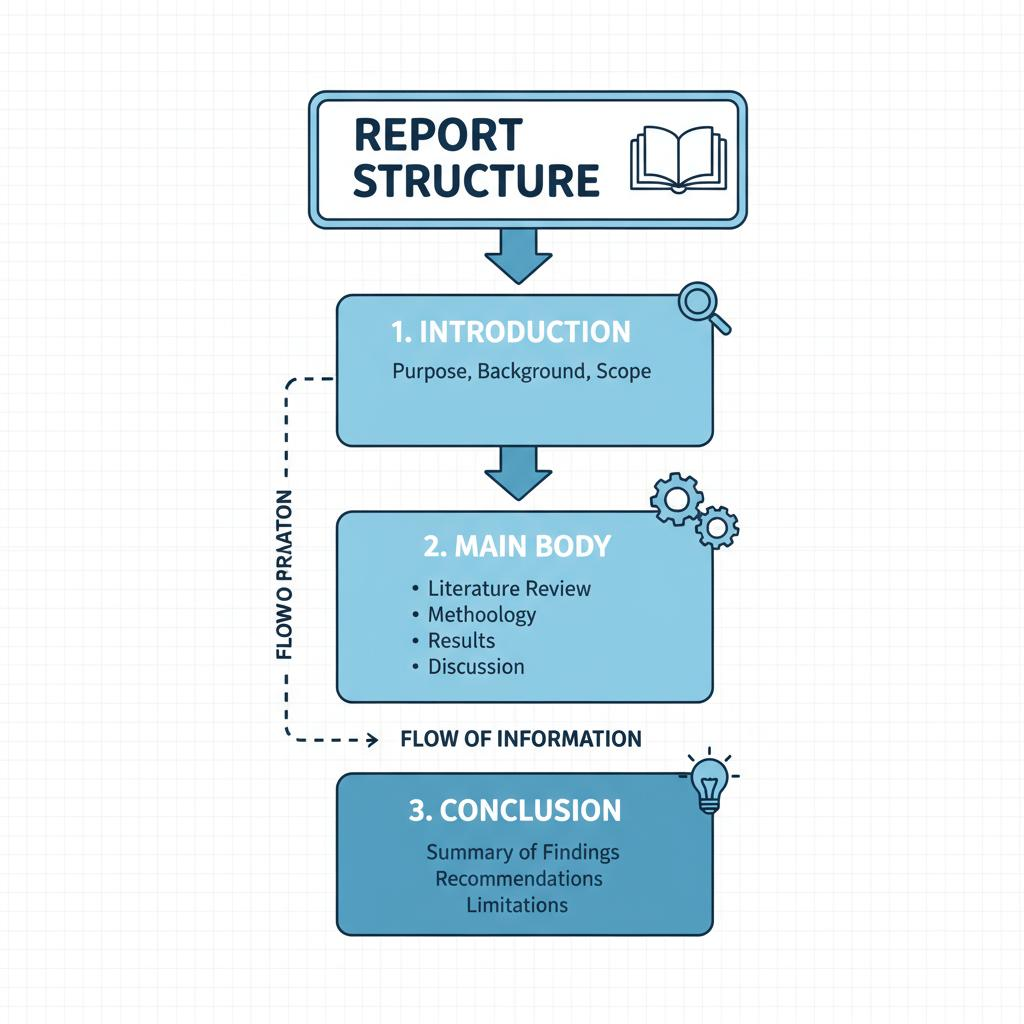
The technical report structure will dictate the organization of the information and its readability to the reader. While particular details may vary based on the organization, industry, and intent of the document, most reports follow a similar structure and include a title, an abstract or executive summary, an introduction, a methodology, the findings, an analysis, a conclusion, recommendations, and references. Diagrams, tables, screenshots, and appendices, if necessary, will be used to support the materials. Each section is designed for a specific purpose and leads the reader from understanding the problem, through analysis of the evidence, to the consideration of possible actions.
Having a structure also facilitates reports to be reviewed, compared and maintained. Additional help in organizing technical reports may be found in this guide to professional technical reports which outlines some technical report writing principles. Adopting the same structure of the document from the outset prevents loss of information and enhances the quality of the final product.
Writing an Effective Introduction
An introduction sets the stage for a technical report by providing an explanation of the topic, background, purpose, and scope of an investigation or project. It should also give readers the necessary context for the report’s preparation and the issue or objective that is being addressed. For instance, a report on a piece of software which has poor response times would include a brief description of the application, the problem with the application’s response times, and why an investigation was warranted.
The introduction should also state your major goals and how the report will be structured. This helps readers to not make misleading assumptions about the document. A good introduction should not be too general or descriptive, or include unnecessary historical background or explanations. It, on the contrary, offers the reader the basic information as a logical sequence and places him/her at the right level for the methodology, the results and the analysis presented later.
Explaining the Methodology
The methodology section outlines the methods, tools, techniques, and techniques employed to complete a technical investigation or project. It’s designed to provide its readers with information on how the information was gathered and how the work was done, so that they can determine the appropriateness and reliability of the process. In software development methodology can refer to testing procedures, software programming tools, software development environments, sample datasets and evaluation criteria. A report from an engineering student may give details of the apparatus used, measurements taken, conditions under which tests were performed, and calculations performed.
The cybersecurity assessment scope, security review techniques, monitoring tools and evidence gathering practices can be outlined in a cybersecurity assessment. Important steps should be explained clearly, but the irrelevant details of operation should not be included in the explanation that will not contribute to the purpose of the writing. The methodology should be accurate and clear in order to provide the readers with understanding of the basis of the results. Properly documented procedures allow other qualified professionals to review, verify or reproduce the work more easily.
Presenting Findings Clearly
The findings section contains the results of the investigation, experiment, project or technical assessment. This portion should be directed towards the evidence and not toward immediately accounting for all possible reasons for the results. Findings can be either measurements, test results, observed system behavior, performance statistics, error patterns, survey results, or documented technical conditions. A software testing report could, for instance, indicate that the software passed its test cases under certain conditions but failed under others.
A network performance report can offer recorded response times, connection interruptions or resource use. These results can be made easier to interpret if they are presented in the form of tables, diagrams, or charts, especially if there are several measurements or comparisons. Each visual element should be clearly titled and be accompanied by appropriate labels and explanation in the surrounding text. When presenting findings objectively, the report’s credibility is enhanced and readers have a solid base on which to build the understanding of the analysis.

The Process of Carrying Out a Meaningful Analysis
Analysis is the part of the report where the results are interpreted and explained as to their significance in terms of the goals of the report. Findings state what was observed, and analysis asks questions of the findings: What do these findings mean? Why did these outcomes occur? How do these findings impact the project, system or organization? If the software tests show that when multiple users are running an application at the same time, resources, database queries or inefficient processing operations may be the reason for the poor performance.
In the field of cybersecurity reporting, analysis can provide an explanation on how the identified weakness might impact on the integrity, confidentiality or availability. Analysis must be sound and be linked to the evidence, not based on assumptions or opinions. It should also include the limitations, unexpected results, and factors that may impact interpretation. A balanced analysis enables decision makers to appreciate the significance of the results and to account for the extent to which they can be confident in the results.
Writing Strong Conclusions
The conclusion ties up the report by summarizing the major findings and clarifying the success or failure in meeting the original goals. It should answer the primary issue or question posed in the introduction to the paper. The conclusion should not be a summary of all the sections, or a lengthy presentation of new information that’s not included in the rest of the essay. Rather it should showcase the most salient findings, present their general significance and set up the overall sense of the investigation which led to the understanding.
In the case of a new software system, for instance, a technical report might assess whether or not the system performed according to its performance specifications and determine what the system was still lacking. A summary of the engineering assessment can be used to indicate if the design meets the criteria. Conclusions should be brief, but include enough information to make readers see the main idea of the report without re-reading the entire report. A strong conclusion smoothly moves from the technical evaluation to practical recommendations.
Developing Practical Recommendations
Recommendations outline the actions that should be taken, in light of the findings and analysis. They convert technical information into usable advice for organizations, project teams or technical professionals that can help solve issues or enhance performance. Recommendations should be specific, realistic, and clearly related to the evidence in the report. A software performance report might suggest that inefficient database operations be reviewed, resources reallocated or further load testing be performed prior to deployment.
A cybersecurity report might call for adding remediation to the top of the priority list, examining access controls or enhancing monitoring protocols. Engineering recommendations may include changes to the design, more testing or more safety evaluations. A writer should whenever possible give reasons for each suggestion and what it is expected to benefit. Project resources, timelines, technical constraints and risks should also be taken into account in making recommendations. Do not use such a broad statement to improve the system. Clear recommendations guide readers from the comprehension of a technical problem to the planning of an appropriate response.
Importance of Diagrams, Tables, and Visual Evidence
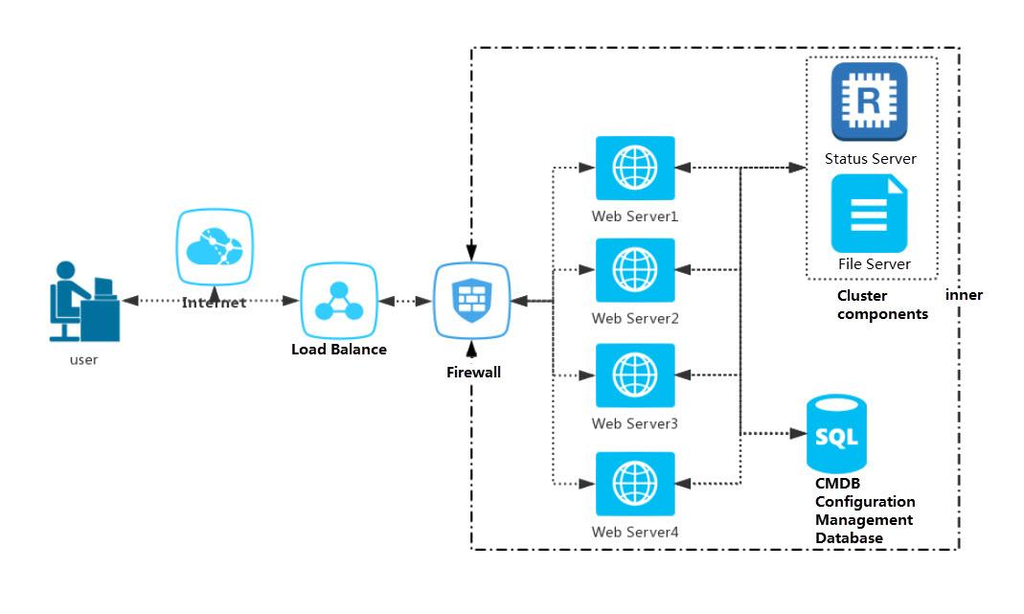
In the technical report, visual elements can be useful in conveying information that is too complex to be communicated through prose alone. Diagrams, flowchart, graphs, tables, networking diagrams, architectural models and screenshots can assist readers to understand the relationships and flows of the systems, as well as system performance and technical findings. A flowchart could be used to depict the flow of information within an application, and a system architecture diagram can be used to represent the interactions between the services, databases and external components. Network diagrams can be used in cybersecurity reports to describe a network that is affected or to depict a network boundary.
Technical drawings, measurement charts, and design illustrations are often incorporated into engineering reports to aid in the explanation. Visuals, however, should only accompany the text if they provide meaningful information. Descriptive caption, readable labels and clear links between diagrams/tables and discussion. The writer should also interpret important observations, don’t leave it to the reader to figure it out for themselves. Good visual evidence is selected correctly to enhance readability, technical accuracy and effective communication of complex information.
Supporting Claims With Reliable Evidence
A sound technical report begins with evidence, which enables readers to judge the accuracy of statements and the validity of conclusions. This can vary by the subject and includes the results of testing experiments, computer programs, system logs, written observations, technical specifications, approved assessment documentation, research-based publications and recognized industry standards. Information should be relevant, accurate and gathered in an appropriate manner. For example, a performance evaluation report should include specific information about conditions of test and measurement criteria rather than “fast” or “slow” statements.
Likewise, a cyber security report should differentiate between risks that have been confirmed and risks that need to be further investigated. Evidence must be presented honestly – that is, results must be shown even if they do not lead to the writer’s original expectations. If the information is obtained from outside sources, it should be cited correctly for readers to find the original sources and verify the information. Reliable evidence adds to the credibility and usefulness of the report for technical review and future reference.
Professional Language and Writing Quality
Professional technical writing must be clear, precise, objective and suitable for the audience. Direct sentences and common words should be used whenever possible, particularly if the report will be read by managers, clients or people who don’t know the technical subject. If technical terms are not familiar, they should be explained if it is necessary. Do not overuse jargon, exaggeration, emotion or vague language that makes the report unreadable. Normally, saying that a system is highly unreliable doesn’t give us much information, but specifying, for instance, the failure rate, which functions it affects, or which conditions it fails, does.
Each paragraph should have a clear point and lead logically into the next. Using the same word in every sentence, following the correct grammar, formatting, and proofreading help ensure that your writing is easy to read. The writer must be neutral, providing evidence and interpretations separately. The principles are designed to ensure that technical information is communicated accurately, clearly, and professionally in the report.
Arranging References and Supporting Documents
Additional information which supports the report but does not interrupt the main discussion is included in the references and appendices. The references section lists books, research papers, technical standards, official documents, websites and other materials referenced throughout the investigation. Correct referencing enables readers to check key points of information, to delve deeper into a topic and identify where the information has been sourced. The writer should adhere to a style of citation that is demanded by the institution, organization, or publication in which he or she writes and use that style consistently throughout the text.
Materials of interest but too detailed for the body of the report, like a lengthy test result, supplementary calculations, configuration summaries, questionnaires, technical specifications or other diagrams, can be included in the appendices. Each appendix should be clearly labeled, and there should be a reference to it in the appropriate section of the report. Supporting documents should be relevant, well structured, and appropriate for the audience. In sensitive technical environments such as cybersecurity, writers need to also make sure that personal data, confidential information and restricted system details are being handled as per the relevant policies.

Common Pitfalls to Avoid When Writing Technical Reports
There are several common pitfalls that may diminish the usefulness of a technical report, even when it is otherwise informative. The primary issue is the lack of a definite target which can lead to the inclusion of too much background information and to a discussion that lacks focus. The other is to interweave findings with interpretations without explicitly separating them, so that readers are not able to see whether the information is a fact or an assumption. Inconsistent terminology, unclear diagrams, missing references, abbreviated and unexplained terms, and poor organization can also undermine the document. Some writers may give too much technical detail with no regard for whether the readers will need it, and others may give too little detail, so that the readers cannot interpret the results. Recommendations that are general, impractical, or unrelated to the conclusions can be of little value. To prevent the difficulties, writers should develop an outline prior to writing, incorporate evidence into the text, work through the logic of each paragraph, and make sure that each visual element has a purpose. Before the report is presented or distributed, a final review should be conducted to check for accuracy, clarity, completeness, formatting and consistency.
Reviewing and Preparing the Final Report
Reviewing is a crucial part of technical report writing because the first draft often has some explanations that are unclear, may lack evidence, may have structural issues, or may have errors that negatively impact the meaning of the technical report. The first step in the review process should be to determine if the report is fulfilling its intended purpose and whether all sections of the report are being included. The writer should then review the methodology, findings, analysis, conclusions and recommendations and ensure that they build on each other in a logical manner with suitable evidence. All calculations, measurement, terminology, diagrams and references should be checked for technical accuracy. Grammar, spelling, sentence structure, consistency of headings, page numbering and formatting should also be checked. If possible, it is useful to have a knowledgeable colleague or an expert in the field read the document to see what issues the original writer might have missed. A representative reader may also provide feedback on reports of great importance to determine if explanations are understandable to the intended audience. With careful revision, a document’s reliability will improve and it will be ready for use in the professional setting.
Conclusion
Technical reports must be written to communicate technical facts in a structured and credible way, and it is also necessary to organise information, explain methods, interpret evidence and report practical outcomes. A good report will have a good introduction, a clear description of the methodology, objective presentation of results and a good analysis that leads to the conclusions. Recommendations should include feasible recommendations, diagrams, tables, references and appendices should support the discussion and not detract from its purpose.
The significance of professional language is as great as that of consistent formatting, reliable evidence, and thorough proofreading in producing a document that readers can comprehend and trust. In various software development, engineering, IT, cybersecurity, and technology projects, these principles are applicable and useful for documenting work, communicating complex issues, and making informed decisions. Technical Reports can be written in a logical sequence and created with clarity, accuracy and relevance, making them valuable resources for teams, organisations and technical activities in the future.



شركة جراند باركيه تقدم خدمات تركيب بديل رخام بالرياض، وتركيب نعلات ووزرات بالرياض**، مع توفير **معلم بلاط وسيراميك بالرياض لتنفيذ أعمال التشطيب والتركيب بدقة تناسب المنازل والفلل والمكاتب.
I do not even understand how I ended up here, but I assumed this publish used to be great
This is really interesting, You’re a very skilled blogger. I’ve joined your feed and look forward to seeking more of your magnificent post. Also, I’ve shared your site in my social networks!
I am truly thankful to the owner of this web site who has shared this fantastic piece of writing at at this place.
very informative articles or reviews at this time.