Introduction
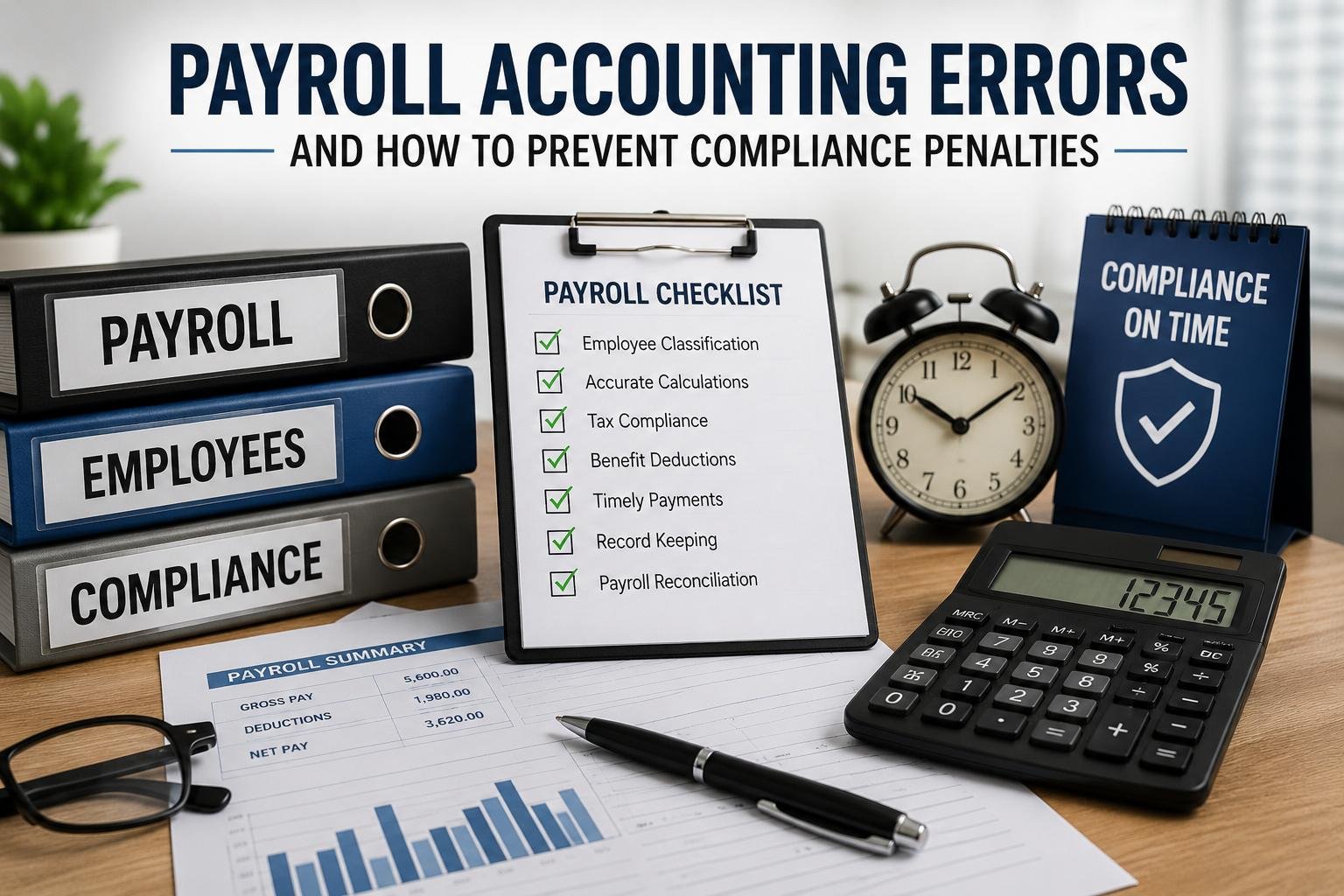
One of the most crucial financial obligations is payroll for any business. Each payday is a testament to the company’s dedication to its workers, tax and regulatory bodies. Just one payroll error can lead to underpaid employees, tax penalties, compliance investigation, loss of trust by employees and unnecessary financial losses. Even though payroll sound may appear as simple as it is, it requires complex calculations, employment classifications, tax related to the job, benefit deductions and accounting entries which all must be accurate. There are a number of payroll compliance elements even small businesses with a few employees can’t neglect. With the ongoing changes in employment legislation and tax rules, companies need to have their payroll systems in place that can make sure that the process is smooth with minimum human mistakes and guarantees financial accuracy. Recognizing the most common payroll accounting mistakes enables companies to find out about weak spots before they become costly legal or monetary issues. One of the most effective ways to improve payroll processes, increase compliance and boost employee confidence in their payroll is to learn from common payroll mistakes.
Why Payroll Accuracy Matters
Payroll is more than just about paychecks. It affects labor law obligations, employee satisfaction, government compliance, retirement contributions, insurance premiums, and tax reporting and financial statements. For every payroll period, accounting records are created that affect the income statement, balance sheet and cash flow statement. Inaccurate payroll data can result in the company filing wrong tax returns, underreporting liabilities and overreporting expenses or employee salaries. These problems may lead to government audits, reassessment of tax liabilities, penalties and employee litigation. There are also other implications for payroll mistakes, such as a drop in employee morale, which is likely to be caused when employees are expected to get the correct paychecks in a timely fashion, with no need for constant corrections. A business that always keeps the payroll accurate will appear professional, improve internal controls, and establish trust between the management and the employees. Payroll accuracy is not just about following regulations; it’s a smart business move that aids in growing the organization and safeguarding its reputation.
Typical Mistakes in Payroll Accounting
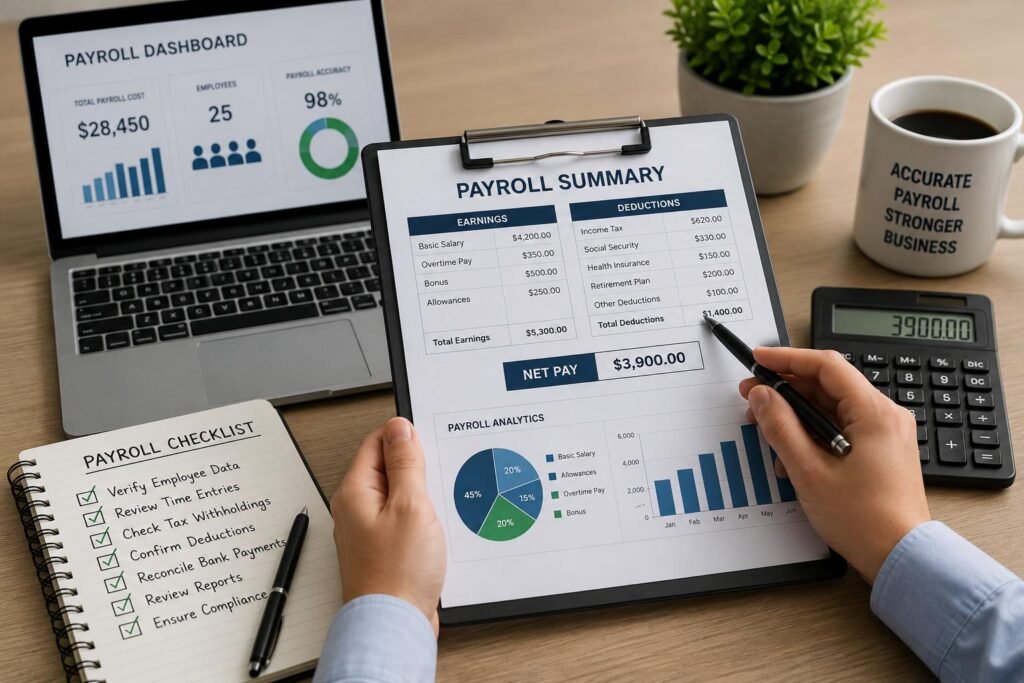
Human error, an out-of-date payroll system, misinterpreting tax laws and regulations, lack of documentation, and lack of internal control are all potential causes of payroll mistakes. By knowing what these frequent errors can be, companies can take proactive steps to prevent these issues from occurring.
1. Misclassifying Employees
One of the most important payroll compliance questions for employers is whether they are correctly classifying their employees. In cases where a business may have made an error in its classification of a worker as an independent contractor rather than an employee, they might have done so to avoid paying payroll taxes, benefits, or administration. Other employers or employees might classify employees as exempt from overtime when they are not. Income tax withholding, Social Security, unemployment taxes, workers’ compensation coverage, pension eligibility and overtime payments are impacted by misclassification. It is also not uncommon for regulators to fine employers for knowingly or unwittingly misclassifying employees. It is important to examine employment relationships, job duties, working hours, level of supervision and relevant legislation to ensure that the classification is correct. It is best practice for organizations to regularly audit employee classifications as requirements may change over time due to changes within the job. Correct classification is an employer and employee protection measure, and helps keep payroll accounting records up to date with applicable employment laws.
2. Miscalculating Payroll Taxes
One of the most complicated areas of payroll accounting is payroll taxes, which often undergo changes in rates, thresholds, exemptions and reporting requirements. Employers are required to correctly determine the amount of income tax to be withheld, employer taxes, social insurance, unemployment tax, pension, and other required payments. Payroll mistakes are frequently made because payroll software is not updated, tax tables are outdated, employee tax information changes or payroll staffs simply do not understand the tax laws. Making a small mistake in calculating the tax, and continuing to commit it on multiple payrolls, can easily lead to large tax liabilities. The penalties and costs that can result from under-payment of payroll taxes could be interest charges, penalties and investigations by tax authorities, and the over-payment of unnecessary reduction in money flow for the business. Having up-to-date tax data, auditing payroll figures and keeping a close eye on tax legislation all help business minimize payroll-related tax errors and stay in compliance with government mandates.
3. Incorrect Employee Benefit Deductions
Many employers offer health insurance, retirement plans, life insurance, transportation benefits and/or other employee benefits. There are various aspects that payroll departments need to take care of, such as calculating employee contributions, employer contributions as well as taxable benefits and the limits of deductions. Common and often confusing errors that arise include changing benefit rates, changes in coverage by employees, and not updating payroll systems for changes in deductions. Employees may lose benefits eligibility, overpay for retirement benefits or taxes as a result of incorrect benefit deductions. Employers also may be subject to penalties if their required benefits contributions are not timely paid to benefit providers or government agencies. Conducting regular payroll reconciliation with statements from the benefit providers can help to ensure that the deductions are correct and the employees elect to get benefits.
4. Payroll Journal Entries are not correct.
Payroll accounting is not just about paying employees – It’s also about getting it right in the accounting system. Expenses, such as wages, should be recognized as expenses, as should be expenses for payroll-related taxes; also, employee deductions, employee contributions, and payroll liabilities should be recognized. Typical errors are those of paying out payroll costs to the wrong accounts, not posting payroll liabilities, misreversing a journal entry, and not differentiating between employer and employee payroll taxes. These errors in accounts led to a difference in financial statements and made financial reporting, budgeting, auditing and tax preparation difficult. A business should have a set of standard procedures for making journal entries to the payroll account with documentation on payroll reports. Periodic review of payroll transactions by accounting personnel helps assure that payroll transactions are properly recorded in general ledger.
5. Failure to Maintain Employee Records
All the details of employees, such as tax identification number, bank information, salary rates, overtime status, choice of benefits, employment contract details, and personal information are critical to payroll. When salary changes, promotions, tax elections or benefit changes are not recorded in a timely manner, it can lead to payroll errors in the outdated employee records. Lack of documentation could also lead to compliance problems during government audits. Employers should have staff check personal details frequently and HR check payroll records upon any changes to employment. Adopting comprehensive and accurate employee records enhances the accuracy and reliability of payroll and aids in adherence to employment laws.
6. Missing Payroll Deadlines
There are many deadlines when it comes to payroll compliance other than paydays. The employer is required to timely pay taxes on payroll, file reports, make pension contributions, make benefit payments, and file regulatory reports. Late submission of such returns to these deadlines may lead to automatic penalties, and not merely for incorrect payroll computation. Late payroll submissions often result from poor scheduling, staffing or manual payroll. Compliance calendars should be kept by businesses, detailing the dates and other particulars surrounding compliance events, such as filing dates, payment dates, reporting requirements, and internal review schedules. The risk of missing a deadline and the compliance management can be greatly reduced through the use of automated reminders and payroll software.
Financial Implications of Payroll Mistakes
Payroll errors not only impact the bottom line but also cause disruptions to businesses. These are the direct costs such as government fines, interest charges, legal fees, compensation changes for employees, accounting changes, external audit fees etc. In fact, the indirect costs can be even higher as employee morale suffers due to the payroll mistakes, staff turnover, harm to the employer’s reputation, and potentially lost management time dealing with unnecessary payroll disputes. Financial statements could be corrected if there is a misstatement of the payroll costs, accrued liability, or taxes. These inaccuracies can impact on the budgeting process, profitability analysis, lender confidence and investor perception. This is particularly important for small businesses as the amount of the payroll penalty can have a huge impact on cash flow. By avoiding payroll mistakes, you safeguard your business’s finances and long-term success.
Compliance Risks that Arise from Payroll Mistakes
Payroll compliance is a complex process that involves various laws and regulations, such as labor laws, tax laws, employment laws, pension laws, and benefits administration laws. Electronic reporting systems are more and more being adopted by regulatory agencies, and these systems can rapidly identify payroll record discrepancies between payroll and submitted tax returns. If your business consistently reports an incorrect payroll, it could be the target of audit or investigation. Failure to comply can also lead to employee lawsuits for wages paid, overtime pay, or improper benefit payments. Establishing a reliable payroll control, keeping records and rectifying payroll mistakes in due time lowers regulatory risk and boosts the bond with both tax authorities and employees.
Best Practices for Preventing Payroll Accounting Errors
1. Use reliable payroll software.
With modern payroll software, you can automate wage calculations, tax withholding, benefit deductions, overtime pay calculation, direct deposits and reporting. Manual calculations are eliminated to a great extent with automation, which can introduce human error. Payroll software should be kept up to date with current tax rates and changes in the legislation. Payroll and accounting systems integration also benefits with the accuracy of the accounting entry and financial reporting, as there is less manual data entry.
2. Apply good internal controls
Good payroll controls minimize chances of error and fraud. Whenever possible they should be different people from those who do payroll, approve, authorize payroll to be processed and reconcile the accounting records. Changes to payroll information such as salary, bonuses or employee records should not be done without documented authorization. Payroll should be reviewed on a regular basis by management for any unusual transactions, overtime that is not expected, duplicate payments or any unauthorized salary changes. The internal control ensures the integrity of payroll and helps to ensure financial accountability.
3. Reconcile Payroll Regularly
Payroll reconciliation involves comparing the payroll reports with the accounting records, bank transactions, tax filings, benefit statements and employee records. It is essential to reconcile regularly to detect discrepancies early in order to avoid larger compliance problems. The payroll liabilities, tax payments, benefit contributions, and wage expenses should be reconciled, after each payroll cycle, by businesses. Monthly and year-end reconciliations also ensure the accuracy and integrity of payroll balances on the financial statements and statutory reports.
4. Provide training for Payroll and HR Staff.
As tax laws, labor regulations, accounting principles, and payroll software evolve, payroll professionals need to be aware of these adjustments and how they impact their work. Continuing professional development enhances technical expertise and minimizes compliance risks. HR staff should also be aware of the impact that employment decisions have on payroll, such as classification of employees, changes to benefits, promotions, firing etc. Effective communication between various departments, such as HR, payroll, and accounting, ensures proper payroll management from onboarding to offboarding.
5. Maintain Detailed Documentation
All payroll transactions should be backed with relevant paperwork such as employment contracts, timesheets, overtime approvals, tax paperwork, enrolment of benefits, payroll registers and journal entries, etc. Good documentation aids in ensuring compliance with regulations, facilitates payroll corrections and makes audits easier. Companies should have a document retention policy that meets the legal requirements and also provides access to payroll documents whenever they are required.
6. To perform regular payroll audits.
An internal payroll audit can reveal problems that regulators or employees would not be able to uncover. Employee classification, payroll calculations, tax compliance, benefit deductions, journal entries, payroll approvals and supporting documentation should be considered during an audit. Independent reviews offer great confidence that payroll controls are in place and working as they should and identify process improvements. It is far more affordable to fix minor problems in the internal audit process, than it is to deal with regulatory violations after external audits have taken place.
The Role of Accounting in Payroll Compliance
Payroll accounting is an essential component of proper financial reporting and adherence to laws and regulations. Accountants ensure that payroll expenses are appropriately recorded in the correct accounting period, ensure that bills are bookable and ensure that payroll and supporting documents are consistent. They also monitor wages earned, payroll taxes payable, employee benefit requirements and employee/employer contribution requirements. The timely and proper accounting of payroll enhances budgeting, cash flow planning, the reliability of financial statements and timely reporting of taxes. Payroll and accounting staff share information with ease and the flow of payroll information goes smoothly into an organization’s financial systems, reducing the possibility of report inaccuracies.
Creating Payroll Compliance Culture
Though software and policies are important in preventing payroll errors, it’s about a culture of accuracy, accountability and continuous improvement that can help to ward off errors before they can occur. HR and Accounting staff need to collaborate to swiftly resolve issues and management need to foster a culture of early payroll error reporting from employees. It is important for businesses to regularly audit their payroll processes, stay current with compliance regulations and track changes to regulations which could impact payroll operations. An open environment where payroll staff, management and employees collaborate in training and management oversight makes payroll accuracy a team effort instead of only a payroll staff responsibility.
Conclusion
Payroll mistakes may result in financial penalties, regulatory investigations, financial reporting miscalculations and more, as well as having a negative effect on employee relations. The most common payroll problems are employee misclassification, incorrect tax calculations, inadequate withholding of benefits, incorrect tax payroll journal entries, inadequate records and failure to comply with payroll deadlines. But, with proper internal controls, payroll systems and accurate, payroll is subject to minimizing all of these risks by reconciling it regularly, auditing it periodically and training the staff and proper documentation. The accounting and compliance elements of payroll can help to protect cash flow, adhere to regulations, construct worker trust, and give precise monetary records. Making the investment in efficient payroll management today can help avoid costly compliance fines later, and create a more efficient and reliable payroll system that will enable companies to continue to prosper well into the future.
Get more well researched information about Payroll Accounting Errors here.