Introduction
Nissan Pathfinder generations guide shows how this SUV has changed since since its introduction in 1987. It was first intended as a rugged SUV with an off-road chassis, but it later evolved to a more family-oriented crossover and is now back to its rugged roots with the new model. Now the Pathfinder is being challenged by some of today’s most popular three-row SUVs like the Toyota Highlander and Honda Pilot. With its V6 engine, three-row seating, 4×4 capability, and impressive towing capacity, it’s a versatile vehicle that could be a great choice for families that don’t require just a car.
Nissan Pathfinder 3-row SUV comes with up to eight seats, a 3.5-liter V6 and a 9-speed automatic transmission. With the right equipment, models can pull as much as 6,000 pounds and the Pathfinder is ideal for families that tow boats, trailers or recreational equipment. Used buyers, however, should be aware that older Pathfinders have various engines and transmissions, fuel economy and reliability issues etc.
Nissan Pathfinder Generations Explained
First and Second Generations
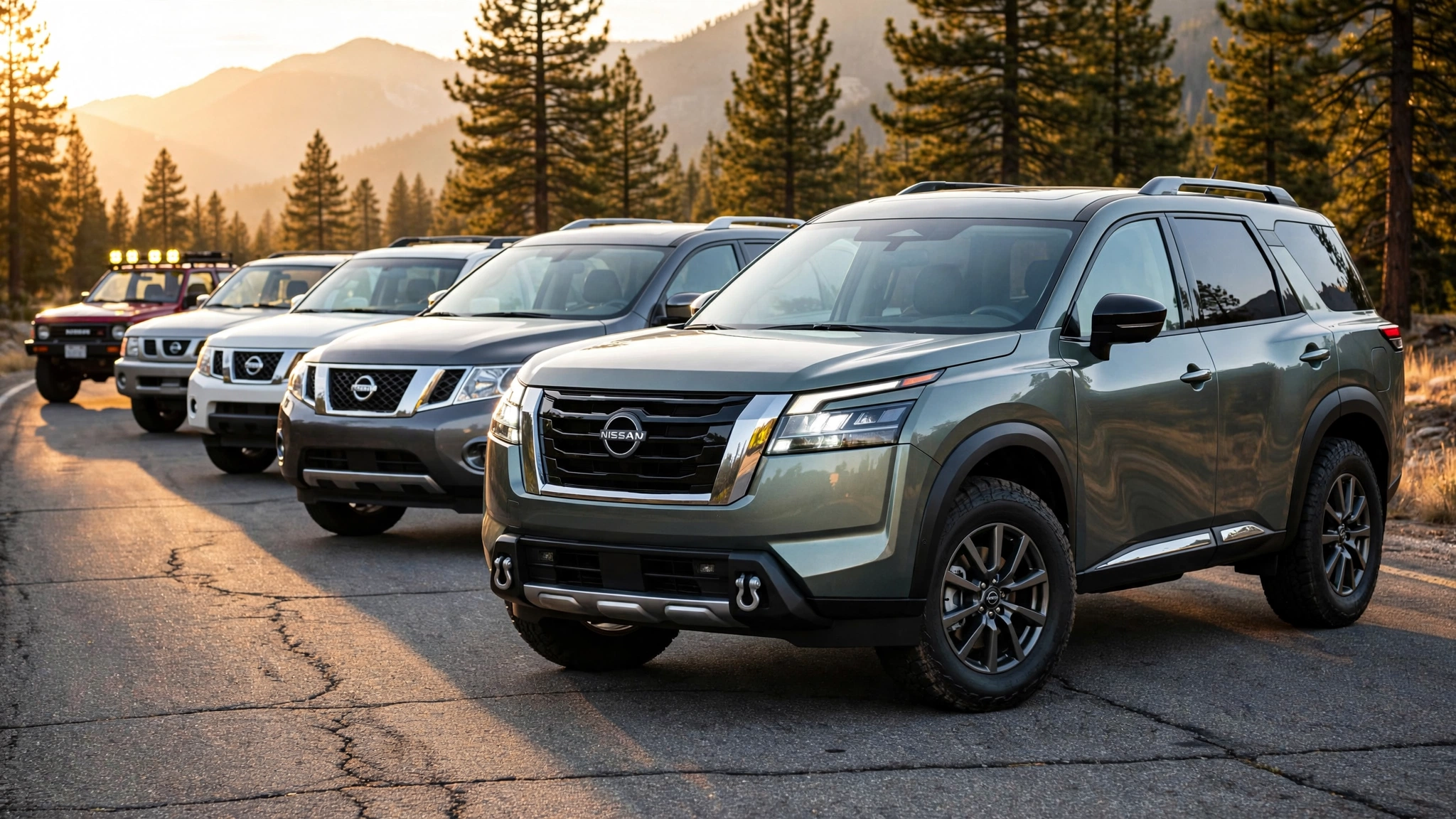
The first generation of the Pathfinder was introduced for the 1987 model year and featured a body-on-frame construction. It was very similar to Nissan’s pickup trucks and heavily geared towards off-road abilities. The second generation appeared in 1996, and was now 100% unibody with comfort enhanced for everyday driving, but with 4WD still available.
Most of these early Pathfinders are now available as used cars or collector items. They are older than trim level and condition and maintenance history becomes more important. When buying an older copy, it’s important to inquire about maintenance neglect, drivetrain issues, suspension wear and rust.
Third Generation: 2005–2012
The third-generation Pathfinder is back in the body-on-frame design, it is much larger, and more powerful. The 300 hp 4.0-liter V6 engine proved to be a strong performer, and the optional 3-row seating option made the SUV more family-friendly. This generation was quite a bit more rugged than the crossover styled Pathfinder that came after it.
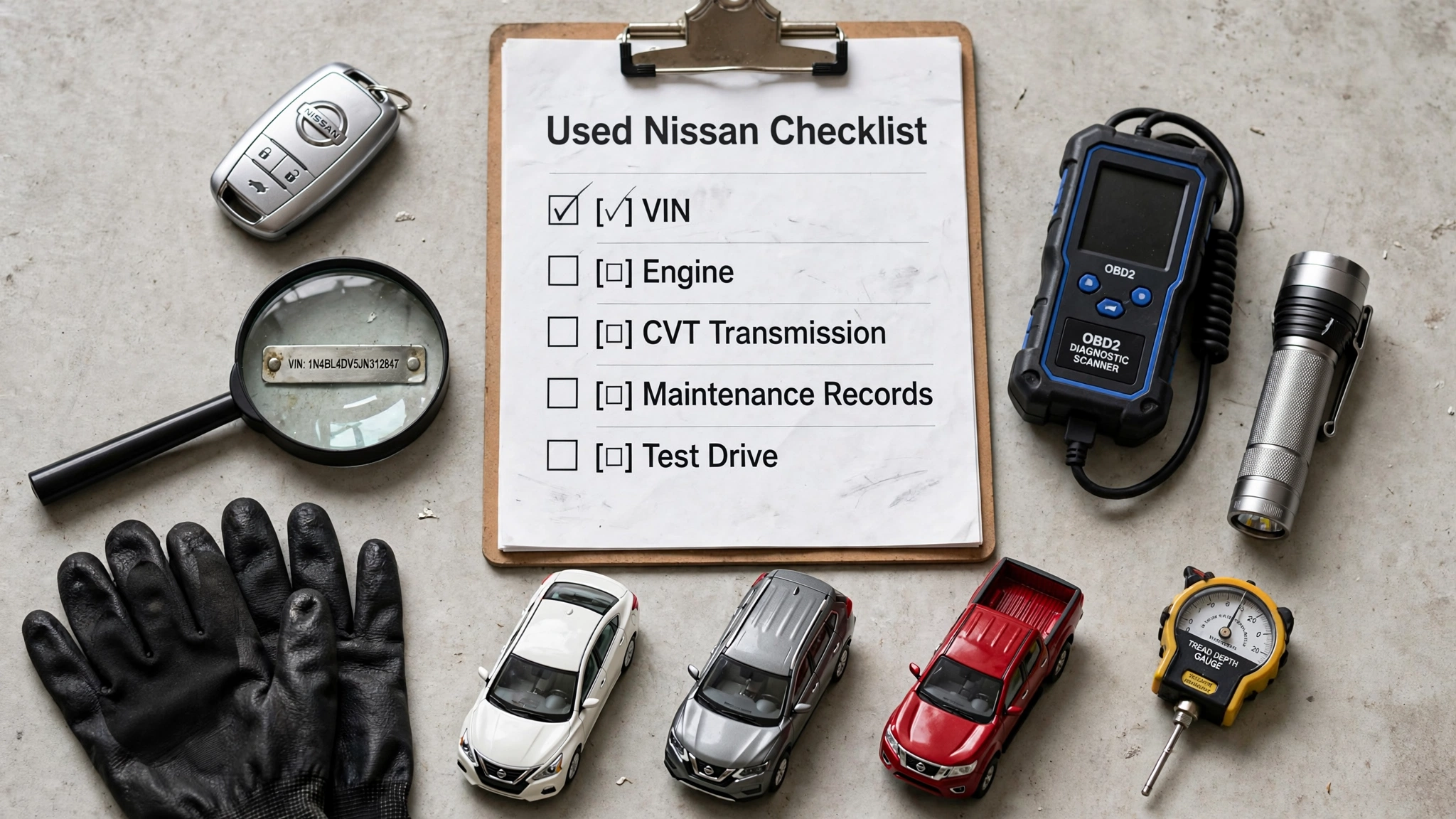
But used buyers need to take into consideration the drivetrain. Timing-chain issues can be a problem in some models and cooling-system and transmission problems can prove costly. If you’re thinking of getting a Pathfinder from this generation, a complete maintenance history and professional inspection can be of great value.
Fourth Generation: 2013–2020
Another significant difference was the fourth generation Pathfinder. Nissan resorted to unibody construction and added a crossover-inspired design that was more directly geared towards the family. The prime engine was replaced with a 3.5-litre V6, with the automatic transmission replaced by a continuously variable unit.
Extra care must be taken in the first few years. The 2013 and 2014 Pathfinder is rated below average for reliability by Consumer Reports and Consumer Reports reports that there are several recalls. Also part of the recall in 2013 were certain models that were involved in a transmission-fluid leak issue. Therefore, used buyers should make sure that the recall has been completed and thoroughly check out the transmission before they buy.
Fifth Generation: 2022–Present
The fifth-generation Pathfinder followed last year’s absence of the 2021 model year by Nissan. The new SUV was built upon the unibody platform, was more rugged and was equipped with a more traditional nine-speed automatic over the old CVT. The 3.5-liter V6 remained as the main powerplant.
The existing Pathfinder is a 284 hp and 259 lb-ft of torque machine. Models are equipped to tow up to 6,000 pounds and with four-wheel drive and selectable drive options, are versatile. This generation also boasts some new features, including updated safety and technology features that better meet the needs of today’s family buyers.
Fuel economy and performance technologies.
The 3.5-liter V6 of the Pathfinder’s engine delivers sufficient torque for normal family driving, highway starts and towing. The engine’s 284 hp and 259 lb-ft of torque provide a smooth and powerful performance that doesn’t need to implement the turbocharging. The new nine-speed automatic transmission also provides the most recent Pathfinder with a more classic driving feel than the CVT of the earlier generation.
Fuel economy is dependent upon the model year, drivetrain, wheels and driving conditions. The crossover was more focused on the everyday use for fuel economy than the older Pathfinder (body-on-frame) models were when they were built. This is the present Pathfinder, and it offers a compromise between V6 performance and fuel economy, so those who value the most fuel efficiency might want to consider a hybrid competitor that offers similar performance.
Nissan Pathfinder towing capacity
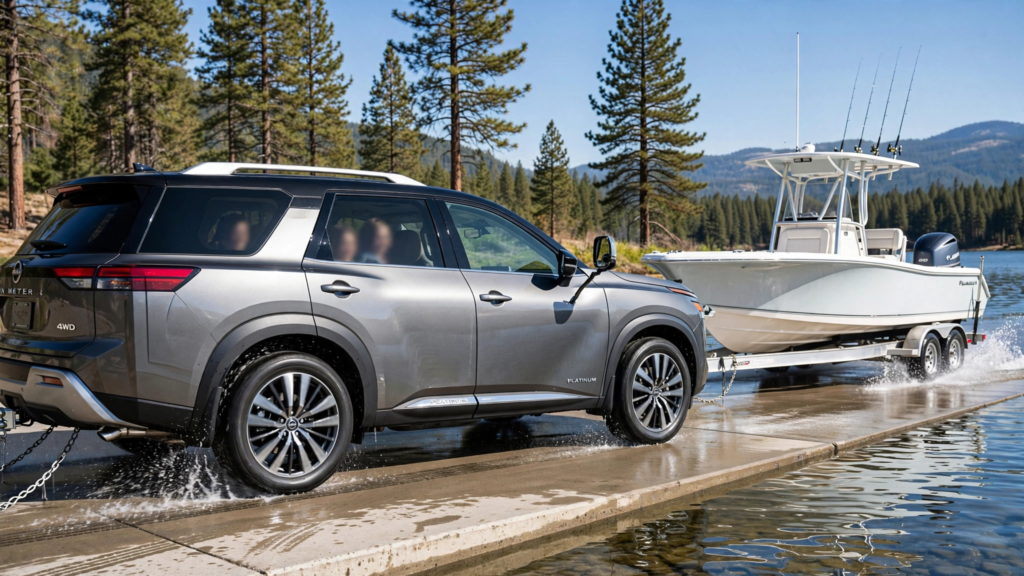
One of the greatest assets of the Pathfinder is its towing. Most of the current models are capable of towing up to 6,000 pounds and should be sufficient for most family trailers and recreational loads. Available towing features may include Tow Mode and Trailer Sway Control and four-wheel drive can offer more grip if things get tough.
The maximum towing is not valid for all Pathfinder combinations, though. When purchasing a vehicle, the specific vehicle’s towing rating should be examined and passengers, cargo, trailer weights, and tongue weights should be taken into account. Towing families should also ensure that the vehicle is set up properly, and not just what is advertised on the headline maximum capacity.
Family-friendly features and interior.
The Pathfinder is built with the family in mind. It can accommodate up to 7 or 8 people, or up to 3 rows for bigger families. The cabin also provides storage spaces and flexible seating that are designed to make it easier to move around with everyday essentials like school bags, sports bags, bags of groceries and luggage.
The generation in use also offers a lot more technology than the previous generation. The large touchscreen, smartphone connectivity, driver-assistance systems and modern safety technology are among the features available. Pathfinder’s high passenger capacity, safety features, and towing capabilities make it a good choice for families looking for an SUV that is comfortable and can be used for both day-to-day driving and weekend entertainment.
Most frequent Nissan Pathfinder Problems
Results are highly dependent on the generation of Pathfinder. 2013 and 2014 models are worth special mention due to lower levels of reliability and several recalls. One of the most critical spaces to look at on fourth generation vehicles is the CVT and buyers should ensure the transmission trips easily without any warning lights, hesitation or unusual noises.
Mechanical issues may also occur with older Pathfinders. Timing-chain problems, cooling-system issues, suspension wear, transmission problems and leaks are all potential trouble areas for third-generation models. Incomplete maintenance records should not deter considering the purchase of a used Pathfinder, as it should have been professionally inspected before.A used Pathfinder in any year should be professionally inspected prior to purchase, especially if maintenance records are incomplete.
Nissan Pathfinder vs. Toyota Highlander vs. Honda Pilot
The Pathfinder is the closest rival to the Toyota Highlander and Honda Pilot, with some distinct advantages for each. The Pathfinder has a maximum towing capacity of 6,000 pounds and the Honda Pilot is 5,000 pounds with 8 seats. The Highlander is a particularly appealing option for those who value hybrid efficiency, as the 2026 Highlander Hybrid boasts a 35-mpg combined rating from Toyota.
The best option for families will vary depending on their priorities. The Pathfinder is especially attractive when towing, V6 power and three-row functionality are key. The Highlander Hybrid is more suited to those who value fuel economy, the other models are solid family SUVs that offer lots of room and V6 power.
Is Nissan Pathfinder a Good Family SUV?
Nissan Pathfinder is capable of being a powerful family vehicle especially in its new generation. An impressive array of features like the 3.5-liter V6, 9-speed automatic, three-row seating, available four-wheel drive and a maximum towing capacity of 6,000 pounds makes it surprisingly practical and capable.
If you’re a used buyer, consider only those that are reliable as reliability can differ among the generations. Additional research is needed on the earliest 4th generation models and some well kept models on stronger model years can be good family transport vehicles. The Pathfinder’s primary selling points over the Highlander and Pilot are its towing capabilities and tough design.
Final Verdict
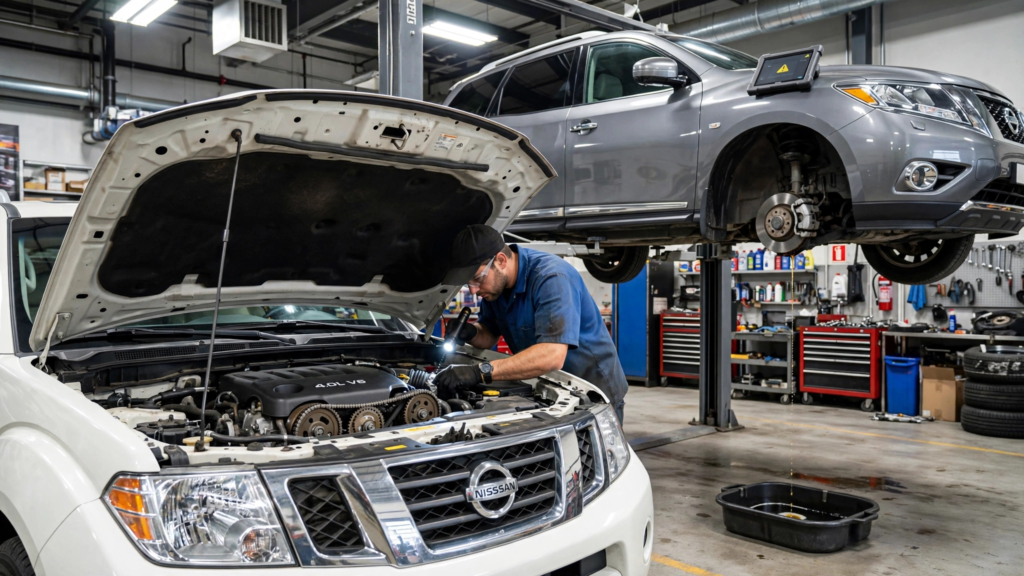
The Nissan Pathfinder has now come full circle from its small SUV/off road origins to be a modern three row family car. Its newest edition packs practical V6 powertrain, traditional automatic transmission, technology, family seat comfort and solid towing power.
If you’re shopping for a three-row SUV, the Pathfinder can be compared to the Toyota Highlander and Honda Pilot. It has an advantage over other towable RVs, with its 6,000-pound towing capacity, and it’s practical for day-to-day family living with its large interior and modern safety features. But used buyers must thoroughly investigate the particular year model and focus on those with great maintenance histories and finished recalls.