Your home should make you feel at ease, relaxed and refreshed. Unfortunately, the worst thing that can spoil even the cleanest house looks is the unpleasant odor, which can turn even the cleanest house into an unwelcoming place. Often bad smells tend to build slowly and homeowners can become tolerant to them over time without realizing how bad they smell for visitors. Rather than using a scented spray which can only temporarily cover up the smell, it is far better to find out what is causing the smell and eliminate it. To make your home naturally fresh daily, you need to know the causes of unpleasant household odors. With the root causes fixed, having a nice indoor atmosphere is a lot easier and cheaper.
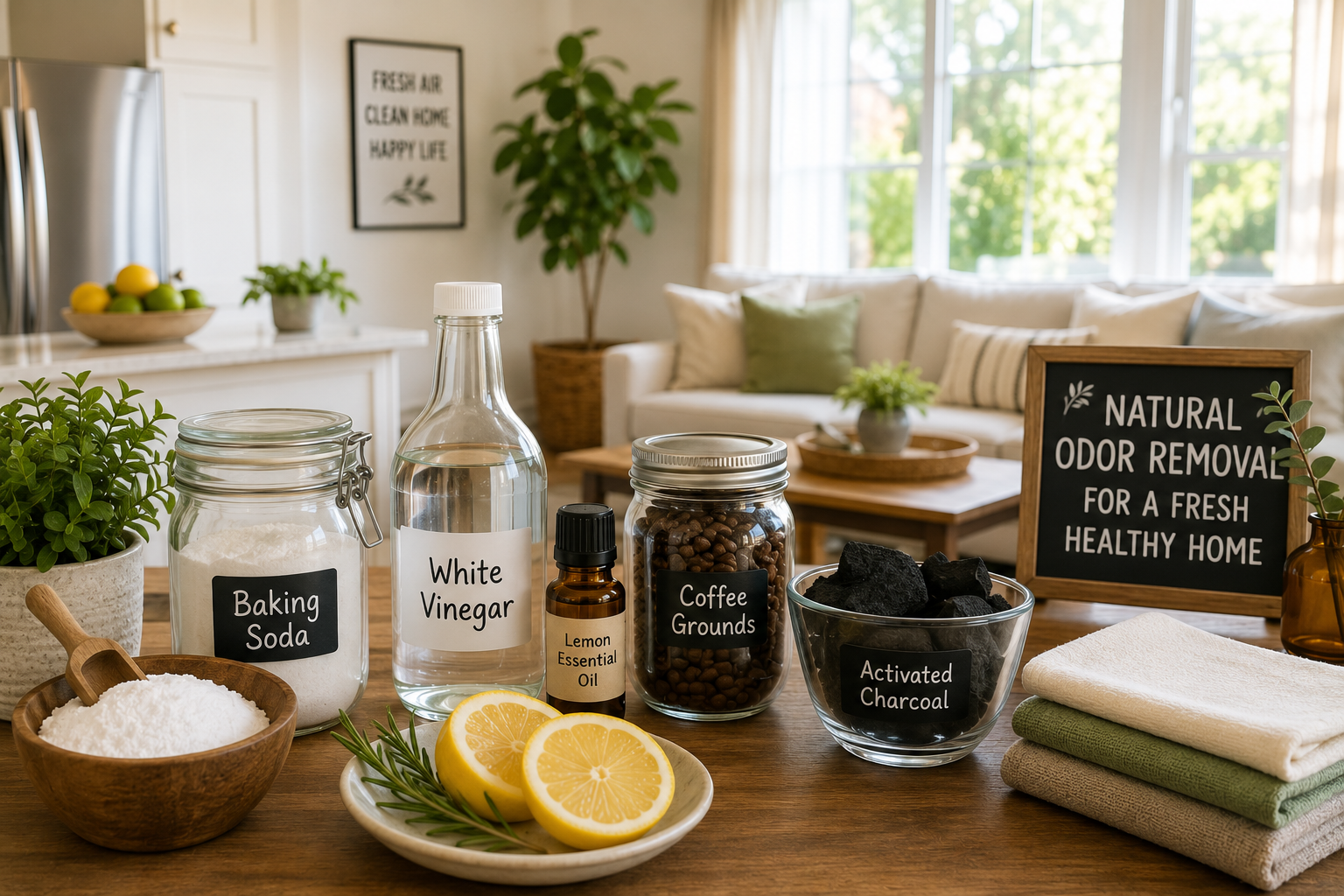
Natural odor removal methods are becoming more and more popular due to their low cost, environmental friendly and safe nature. A variety of ingredients, including baking soda, white vinegar, lemons, activated charcoal, coffee grounds and essential oils can help absorb or neutralize foul odors in your house without the use of harsh, toxic chemicals. These are easy fixes that can enhance indoor air quality, while also minimizing the need for synthetic fragrances that can irritate the respiratory system or cause allergies. With regular upkeep and the use of natural deodorizing methods, homeowners can say goodbye to persistent odors and hello to a healthier, fresher home.
Understanding the Causes of Household Odors
Bad smells come from moisture, bacteria, mold, food debris, pet dander or air quality issues. Over time, organic materials will break down and generate odors that can be easily trapped in carpet, upholstery, curtains and even painted walls. Spilled food, overflowing trash bins, dirty garbage disposals and greasy cooking surfaces can cause odors in kitchens. Persistent bathroom odor can result from damp towels, clogged drains, mildew, or other undetected plumbing problems. Homeowners often clean those surfaces you can see, but neglect the hidden spots where bacteria that cause odor can thrive, leading to unpleasant odors again soon after cleaning.
The indoor smells can also be greatly influenced by the environment. Mold thrives in high humidity and stale air lingers for long periods in the house when the air is not circulated. Moisture issues can be exacerbated by the changing seasons, particularly in basements, closets, and storage spaces. Over time, pet beds, shoes, laundry hampers, and upholstered furniture can soak up odors, giving the entire house a bad odor when they look like they’ve been cleaned. Homeowners can deal with these hidden odor sources instead of repeatedly covering the odor with air fresheners.
Why Natural Odor Removal Works Better Than Artificial Air Fresheners
You can usually only use commercial air fresheners to mask odors, and only for a short period of time. The house can smell nice for a while but the bacteria, mould or food particles that are the source of the smell will still be present. After the spray goes away, the smell is typically replaced by the original odor, thus resulting in continuous spray without any resolution. Certain products are also highly fragrant and contain chemicals that can irritate sensitive people and/or lower air quality if too much is applied.
Natural odor removal is about getting rid of the odor rather than covering it up. Baking soda neutralizes the bad odor of carpets, refrigerators, shoes, and many other household surfaces; white vinegar neutralizes the odors of alkaline items and also disinfects many household surfaces. The porous structure of the activated charcoal draws in molecules of the odor and therefore is very effective in closets, storage areas, and moist rooms. Lemon juice easily removes grease, while essential oils give it a light scent and also has antimicrobial properties. The natural alternatives are inexpensive, readily available and non-toxic for household use.
How to Reduce Kitchen Odors Naturally
The kitchen is one of the most frequent areas where bad odors occur since food preparation generates grease, moisture and organic waste on a daily basis. Bacterial growth is fostered by leftover food particles that get stuck in sinks, garbage disposals, drains, trash cans, microwaves, refrigerators, and ovens. Foul odors can start to appear within a few days after a spill, no matter how small, under or inside appliances or cabinets. By running the cleaning process regularly, these smells cannot accumulate and spread around the house.
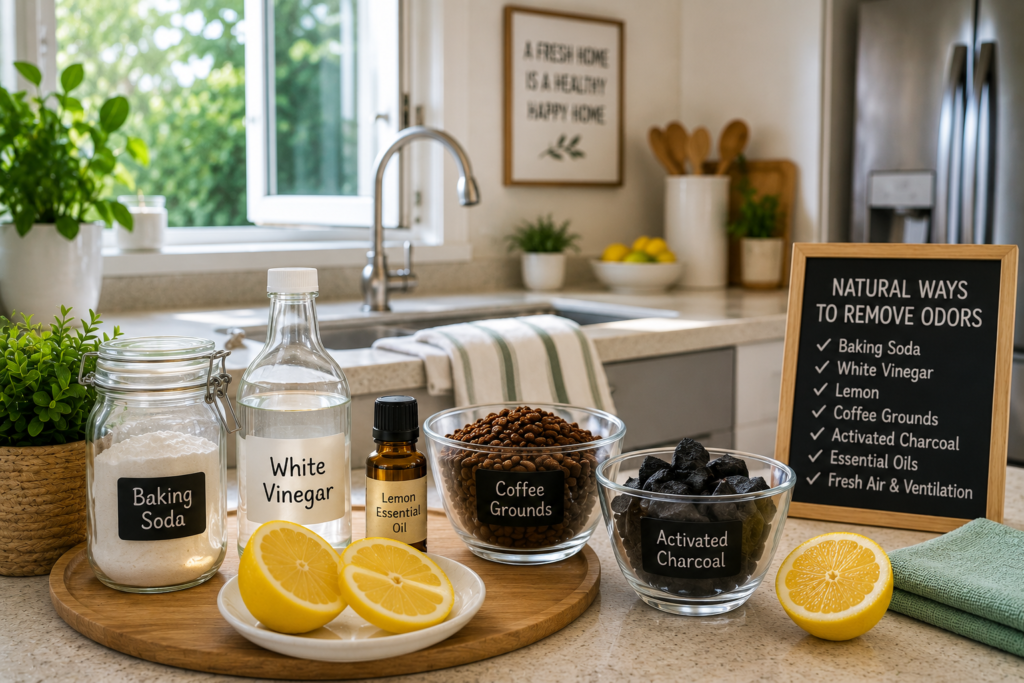
In kitchens, natural cleaners are particularly good at removing grease whilst simultaneously eliminating odors. Use baking soda in trash cans before putting in new liners to eliminate odors. Run white vinegar and hot water down kitchen drains to prevent build-up of odors. An open box of baking soda placed in the refrigerator can continuously absorb food odours and lemon slices placed in water in the house can get a fresh aroma naturally. Cleaning up after cooking in the kitchen will also help to stop any unpleasant smell getting trapped by grease that builds up on the surface.
Natural Ingredients That Keep Kitchens Fresh
The products in the house are more effective than commercial deodorizers in many cases and we have to use regularly. Certain other materials are suitable for use inside the refrigerator. Coffee grounds will soak up odours and citrus peels in the garbage disposals will reduce the odours during operation. The bags of activated charcoal may be placed in damp spots in the pantry sections. These affordable techniques rely on ongoing processes, rather than synthetic fragrances being added into the indoor environment.
Homeowners also need to keep in mind ventilation is also crucial. Cooking with open windows helps to release smoke, steam and rich food scents before they find their way into curtains, cabinets and upholstery. Regular use of exhaust fans also decreases the amount of moisture and airborne grease in the kitchen, making it consistently fresh.
Removing Bathroom Odors Without Harsh Chemicals
Bathrooms are already humid, which is the perfect breeding ground for mold, mildew and bacteria that can produce unpleasant odors. Toilets themselves are rarely the source of lingering odors, and are frequently a symptom of other problems such as damp bath mats, shower curtains, towels, clogged drains or poor ventilation. Microbial growth behind sinks or around plumbing fixtures can lead to continuous emissions of odours from the surfaces, even when they’re clean.
Natural cleaners are successful at tackling moisture issues and bacteria. Vinegar will clear mineral deposits and will not encourage mold to grow on the surfaces of the bathroom. Sinks, tubs and grout can be scrubbed with baking soda, which removes the residue and odours without harming finishes. Mildew can be prevented from forming by keeping windows open after showers or by running exhaust fans until all moisture is gone. Regularly washing bath mats, towels and shower curtains keeps bacteria at bay and helps keep your bathroom smelling fresh year round.
Improving Bathroom Airflow
One of the best methods to keep bathroom smells from recurring is to ventilate. Drying windows, allowing doors to slightly open after showering, and keeping exhaust fans working all go a long way to lowering humidity. With less moisture, there will be less mold, less bacteria and less bad odors over time.
Adding moisture-absorbing items like activated charcoal or reusable dehumidifying bags will further protect bathrooms from moisture. These natural ways, in conjunction with regular cleaning routines, leave you with a cleaner, fresher atmosphere, without the use of chemical air fresheners.
Eliminating Odors from Carpets, Furniture and Upholstery
Since soft household materials can hold moisture, dust, pet hair, smoke particles and cooking oils, they take up odors much quicker than hard surfaces. These contaminants settle onto carpets, sofas, mattresses, curtains and cushions over time and eventually emit detectable odors into the air. While there are a lot of loose particles that can be vacuumed, many odor-causing particles are stuck tight and won’t be removed with the vacuum.
Natural deodorizing treatments will bring freshness to delicate fabrics without harming them in any way. To effectively absorb trapped odours, a generous amount of baking soda is sprinkled on carpet and upholstered furniture surfaces before being vacuumed. Vinegar solutions can be used for steam cleaning, eliminating bacteria and naturally revitalizing fabric fibers. Drying cushions, rugs and mattresses in fresh air and sunlight can help to reduce bacterial growth and dry out any moisture which can cause bad odors. If these treatments are repeated frequently, odors will not be permanent.
Keeping Closets, Storage Areas and Shoes Fresh
The musty smell in closets is caused by the lack of ventilation in the closet area, and the storage of moisture-absorbing fabrics. Clothing boxes, shoes, blankets and seasonal clothing all can provide humidity and encourage mould and foul odor for months. This is especially an issue with shoes, since the bacteria continue to generate stinky smells long after you’ve taken them off.
This is where natural moisture absorbers are a great solution. Activated charcoal, cedar blocks, baking soda and silica-based dehumidifiers help to absorb unwanted odors and are dehumidifiers. Clothing that has been stored should be washed prior to long-term storage to avoid the body oils from causing odors in the long term. Sometimes you can leave the closet doors open so that fresh air circulates, and if you organize your belongings, it will not be so crowded that you will not be able to ventilate and dry it out.
Eliminating Pet and Trash Odors Naturally
While pets can provide a sense of comfort, they can also cause odors due to their fur, bedding, litter boxes, and accidents. Frequent grooming eliminates loose hair and minimises natural oils that cause an odor. Pet bedding should be washed every week and all parts of the house should be vacuumed regularly to reduce odor. When cleaning accidents the vinegar solutions will prevent any lingering odours from being absorbed into carpets or furniture, making it much harder to remove later.
Just as with the food chain, attention should be given to trash bins, as the food waste quickly decomposes, particularly during the summer. Liquid and residue left in containers still emits an odor even after garbage has been removed from the container. Regularly wash trash cans with vinegar and warm water to destroy bacteria and add baking soda to the bottom of the container to absorb odors. Proper composting of food waste and regular removal of waste to the outside also minimizes odors in the building.
Building Daily Habits to Keep Your Home Fresh
Regular habits are important to maintain for long term odor control, rather than doing intermittent deep cleanses. It’s easy to keep things clean and prevent problems in the first place, like wiping kitchen counters every day, emptying trash before it fills up, washing laundry promptly, cleaning drains once a month, and regular vacuuming. Open windows when it’s safe to do so to bring fresh air into the house to replace the stale air, and keep indoor humidity low to prevent mold growth throughout the home.
Regularly checking for natural odors in neglected spots, like under furniture, inside closets, in corners, behind appliances, under sinks and around plumbing fittings will go a long way toward getting rid of them. Don’t wait for the little moisture problems to grow into big ones; not only is this time-consuming and costly, but it can also affect indoor air quality. Using natural cleaning ingredients to complement preventive maintenance, a home will stay welcoming, comfortable and always fresh with every season.
Conclusion
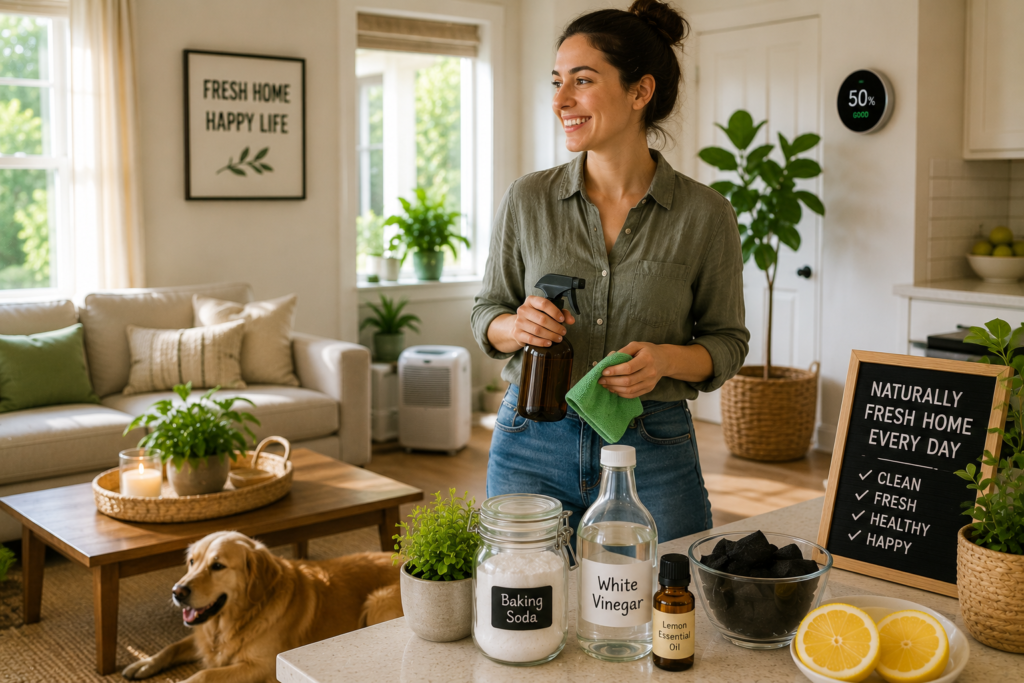
To decorate a naturally fresh home, it doesn’t need to be a very costly affair, and it doesn’t need to be a fragrant and strong aroma. The best solution is to determine the source of the foul odors and remove the source with simple, natural methods that will improve cleanliness and indoor air quality. In addition to the kitchen, bathroom, carpet, furniture and trash areas, they must be addressed from time to time as they are the perfect breeding ground for odor-producing bacteria, water, and organic growth. Fortunately, there are lots of safe, affordable and eco-friendly options available to you, such as baking soda, vinegar, lemons, coffee grounds and activated charcoal—these are all options you have in your home that can neutralize odors and stop them from ever coming back.
House owners can prevent unpleasant odors from returning by establishing a regular cleaning routine, ensuring proper air flow, managing humidity, and taking advantage of any issues before they get worse. A fresh-smelling home not only makes for a comfortable home environment, but for improved health, higher self-confidence in hosting guests, and generally a better place to live. Maintain the normal use of natural odor control over time and it becomes a routine and everyday thing that keeps every room clean, inviting and pleasant all year round.