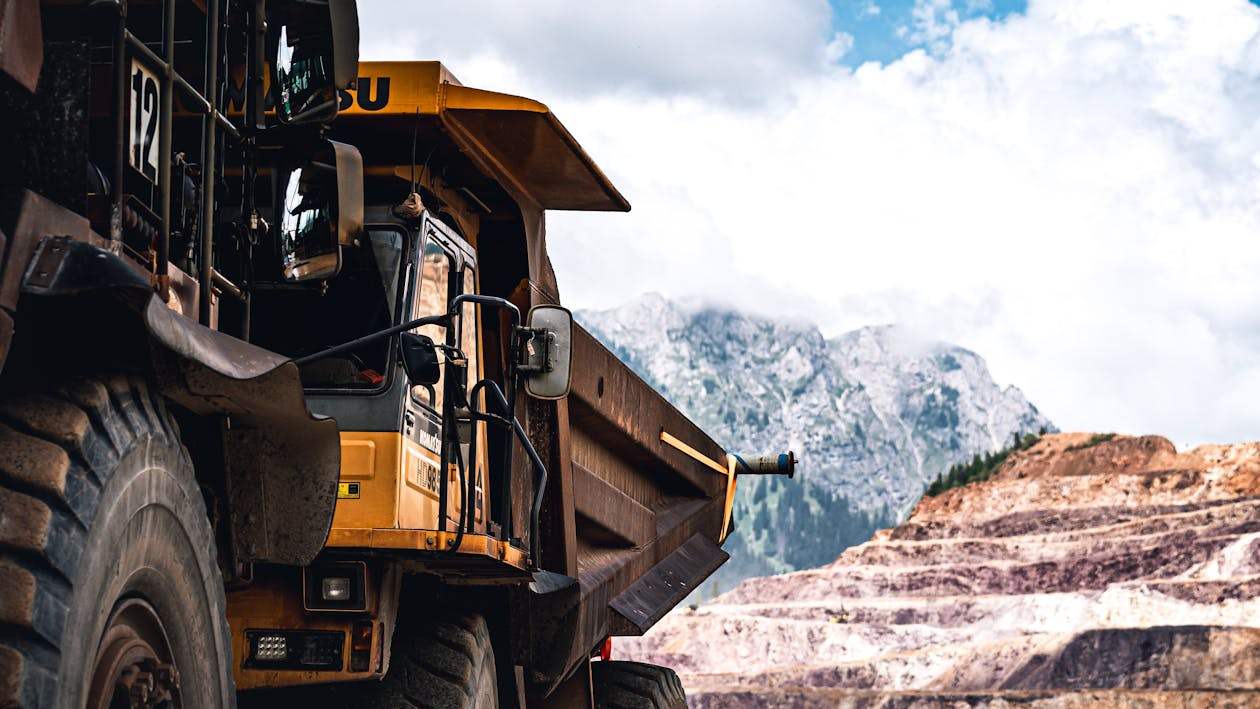
Some decisions are never announced in press releases or celebrated at conferences, yet they support the entire operation. In mining, many of those decisions happen before an excavator touches the ground or a team enters an underground tunnel. They are made in training rooms, technical meetings, and exchanges between engineers, supervisors, and operators who often do not share the same language or cultural context. That is where something non-negotiable is defined: how work is carried out without anyone getting hurt.
In recent years, the expansion of mining projects into increasingly diverse geographies has made this scenario more complex. Companies headquartered in North America operate in Latin America, Africa, or Asia; they hire local staff; integrate international suppliers; undergo external audits; and coordinate technical teams across multiple jurisdictions. All of this takes place under strict regulatory standards and with zero tolerance for error.
Industrial safety is no longer just a set of rules printed in a manual. It is a living system that must be understood, internalized, and executed consistently—even when teams speak different languages or interpret hierarchies differently.
When Technical Knowledge Isn’t Enough
Mining training programs are often designed with strong technical rigor: diagrams, simulations, detailed protocols, risk matrices, evacuation procedures, and proper use of personal protective equipment. However, technical knowledge does not always translate automatically into safe behavior.
In multicultural environments, subtle nuances can change how a message is received. In some cultures, questioning a supervisor during training may be seen as disrespectful. In others, open discussion is an essential part of learning. That difference directly impacts the early detection of doubts or misunderstandings.
A protocol that is poorly understood usually does not show up in the classroom. It becomes visible in the field—during the night shift, or in the rushed execution of a routine task. That is why training cannot be limited to delivering information. It must ensure real understanding.
Protocols That Cross Borders
Large mining companies operate under regulatory frameworks that vary by country, but also under global corporate standards. The result is overlapping requirements that demand terminological precision and conceptual consistency.
When a lockout/tagout procedure is explained in English, adapted into Spanish for teams in Latin America, and later reviewed with local contractors, every step must preserve its original meaning. The goal is not to translate words, but to preserve technical intent.
In this context, many companies integrate language support mechanisms during large-scale in-person training sessions, internal audits, or external certifications. In sessions where foreign engineers, local managers, and operational teams participate, interpretation for on-site events ensures technical discussions flow without distortion, preventing language barriers from becoming latent safety risks.
This is not an ornamental resource. It is a risk management tool.
The Human Factor in Prevention
Mining is an industry where statistics coexist with unpredictability. Incidents are measured, events are classified, and risk matrices are updated. But every number represents a real situation involving people.
Effective prevention emerges when workers understand not only the “how,” but also the “why” behind every protocol. In multicultural environments, that understanding can be affected by differences in risk perception.
In some regions, exposure to informal work environments leads to the normalization of danger. In others, strict regulation creates greater sensitivity to any deviation. When both profiles coexist within the same project, training must align criteria without imposing models abruptly.
Companies that successfully integrate these differences often incorporate participatory dynamics, contextualized case studies, and spaces where local experiences are incorporated into global standards. Learning stops being one-directional and becomes a technical dialogue.
Training That Doesn’t End in the Classroom

Initial training is only the starting point. Mining projects evolve, expand, and shift phases. New contractors join, technologies are updated, and regulations change.
Maintaining safety consistency requires ongoing training programs: quarterly meetings, specialized workshops, and full-scale drills. In every instance, communication clarity becomes critical again.
When evacuation simulations or emergency response exercises are conducted with international teams, every instruction must be understood without ambiguity. A partial interpretation can delay a critical response.
That is why many companies incorporate linguistic planning into the design of their training programs, in the same way they plan logistics or equipment availability.
Audits and Certifications in Multicultural Environments
External audits represent another sensitive moment. International inspectors review documentation, interview employees, and walk through facilities. In these exchanges, precision is essential.
A supervisor responding in a local language while the auditor asks questions in English may depend on third parties to convey complex technical information. In these scenarios, communication quality influences the perception of compliance.
It is not just about passing an evaluation. It is about proving that protocols are not merely administrative formalities, but practices embedded in daily operations.
The consistency between what is documented and what is executed becomes more visible when all stakeholders share the same understanding.
Safety as a Common Language
When an organization ensures that an operator in Peru, an engineer in Canada, and a supervisor in Australia understand a protocol with the same clarity, the operation gains cohesion. Not because everyone thinks the same way, but because they share a consistent operational framework.
That coherence does not happen spontaneously. It is built through planning, investment in continuous training, and careful attention to details that may seem minor at first glance.
Mining will continue expanding into diverse territories, incorporating local talent and collaborating with international teams. In that context, industrial safety cannot rely solely on standardized manuals. It requires systems that ensure every instruction, warning, and procedure is understood in the same way—regardless of the language in which it is delivered.