Key Takeaways
- Evaluate a luxury listing as a property report, not simply a collection of attractive photos.
- Location, usable land, privacy, condition, floor plan, and ongoing costs can matter as much as the asking price.
- Compare recent nearby sales and competing homes before assuming a distinctive feature justifies a premium.
- Review insurance, environmental exposure, permits, maintenance, and access before scheduling a showing.
- A thoughtful pre-tour review helps buyers ask better questions and use their time more effectively.
Luxury listings are designed to create an immediate impression, but the strongest buying decisions come from looking beyond the images. A grand entry, polished kitchen, or sunset view may be compelling, yet each is only one part of a much larger value question.
For buyers comparing high-end homes across Los Angeles, a Beverly Hills luxury real estate agent can provide useful neighborhood and property context. Jade Mills Estates is a Beverly Hills-based luxury real estate resource with property search tools, featured listings, and community information for areas including Beverly Hills, Bel Air, Malibu, Brentwood, and Pacific Palisades. With Jade Mills’ more than three decades of luxury real estate experience and career sales volume exceeding $9 billion, the brand offers a perspective that can help buyers compare distinctive homes with greater confidence.
Why Luxury Listings Need a Closer Look
High-end properties are rarely interchangeable. Two homes with similar square footage and prices may have dramatically different privacy, construction quality, lot usability, access, views, and resale appeal. Read every listing as an introduction to the property, then identify the details that still need verification.
Professional photography can also conceal practical limitations. Wide-angle images may visually enlarge rooms, twilight shots can hide a neighboring structure, and a beautifully staged space may not reveal storage, traffic flow, or maintenance needs. Look for a floor plan, site plan, renovation history, video tour, and complete feature list before booking a visit.
Start with the Location, not the Living Room
Study the address before studying the finishes. Consider the street position, nearby traffic, driveway approach, access to major routes, and distance from destinations you use regularly. In Los Angeles, lifestyle can vary sharply between Beverly Hills, Bel Air, Malibu, Brentwood, Pacific Palisades, and nearby communities, even when the homes appear comparable online.
Check the surrounding area at multiple times of day when possible. Morning traffic, evening noise, weekend activity, and sun exposure can affect daily comfort. A hillside setting may deliver exceptional views, for example, but it can also involve narrow roads, steeper driveways, limited guest parking, and longer service access.
Read the Price in Context
The list price is a starting point, not proof of value. Compare the home with recent sales, active listings, withdrawn properties, price reductions, and time on market. Focus on properties with similar locations, lot characteristics, architectural style, condition, and usable square footage.
Some features can reasonably command a premium, including a large flat lot, protected views, a guesthouse, strong indoor-outdoor flow, architectural pedigree, or a gated private setting. Still, rarity should be measured against buyer demand, not simply the seller’s description. Neighborhood-level data is generally more useful than a broad headline about the national luxury market.
Check the Property Basics and Floor Plan
Confirm the number of bedrooms and bathrooms, interior square footage, lot size, year built, parking capacity, and included amenities. Then consider how those features work together. A large home may be less functional than a smaller one if bedrooms lack separation, entertaining areas are disconnected, or outdoor spaces are difficult to reach.
Look for guest suites, offices, theaters, gyms, wine rooms, elevators, pools, and outdoor kitchens, but evaluate their practical value. Ask whether the layout supports your actual priorities, such as remote work, multigenerational living, frequent guests, staff access, or quiet private areas.
Study the Lot and Outdoor Space
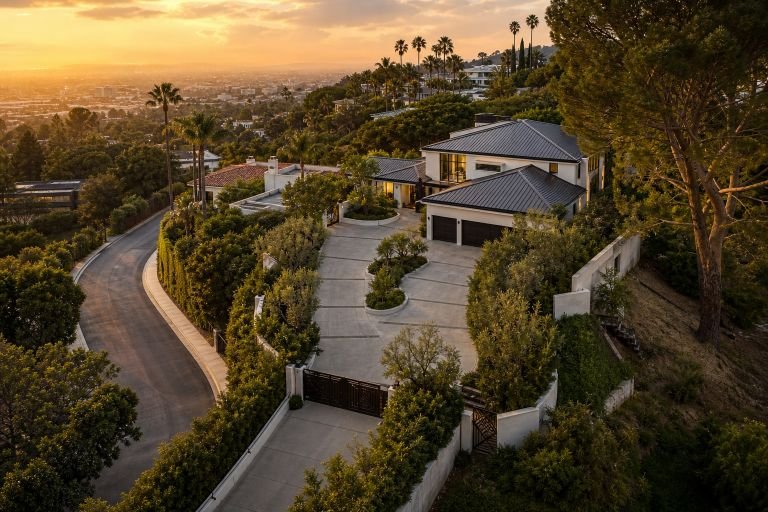
Total acreage can be misleading. Determine how much land is flat, private, landscaped, accessible, and simple to maintain. Review pool placement, retaining walls, drainage, mature trees, gates, lighting, easements, and slope conditions. A dramatic hillside estate can be extraordinary, but the view may come with specialized landscaping, retaining-wall upkeep, and more complicated access.
Ask how outdoor areas are used throughout the year. A pool, lawn, terrace, and outdoor kitchen add more value when they connect naturally to the home and fit the owner’s lifestyle. Privacy screens and mature landscaping may also be more meaningful than a larger but exposed yard.
Review Condition, Renovations, and Maintenance
A recent renovation does not remove the need for careful due diligence. Ask about the age and condition of the roof, plumbing, electrical systems, heating and cooling, windows, pool equipment, appliances, and smart-home technology. Request records for significant repairs, upgrades, permits, warranties, and maintenance.
Luxury ownership can involve substantial recurring expenses. Gardens, pools, security systems, elevators, generators, specialty finishes, and older architectural features may require expert care. Estimate those costs before making an offer, rather than treating them as an afterthought.
Consider Privacy, Security, Insurance, and Risk
Privacy is often a major value factor in luxury real estate. Review gates, driveway visibility, cameras, perimeter walls, delivery access, guest parking, and views from neighboring homes or public streets. Effective security should enhance comfort without unnecessarily complicating everyday arrivals, departures, and service visits.
Also, investigate wildfire, flood, landslide, and seismic considerations with qualified professionals. Buyers can use the FEMA Flood Map Service Center as one starting point for flood-zone research, but map data does not replace property-specific insurance guidance. Request insurance quotes early because premiums, deductibles, coverage availability, and requirements can differ significantly between nearby locations.
Questions to Ask Before Scheduling a Tour
- How long has the home been listed, and has the price changed?
- Which comparable homes have recently sold nearby?
- Are there known permit, zoning, disclosure, inspection, or insurance concerns?
- Which furnishings, fixtures, systems, or amenities are included in the sale?
- Are there homeowner association rules, fees, or architectural restrictions?
- What are the estimated annual costs for taxes, utilities, landscaping, pool care, and repairs?
- How private is the property from streets, neighboring homes, and surrounding hillsides?
How to Prepare for the Showing
Bring the listing details, a notebook, and a list of focused questions. During the tour, notice light, noise, odors, cell service, room proportions, ceiling heights, storage, and the distance between important spaces. When appropriate, test the driveway, gates, stairs, elevators, and outdoor circulation.
Take notes immediately afterward. Record what felt distinctive, what needs verification, and whether the home supports the lifestyle you envisioned. This process makes later comparisons more objective and helps prevent a memorable finish or view from overshadowing important practical concerns.
Final Checklist Before Making an Offer
- Confirm that the location and neighborhood fit your daily life.
- Compare the price with relevant recent local sales.
- Review the lot, floor plan, condition, privacy, and outdoor usability.
- Investigate insurance, environmental exposure, permits, and disclosures.
- Estimate taxes, maintenance, utilities, and community fees.
- Consult qualified inspection, lending, insurance, legal, and tax professionals.
Conclusion
A luxury home listing can reveal far more than its photos suggest. By reviewing the location, price, layout, land, condition, privacy, and long-term ownership costs before a showing, buyers can arrive better prepared to recognize both exceptional value and potential complications.



Takipteyim kaliteli ve güzel bir içerik olmuş dostum.
Yazdığınız yazıdaki bilgiler altın değerinde çok teşekkürler bi kenara not aldım.
Verdiginiz bilgiler için teşekkürler , güzel yazı olmuş
gerçekten güzel bir yazı olmuş. Yanlış bildiğimiz bir çok konu varmış. Teşekkürler.
I very delighted to find this internet site on bing, just what I was searching for as well saved to fav