Hormonal balance in women: Hormones are powerful chemical messengers that control many important processes in a woman’s body, such as menstrual cycles, mood, metabolism, and fertility. With the balance of these hormones, the body functions well. Nevertheless, even minor disturbances may cause some observable physical and emotional shifts. Hormone awareness, knowledge of initial indicators of imbalance, and proactive actions are crucial to health and well-being.
What Are Hormones and What Is the Importance of Hormones?
Hormones are substances secreted by glands in endocrine system, such as the ovaries, thyroid, adrenal glands and pituitary gland. They go via the blood to tissues and organs and control functions like:
- Growth and development
- Production and metabolism of energy.
- Sexual functioning and fertility.
- Mood stability and emotional reactions.
Key Hormones in Women’s Health
In women, estrogen, progesterone and testosterone hormones are particularly important. These hormones naturally vary with the different stages in life, like puberty, menstruation, pregnancy and menopause.
- Estrogen
The most common female hormone is referred to as estrogen. It controls the menstrual cycle, helps in bone health, and helps in skin elasticity and mood maintenance.
- Progesterone
Progesterone combines with estrogen to control the menstrual cycle and prepares the body to get pregnant. It also has a calming effect on the brain.
- Testosterone
Testosterone helps in libido, muscle strength, and energy levels, though it is found in small quantities among women.
- Thyroid Hormones
These hormones control metabolism, influencing how the body uses energy. Imbalance may result in gaining weight, being tired, or becoming anxious.
- Cortisol
Cortisol is also known as the stress hormone, and it aids the body in reacting to stress. Nevertheless, chronic stress may result in a long-term high level of cortisol, which interferes with the work of other hormones.
Functions of Hormones in the Body
- Menstrual Cycle Regulation
Each of the menstrual phases is regulated by hormones. Estrogen enriches the uterine lining, whereas progesterone prepares the uterine lining in case of pregnancy. The imbalance may cause irregular cycles or missed cycles.
- Mood and Emotional Health
The mood can be considerably influenced by hormonal changes. Hormonal changes can cause irritability, anxiety or depression in many women, particularly around the time of menstruation or menopause.
- Metabolism and Weight Management
Insulin and thyroid hormones are hormones that control the way the body utilizes food and stores energy. The imbalances can result in unaccounted weight gain or an inability to lose weight.
- Reproductive Function
Hormones play a vital role in ovulation, fertility and pregnancy. Healthy egg production and uterine functioning are guaranteed by proper hormonal balance. To get more in-depth information about reproductive health maintenance, one needs to learn about the impact of environmental and lifestyle factors on hormonal systems.
Causes of Hormonal Imbalance
The causes of hormonal imbalance may encompass lifestyle habits to medical conditions. Hormonal imbalance can result from a variety of factors, ranging from lifestyle habits to underlying medical conditions.
- Chronic Stress
Stress over a long period of time raises the levels of cortisol that may inhibit reproductive hormones and interfere with menstrual cycles.
- Poor Diet
Unhealthy fats, sugar, and high amounts of processed foods may disrupt the production of hormones and the regulation of insulin.
- Physical Inactivity
Inactive lifestyles also lead to weight gain and insulin resistance, which also influences the hormonal balance.
- Sleep Deprivation
Poor sleep interferes with the release of hormones that control appetite, mood, and energy.
- Medical Conditions
Hormonal imbalances are closely associated with such conditions as polycystic ovary syndrome (PCOS), thyroid disorders, and diabetes.
- Environmental Factors
Hormone functions can be disrupted by exposure to endocrine-disrupting chemicals in plastics, cosmetics, and pesticides.
Signs and Symptoms of Hormonal Imbalance
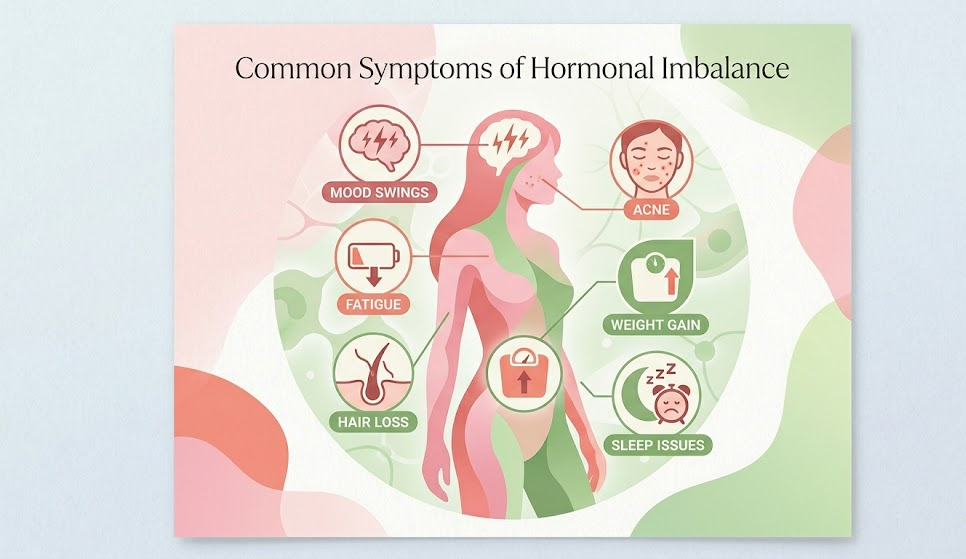
Early detection of hormonal imbalance can be used to avert more serious health problems. Common symptoms include:
- Periods that are irregular or skipped
- Persistent fatigue
- Acne or oily skin
- Weight gain or weight loss with no cause
- Depression, mood swings, or anxiety
- Low libido
- Hair loss or too much hair
- Sleep disturbances
These symptoms can be different based on the affected hormones.
Lifestyle Strategies in Maintaining Hormonal Balance

Simple and regular living habits can be a start to maintaining hormonal stability.
Balanced Nutrition
- Consumption of whole foods with nutrients aids in hormone synthesis. Include:
- Whole grains (avocados, nuts, olive oil)
- Lean proteins
- Fibre-rich vegetables
- Whole grains
- Limit sugary things and junk foods as they raise the amount of insulin.
Regular Exercise
Exercise aids in insulin level control, de-stressing, and is beneficial in maintaining a normal weight. Target: a mix of:
- Cardiovascular exercises
- Strength training
- Bendy workouts, such as yoga.
Stress Management
Cortisol can be reduced through practices like meditation, deep breathing, and mindfulness, which help to enhance the well-being of the hormones as a whole.
Adequate Sleep
A target of 7-9 hours of good sleep every night should be considered to help with hormone levels and wellness.
Hydration
Water is also necessary to aid the metabolic functions and to aid in flushing out toxins that can affect hormonal balance.
Drug Therapies and Surgery
In cases where lifestyle modifications are ineffective, medical treatment might be needed.
Hormone Therapy
Hormone replacement therapy (HRT) may be prescribed by doctors to treat deficiencies or imbalances.
Medications
Certain drugs may be taken to control the menstrual cycles, thyroid diseases or the insulin levels.
Regular Check-Ups
Regular blood tests and medical check-ups allow for identifying imbalances at an early stage and informing treatment programs.
Preventive Measures for Long-Term Hormonal Balance in Women
It is always better to prevent rather than to treat. Hormonal balance in women is further maintained by:
- Observing regular menstrual cycles
- Managing stress effectively
- Keeping a good weight
- Not being exposed to dangerous chemicals
- Seeking medical advice when symptoms persist
Consistency in these habits is key to sustaining hormonal health over time.
Final Words
Hormonal balance in women is an essential component of overall health as it affects all aspects of her physical health, emotional stability, and even her reproductive health. Although hormonal change is a normal occurrence in life, the constant imbalances can indicate that there is something wrong that should be addressed.
Women can take charge of their health by knowing how hormones work, the initial signs and symptoms, and practising good lifestyle habits. Regardless of diet, exercise, stress management, or medical treatment, it is not only possible but crucial to keep the hormones stable in order to live a healthy and good life.