Introduction
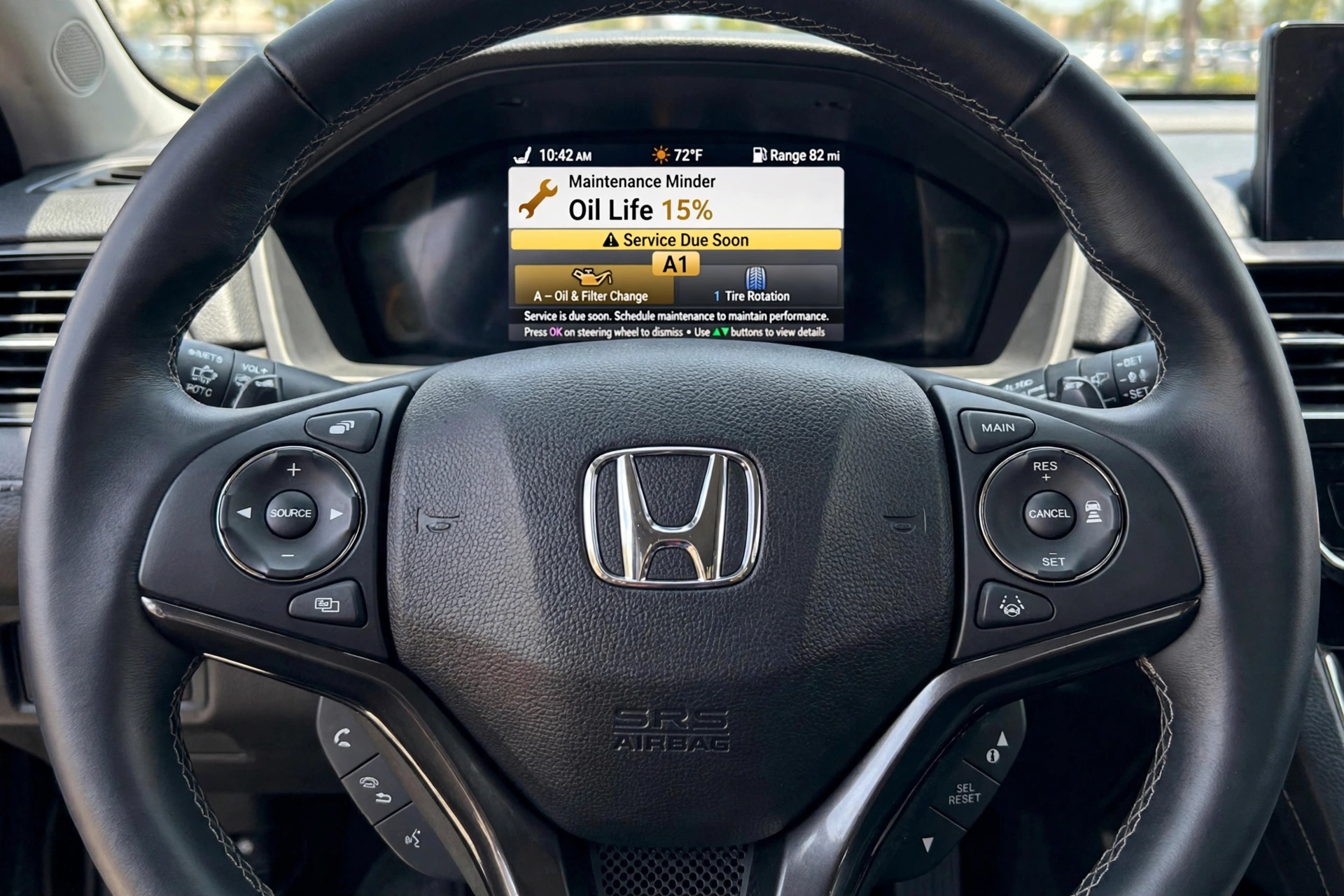
Honda Maintenance Schedule keeps your reliable Honda running safely, efficiently and reliably. Honda is a very reliable brand, but even trusted Hondas require regular maintenance to avoid small issues becoming large, expensive repairs and to protect trade-in value. What you should do varies by model, engine type, CVT/automatic/manual transmission, mileage and driving conditions, so check the Maintenance Minder for your specific Honda.
Sure, here is the paraphrased version of the text: Honda’s service history is also a great asset when it comes to pre-owned car shopping. With full service records in hand, we, as buyers, have the information with which to determine what work has been done. Also, regular oil changes, transmission fluid service, brake checks, timing belt maintenance, and Honda Sensing, which we can see if they have been looked at, all play a role in the car’s dependability.
Honda Maintenance Schedule by Mileage
Honda has developed their Maintenance Minder, which determines when your car needs care. We do not have a set schedule for all models; what we have is a system that looks at how you drive and how many miles you put on the car, and based on that info, we alert you when it is time for maintenance. Common services include oil changes, tire rotations, inspections, air filter replacement, transmission fluid service, and other model-specific work.
During the first 30,000 miles, what owners will see is that oil changes, tire rotations, brake inspections, fluid checks, and general care are the main things. Between 30,000 and 60,000 miles, it is also at this time that other services like transmission fluid, filters, spark plugs, coolant, and other components, which will vary by model, may be required. From 60,000 to 100,000 miles, the focus turns to major maintenance and wear items.
0 to 30,000 Miles
During the first 30,000 miles, at which point regular oil and filter changes become the most important services. Also, owners should pay attention to tire pressure, rotate tires as per the recommended schedule, have the brakes checked, and see that fluid levels are at proper marks. It is advised that warning lights, strange noises, vibrations, or any changes in how the car performs be looked into instead of ignored.
This, at the same time, is a great time to put together a maintenance record. We recommend keeping what you receive from service; these will make future maintenance easier to track and also may increase the car’s value at resale. Also, new Honda owners should familiarize themselves with the Maintenance Minder system and go by the recommended maintenance schedule for your specific vehicle.
30,000 to 60,000 Miles
At 50,000 to 100,000 km, which is the equivalent for Honda owners, is to do regular oil changes and checkups, during which they also pay close attention to the transmission fluid, filters, brakes, coolant, spark plugs, as well as model-specific requirements. Timing of services may vary, so it is up to the owner to not assume that all Hondas require the same service at the same distance.
In the world of used cars, this is an important range which we look at for maintenance history, which tells us how well a vehicle has been cared for. A Honda that has had its oil changed, transmission serviced, brakes inspected, and other scheduled care is usually an easier car to evaluate than one which has had little or no service.
Oil Changes and Transmission Fluid

Engine oil, which plays a key role in protecting internal components from wear and heat, is also what makes oil maintenance so very important in Honda care. We recommend that owners use the Maintenance Minder system and use the oil which is recommended for their vehicle. As the engine logs more miles, that which in turn causes more wear, we see the importance of regular oil service increase.
Transmission oil is just as important, which is for the purpose of lubricating and cooling transmission elements. Honda has a variety of transmission types, which include CVTs, automatics, and manuals, so the right fluid and service for your make and model is key. It is recommended you use the oil which Honda says is right for your car and pay attention to signs of trouble like odd shift feel, delay, or out-of-the-ordinary noises.
Brake Pads and Brake Maintenance
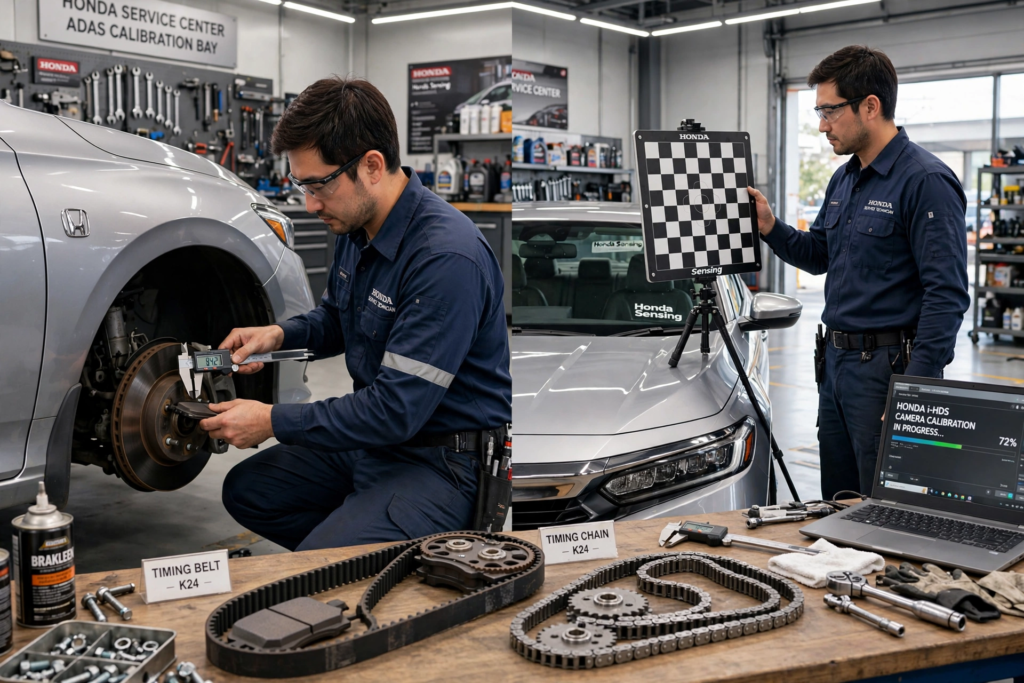
Brake pad life is a result of the type of driving you do. In city traffic, which requires lots of stopping, your pads will wear out faster than in open-road use. There isn’t a set mileage for pad replacement for every Honda, as wear is variable. Also, we recommend regular brake checks, which include a pad thickness check and identifying worn rotors and other issues before your brake performance is affected.
Brake fluid and that which pertains to the brake system in general requires attention. Squealing, grinding, vibration, pulling, or changes in pedal feel should be reported as soon as they are noticed. At the first sign of worn-out brake parts, it is best to replace them, which in turn will prevent more damage and will also help keep repair costs down.
Timing Belt vs. Timing Chain
Honda uses different timing systems, which may include chains or belts based on the engine. Also, we see that timing belts are a part of the regular maintenance, which varies by model and which also varies by engine. In some cases, it is best to replace the belt before failure, which in turn may cause severe engine damage, hence very important to do so at the recommended intervals.
Timing chains do not have the maintenance intervals of timing belts; instead, they also require proper engine lubrication. We see that regular oil changes are key for cars that have timing chains. What owners should do is check out the individual maintenance needs of the engine in question, which may not be the same across all Honda models.
Honda Sensing Calibration
Honda Sensing, which includes features like collision mitigation, lane keeping assistance, and adaptive cruise control in what is dependent on the model. These systems, which are made up of cameras, sensors, and electronic components, note that which repair work is done is important for their performance.
Calibration is a service which does not usually go with every oil change. What we do see is that it may be required after a windshield repair, post-collision repairs, sensor replacement, or in the case of any work that may have affected the system. If you see a Honda Sensing warning, then the issue should be looked at according to the proper Honda service procedures.
Honda Ownership and Repair Costs
Honda is known for being an affordable brand in comparison to many luxury cars. At an average of $428 per year for repair, which RepairPal reports, that is the expected range for most Honda vehicles’ maintenance. Of course, this is a general estimate and does, in fact, vary by model, age, mileage, location, and also the overall condition of the car. Also, some years may just have simple maintenance issues, while others may require more in-depth work.
Owners need to separate out routine maintenance from unexpected repairs when it comes to budgeting. We see oil changes, filters, fluids, brakes, and tires as routine ownership expenses, but repairs like suspension work, air conditioning issues, starter replacement, or other component failures are to be expected. Also, putting aside an emergency repair fund will make these expenses more manageable.
How to Keep a Honda Reliable
The way to lower your long-term Honda ownership costs is to stick to the factory maintenance schedule as opposed to waiting until a component breaks. Routine oil changes, proper tire pressure, brake checks, that which is related to fluids, and timely wear parts replacement will also help avoid more expensive issues.
Driving habits do play a role in vehicle wear. Even smooth acceleration and braking, regular tire care, and paying attention to warning lights, which is also very important. In complex issues which the owner does not feel at ease with, it is best to turn to a professional technician that is well versed in Honda models. This is very true for transmission work, timing belt replacement, or any of the Honda Sensing features.
Conclusion
Maintaining your Honda may not be as complex as some make out, but it’s up to you to see to it that your car is reliable. For that, you must do regular oil changes, transmission fluid services, brake work, timing belt or chain care, and bring it in for Honda Sensing checks.
For car buyers that have had their eye on the used market, maintenance history is very much a factor, as is mileage. A Honda which has high miles but has been well maintained may, in fact, be a better buy than a low-mileage car which has been neglected. By following the right maintenance schedule and budgeting for routine service as well as the unexpected repair, Honda owners can keep their cars’ performance at a high level, also, which in turn will help to control long-term ownership costs.