Montreal in 2026 is a city where you can order restaurant food, a week’s worth of groceries, a last-minute gift, and a parcel across town, and have all four at your door the same day through four different apps. Home delivery has moved from a convenience to an expectation across most of the island, and the infrastructure supporting it has matured considerably since its pandemic-era acceleration.
Canada’s online food delivery market generated approximately $19 billion USD in 2024 and is projected to grow to $28.6 billion USD by 2030, growing at 7.7% annually. Montreal, as the country’s second-largest metropolitan area with a dense urban population and a strong restaurant culture, participates actively in that growth. This article covers how home delivery in Montreal actually works in 2026, who the main players are, what you can get delivered, and what to expect in terms of costs and service quality.
food delivery: the most active segment in Montreal
Food delivery is the most used home delivery service in Montreal, driven by the city’s extraordinary restaurant density, its multicultural population, and a culture that takes food seriously across every price point. The three dominant platforms in the Canadian food delivery market are Uber Eats, DoorDash, and SkipTheDishes, with Uber Eats and DoorDash being the most actively used in Montreal specifically.
Across Canada, 54% of consumers used Uber Eats in the past year and 49% used DoorDash, according to Deliverect’s 2025 report. In Montreal’s urban market, both platforms offer broad coverage across the plateau, downtown, Rosemont, NDG, Verdun, and most central boroughs. Delivery times vary between 25 and 50 minutes depending on restaurant proximity, time of day, and courier availability, with peak hours on Friday and Saturday evenings producing the longest waits.
One important practical reality for Montreal food delivery users: the markup is real and it is significant. An investigation by Le Devoir found that using Uber Eats or DoorDash adds on average 36% to the price of a restaurant meal in Montreal when you factor in delivery fees, service fees, and the price inflation some restaurants apply to their delivery menus relative to their in-restaurant menus. A $20 meal can easily become $28 to $30 by the time fees are applied. This cost gap has led many Montreal residents to use delivery platforms selectively rather than habitually, reserving them for situations where the convenience premium is genuinely worth it.
grocery delivery: the fastest-growing category in Montreal
Grocery delivery in Canada is projected to grow by 10.8% in 2026, the fastest growth rate of any home delivery segment. Montreal residents now have several options for getting groceries delivered to their door, ranging from the major supermarket chains’ own delivery services to third-party quick-commerce platforms.
IGA, Metro, and Maxi all offer home delivery through their own platforms and through partnerships with Instacart. IGA’s delivery service is well-established in Montreal and covers most of the island with scheduled delivery windows. Metro’s service similarly covers the majority of the island. Instacart operates as an aggregator that allows Montreal residents to order from multiple grocery chains, including some that do not have their own delivery infrastructure, with shoppers picking and delivering the same day.
Uber Eats has also expanded aggressively into grocery and convenience delivery in Montreal, partnering with Metro, Couche-Tard, and other retailers to offer fast delivery of a curated selection of items. The quick-commerce model, where a small selection of high-frequency grocery items can be delivered in 15 to 30 minutes from a local micro-warehouse, has established a foothold in Montreal’s denser neighborhoods, though the category is more developed in other major cities than in Montreal specifically.
same-day parcel and courier delivery in Montreal
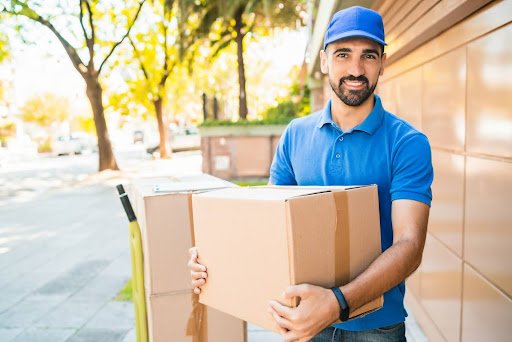
Beyond food and groceries, Montreal has a functional same-day delivery ecosystem for parcels, documents, gifts, and other goods. Uber Direct and Uber Coursier are available in Montreal, offering same-day or within-hours delivery of items that fit in a standard vehicle trunk, at prices that vary based on distance and item size. These services are used both by businesses offering local delivery and by individuals sending items across the city.
Canada Post, Purolator, FedEx, and UPS all offer home delivery in Montreal through their standard networks, with next-day and two-day options available depending on origin and service level. Amazon’s delivery network in Montreal has expanded significantly, with same-day delivery now available on eligible Prime items in many Montreal neighborhoods, particularly in areas with high population density that Amazon’s local delivery network prioritizes.
For businesses operating in Montreal, Uber Direct offers a white-label same-day delivery solution that allows retailers and service businesses to offer branded home delivery without building their own logistics infrastructure. The service handles pickup at the business location and delivery to the customer’s door with real-time tracking, and it covers most of the island of Montreal.
what drives Montreal’s strong delivery market
Several factors make Montreal a particularly active home delivery market. The city’s density is the most fundamental: large portions of the island have population densities that make delivery economics work, with many customers within short distances of restaurants, grocery stores, and retail. This density supports faster delivery times and better courier availability than lower-density markets, which reinforces usage.
Montreal’s winters are also a structural driver. Canada’s severe winters drive consumers toward home delivery as an alternative to going out in conditions that can be genuinely unpleasant. This seasonal demand pattern is particularly pronounced in Montreal, where winter temperatures and snow accumulation are more extreme than in Vancouver and comparable to Toronto. Food delivery platforms in Canada specifically note weather as a meaningful driver of delivery revenue growth, and Montreal’s winters are among the most reliable seasonal demand catalysts in the country.
Montreal’s multicultural population, with strong representation from communities with varied culinary traditions, generates demand for restaurant delivery across an unusually diverse range of cuisines. The city’s restaurant culture, which is among the most active in Canada on a per-capita basis, means the supply of delivery-available restaurants is deep and competitive, which in turn supports consumer usage. When there is always something worth ordering, people order more.
ghost kitchens and the changing restaurant supply
Ghost kitchens, which operate exclusively for delivery without a dine-in space, have established a meaningful presence in Montreal. These operations reduce overhead by eliminating dining rooms, waitstaff, and the real estate premium of high-traffic retail locations, allowing them to produce delivery-optimized food at competitive prices. In 2026, ghost kitchens are a normal feature of major Canadian cities’ delivery ecosystems, and Montreal has its own growing cluster of these operations across the island.
For consumers, ghost kitchens are usually invisible. The restaurant brand you see on Uber Eats may be a ghost kitchen operation rather than a full-service restaurant, and the food quality and delivery performance can vary significantly. For Montreal’s restaurant industry, ghost kitchens represent both competition for traditional restaurants and an accessible entry point for food entrepreneurs who want to reach delivery customers without the full capital commitment of a dine-in establishment.