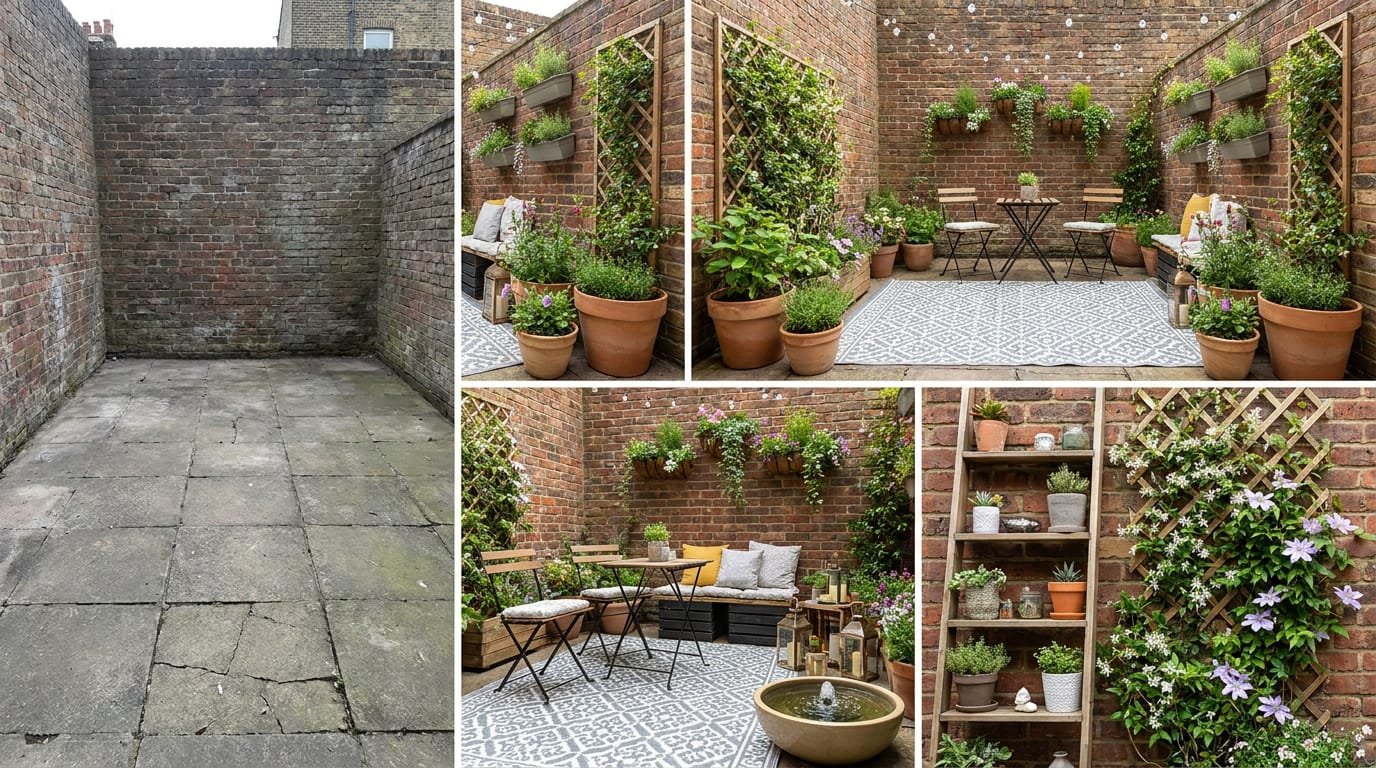
I have a small courtyard. When I first moved in, it was essentially a concrete box — high brick walls on three sides, a cracked paving slab floor, and about the same square footage as a generous parking space. I remember standing in it on the day I moved in, looking around at the grey walls and dead corners, and wondering what on earth I was supposed to do with it.
Four years later, it is one of my favourite parts of the house. I have eaten out there, worked from it, had friends around for evenings that stretched until midnight, and grown an embarrassing number of plants in it. The transformation did not require a landscaper, planning permission, or anything close to a serious budget. It required understanding what actually works in a small outdoor space and making decisions based on that understanding rather than just buying things that look nice in isolation.
If you are working with a small garden, balcony, courtyard, or patio, this article is an honest account of what the process actually looks like.
The Small Space Mindset Shift
The biggest adjustment you need to make when decorating a small outdoor space is to stop thinking about what you cannot do — no room for a lawn, no space for a large dining set, no depth for a proper garden border — and start thinking about what the smallness actually allows.
Small spaces are intimate. They are enclosed and private in a way that large open gardens are not. They can be furnished and decorated more like an outdoor room than a traditional garden, which opens up possibilities that a larger space would actually work against.
Some of the best small-space garden decoration ideas come directly from interior design rather than traditional garden design — and this is not a compromise, it is actually an advantage. You are creating a room that happens to be outside.
Vertical Space Is Your Best Friend
In a small garden, the walls and fences are not just boundaries — they are growing surfaces, display areas, and design opportunities. Going vertical multiplies your usable space without increasing the footprint at all.
Wall-mounted planters are the obvious starting point. A row of small planters staggered at different heights on a fence can hold herbs, trailing plants, flowering annuals, or small succulents. They add greenery without eating into floor space, which in a small courtyard or balcony is genuinely precious.
Climbing plants on a trellis are even more impactful for larger areas of wall. A fast-growing climber — jasmine, clematis, roses, wisteria — will cover a fence or wall within a season or two and completely transform the feeling of being in the space. A blank brick wall is depressing. The same wall covered in greenery and seasonal flowers is beautiful.
Ladder shelving units designed for outdoor use give you tiered display space for plants, lanterns, and decorative objects without taking up much floor area. Positioned in a corner, they add dimension to what would otherwise be a dead spot.
Paving and Flooring Transform the Feel
The floor surface of a small outdoor space has a disproportionate effect on how the space feels. Cracked concrete or tired paving says neglect before you have even looked at the plants or furniture.
Outdoor rugs designed for all-weather use are one of the best investments you can make in a small patio or courtyard. A large rug — bigger than you think you need — under a seating area creates the visual impression of a defined outdoor room and immediately makes the space feel warmer and more intentional. Choose a rug with good drainage properties and make sure it dries quickly so it does not stay damp.
If you want to address the actual hard surface, deck tiles that click together over existing paving are a weekend project that visually covers tired concrete and adds warmth. Wood-effect composite tiles look good and last well. Natural stone is beautiful but heavier and more expensive.
Even just pressure washing existing paving and sealing it properly can make an enormous difference. Paving that has become green and dirty looks old and neglected; clean, sealed paving looks new.
Furniture Scale Matters Enormously
The most common mistake in small outdoor spaces is furniture that is too large. A full-size dining table and six chairs in a small courtyard leaves no breathing room, makes the space feel cramped, and means you end up with furniture that gets in the way every time you move through the space.
When choosing garden decor furniture for a small space, measure carefully and err on the side of smaller. Two or three pieces of appropriately scaled furniture in a small space looks and functions better than a complete matching set that fills every corner.
Folding or stackable furniture is worth considering if your small space needs to perform multiple functions — eating, sitting, working, hosting. Furniture that tucks away when not in use keeps the space flexible and prevents it from feeling permanently stuffed.
A small bistro table with two chairs is often the perfect choice for a small patio. It is scaled correctly, it creates a designated spot for morning coffee or an evening drink, and it does not dominate the space the way larger sets would.
Container Planting Done Well
Container planting is the engine of small-space garden design. When you cannot dig borders, cannot have a lawn, and cannot put plants directly in the ground, containers are how you bring everything that makes a garden feel alive.
The key to container planting that looks good rather than just functional is to think in combinations. A single plant in a pot looks like a houseplant that got lost outside. A group of three containers at different heights, planted with complementary species that have contrasting textures and forms — a tall structural grass, a medium flowering perennial, a low trailing plant — looks designed.
Invest in a few large, well-made containers rather than a lot of small cheap ones. Large containers look more substantial, retain moisture better, give plant roots more space to develop, and do not need watering as constantly as small pots that dry out within a day in summer. They also look more permanent and considered, which is exactly what a small space needs.
Lighting Creates a Second Life for Small Spaces
Good outdoor lighting takes any small garden decorations scheme and makes it work twice as hard. A small courtyard or patio that you would leave at dusk because it gets dark and loses its appeal becomes a space you can use for another four or five hours with the right lighting.
String lights are the easiest, most versatile, and most immediately effective option. Hung between two points above the seating area, they create a canopy effect that feels magical. Solar-powered versions eliminate the need for electrical connections and are reliable enough for regular use.
Candles and lanterns add atmosphere and can be rearranged easily to suit different occasions. A cluster of varying-height lanterns in a corner adds visual interest during the day as objects and provides warm flickering light at night.
For a more permanent installation, a single outdoor wall light mounted at head height on a garden wall or fence gives the space a proper room-like quality and ensures there is always some ambient light when you step outside at night.
Sound and Scent: The Forgotten Dimensions
We focus so much on how a garden looks that we often neglect the other senses. But sound and scent are a huge part of why certain gardens feel magical and others just feel like nice-looking outdoor areas.
A small self-contained water feature — a wall-mounted fountain, a small recirculating bowl, a bubbling urn — adds the sound of water, which masks urban noise and creates a calming atmosphere. In a small courtyard where traffic and neighbour noise can be particularly audible, this is not just decoration, it is genuinely functional improvement.
For scent, think about what you plant near the seating area. Jasmine is extraordinary in a small enclosed space — the scent on a warm summer evening fills the whole courtyard. Herbs like rosemary, lavender, and mint release fragrance when brushed and also look beautiful. Sweet peas grown up a trellis provide colour and perfume simultaneously.
A Few Things to Avoid
Some things that look good in large gardens actively work against small spaces. Too many different materials creates visual noise in a tight area — stick to two or three complementary materials throughout the space. Too much furniture leaves no breathing room. Too many different plant species in small spaces creates a jumbled, unresolved feeling rather than the curated abundance that well-planted large gardens can pull off.
Avoid very dark colors for walls or fences in small enclosed spaces — they absorb light and make the space feel smaller and more oppressive. Pale colors, or the natural weathered grey of untreated timber, keep the space feeling open.
The Long Game
Small spaces reveal quality very clearly because there is nowhere for mediocrity to hide. A cracked pot, a dying plant, a broken light fitting — in a small space these things are always visible. Keeping on top of maintenance, replacing things that get tired, and regularly editing what is out there matters more than in a larger garden where there is always somewhere else for the eye to go.
But this is also what makes small-space garden design so satisfying. When every element is right, the whole space hums. And achieving that state of rightness in a small space is genuinely achievable in a way that perfecting a large garden rarely is.