Introduction
Financial data analytics has become a part and parcel today in banking, trading and even investment management. Relying on data from customer interactions, market pricing, payment networks, economic reports and investment portfolio data, financial institutions produce and gather vast quantities of data every day. This information can be used to identify patterns, assess risks, identify suspicious activities and to make informed decisions. Advanced analytical systems can provide financial professionals with a more comprehensive analysis of the evolving situation and enable them to make more informed decisions. Artificial Intelligence, predictive analytics, business intelligence dashboards, and real-time processing of data can help financial organizations transform vast amounts of raw data into meaningful insights to aid quick decision-making, better service, and more efficient risk management.
Financial Data Analytics
Financial data analytics involves the ingestion, structuring, analysis and interpretation of financial data for making business decisions. It is a combination of statistical methods, computing technologies, and analytical models, which can help to identify relationships and trends that may not be apparent otherwise. A commercial bank might be able to detect transactions by its customers that are uncommon; an investment company might be able to compare stock prices of different companies, their earnings, and various economic indicators from the past to determine investment opportunities. Typically, financial data analytics encompasses descriptive, diagnostic, predictive and even prescriptive analytics: describing what has occurred, determining why it occurred, predicting what may occur, and considering what actions might be taken. These strategies combined enable organizations to gain a better understanding of financial performance, to predict possible issues, to allocate resources and to make decisions based on data not assumptions.
How Financial Institutions Gather and Control Large Data
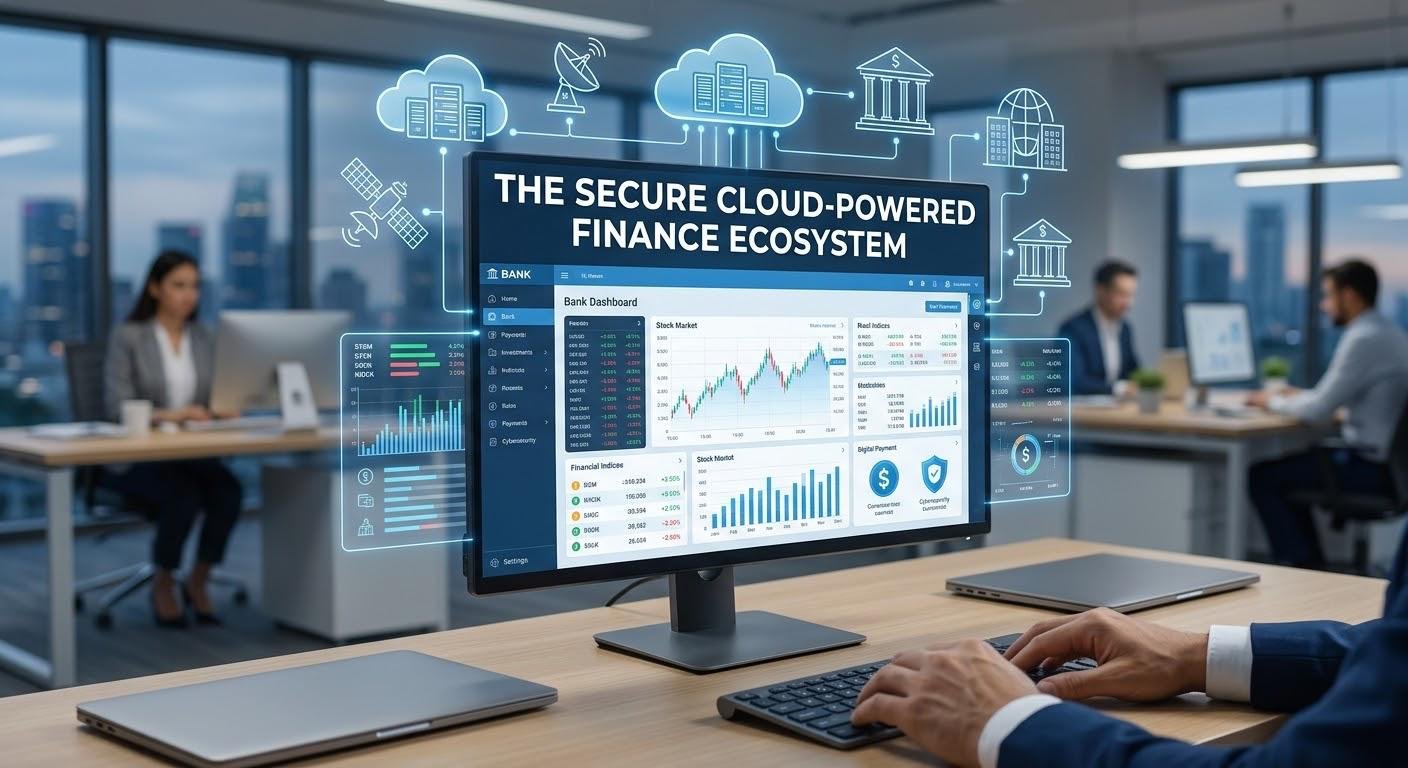
Financial Analytics starts with the gathering of data from trusted data sources. Banks get information from customer deposits, withdrawals, transfers, loan applications, credit history and customer interactions. The forex brokers and stock trading platforms gather the currency quotes, share price, trade volumes, orders and records of trading and execution history. These investment managers also review the financial statements of the companies, bond yields, property valuations, economic statistics and portfolio performance. The various sources may generate information in structured formats (e.g., database tables) or unstructured formats (e.g., customer messages, financial news). Data management systems consolidate the data into one place, eliminate inconsistencies and arrange it for analysis. Cloud computing, databases and data warehouses offer storage and processing power, and access control helps to keep sensitive data secure. The integrity of these basic reporting, forecasting and analytical processes is directly tied to the quality of the basic systems.
Business Intelligence Dashboards and Automated Reporting
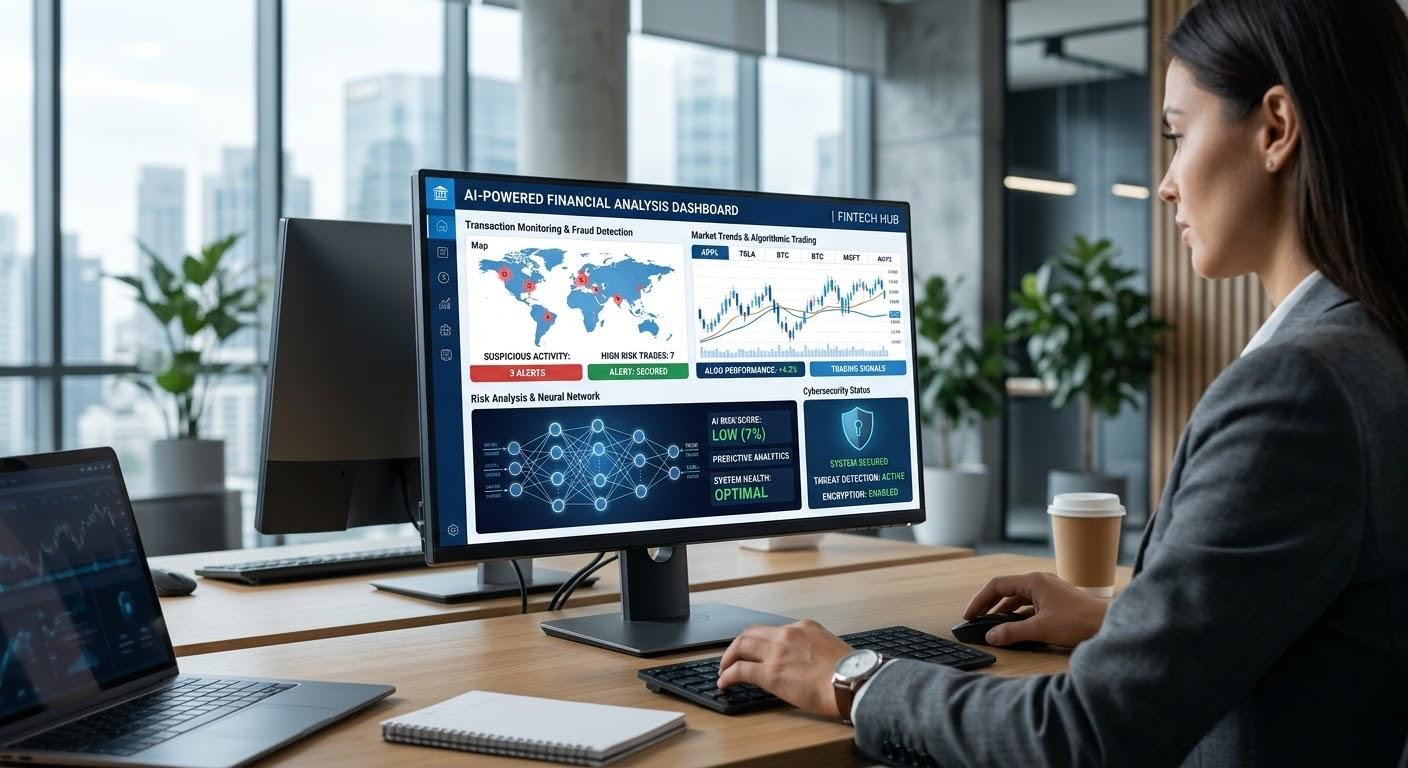
Business intelligence dashboards present all of the relevant numbers in charts, tables, summaries and interactive reports to make high-level financial data easier to understand. Some of the metrics on a banking dashboard could include loan repayments, customer numbers, suspicious transaction alerts, business costs and growth in deposits. A stock trading dashboard will be a chart displaying market prices, trading volume, portfolio performance and stock exposure. The tools enable managers to keep an eye on the performance without having to look through thousands of individual records. Automated reporting also boosts efficiency by producing summary reports, notifying of any unusual changes and sending reports to authorized staff at regular intervals. An investment manager might get a daily portfolio report that gives him information about changes in asset values, exposure to currency and performance of the benchmarks. But, dashboards are only effective if there is clarity around each indicator, if the indicators are updated appropriately and if they are being interpreted in context. Pretty charts aren’t enough, nor are they a substitute for missing information or for bogus measures of performance.
Predictive Analytics and Financial Risk Models
Predictive analytics leverages past data, statistical models and machine learning to forecast future results. Predictive models can be used by banks to determine the probability that a borrower will be able to pay back a loan, to identify customers who may be getting on top of their loan payments or to predict cash needs. Investment firms can analyze past performance and earnings of companies, the rate of interest and economic factors, to forecast potential situations in the market. Risk models take this analysis a step further and quantify the exposure to such events as interest rates, liquidity, market volatility and loan default. If a bank has customers with variable-rate mortgages, they can predict what impact the increased interest rates will have on those loans, for instance, or a portfolio manager can go through a grouping of stocks and bonds and calculate how it would react in a slump. These models can be used for preparation and planning, but cannot make a precise prediction of all events. Unplanned political, market and investor events have the potential of undermining forecasts, and frequent testing of models and human oversight are crucial.
Real-Time Analytics in Banking and Fraud Detection
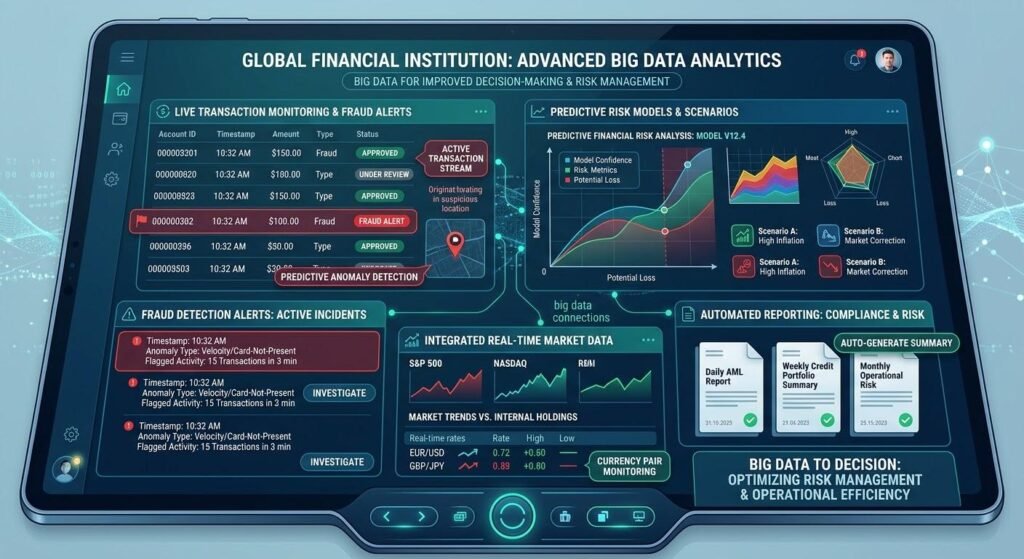
When a financial institution can analyze incoming data as it arrives, rather than after it has been processed into end-of-period reports, it’s known as real-time analytics. This function is used in banking to facilitate payment authorization, monitoring of transactions, sending account notifications, and detecting suspicious activity. Once a customer pays, analytical systems can then be used to analyze and compare transactions against a profile of known behaviors, devices, transactions, and other factors that could indicate risk. If a payment amount that is much larger or smaller from the usual amount, it could prompt further verification or review. Other systems can aid payment providers in detecting fraudulent attempts to pay the same player, volumes of transactions that are too high, and possible account takeovers. Real-time monitoring may also enable the banks to keep an eye on the liquidity situation and detect any technical issues with the payment system. However, any odd transaction does not necessarily constitute fraud. Valid customers can move, adjust their purchasing methods or make big purchases. A financial institution is thus obliged to find a balance between the speed of alert detection and the treatment of the alert, appropriate verification procedures and procedures for dealing with an incorrect alert.
Financial Data Analytics in Forex and Stock Trading
The Forex and stock markets are constantly pumping out information and traders leverage it to evaluate prices, liquidity, volatility, market direction, etc. Forex analysts analyze various factors that affect the movement of the money, such as the exchange rates, announcements from central banks, inflation data, employment data and expectations about interest rates. Analysts in the stock market analyze listed companies using the value of their past transactions, as well as the value of the company’s earnings, valuation ratios, and other economic indicators. These inputs can be used in quantitative trading systems to identify patterns, compute trading signals or trigger a specific trading strategy when certain conditions are reached. Market surveillance systems also review market activity and trading details to identify any suspicious trading patterns, market manipulation, or breaches of market regulations. But, if there’s an apparent historical relationship, it doesn’t imply a relationship in the future as well. Furthermore, market conditions shift and models can become over-fitted in the past and automated strategies can exacerbate losses when market conditions do not behave as assumed. Therefore, traders need to consider several other factors such as costs, liquidity, limitation of the model, and risk before they take advantage of analytical signals.
Money Markets, Investment Portfolios and REITs
Other areas where financial data analytics are helping are money market, portfolio management, and real estate investment trusts (REITs). The money market participants determine short-term interest rates, government securities, commercial paper, liquidity conditions, and the exposure to counterparty in order to manage cash and short-term investments. The analytics helps portfolio managers to track and compare returns with benchmarks, diversify, monitor asset allocation, and evaluate the risk associated with the various investments. When analyzing REITs, investors look at the rent the REIT is bringing in, the rental unit’s occupancy rates, property costs, debt levels, financing costs, and the REIT funds from operations, which is a typical metric used in analyzing REITs. They can also differentiate property types, geographic markets, lease structures and interest rate sensitivity, in order to get an idea of potential returns. Financial and operational information are needed to have a more comprehensive picture than the share prices. However, the values of properties may not be updated on a regular basis and reported values may not be updated to reflect market changes on a real-time basis. The risk and uncertainty factors should be considered in conjunction with the company’s financial statements, management disclosures and the relevant market information.
Customer Service and Personalized Financial Products
Customer analytics allows banks and investment providers to better serve their customers and create products that satisfy their customers’ specific requirements. Organizations can use this data to detect patterns in account usage, how many times customers request services, how they interact with products, and customer feedback to develop customer-centric actions for digital banking, pinpointing recurring issues, and providing pertinent financial information. For example, a bank may be more likely to notify customers about their account balances if they often overdraw their accounts, or offer alternative accounts for customers who are more prone to over-drafting. A customer’s preferences and their statements of what they want to invest in can be used to group research tools and education resources for an investment platform. Analytical systems can also be used to prioritize cases that need attention and can help customer service identify complaints’ common causes. But personalization should not be the excuse to discriminate and excessive surveillance, or provide inappropriate financial advice. Institutions need to have the right data, but also explain key decisions (where needed) and have protections in place for possible bias of models. When the service is relevant to customers’ needs and not just to the product, it is again enhanced by effective customer analytics.
Adopting Data Quality, Privacy, and Responsible Interpretation Approach.
While financial data analytics offers a number of benefits, there are also some drawbacks. These errors in the transactions, obsolete market prices, multiple data entries, missing data, and reporting inconsistencies can lead to inaccurate conclusions. Prior to utilizing analytical outcomes, organizations need to verify data sources, explore any irregularities, record any assumptions, and regularly test their models. The privacy is also of key significance as financial information can show an individual’s spending, income, borrowing and investment patterns. Institutions should limit access to the authorized personnel, use the proper type of encryption, have retention policies in place, and adhere to the applicable data protection and financial regulations. Care must be taken to interpret the results of the analytical models: correlation does not imply causation, historical results do not assure future results, and a high model confidence score does not reduce uncertainty. Human review is valuable in making consequential decisions, particularly where automated systems involve accessing credit or fraud investigations or investment advice. Responsible analytics is about having the technical skills and also being able to be held accountable, transparent and judicious.
Conclusion
Financial data analytics is revolutionizing the way financial information is perceived and used in financial decision-making within banks, Forex trading platforms, stock trading platforms, money market participants and investment providers. Business intelligence dashboards help to increase visibility, predictive analytics assists in planning and real-time systems provide more robust transaction monitoring options, while portfolio models enable investors to assess risk and performance. These features can enhance the efficiency of operations, customer service, preventing fraud, market monitoring and research on investments. However, success is determined by the accuracy of the data, by the quality of the analytics applied to the data and by the robust privacy safeguards and realistic expectations regarding the capabilities of models. Financial institutions need to regularly audit their systems, pay attention to the changing situation and provide adequate oversight of vital decisions. The overarching message for both individuals and institutions is that data is a useful basis for making financial decisions only when it is supercharged with technology insights, carefully interpreted, responsibly used, and creatively applied by people.
Get more well researched information about Financial data analytics here.