Extend household appliances lifespan with simple maintenance habits that help protect one of the biggest investments in your home.The house appliances are some of the most valuable house investments. These devices help make life more comfortable and convenient, from refrigerators that help maintain freshness of food to washing machines that make laundry a breeze and ovens that make meal preparation a breeze. But there are some easy maintenance routines which determine the life span of an appliance from 5 years to much longer than that. From cleaning filters, not overloading the system and fixing minor issues quickly, small habits can go a long way towards boosting efficiency and averting costly repairs.
Make your household appliances last longer without any difficulties and with patience and attention to detail. Regular maintenance, correct operating procedure and timely inspections, all aid in ensuring that appliances operate efficiently, at a reduced energy load and with less wear. If homeowners practice these habits, they’ll prevent many of these types of breakdowns and postpone expensive replacements. This Guide provides information on the best maintenance procedures, correct uses, cleaning plans and practical solutions for reliable years of life for the many appliances used around the home.
Why it is Important to Maintain Your Appliance Regularly?
A lot of homeowners believe that they need to only take care of their appliances when there are issues. Unfortunately, sometimes, when machines start making strange noises or not working at all, only then will it be too late for the cost of the repair to be felt. All appliances are subject to wear during normal use and dirt, dust, moisture and mechanical stresses over time make them less efficient when not properly maintained. With preventive maintenance, minor problems can be caught before they become big mechanical problems. Follow simple maintenance tasks, such as wiping down door seals, cleaning vents and checking hoses, and they can help you keep an appliance running at peak performance and longevity year-round.
Routine maintenance also helps to maintain energy efficiency, helping to conserve the environment and save family budgets. When appliances run in the clean, well-maintained environment they need less electricity and are less subjected to mechanical stresses. The cleaner the condenser coils of a refrigerator, the more efficient it is in cooling, and the cleaner the lint filter of a dryer, the faster it dries clothes, while conserving energy. Buyers whose homes are kept on the “proactive” side will also be more familiar with the normal performance of their appliances and will be better able to see the early warning signs. Homeowners can educate themselves on troubleshooting common appliance issues and follow step-by-step appliance repair tips to see if they are able to resolve the problem or if professional services are needed.
Adhere to Proper Usage Practices Every Day
Avoid Overloading Appliances
A sure way to reduce the life of an appliance is to always run it at full load. Overloading washing machines with heavy clothes puts undue pressure on the motor, bearings and suspension systems. Likewise, if the dish machinery is overfull, water should not circulate properly for effective cleaning, and will cause the pumps to operate under greater stress. When refrigerators are overfilled, the compressors are forced to operate longer to keep them at the proper temperature, thus consuming extra electricity. All appliances are designed with recommended load limits and adhering to these specifications helps them to work normally without being overloaded.
Another key to correct usage of appliances is choosing the right setting rather than always using the longest or highest setting. Modern appliances feature special programs for a wide variety of different fabrics, food types and cleaning needs. The right cycle helps to ensure that wear is kept to a minimum and performance is maximized. The wash cycles for your washing machine and the energy saving cycles on your dishwasher are both examples of measures taken to protect your washing machine components and energy saving dishwasher cycles that limit heat exposure to seals and pumps. They may be minor changes, but they add up over the years and keep appliances reliable for many more years than those that are overused.
Use Appliances as per Manufacturers’ Instructions
Once the appliance is installed, the manufacturer’s instructions are often overlooked, but there are great tips created specifically for the model of appliance. These guidelines provide information on vent clearances, maintenance schedules, recommended detergents and operating restrictions. Failure to follow these recommendations may lower efficiency, or even invalidate the warranty. Reading the owner’s manual gives a homeowner a better idea of the needs of the appliance they are using than he or she may have if it’s simply assumed that they know.
An additional best practice is to allow sufficient recovery time between high demand cycles of appliances. Continuously running back-to-back loads of washers or washing doors repeatedly while preparing the food load equipment to restrop continuously. Appliances are intended for use in the home, so the amount of time they can recover between uses decreases heat accumulation and mechanical fatigue. The balanced operation reduces stress on motors, compressors, heating elements and electronic control units when they are continuously in use and enhances reliability.
Set Up a Regular Cleaning Routine
Regularly Clean Refrigerator Parts
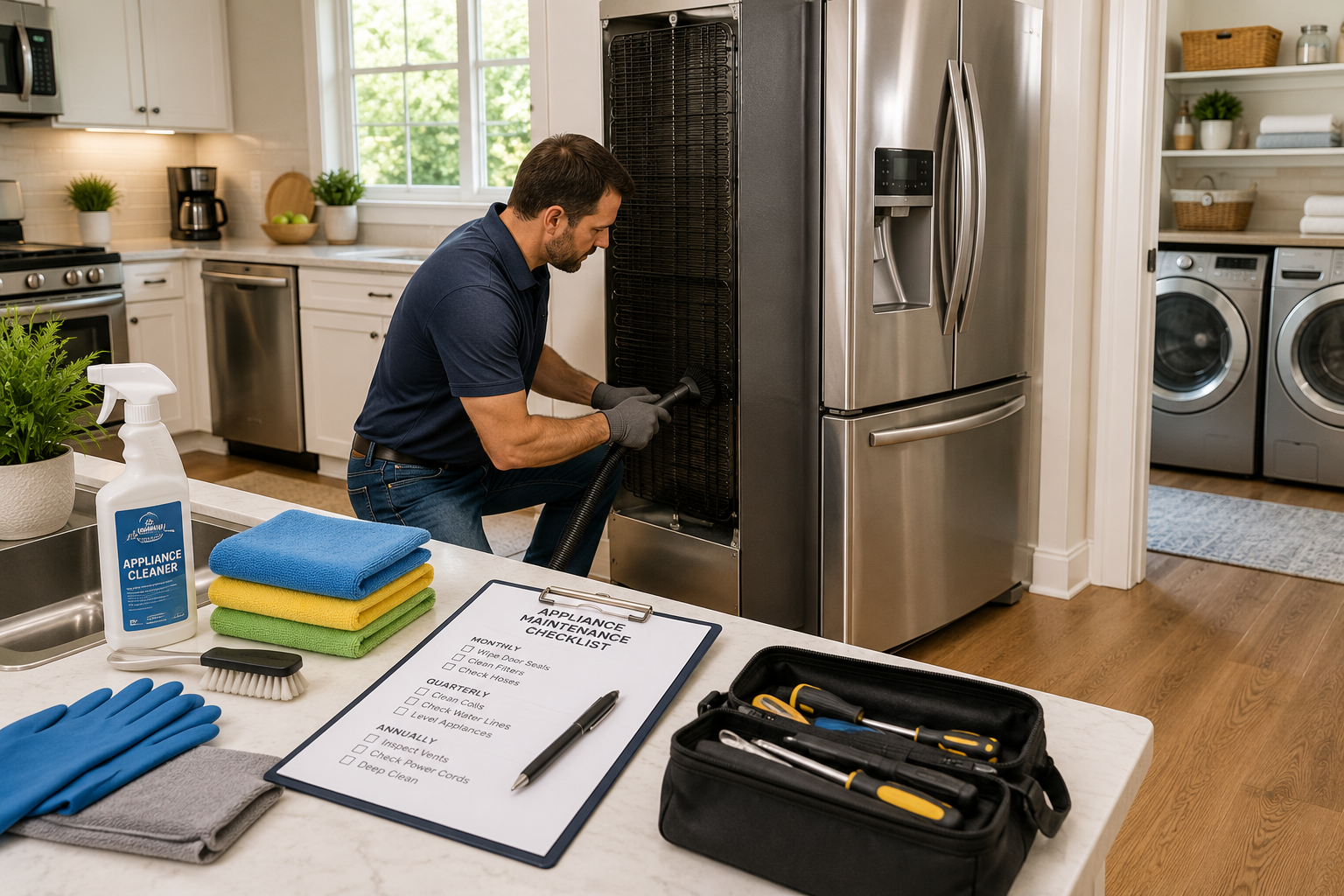
One of the basic and essential maintenance practices that homeowners should have is to keep their refrigerators clean regularly, since these units are in constant use all year round. Many refrigerators have condenser coils underneath or behind which collect dust. Dirt build-up on these coils makes them less efficient at shedding heat and the compressor has to work harder, consuming more electricity. Cleaning the coils with a vacuum clean or brush every six months can help keep the cooling system running efficiently, as well as minimize the mechanical strain. It’s also a good idea to clean the refrigerator door gasket regularly as food residue can build up and cause it to not close properly, letting cold air out and shorting the refrigerator’s operating time.
The interior should be given the same attention. Liquid spills, old food and obstructed air vents can hinder air flow and cause foul smells or mold. Cleaning shelves, tidying up stored goods and maintaining clear vents helps cold air flow in an even way around the entire compartment of refrigerator. Controlling internal temperature levels decreases the compressor workload and helps maintain a good quality of the products and extends the life of the appliance.
Keep Washing Machines, Dryers and Dishwashers in Working Order
Regularly cleaning laundry machines is also very advantageous. To avoid buildup of detergent, mildew and odors, detergent dispensers, rubber door gaskets and drum interiors should be cleaned periodically in washing machines. An approved cleaner can be used to run an occasional maintenance cycle to prevent residue build-up in hidden components. When the washer door is partially open after use, it will help moisture to vaporize which helps prevent mold growth that may deteriorate seals over time.
Dryers need even more routine servicing due to the build-up of lint which can cause both efficiency and safety problems. Cleaning the lint filter after each wash will enhance the ventilation, drying performance and minimize over drying. It is also recommended to clean and clear the dryer vent a few times a year to make sure that it doesn’t get blocked and causes the heating system to operate more strenuously. Cleaning the spray arms, filters and door seals in dishwashers also helps water flow freely without causing food particles to create a clog in the pumps or to lessen the effectiveness of the cleaning process.
Conduct Routine Checks to Prevent Issues from Arising
Major repairs on high ticket items start with minor problems that are ignored over the course of many months. Water supply hoses to washing machines and dishwashers should be checked periodically for leaks, bulges and cracks. Changing out worn hoses that may leak or burst before they do helps to avoid expensive water damage and keep appliance parts free of water-induced failure. Power cords should also be inspected for wear and tear and unusual vibration should never be taken for granted as it may be a loose part or a leveled part problem that may develop later.
By listening to appliances when they are running, you will get a good idea of their condition. When new rattling noises, excessive humming, grinding or squealing noises emerge, this is often a sign of a mechanical problem. Similarly, if there are any abnormal sounds or performance issues, there should be immediate investigations instead of continuing to operate. These warning signs can be addressed early which will lead to smaller parts rather than wholesale parts replacement. While only taking a few minutes to run a routine inspection, it can save you a considerable amount of repair charges and increase the life of your appliances.
Also, it is important to track how appliances are performing over time, as well as to assume that the gradual decrease is “normal.” These are signs of the refrigerator taking longer to cool, the dishwasher leaving water marks on the dishes or the dryer needing more cycles — which can indicate that the unit is just in need of maintenance, not necessarily aging. Keeping track of maintenance dates and monitoring efficiency increases will enable homeowners to recognize issues that are likely to return before they become a problem. Regular checks ensure a chance to resolve minor issues by cleaning, adjustment or timely servicing before they develop into full mechanical failure.
Resolve Minor Problems Before Sending for Repair
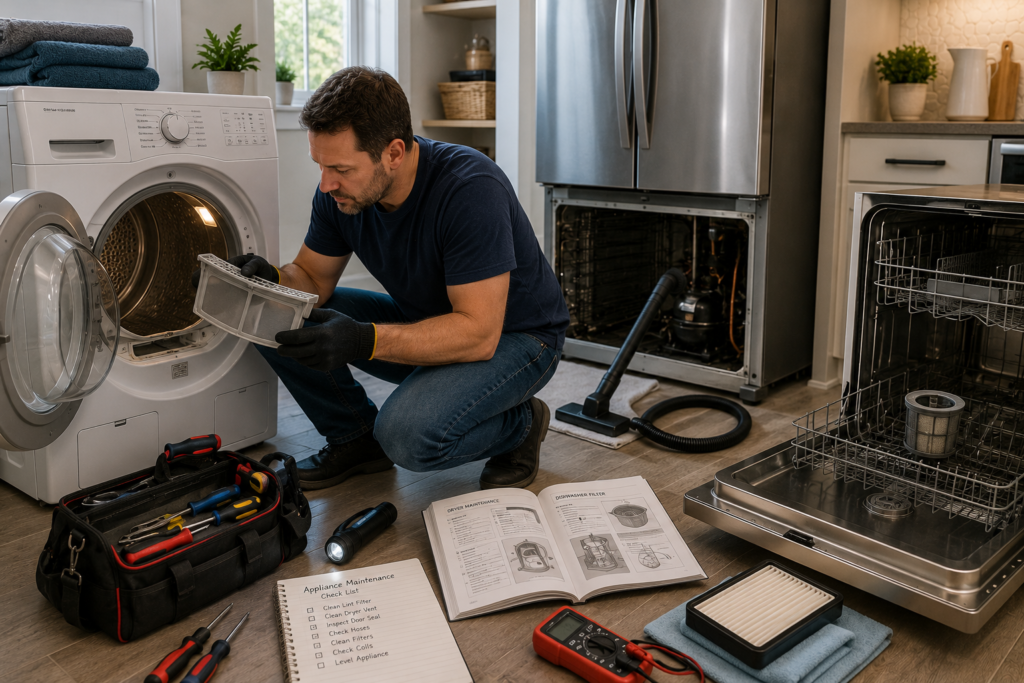
Not all of the appliance issues will need to be dealt with by a professional. A lot of common problems are caused by simple careless mistakes, instead of serious mechanical problems. If your dryer has become inefficient in drying clothes, it could be that the lint filter or vent have become clogged. A dirty dishwasher spray arms or a dirty filter may be the cause of a dishwasher leaving dishes dirty. Some refrigerators appear to be hotter than normal, but may simply require condenser coil cleaning or better ventilation of food stored in the unit. All of these fundamental troubleshooting skills help save time, money and avoid needless service appointments.
But property owners should also be aware of what you can do without professional help. Any electrical problems, refrigerant leaks, problems with any gas appliances or mechanical problems inside the appliance should always be resolved by an expert. Complex repairs may pose risks or cause further damage if attempted by someone who is not trained. The purpose of basic troubleshooting is to determine that simple maintenance problems exist, and to know when to seek professional assistance. This will help ensure that the appliance is protected while allowing all users to do so too.
Establish a Long-Term Appliance Maintenance Routine
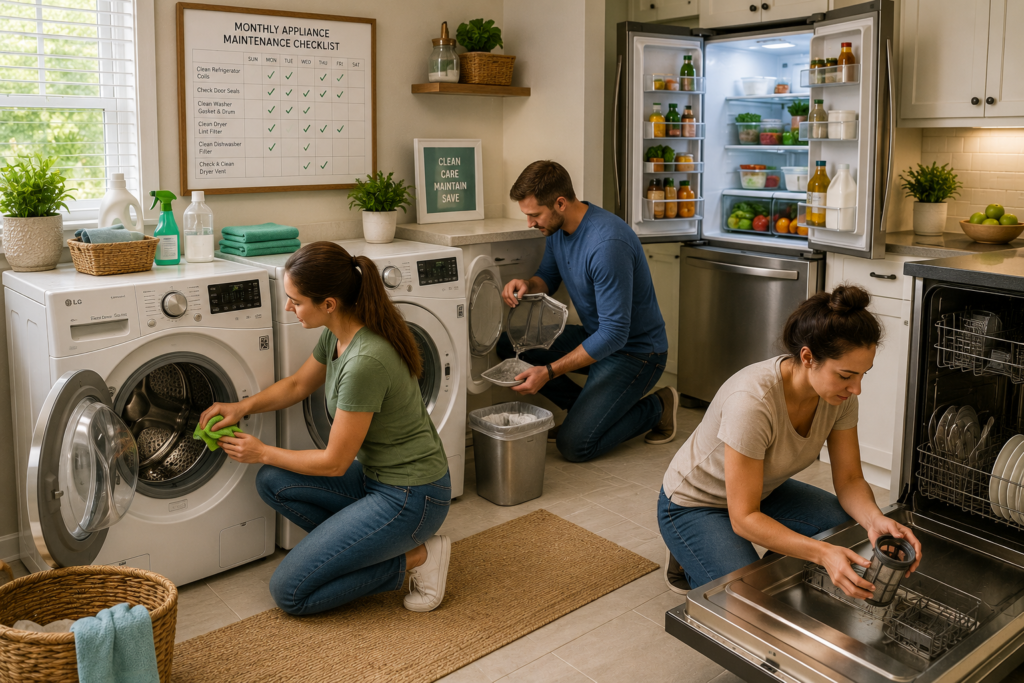
Creating a household maintenance schedule can help avoid the forgetfulness of important tasks. Homeowners don’t have to wait until an appliance breaks before they give it a check-up since they can assign simple monthly, quarterly, and annual maintenance tasks. This can include tasks such as checking washer door seals, checking dryer lint filters (outside of regular cleaning) and cleaning refrigerator shelves on a monthly basis. Water hose inspections, dishwasher filter cleaning and appliance leveling could be part of the quarterly maintenance. Parts that may need to be cleaned semi-annually are electrical connections, dryer vents and refrigerator condenser coils.
It also makes appliance ownership easier for overworked families, since they will have a written checklist to keep track of the required maintenance. Keeping track of service dates, filter changes and repairs makes it easy to look back on the history of the service and see any recurring issues and when it’s time for something to be done again. This systematic strategy minimizes lost maintenance work, while maximizing appliance reliability. Regular maintenance can be one of the most important investments a homeowner can make, as these cost-saving measures may ultimately save a great deal of money over the years, and it’s better to invest in preventative maintenance than to make emergency repairs or replace appliances too early.
Conclusion
Saving the life of household appliances doesn’t have to be a technical challenge or the use of a costly machine. However, it relies on proper maintenance practices, operating procedures, frequent cleaning, regular checks, and addressing minor issues before they escalate into costly repairs. All appliances require preventive maintenance and homeowners who have simple maintenance schedules can see benefits such as better performance, lower energy bills, less unexpected equipment failures and have their equipment last longer.
Homeowners can be more efficient and comfortable in their home, and maintain their appliances as part of their household routine, which helps protect their investment. From cleaning refrigerator coils to checking washing machine hoses, dryer lint, or as per manufacturer’s instructions, each preventive measure helps to ensure long-lasting reliability. These regular practices save on replacement costs, prevent unscheduled breakdowns and allow households to keep using their household appliances effectively for years to come.