When thousands of eyes turn toward a stage, it’s the lighting that shapes the emotional landscape of every moment. On large stages—whether concert arenas, theatrical productions, or corporate galas—lighting does far more than illuminate performers. It sculpts atmosphere, directs attention, and transforms empty space into immersive environments. Yet lighting technicians working in expansive venues face persistent challenges: achieving uniform coverage across vast distances, maintaining precise effects that read clearly from every seat, and coordinating complex rigs that must perform flawlessly under pressure. Beam lights have emerged as one of the most powerful tools for addressing these demands. Their concentrated output, long throw capability, and versatile effects make them indispensable in professional lighting arsenals. This article explores how to select the right beam light equipment for large stage applications and how to harness their full potential for creating dynamic, textured visual experiences that elevate any production to a professional standard.
Understanding Beam Lights and Their Role in Professional Lighting for Large Stages
Beam lights are a category of moving head fixtures designed to produce a narrow, highly concentrated column of light with minimal dispersion over distance. Unlike wash lights that spread illumination broadly or spotlights that create soft-edged pools, beam lights maintain a tight, parallel ray that cuts through space with striking visibility. This core characteristic makes them uniquely suited to large stages where fixtures must project across distances of thirty meters or more without losing intensity or definition. In arenas and outdoor festivals, beam lights deliver the dramatic aerial effects and sharp mid-air shafts that audiences associate with high-production-value events. Within a broader lighting rig, they complement wash fixtures and profiles by adding punctuation—sharp accents, sweeping movements, and geometric patterns that create visual rhythm. Modern beam technology has evolved significantly from early discharge lamp fixtures with limited movement. Today’s units offer faster pan and tilt speeds, tighter optics, and sophisticated onboard effects engines, allowing designers to achieve complex choreography that once required multiple fixture types. This evolution has made beam lights a cornerstone of professional lighting design for any large-scale production.
Key Features and Components of Advanced Beam Light Equipment
Selecting beam lights for large stage applications requires understanding the critical features that separate professional-grade fixtures from entry-level units. Brightness output, measured in lumens, determines whether a beam will remain visible under competing ambient light and across extended throw distances. Zoom capability, even in narrow-range configurations, gives technicians the flexibility to adjust beam diameter for different scenic moments without swapping fixtures. Pan and tilt speed directly affects how well a fixture can execute fast-paced choreography during musical performances or high-energy corporate reveals. Color wheels equipped with dichroic filters deliver saturated, consistent hues that hold their integrity over long distances, while frost filters allow operators to soften the beam edge when a slightly diffused look serves the design better. Dimming quality matters enormously—smooth, flicker-free fading ensures that transitions appear polished on camera and to the live audience alike. These features collectively determine whether a lighting rig can meet professional standards on large stages where every detail is magnified by scale and audience expectation.

HID Models: Powering Large Stages with Efficiency
High-Intensity Discharge technology remains a dominant force in beam light design for large-scale productions. HID lamps generate light by creating an electrical arc between two electrodes within a gas-filled chamber, producing an exceptionally bright, focused point source that optical systems can shape into razor-sharp beams. Compared to LED-based beam fixtures, HID models typically achieve a more concentrated point source, which translates into tighter beam angles and greater punch at distances exceeding forty meters. This makes them particularly effective for aerial beam arrays in arenas where the fixture-to-ceiling distance demands raw optical power. For lighting technicians managing energy budgets across large rigs, modern HID fixtures offer improved lamp life and reduced power consumption compared to earlier generations, narrowing the efficiency gap with LED alternatives. LED fixtures excel in color mixing flexibility and instant restrike capability, but when the priority is a single, piercing shaft of light that reads clearly from the back row of a ten-thousand-seat venue, HID models consistently deliver. Technicians should evaluate lamp replacement cycles and thermal management requirements when integrating HID fixtures into touring rigs where reliability under demanding schedules is non-negotiable.
Choosing the Right Beam Light: A Guide for Lighting Technicians
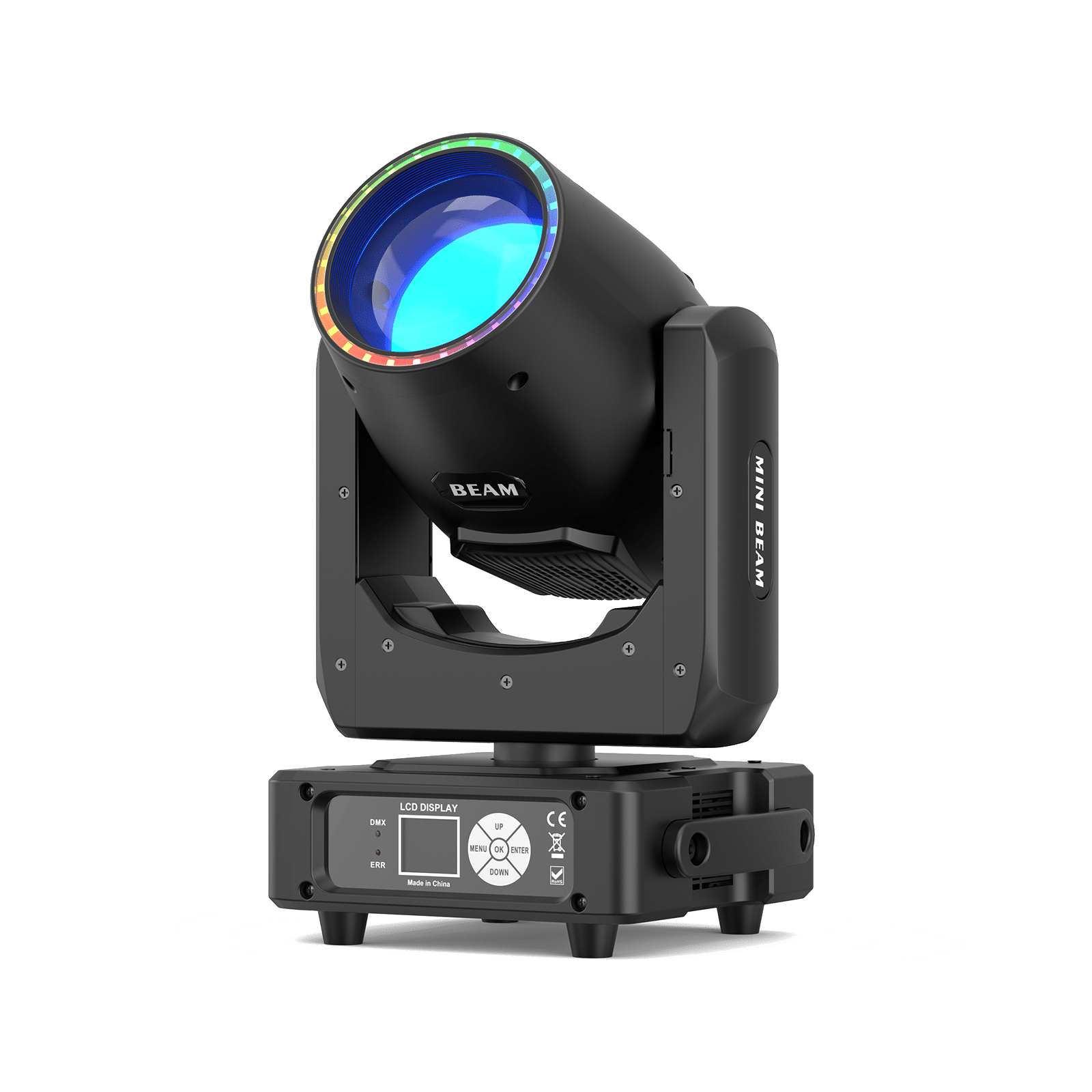
Selecting the ideal beam light for a large stage production begins with a clear assessment of the venue’s physical dimensions. Measure the maximum throw distance from your furthest rigging position to the stage floor or the farthest point where aerial effects must remain visible. This measurement directly determines the minimum output and optical quality required from your fixtures. A venue with a forty-meter throw demands significantly more concentrated optics than a twenty-meter space, and choosing underpowered equipment for the distance will result in washed-out beams that fail to create impact.
Next, consider audience sightlines and seating configuration. In thrust or in-the-round stage layouts, beam fixtures must perform from multiple angles, which means prioritizing units with wide pan ranges and fast repositioning speeds. For proscenium stages, front-of-house positions may be limited, making long-throw HID models essential for maintaining beam integrity from distant truss positions. Evaluate how many fixtures you need by mapping coverage zones—each beam light covers a narrow corridor, so achieving a full aerial array across a wide stage requires careful spacing calculations.
Budget allocation should balance fixture quantity against fixture quality. Fewer high-output professional units often outperform a larger number of budget fixtures, particularly when reliability during multi-show runs is critical. Manufacturers like UKING offer beam light solutions across various output classes, giving technicians options to match specific venue requirements and budget constraints. Before committing to a purchase or rental, test prospective fixtures in conditions that simulate your actual venue. Run them at full intensity for extended periods to evaluate thermal stability, listen for fan noise that might intrude during quiet moments, and confirm that their DMX protocols integrate smoothly with your existing console and control infrastructure. Check that color wheel selections align with your designer’s palette requirements, and verify that gobo rotation and prism effects operate without mechanical vibration at the speeds your programming demands. Finally, consult with your rigging team about weight and clamp compatibility—professional beam fixtures vary considerably in mass, and exceeding truss load ratings is never an acceptable compromise regardless of how impressive the fixture performs optically.
Creating Dynamic Textures and Effects with Beam Lights
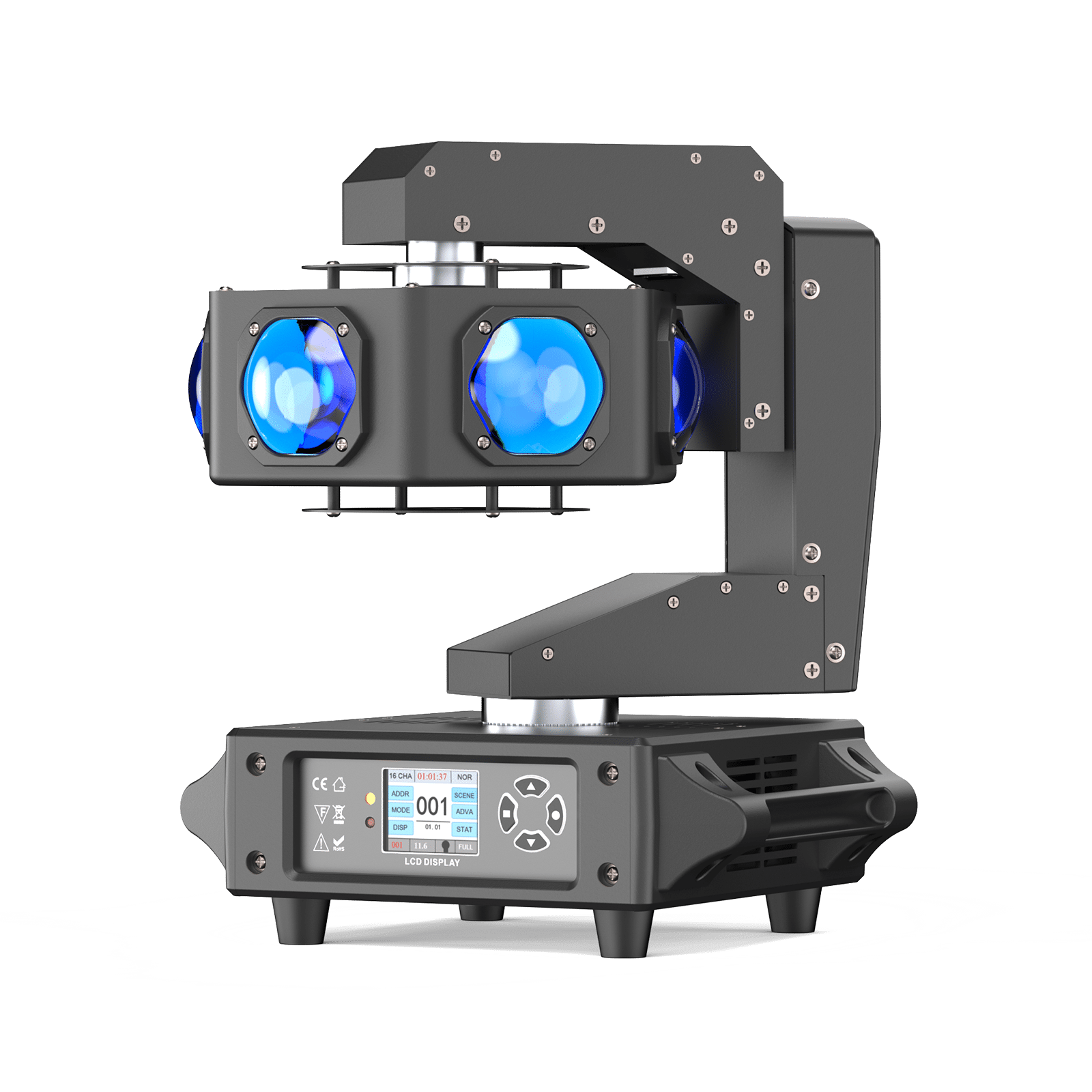
Beyond raw intensity and reach, beam lights offer lighting designers a sophisticated toolkit for creating visual depth and movement that transforms a static stage into a living environment. The narrow beam itself becomes a sculptural element—a single shaft cutting through haze reads as a solid architectural line, while arrays of beams moving in coordinated patterns generate kinetic energy that amplifies musical rhythm or dramatic tension. Achieving these effects consistently across large stages requires deliberate technique and an understanding of how optical accessories interact with the fixture’s core output.
Utilizing Gobos and Prisms for Enhanced Visuals
Gobos are metal or glass templates inserted into the fixture’s optical path to project patterns, textures, or shapes onto surfaces or into mid-air when atmospheric haze is present. For large stages, gobos transform a simple beam into a textured column—breakup patterns create organic, dappled effects reminiscent of light filtering through foliage, while geometric gobos produce sharp architectural projections across stage floors and scenic elements. When selecting gobos for beam fixtures, choose designs with bold, open patterns rather than fine detail, since the narrow beam angle concentrates the projection and can obscure intricate linework at distance. Rotating gobos add motion without requiring pan or tilt movement, creating swirling aerial textures that fill vertical space above performers.
Prisms multiply the beam into several parallel or fanning rays, instantly expanding a single fixture’s visual footprint. A three-facet prism triples the beam into a triangular spread, while eight-facet or sixteen-facet prisms create circular arrays that read powerfully in haze-filled arenas. Combining prism rotation with gobo projection yields complex, evolving patterns that maintain audience attention during sustained musical passages. To implement these effects, start by programming a static look with the gobo and prism engaged, then layer in rotation speeds incrementally—subtle movement often reads more professionally than rapid spinning, which can appear chaotic from distant seating positions.
Advanced Techniques for Professional Lighting Setups
Programming beam lights for dynamic scenes on large stages demands precision in timing and spatial awareness. Begin by establishing position presets that map to specific stage zones, ensuring that sweeping movements travel meaningful paths rather than arbitrary arcs. Use your console’s timing functions to stagger identical movements across a row of fixtures, creating wave effects where each beam follows the previous one by a fraction of a second—this technique produces fluid, organic motion from mechanical equipment. When building intensity chases, program smooth sine-wave dimming curves rather than abrupt on-off snaps to maintain a polished aesthetic that reads well both live and on camera.
Maintaining consistency across multi-show runs presents a common challenge on large stages. Save detailed cue data including exact color wheel positions, gobo indices, and prism engagement states so that every performance replicates the designer’s intent regardless of which operator is running the board. Calibrate all fixtures in your beam array before each show using a reference point on stage—even minor pan or tilt drift accumulates across a run and destroys the geometric precision that makes beam effects compelling. For productions incorporating dynamic textures alongside other lighting equipment such as wash fixtures and profiles, assign beam lights to dedicated DMX universes to prevent data bottlenecks that cause stuttering during complex cue transitions. This infrastructure discipline ensures that your creative programming translates into flawless execution when the audience is watching.
Mastering Beam Lights for Large Stage Productions
Beam lights stand as essential tools for any lighting technician tasked with bringing large stages to life. Their unmatched throw distance, concentrated intensity, and versatile effects capabilities make them uniquely suited to the demands of arenas, theaters, and outdoor festival stages where ordinary fixtures simply cannot deliver the required impact. Selecting the right equipment—whether HID models for maximum punch or configurations optimized for specific venue geometries—lays the foundation for every successful production. Equally important is mastering the creative potential these fixtures offer through gobos, prisms, and precisely programmed movement to generate dynamic textures that captivate audiences and elevate performances beyond the ordinary. Lighting technicians who invest time in understanding their beam fixtures’ full capabilities, maintain rigorous calibration practices, and develop disciplined programming workflows will consistently achieve results that meet professional standards. As beam light technology continues advancing with faster motors, more refined optics, and deeper integration with intelligent control systems, the creative possibilities for large stage lighting design will only expand—rewarding those who stay current with tools that push visual storytelling into new territory.