While activities like walking, running or strength training are more commonly thought of as methods to maintain flexibility and mobility, stretching is often overlooked. A lot of people spend hours sitting in their work stations, sitting in their car, or sitting on their phone while watching TV.People sit for hours at their desks, in their cars, on their phone during TV time and this can cause muscle tightness and a lack of range of motion. Stretching can be a simple and easily accessible strategy to help facilitate movement, promote good posture and ease discomfort in everyday activities. Stretching is a simple exercise that can be done nearly anywhere and is suitable for all ages, fitness levels and physical capabilities. Regularly stretching can help maintain the body’s overall health and make people feel more comfortable during the day.
The benefit of easy stretching exercises in the life of every day is, of course, that they don’t take a lot of time but they give meaningful benefits. When done properly, stretching can help with flexibility and quality of movement; there are resources available to help you learn more about this, including a great resource from the Mayo Clinic website: easy stretching routines. Learning to stretch regularly can help alleviate the stiffness, enhance posture, and promote a more active lifestyle regardless of the individual’s student status, office job, athletic schedule or retirement. Familiarizing yourself with the benefits of stretching, and learning a few simple stretches, can make moving easier and more enjoyable.
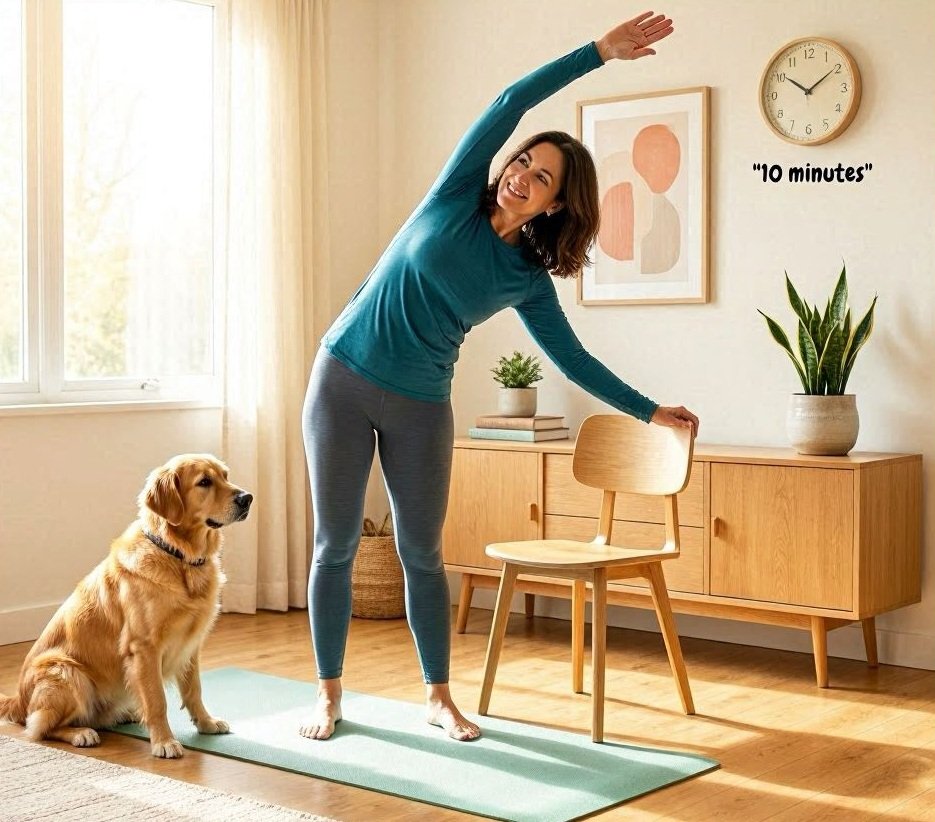
By the way, stretching is important for your health and try to get in 10 minutes of it daily!
The “easy stretching routine for flexibility and mobility at home” article is a text-based resource that explains how to improve your flexibility and mobility at home by doing simple stretching exercises.
Recognize flexibility and mobility.
Flexibility and mobility are used interchangeably but it can be said they are two different aspects of the movement. Flexibility is the ability of muscles and connective tissues to extend and provide joints with the range of movement they can provide. Mobility is the ability to perform joint movements efficiently and pain-free through that range and with control and stability.
These are all important aspects of efficient movement patterns and overall physical comfort. Activities of daily living (ADLs) like bending, reaching, lifting, or walking can be more challenging when flexibility and mobility are decreased. Stretching on a regular basis can help to keep the muscles supple and promote good movement patterns, thus contributing to flexibility and mobility. This not only helps athletes, but also everyday people who wish to move more easily through everyday activities.
How stretching can help you stay healthy every day.
Stretching promotes the body’s natural function in moving efficiently and comfortably. Doing tasks with the body for prolonged periods of time, or reaching, twisting, bending or leaning are a part of many activities that occur throughout the day. Movement, if not regularly, can cause muscles to become tight and joints to become stiff, which can make everyday tasks uncomfortable.
Stretching can reverse these effects by allowing for gentle movement and keeping muscles flexible. Stretching helps not only with physically stretching the muscles, but also it can give a chance to slow down, concentrate on breathing, and be more aware of body position and posture. The combined effects of these make stretching a useful technique for overall wellbeing. Taking a few minutes a day to stretch will help people maintain long-term comfort and movement quality.
Exercise 1: Neck Stretch
One of the most affected parts of the body by the modern lifestyle is the neck. Excessive screen time with computers, smart phones or tablets can lead to muscle tension and discomfort. A stretch of the neck is a simple move that can help increase flexibility here and make the neck more comfortable in everyday activities. Sit or stand comfortably with shoulders relaxed to perform the stretch.
Gently bend head towards opposite shoulder until stretch is felt on other side of the neck. Sustain the stretch with a normal breathing rate and repeat on the other side. This exercise should be done gradually and in a non-compromising manner. Frequent activity can help alleviate stress and tension that can occur with sitting for long periods and using screens.
Exercise 2: Shoulder Stretch
The shoulder is also important for reaching, lifting and carrying, and household chores. Shoulder tightness can affect body posture and cause upper body pain. A simple shoulder stretch is to bring one arm across the chest and using the opposite arm to gently place it closer to the body.
This motion stretches the upper shoulder and upper back area slightly. Lifting the stretch with correct posture can increase the effectiveness of the stretch. Shoulder stretches help promote comfortable motion and can help people stay lined up when performing activities of daily living and engaging in play.
Exercise 3: Cat-Cow Stretch
Cat-Cow stretch is a gentle one that is frequently used for providing mobility in the spine. A blend of two positions that promote gentle undulating through back and torso. People begin on all fours and take turns arching their backs up and downhanging their abdomens and raising their chests.
This swinging action allows flexibility in the spine and helps to be aware of posture. Many individuals sit for long periods of time, and exercises that promote spinal mobility are beneficial. This Cat-Cow stretch can apply to a good range of fitness levels and can be performed as part of a morning or evening yoga practice to promote movement in a comfortable way.
Exercise 4: Standing Hamstring Stretch.
Tight hamstrings, which are on the back of the thighs, can develop from not moving enough and sitting for long periods. If the hamstrings are tight, this can impact posture and can impact movement patterns when walking or doing other activities. The standing hamstring stretch stretches the hamstring of one leg, with the knee extended forward over the heel while the upper body moves towards the extended leg.
The motion should be smooth and easy, and should not be overly straining. Regularly stretching the hamstrings can help maintain flexibility in the lower body and promote greater mobility while performing regular activities. This is a great exercise for people who are seated for a lot of time during the day.
Exercise 5: Hip Flexor Stretch
The hip flexors are the muscles in the front of the hips which are very important for walking, going up stairs and many other actions. Tightness can occur in this area from sitting for too long. A hip flexor stretch that is done gently can help promote mobility and promote proper posture.
Gently moving the weight forward into a comfortable lunge position, may be felt near the front of the hip on the back leg. The movement should be slow and deliberate, focusing on posture. Greater flexibility around the hip area can lead to more comfort throughout the day, while sitting and working.
Exercise 6: Seated Forward Stretch
The seated forward stretch works on several muscle groups at once – lower back, hips and hamstrings. People sit on the floor with their legs straight and bend forward, but move slowly and in a comfortable way. The goal is NOT to touch the toes, but to stretch the back of the body gently.
This exercise is to promote flexibility and awareness of posture and body alignment. It is flexible enough to be adapted easily depending on the level of flexibility so it can be used by beginners as well as more advanced users. Over time, repeated use can help to increase comfort and mobility.
Exercise 7: Wall Angels
Wall angels are great for supporting upper body mobility and posture. For the exercise: Stand back to the wall and make a controlled arm movement overhead keeping the back against the wall as much as possible. This movement will help to increase mobility in the shoulder and upper back, and raise awareness of posture.
Wall angels are particularly beneficial for people who sit at desks for long periods of time as they help mitigate some of the negative effects of sitting for extended periods. Regular practice can help to establish healthy movement patterns and promote increased comfort while engaging in daily activities.
The benefits of stretching for improved posture
Posture affects body function and movement during the day. Bad posture can put undue stress on muscles and joints, causing discomfort and decreasing efficiency in movement. Stretching helps to improve posture by allowing flexibility in areas that often tend to be stiff, including the neck, shoulder, chest, hip and lower back.
People can be more comfortable and balanced seated, standing or walking with flexibility increasing. Stretching also encourages awareness of the body, allowing for identification of any habits that may be causing poor body alignment. Stretching should be used in conjunction with movement and physical activity to help maintain healthy posture.
Stretching is an essential part of a healthy lifestyle.
The beauty of stretching is that it is accessible and easy to perform. It doesn’t need to be expensive, require a lot of space, or demand a lot of fitness experience. Stretching sessions are as brief as 10-15 minutes and can be customized to accommodate individual schedules.
Others love to stretch in the morning to get ready for the day, others stretch in the evening to relax after a long day. It is the consistency of the exercise, not the length of it, that makes the difference and even brief periods of regular exercise can make a difference in flexibility and comfort. If stretching is considered part of the self-care routine, it will be more likely to be continued over the long term.
Here are some tips for safe & effective stretching.
All stretching should be done in a controlled and comfortable way. Stretches should feel like a gentle stretch, not causing pain, and movements need to be slow. It can be helpful to breathe evenly throughout the stretch to promote relaxation and comfort. Bouncing and forcing the body into positions outside of normal range of motion is also important to avoid. Individuals should make adjustments to stretches as necessary to fit themselves and listen to their bodies. Stretching must enhance movement and wellness, but not cause undue strain. It’s important to stretch patiently and consistently, as this will most likely yield the best results over time.
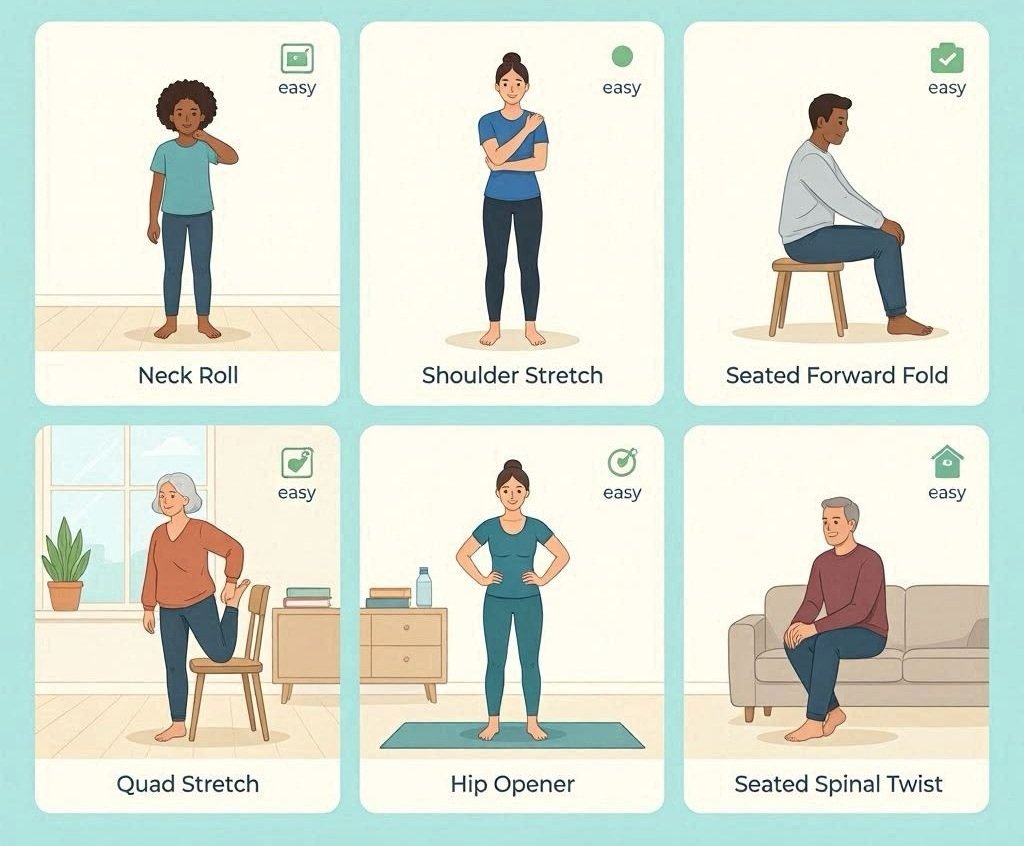
Exercises to stretch easily for everyone of all ages and levels of fitness.
Conclusion
Frequently, simple stretching exercises can be performed throughout the day to help ensure flexibility, mobility, posture and comfort. There are seven stretching exercises in this guide that are suitable for all ages and fitness levels. Stretching supports healthier movement patterns, improving mobility of the neck and shoulder region, assists movement of the spine and flexibility in the lower body and improves overall function in daily life. Stretching is one of the most convenient wellness activities, as it does not require much time or equipment. When people make stretching a regular component of a healthy lifestyle, they can experience improved mobility, posture and physical health that will last them for years.