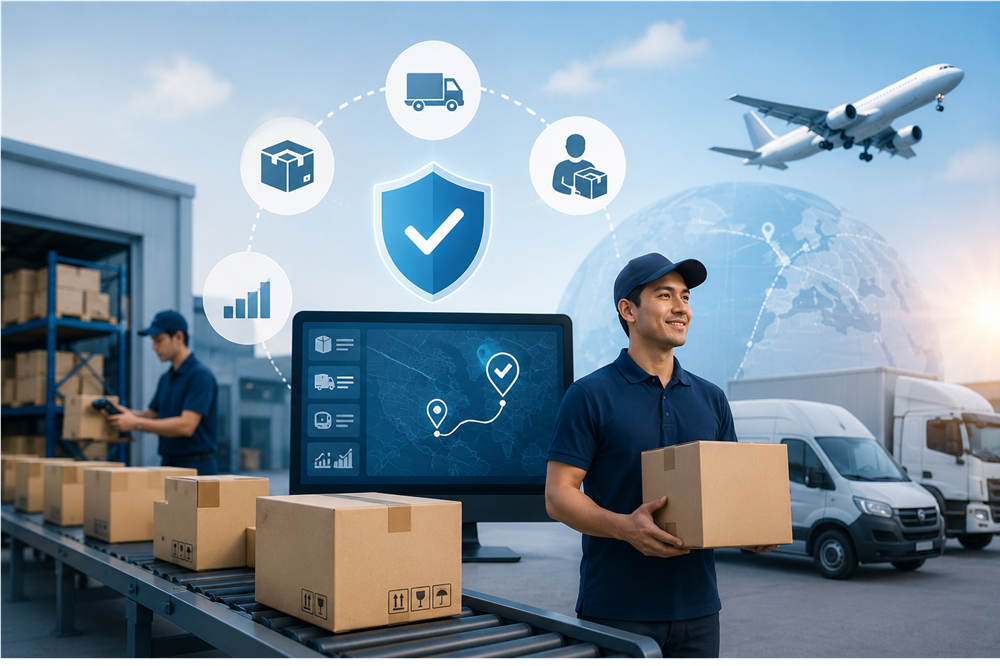
Online shoppers expect fast dispatch, reliable tracking, and smooth delivery after every checkout. For growing brands, fulfillment cannot depend only on warehouse speed or internal operations.
The right e-commerce courier partner connects pickup, sorting, delivery attempts, returns, and customer communication into one structured flow. This helps sellers reduce delays, improve delivery confidence, and manage higher order volumes without losing control. It also supports marketplace sellers, Direct-to-Consumer (D2C) brands, and small businesses expanding across India.
With the right support, brands can make fulfillment feel more predictable for both internal teams and customers. Let’s learn how the right courier partner can make order fulfillment faster, cleaner, and more efficient.
Why Courier Efficiency Matters for E-commerce Growth
Fulfillment efficiency directly affects customer retention, repeat orders, and brand perception. A product may be priced well and packed neatly, but late delivery can weaken the complete buying experience.
Courier performance also affects internal teams. When tracking updates, pickup schedules, delivery attempts, and returns are predictable, teams spend less time fixing shipment issues. This helps them focus on inventory planning, customer service, merchandising, and growth.
For marketplace sellers and D2C brands, scale needs automation, coverage, and exception handling. A reliable e-commerce courier partner can help brands serve more locations without losing operational control.
7 Ways an E-commerce Courier Partner Improves Fulfillment Efficiency
Order fulfillment becomes more efficient when shipments move through a clear, measurable, and technology-supported process. A reliable e-commerce courier partner helps businesses manage this journey from warehouse pickup to delivery confirmation.
- Faster First-mile Pickup
The first mile begins when orders leave the seller’s warehouse, store, or fulfillment center. Delayed pickup can slow sorting, routing, and delivery.
A strong e-commerce courier setup supports scheduled pickups, defined cut-off times, and pickup scans. This improves dispatch discipline and reduces the gap between packing and shipment movement.
- Cleaner System Integration
Efficient fulfillment depends on smooth data flow between order platforms, inventory tools, and courier systems. Manual uploads can create errors in addresses, weights, invoice values, and phone numbers.
Courier integrations with Enterprise Resource Planning (ERP), Order Management System (OMS), and marketplace panels help automate shipment creation. This reduces repetitive work and improves accuracy at scale.
- Stronger Service-level Planning
Businesses need delivery commitments they can measure clearly. A Service-Level Agreement (SLA) defines expected timelines, pickup performance, delivery attempts, and issue-resolution standards.
An e-commerce courier partner helps brands match customer promises with realistic delivery performance. This is useful during festive sales, product launches, and regional expansion.
- Clearer Tracking Visibility
Tracking visibility helps sellers and buyers understand where an order stands. Without clear tracking, support teams receive more “Where is my Order?” (WISMO) queries.
A good e-commerce courier partner provides milestone updates from pickup to delivery. These updates may include booked, picked up, in transit, out for delivery, attempted, and delivered statuses.
- Fewer Failed Deliveries
Failed deliveries increase costs, delay revenue, and affect buyer experience. They often happen because of wrong addresses, unavailable customers, or poor delivery communication.
The right e-commerce courier partner can support address checks, buyer notifications, reattempt coordination, and delivery calling. These steps improve first-attempt delivery and reduce avoidable returns.
- Smoother Reverse Logistics
Returns are part of e-commerce, especially in fashion, beauty, electronics, footwear, and lifestyle categories. Slow reverse pickup can frustrate buyers and delay inventory recovery.
An efficient courier partner manages pickup requests, return scans, inspection movement, and reverse tracking. This helps businesses bring returned products back into the inventory cycle faster.
- Better Delivery Accountability
Proof-of-Delivery (PoD) confirms that an order has reached the buyer. It can include a delivery scan, One-Time Password (OTP), customer signature, photograph, or digital delivery record.
For an e-commerce courier operation, PoD reduces delivery disputes and improves shipment accountability. It also helps support teams resolve delivery-related questions with clearer evidence.
Build a Fulfillment Process That Scales With Demand
A strong e-commerce courier partnership helps businesses move orders faster, communicate better, and reduce fulfillment friction. It connects first-mile pickup, system integrations, tracking, delivery attempts, reverse logistics, and PoD into one coordinated process.
Businesses also gain stronger control over buyer experience when courier timelines and shipment updates remain consistent. Logistics partners like DTDC can support this scale with 500+ operating facilities, 96% population reach across India, and 15,300+ pincodes covered.
Such network depth can help e-commerce sellers, D2C brands, and marketplace businesses reach more buyers with greater reliability. With the right courier process, order fulfillment becomes more predictable, efficient, and growth-ready.
Your blog is a beacon of light in the often murky waters of online content. Your thoughtful analysis and insightful commentary never fail to leave a lasting impression. Keep up the amazing work!
What i do not understood is in truth how you are not actually a lot more smartlyliked than you may be now You are very intelligent You realize therefore significantly in the case of this topic produced me individually imagine it from numerous numerous angles Its like men and women dont seem to be fascinated until it is one thing to do with Woman gaga Your own stuffs nice All the time care for it up
Hi my family member I want to say that this post is awesome nice written and come with approximately all significant infos I would like to peer extra posts like this
Its like you read my mind You appear to know a lot about this like you wrote the book in it or something I think that you could do with some pics to drive the message home a little bit but instead of that this is fantastic blog An excellent read I will certainly be back
Your blog is a testament to your passion for your subject matter. Your enthusiasm is infectious, and it’s clear that you put your heart and soul into every post. Keep up the fantastic work!