DIY Plumbing Repairs can help homeowners solve some of the most common household plumbing issues without spending money on professional service calls. One of the most aggravating problems that homeowners generally have in their homes is plumbing problems. A leaky faucet wastes hundreds of gallons of water a month, a clogged sink can cause headaches and a running toilet can keep you awake all night. Most people would suspect they know what to do when such issues come up and they would reach for the phone to contact a plumber, but the reality is that there are a number of common, straightforward plumbing problems that can be tackled without advanced skills or high-end equipment.
When it comes to tackling minor plumbing problems, not only will you save money, but you will also help avoid any little plumbing problems turning into a big household emergency. Furthermore, once a homeowner is aware of the reasons these issues may arise, they can be well-equipped to notice when warning signs appear and take steps to ensure that problems don’t intensify. Many repairs can be done with the right tools and a little patience and you can get professional-looking results.
To know more about the most common house plumbing issues, one should know both the causes of the problem and their solutions. Fortunately, leaky faucets, blocked sinks and running toilets are among the most easily diagnosed and fixed plumbing problems. The following instructions will help you to restore proper functionality of your plumbing system without paying any unnecessary plumbing service charges.
Table of Contents
- Learning basic plumbing repairs is vital because of the following reasons
- Learn how to repair a leaking faucet
- Use a plunger to clear a clogged sink
- Learn how to repair a running toilet
- To keep your plumbing system in good working order, here are some tips on how to prevent issues from occurring
- Conclusion
How to do some basic plumbing repair work.
Homeowners think that plumbing repair needs to be done by professionals. Many household plumbing issues, however, are caused by worn parts, debris build-up or by simply making a few adjustments which do not require special training. Having a few plumbing skills can make it easy for the homeowner to fix the problem in a timely manner. Plus, water leakage, mold and higher electricity bills usually can be avoided with early intervention. Often homeowners can fix the issues within minutes and without scheduling an appointment with the local plumbing company as they may have the tools needed at their home.
Also, knowledge of the functioning of plumbing fixtures will give you great insight into the concept of preventive maintenance. Once you understand the mechanics of the faucet, drain and toilet, spotting any irregularities is much simpler. For this reason, you can identify potential issues early and avoid expensive repairs. These abilities not only can save cash with time but additionally can boost self-assurance in home maintenance jobs.
How to fix a leaky faucet
The leaky faucet might not seem like much, but even dripping faucets can cause a significant amount of water loss each year. Plus, all the time, it can be extremely annoying. Fortunately, most leaks in faucets are just due to failures of the components in the faucet that can be fixed in under an hour.
The most common causes of faucet leaks are as follows:
The leak in a faucet typically occurs as a result of deterioration within the faucet’s internal components over the years. Washers, O-rings, cartridges and seals are engineered to provide watertight seals. These parts however, will deteriorate with repeated use over time. This causes water to seep through where it shouldn’t.
There are various types of faucets and each has its own particular method of operation. Rubber washers are the standard sealing mechanism in compression faucets, whereas cartridge, ball and ceramic-disc faucets have special internal assemblies. So, before you start working on your faucet repair, it is important to determine the type of faucet you are working with as the parts are quite different for various models.
Materials & Tools:
- Adjustable wrench
- A Phillips and flat head screwdriver.
- Replacement washer or cartridge…
- Plumber’s grease
- Clean cloth
- Small bucket/towel
Turn off the water supply to the house. First, shut off the water to the home.
Turn all faucet water shutoff valves under the sink off before taking the faucet apart. Then open the faucets to bleed the lines (drain water from the lines). This will avoid the possibility of flooding and will make working conditions safer. Also, offering a towel underneath the sink will assist trap some water that may drip during the repair work.
Step 1: Take off the Faucet Handle
Slowly take off decorative cap over the handle screw. After you’ve removed the screw, pull off the handle. It will require a screwdriver or Allen wrench depending on the type of faucet. Then, put everything in its place in the order it was taken apart so that it can be quickly put back together later.
Step 2: Check Internal Parts
Without the handle detach the internal components for wear. Leaks often occur due to cracked washers, flattened O-rings and damaged cartridges. In addition, the deposit of minerals can cause the sealing to become faulty. Inspect each part carefully and make sure that each component is in good shape and matches that of any replacement parts purchased.
Step 3: Replace Worn out Parts
Install correct replacement part and make sure it is securely installed. When replacing a washer, be certain to use the same size washer. Similarly, replacement cartridges should be the same as per the manufacture’s specifications. A dollop of plumber’s grease will help to perform better and reduce wear in the future.
Step 4: Reassemble and Test.
Carefully put the faucet back together and turn on the water. Turn the water valve at least a few times to see if there are any leaks. If there is no dripping, then the repair is done. If the leak continues, however, check more parts as possibly more than one part could be worn.
When you have a clogged sink, here are a few tips to unclog it.
One of the most frequent plumbing issues for homes is clogged sinks. A clogged drain can make day to day activities in the kitchen or bathroom cumbersome and unpleasant. Fortunately, many times the blockage in a sink can be removed without the use of harsh chemicals using simple techniques.
What Makes Sink Clogs?
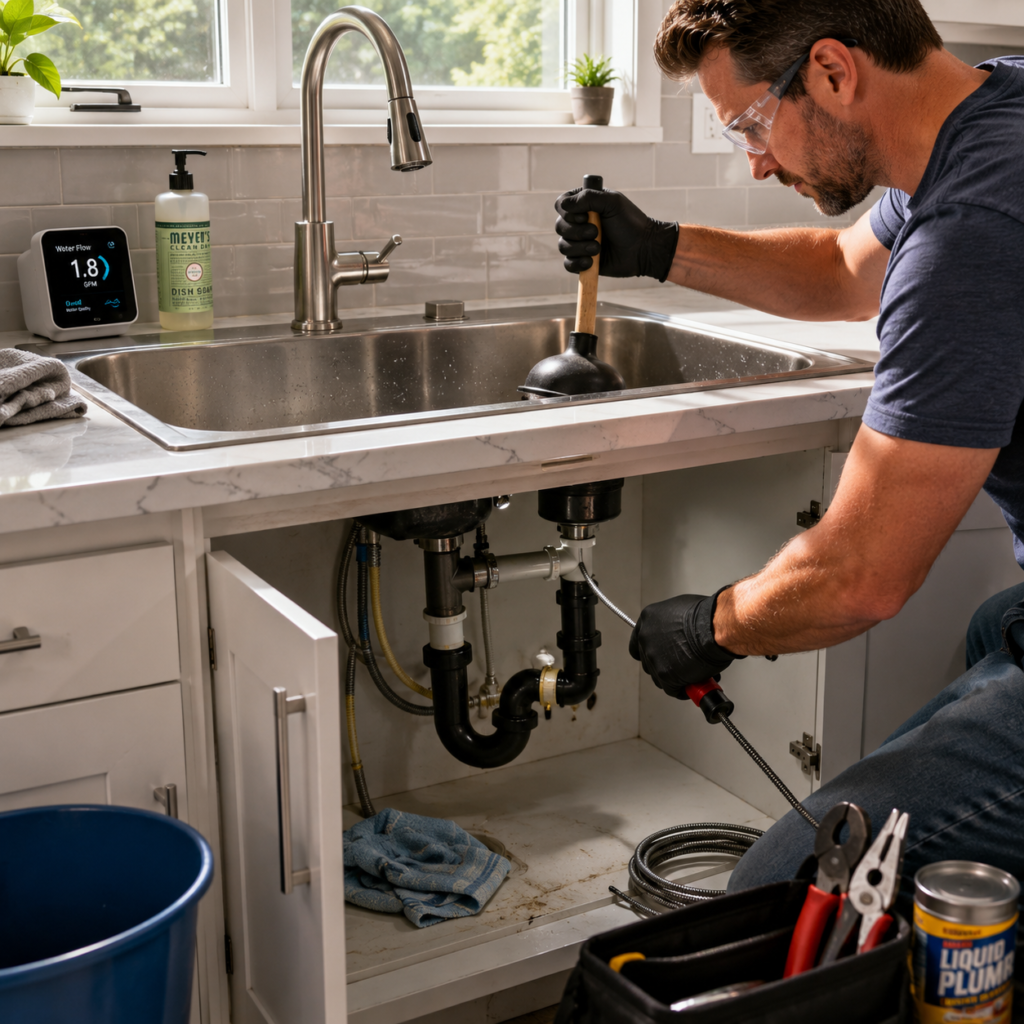
Grease, food debris, coffee grounds and soap scum are common problems that cause kitchen sinks to clog. In contrast, bathroom sinks are a place where toothpaste, grooming products and hair are often found. These materials deposit over time on the pipe walls and over time, cause water flow to decrease. If not corrected, it can eventually cause a complete blockage.
Some early warning signs are slow draining, foul odors and gurgling noises. So, it’s always best to deal with these symptoms right away to avoid more serious plumbing issues in the future.
Materials: Tools:
- Sink plunger
- Drain snake
- Bucket
- Rubber gloves
- Adjustable pliers
- Flashlight
- Old towels
Step 1: Remove Visible Debris
First check the drain hole. A blockage is often caused by dirt, food or soap buildup on the surface of the hair. Put on gloves and take off any noticeable dirt and trash. This basic measure may help restore partial drainage and will enhance the success of other cleaning techniques.
Step 2: Use a Plunger
If the blockage still persists use a sink plunger to create suction. Fill cup of plunger with water so that it covers the plunger, and cover overflow holes. Then dive hard (buoyancy control) for 20-30 seconds. Frequent plunging will clear small clogs and allow for the normal flow of water.
Step 3: Use a Drain Snake
If the clogs don’t budge, use a drain snake to clear the blockage. Turn the handle as you push the snake further into the drain. Over time, you will either get rid of the blockage or find some debris that can be removed. After removing, run hot water through the drain to remove any residue.
Step 4: Clean P-Trap
If the clog doesn’t clear up, the P-trap under the sink could be clogged as well. Be sure to set a bucket under before opening the fittings. When removing the trap, remove it carefully and empty the trap. Thoroughly clean and re-attach the trap and test the sink. Slow drainage is often due to trapped debris in the trap.
Preventing Future Clogs
Regularly scheduled maintenance will greatly minimize the risk of future blockages. Don’t pour grease down kitchen drains and always use a strainer to prevent food particles from getting caught. Bathroom drains also can be equipped with devices that catch hair. Also, flushing once a week will help hot water keep buildup from forming within pipes.
Steps for fixing a running toilet.
A running toilet may sound like it’s not an emergency, as it still works. But over time, this can lead to the loss of a lot of water and can significantly raise utility costs. So it’s best to get the running toilet fixed immediately.
The overwhelming majority of running toilets are due to a problem in the tank. Worn flappers, broken or worn fill valves, misaligned floats, and tangled chains are often the causes. These parts regulate water flow and, even if they fail slightly, the water flow stoppage may not occur properly.
Luckily, replacement parts are not costly and are readily obtainable. This means that most repairs can be done swiftly and cost effectively.
Materials and Tools:
- Adjustable wrench
- Replacement flapper
- Fill valve kit
- Sponge or towel
- Rubber gloves
In the first step, observe the Toilet’s Operation. The first step is to observe the Toilet’s Operation.
Take off the lid of the tank and clean the toilet as you watch the tank’s parts. Observe the flapper opening and closing and make note if there is any water that still flows after the tank is refilled. This inspection will frequently identify the cause of the problem straight away.
Next, go to Step 2: Check the Flapper. Then go to Step 2: Check the Flapper.
One of the most common reasons for a leaky toilet is due to the flapper. If it shows signs of being cracked, warped or worn, it will not form a good seal. Shut off the water, drain the tank, and install a new flapper (with a matching model). Once installed, test toilet to see if the problem is solved.
Step 3: Edit the Float
The float is used to regulate the water level in the tank. If set too high, excess water will continually run over into the overflow tube. Pin the float to the level recommended by the manufacturer, so that the water level is not above the overflow opening. The result is that the fill valve should close properly.
Clean the space where the Fill Valve is located. Clean area for Fill Valve replacement.
The fill valve might be faulty if the toilet keeps running. Turn OFF the water and install a new valve as per manufacturer’s instructions. This repair is slightly more involved but is still an easy repair for the majority of homeowners. After finishing, make a few test flushes to ensure that the operation is correct.
Troubleshooting Persistent Problems
Sometimes several of the components are worn causing a running toilet. If the problem persists after replacing the individual parts, then check the entire tank assembly. Moreover, refreshing mineral deposits in moving mechanisms can be helpful in enhancing the performance and achieving reliable functioning.
- Keep the toilets, sinks, and bathtubs clean.
- Make sure to keep the toilets, sinks and bathtubs clean.
One of the best ways to prevent plumbing emergencies is to perform preventive maintenance. Repair skills are essential to learn, but it can definitely save a person time and money if he could prevent the problem from even happening. It is important for homeowners to regularly check their plumbing and take care of small issues before they become bigger issues.
Look for any dripping faucets, leaks in sinks, and dripping toilets. In addition, periodically check exposed pipes for corrosion, moisture or wear. It’s also a good idea to track water pressure since too much pressure will wear down plumbing fixtures. Further, seasonal maintenance activities like insulating exposed pipes and clearing drains can help maintain the long-term reliability of the system.
With proactive measures, homeowners can save a considerable amount of money on plumbing repairs and maintenance, and also extend the lifespan of their plumbing systems. Consequently they suffer a lesser disruption and have peace of mind during the year.
Conclusion
Some of the most common plumbing problems that people want to fix in their house are leaky faucets, blocked sinks and running toilets. Fortunately, these problems can be solved in many cases without the help of professionals by tackling them systematically. Homeowners will gain insight into the causes of each and learn how to follow detailed repair procedures to get reliable results and save on service calls.
Besides, routine maintenance can steer clear of future issues and ensure plumbing systems are running efficiently. These handy methods could be the difference in keeping your home in good repair, from replacing a worn faucet washer, to unclogging a clogged drain, to installing a new toilet flapper. Many plumbing repair jobs can be done like a pro with patience, proper tools and guidance and you can enjoy a hassle-free household.