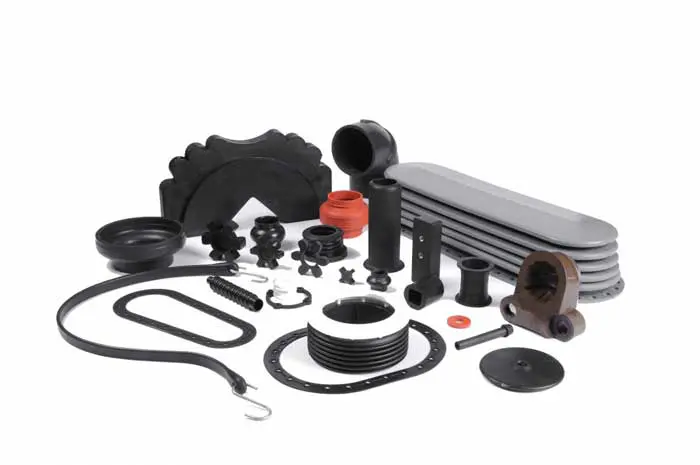
Custom rubber molding encompasses the design, material selection, tooling, molding process and finishing required to produce precision custom molded rubber parts and custom rubber products for industries ranging from automotive and aerospace to medical and consumer goods. This introduction outlines the role of rubber molding in manufacturing, highlights the distinctions between custom rubber solutions and off-the-shelf rubber products, and frames the practical choices designers and procurement teams must make when selecting a supplier for molded rubber components and assemblies.
If you are looking for more information about Custom Rubber Molding Manufacturer – Engelhardt go here right away
What is rubber molding and how does custom rubber molding differ from standard molding?
Rubber molding is the broad manufacturing discipline that converts elastomeric compounds into functional molded parts through compression molding, transfer molding, injection molding and other molding processes; the result can be a rubber part, seal, gasket or complex molded rubber component tailored for a specific application. Custom rubber molding differs from standard or commodity rubber manufacturing in that it emphasizes custom formulations, bespoke tool design, precise material selection and close collaboration between the designer and the molding services provider to meet application-specific requirements such as chemical resistance, temperature range, mechanical properties and regulatory needs. Where standard rubber products are often manufactured to generic specifications and sold as catalog items, custom molded rubber products are engineered to a part drawing or specification and manufactured with controlled molding capabilities, quality molded rubber practices and often ISO-compliant processes to ensure performance and reproducibility across production runs.
What processes (compression, transfer, injection) are used in rubber molding?
The main processes used in rubber molding include compression molding, transfer molding and injection molding, each chosen based on part geometry, material behavior and production volume. Compression molding places a measured amount of elastomer into an open tool and compresses it under heat and pressure until cured, offering cost-effective tooling for low- to mid-volume molded parts and simple rubber components. Transfer molding extrudes material through a sprue into a closed cavity, reducing flash and enabling more complex internal geometries and insert placement; this process suits medium-volume production of custom molded rubber parts where control of flow and fill is important. Injection molding of rubber, sometimes called liquid injection molding or LSR for silicone, injects a pre-metered elastomeric compound into a closed mold via runners and gates, enabling high-volume production with tight tolerances and consistent part-to-part variability, which is ideal for custom rubber products that demand intricate features, o-rings, seals and multi-cavity tooling. Each molding process interacts with the chosen rubber compound and tool design to determine cycle time, surface finish, resistance to environmental factors and the overall economics of rubber manufacturing.
What advantages do custom molded rubber parts offer over off-the-shelf rubber products?
Custom molded rubber parts offer several advantages versus off-the-shelf rubber products, including optimized performance through tailored custom formulations and material selection, precise dimensional control and tighter tolerances for mating surfaces and sealing interfaces, and the ability to incorporate inserts, undercuts or overmolding to create integrated rubber and plastic assemblies that reduce secondary operations. Custom rubber components can be engineered for improved resistance to chemicals, ozone, heat, low temperature or abrasion by selecting specific elastomers such as neoprene, nitrile, EPDM or silicone and by adjusting compounding to meet the operational environment. Additionally, custom molding allows for unique geometries like integrated gaskets, complex o-ring profiles and bonded assemblies that cannot be sourced from standard catalogs, enabling product differentiation, improved reliability and often lower total cost of ownership through design for manufacturability and reduced assembly labor.
When is molding rubber the best choice for a rubber component?
Molding rubber is the best choice for a rubber component when the application requires consistent material properties, repeatable dimensional accuracy, complex geometry or integration with other materials such as metal or plastic. Molding is preferred when environmental resistance — including resistance to oils, fuels, ozone, UV or extreme temperatures — is critical and can be achieved only through careful rubber compound selection and curing regimes. It is also the optimal approach for high-volume production of seals, gaskets and o-rings where the molding process delivers economies of scale and consistent mechanical performance, and for applications where compression set, resilience and long-term sealing integrity must be tightly controlled through validated formulations and molding process controls within custom rubber molding services and rubber manufacturing facilities.
How do I choose material and formulation for custom molded rubber parts and rubber products?
Choosing material and formulation for custom molded rubber parts begins with a comprehensive understanding of the operating environment and functional requirements, followed by selection among available rubber compounds and custom compounds to match mechanical, chemical and thermal performance. Material selection should consider resistance to media (oils, fuels, solvents), mechanical properties (tensile strength, elongation, hardness), aging characteristics (ozone, weathering), and manufacturing constraints such as cure rate and moldability. A supplier experienced in custom rubber molding and custom formulations will guide the decision between elastomers like neoprene for general-purpose resistance, EPDM for excellent ozone and weather resistance, nitrile (NBR) for oil and fuel resistance, silicone for extreme temperature ranges and biocompatibility, or specialty custom compounds tailored for hybrid demands. The formulation not only dictates durability and sealing performance but also impacts the molding process, tooling wear, and post-mold secondary operations.
What rubber compounds (neoprene, silicone, EPDM, nitrile) suit specific resistance needs?
Different rubber compounds are suited to different resistance needs: neoprene (CR) offers balanced resistance to ozone, weathering and some oils, making it a versatile choice for external seals and gaskets; silicone (VMQ) provides outstanding temperature resistance, low-temperature flexibility and biocompatibility but limited resistance to hydrocarbon solvents, making it ideal for medical-grade custom molded rubber products and extreme-temperature applications; EPDM excels at ozone, weather and steam resistance and is preferred for outdoor seals and gaskets where water and steam exposure are common; nitrile (NBR) is the standard for oil and fuel resistance and is widely used for o-rings, seals and molded rubber components in automotive and industrial fluid systems. Suppliers offering custom rubber molding services often develop custom compounds to blend these properties or to meet specific resistance targets, delivering a material solution that balances cost, performance and manufacturability for the intended service conditions.
How do custom formulations affect durability, chemical resistance and temperature range?
Custom formulations affect durability, chemical resistance and temperature range through the selection and proportioning of base elastomers, fillers, plasticizers, crosslinkers and cure systems, which together define the cured elastomer’s network structure and surface chemistry. Adjusting the formulation can increase tensile strength and abrasion resistance for long-life molded parts, enhance chemical resistance by incorporating specific polymers or additives to repel solvents, and broaden temperature range through silicone or fluorocarbon chemistries for high-heat applications. Custom formulations also influence compression set and fatigue resistance—critical factors for seals and gaskets—by controlling crosslink density and using anti-degradants to resist ozone or UV. An experienced supplier will provide material data, perform accelerated aging tests and recommend formulations that reconcile resistance, durability and cost for the custom molded rubber parts required.
When should I consider thermoplastic elastomers (TPE) versus traditional rubber?
Consider thermoplastic elastomers (TPE) versus traditional rubber when you require simplified assembly, recycling advantages, faster processing cycles or overmolding onto plastic substrates, as TPEs can be processed via injection molding and extrusion with re-meltable behavior and lower tooling costs for certain volumes. TPEs often provide good elastomeric performance with easier molding and bonding to plastic parts in rubber and plastic assemblies, making them attractive for consumer-facing custom molded rubber products, grips, and soft-touch features. However, traditional cured elastomers may be necessary when superior high-temperature resistance, chemical resistance or compressive set performance is required; thus, the choice between TPE and traditional rubber depends on application-specific functional requirements, regulatory constraints and the molding capabilities the supplier offers.
What molding services and tooling options are available in custom rubber molding services?
Custom rubber molding services typically offer a range of tooling options, from prototype and soft tooling for initial development runs to hardened steel tooling for high-volume production, as well as services spanning design support, prototyping, low-volume manufacturing and full-scale production. Tool selection plays a central role in the final part quality: steel tools provide long life and tight tolerances suited for custom molded rubber products at scale, while aluminum or epoxy tools reduce initial cost and lead time for prototyping and validation of molded rubber components. Many molding services also provide secondary operations such as machining, rubber bonded assemblies, insert molding and post-cure ovens, and they maintain molding capabilities across compression, transfer and injection molding lines to match the chosen material and geometry constraints of the rubber part.
How does tooling selection impact cost and lead time for molded parts?
Tooling selection directly impacts cost and lead time: hardened steel tools require higher upfront investment and longer manufacturing lead times but yield lower part cost per unit for high-volume production owing to longevity and consistent cavity replication, whereas soft tooling and rapid prototype molds offer shorter lead times and lower initial cost for development and low-volume production but wear out faster and may produce variable tolerances. The molding process chosen also influences tool complexity—transfer and injection molding typically require more complex tool features like runners and gates compared to compression molding—affecting both the tool cost and the total lead time to first article parts. Suppliers that provide integrated custom rubber molding solutions will present trade-offs between tool material, cavity count, expected lifecycle and production ramp-up to align with the customer’s cost structure and delivery schedule.
What service levels (prototyping, low-volume, high-volume) do molding services offer?
Molding services commonly offer multiple service levels including prototyping for design validation and fit checks, low-volume production for market testing or spare parts, and high-volume manufacturing for mature products requiring consistent supply. Prototyping often leverages rapid tooling or 3D-printed patterns and allows evaluation of molded rubber parts, gaskets and seals before committing to hardened tooling. Low-volume runs may use soft tooling or limited-cavity steel molds to manage cost while providing production-grade materials and formulations. High-volume services scale with multipunch cavities, automation, and robust quality molded rubber controls to ensure repeatability across thousands or millions of molded parts, and these services are accompanied by production scheduling, inventory management and assembly integration where required.
How do suppliers handle tool modifications and iterative design changes?
Suppliers handle tool modifications and iterative design changes by offering engineering change management, incremental tool rework, mold polishing or machining and iterative testing to refine part geometry and address molding issues such as flash, sink, or fill imbalances. A responsive custom rubber molding services provider will maintain close communication, provide DFM (design for manufacturability) feedback early in the design phase, and perform controlled tool modifications under revision control to minimize disruption to lead time and cost. For complex products, controlled prototyping cycles and sample approval processes ensure that custom molded rubber parts meet specifications before committing to high-volume tooling investments, and many suppliers offer turnkey solutions including tool maintenance programs to maximize tool life and part quality.
How should I design a rubber part, seal or gasket for optimal performance and manufacturability?
When you design a rubber part, seal, or gasket for strong performance and easier manufacturing, you really need to follow design guidelines that mix function with what the mold can realistically do. Keep the section thickness pretty even. If you do not , you can get molding defects and uneven curing, which is the opposite of what you want. Add draft angles so the part can be released from the mold without a fight. Try to avoid sharp corners and very thin webs, because these areas tend to tear or create weak spots. Also, set tolerances that match how elastomers actually behave, not how rigid parts behave.
It helps a lot to work early with the supplier. Talk about material selection, tool design, and expected compression set behavior. That kind of collaboration reduces rework and late-stage changes. And do not forget the “service” side of it: think about required sealing pressures, the gland geometry for an O-ring or a gasket, and the allowable compression set for long term sealing stability. Put these requirements into the product drawings, so manufacturing and field performance line up.
What design guidelines specifically minimize flash, improve demolding, and keep tolerances consistent?
To minimize flash and make demolding easier, it helps to give enough draft angles on the parting surfaces and avoid anything that traps resin, also keep the wall thickness fairly uniform so cure and shrinkage happen evenly. When you can, place bosses, ribs, and other features away from the parting lines. For internal corners, add radii instead of sharp transitions, this supports material flow and lowers stress concentrations.
When planning tolerances, you have to consider material based shrinkage plus thermal expansion. Only call out critical dimensions as functional where you truly need them, because over-constraining the part can create unnecessary risk. The molding process itself also shifts these recommendations: transfer molding and injection molding usually allow finer features and tighter tolerances, since the flow path is controlled. Compression molding typically pushes you toward simpler shapes and thicker sections, because the material fills differently and tends to be less forgiving.
Finally, be clear with your molding services supplier about the expected functional tolerances, and run a first article inspection. That combination helps stabilize results over repeated production runs, and reduces surprises in later tooling revisions.
How do you specify seals and gaskets for pressure, compression set, and sealing resistance?
You start by saying the actual operating pressure, the expected compression level, what compression set is allowed after the full service life, and what media the seal will touch, then you choose a compatible elastomer and a specific formulation that fits those conditions. After that you define the gland dimensions and the target squeeze percentage for the o-ring, or for the gasketing element, and you also state the surface finish requirements for the mating flanges so the supplier can confirm the design for pressure containment and sealing resistance.
Make sure the document includes test methods or acceptance criteria like leak rate limits burst pressure requirements, cyclic compression testing, and the aging protocol that matches the service environment. The supplier will usually propose particular rubber compounds and a cure state to control compression set and resilience, and they may run qualification tests to prove the part still meets the sealing criteria you wrote down.
Testing and qualification steps that confirm a rubber part meets functional requirements usually start with initial material characterization, then dimensional inspections , to make sure the shape is right. After that, mechanical testing like tensile strength , elongation and hardness checks is done, because these values confirm real-world behavior. Next you run accelerated aging and ozone resistance tests to see how the rubber weathers over time, plus chemical resistance exposure to verify it can tolerate the actual fluids. Compression set measurements are also important, since they show how well the part rebounds after load. Depending on the application, you also perform functional tests like pressure cycling for seals, vibration related checks, or leakage verification.
Before production fully ramps, first article inspections and sample runs are used to validate the molding conditions and tooling performance, and then statistical process control during production helps keep compliance consistent. When applicable, the supplier provides supporting certifications and documents, for example ISO quality standard references, material test reports, and test data. These records demonstrate that the custom molded rubber parts satisfy the contract requirements and any regulatory expectations for the intended use.
What assembly, overmolding and thermoplastic/TPE options exist for custom molded rubber products?
Assembly, overmolding and thermoplastic/TPE options expand the capability of custom molded rubber products by enabling bonded assemblies, multi-material parts and simplified installation. Overmolding rubber onto plastic or metal creates integrated components that combine the structural strength of rigid substrates with the sealing or ergonomic properties of elastomers, and these rubber and plastic assemblies reduce fasteners and secondary bonding steps. Thermoplastic elastomers provide injection-molded soft-touch surfaces and are often used where recycling and ease of assembly are priorities. Molding services offering these capabilities can provide design guidance on bonding techniques, insert placement, and process sequencing to ensure robust adhesion and functional integrity of the final assembly.
When is overmolding rubber onto plastic or metal the preferred assembly method?
Overmolding rubber onto plastic or metal is often the better choice when the end-use needs a mix of structural support and a soft feel , plus integrated seals that basically remove the need for secondary adhesives. It can also be useful when sealing features have to be positioned with precision on a stiff substrate. In practice, overmolding usually helps with assembly speed, reduces the total number of parts, and can make the product look more refined, while still giving practical gains like stronger sealing performance , better vibration isolation , and improved user ergonomics. You’ll see this approach a lot on handles , on connectors with built in gaskets, and on rubber bonded housings, where the molding process holds inserts or metal components inside the molded rubber part, making a sturdy and repeatable assembly that stays consistent from unit to unit.
What are the benefits of thermoplastic elastomer , TPE parts for both assembly and recycling?
Thermoplastic elastomer components can be pretty useful for assembly and recycling because they are reprocessed again, they can be welded to thermoplastic bases, and they can be molded with quicker cycle times than cured elastomers. This makes the whole setup feel simpler and it can even allow single-material solutions that support recycling streams. TPEs also make multi-shot injection molding feasible and they enable direct bonding to firm plastics, so there is less need for adhesives and the design can include integrated elements that help assembly efficiency. For products aiming at sustainability and circularity, TPEs can reduce environmental impact by improving end of life recyclability, while still keeping enough elastomeric behavior for many consumer and industrial uses.
How do molding services deal with bonded assemblies, inserts and the follow-up secondary operations?
Molding services handle bonded assemblies , inserts and those secondary operations by weaving the whole lot into the production flow, giving insert placement during the molding cycle, then adhesive bonding, a vulcanization-to-metal sequence, trimming, inspection, and packaging all in one go, so you end up with finished assemblies. Suppliers with real experience in custom rubber molding solutions will suggest compatible material pairings, set up pre-treatment or bonding procedures for the inserts, and manage the secondary steps like machining or ultrasonic welding, so the final part keeps a steady assembly strength and a clean appearance. With end-to-end handling of these tasks, customers have less back and forth, lead times get shorter, and the final custom rubber product plus the molded rubber components match the functional and visual requirements that were laid down at the design stage.
How do I select a supplier for custom rubber molding, custom rubber products and molded parts?
Selecting a supplier for custom rubber molding involves evaluating technical capability, breadth of molding capabilities, material knowledge, tooling expertise and quality systems. A qualified supplier will demonstrate experience across compression, transfer and injection molding, provide guidance on material selection and custom formulations, manage tooling and iterative changes, and deliver quality molded rubber parts with appropriate testing and certifications. Consider the supplier’s ability to produce prototypes, their tooling options, and whether they offer integrated assembly and overmolding services to meet the full product lifecycle needs.
What questions should I ask a supplier about material selection, testing and quality control?
Ask the suppliers how they handle their material selection process, whether they have access to custom compounds plus stock rubber compounds. Also ask what they can do for developing custom formulations, and talk through their hands on experience with elastomers like neoprene, EPDM, nitrile, and silicone. Inquire about their testing capability, for tensile, compression set, aging, ozone exposure, chemical resistance and functional sealing tests. Then ask how their quality control system is set up, for example ISO certification, first article inspection protocols, statistical process control, and traceability for raw materials. Request sample reports, material data sheets, and references from similar projects so you can confirm they can meet both your functional needs and regulatory requirements.
How do lead time, minimum order quantities, and the cost structure change from one supplier to another?
Lead time, minimum order quantities and cost structure shift based on the suppliers tooling approach production capacity and process specialization: vendors that use softer tooling and in-house rapid prototyping may come with shorter lead times and smaller minimum orders for early prototypes, whereas suppliers ready for high volume injection molding with hardened steel tools will usually ask for bigger minimum orders but deliver lower per-part costs once you scale. The cost structure is influenced by how the tool is built, cavity count, material spend, labor effort and secondary operations. Most suppliers then give tiered pricing across volumes to reflect how tooling costs get amortized. During supplier selection, ask for transparent cost breakdowns, expected tool lifecycles, and ramp plans so commercial expectations match production realities.
What certifications, sample practices, and client references point to a reliable custom rubber molding partner?
Reliable custom rubber molding partners will provide certifications like ISO 9001 or specific industry quality credentials, documented sample practices such as first article inspection and PPAP like process flows, plus references or case studies showing successful delivery of quality molded rubber components for similar needs. Additional signals include solid material traceability, validated testing routines, a fast engineering back channel for custom compound tweaks and tooling changes, and straightforward communication about lead times and available capacity. A supplier that can show quality molded rubber paperwork, sample test results and client references will give you more confidence that they can deliver custom rubber molding solutions that satisfy strict performance targets and compliance requirements.