Introduction
One of the biggest challenges that marketers face is the marketing challenge for small businesses. Large businesses may have an extensive budget for television advertisements, sponsored campaigns and professional marketing agencies, but it is hard for smaller businesses to compete without so many resources. But, with marketing, there are times when it’s not about the money. Focusing on consistency, creativity and a good understanding of customer behavior can achieve results better than expensive advertising in many cases. Small businesses should adopt a strategy of building relationships, creating value and keeping their business visible to make impressive growth without spending too much money.
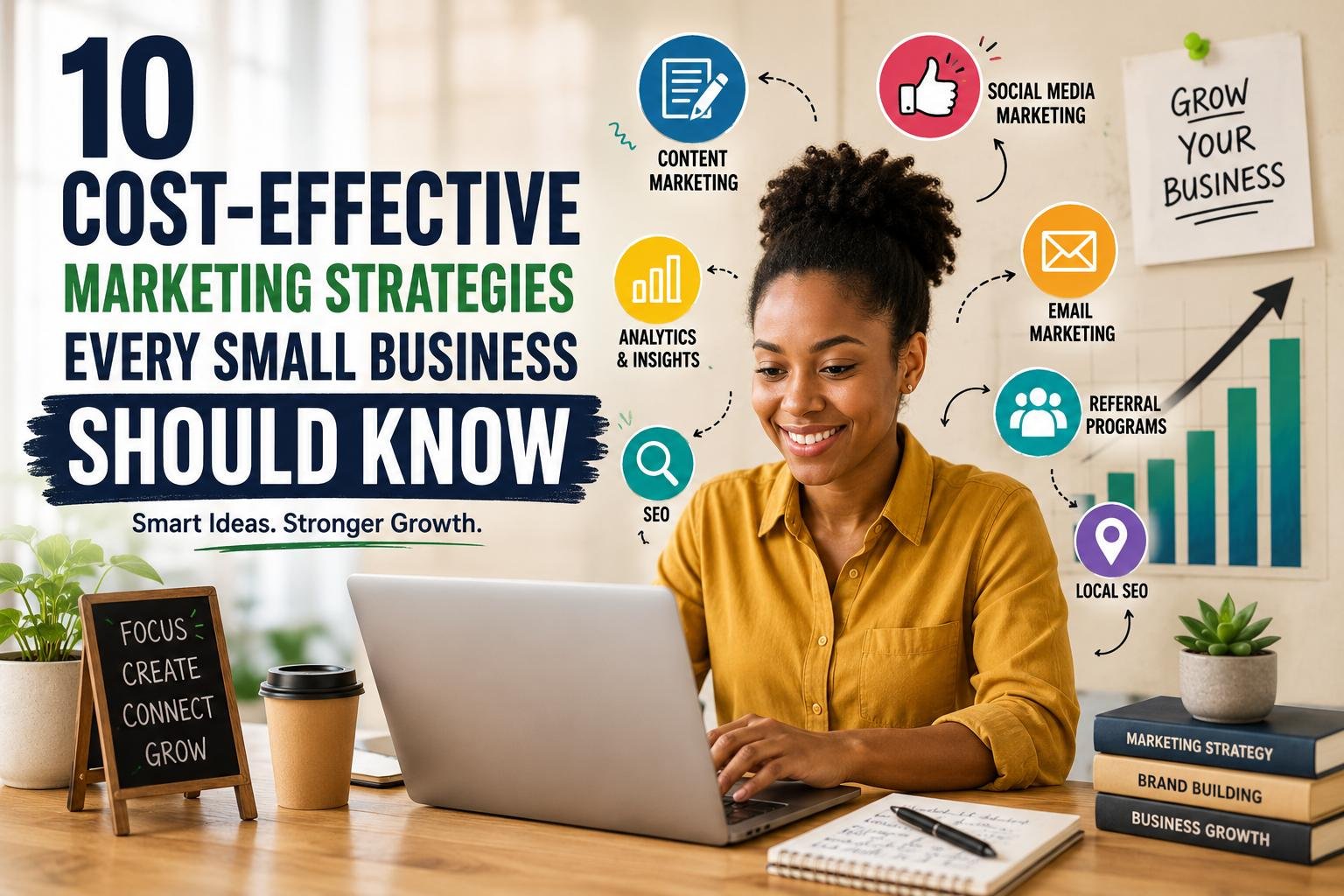
The digital world today brings the opportunity for entrepreneurs to connect with their potential customers more easily than ever in a cost-effective way. By leveraging online channels, engaging in the community, and cultivating customer advocacy, business owners can boost awareness, drive sales, and control expenses. Some really great companies started with a small marketing budget and grew from investments in marketing strategies that were going to lead to long-term ROI. There are a number of effective and affordable marketing strategies that can be explored to identify potential sustainable customer acquisition and business growth opportunities for the entrepreneurs. Entrepreneurs will be able to identify potential sustainable customer acquisition and business growth opportunities by exploring some of the proven affordable marketing strategies.
Why Cost-Effective Marketing is Important to Small Businesses.
The funds available for businesses with small budgets can often lead them to make some tough decisions regarding their advertising and promotion. Budgets that are over-spent but under-performing can shrink cash flow and strain the business’s financial resources, which can impact operations, staffing, and inventory management. Businesses can reduce the risk and maximize ROI by implementing cost-effective marketing strategies. Running expensive advertising campaigns, when it is possible to build a business without such campaigns, is not the best way to spend money. There are ways to get steady, measurable results without spending money on running expensive advertising campaigns that can be implemented as a way to grow a business as funds become available.
One of the other benefits of cheap marketing is versatility. Smaller campaigns can be tweaked rapidly as customers react and see how they’re doing. Business owners have the ability to try out various messages, promotions and channels without putting up a lot of resources initially. This experimentation fosters innovation and assists businesses in discovering resonating themes and messages for their audiences. All these pieces of info add up over time to better decisions and better use of marketing dollars.
1. Create content for your site and invest in it.
Content marketing is still one of the most powerful and cost-effective marketing strategies to get customers. Content marketing is not about selling a product or service, but about creating valuable content that answers customer questions and meets their needs. Blog posts, guides, videos, tutorials, and infographics can help establish your business as a trusted industry expert, and boost your search engine rankings.
Valuable content brings potential customers who are searching for solutions online to businesses. The bakery might post out recipes and baking hacks; the accounting firm could post out tax advice for entrepreneurs. Every piece of content provides more discovery and engagement opportunities. Quality content can drive traffic and leads for months and years after it’s published, whereas paid advertisements are only effective while you are paying them. That’s why content marketing is one of the top investments that small businesses can make.
2. Establish a sound online reputation.
Social media platforms offer businesses a direct line to the customer and don’t need much money to invest in advertising. By regularly posting, engaging with the community and the customers, brands can keep themselves relevant and visible within their target markets. Social media platforms like Facebook, Instagram, LinkedIn, TikTok, and X provide a space to advertise products, share the “how it works” side of things and express values or beliefs.
Without consistency, you are not going to be successful in social media marketing, doesn’t be that kind of marketer. Businesses that deliver educational material, entertainment and helpful information and insights as well as promotional messages are more likely to be engaging with their customers. Customer engagement is also enhanced by responding to comments, answering questions and joining in discussions, all of which builds trust and strengthens customer relationships. Keeping active social media sites can lead to higher brand loyalty and customer referrals, all without a huge marketing budget.
3. Nurture relationships using Email Marketing

Email marketing remains one of the top-performing digital marketing strategies and provides a tremendous ROI. A business email list is a great way to reach a specific audience of interested customers without being influenced by social media algorithms or having to pay for advertising. The business is already gaining interest from the subscribers, who are more likely to respond to the future messages and offers.
An effective email marketing message is not just a message with a promotion. Educational newsletters, industry updates, customer success stories, and exclusive offers are all things that businesses can send out that will continue to benefit their subscribers. Personalised communication leads to increases in customer satisfaction levels and repeat customers. Automated email sequences can also help to save time and ensure that customers are provided with the information they need at the right time after they’ve signed up, made a purchase, or asked for more information about products and services.
4. Develop customer referral programs
Happy customers can be the greatest asset for marketing products and services to a business. Referral programs are an incentive for customers to bring in new customers via discounts, rewards, or other exclusive benefits. Referrals are more likely to lead to sales than conventional advertising, as people are more likely to buy from those they know.
A good referral program should be easy to implement and advantageous for all participants. Purchasers must be made aware how they can take part and the rewards they can reap. Running an email campaign, social media campaign, and sending the receipt to customers are effective ways for businesses to encourage referrals. As time goes on, referrals can build up to a regular source of new clients and can cost just as little as a small part of the amount of money spent on paid advertising campaigns.
5. Make use of social media marketing channels.
Local search engine optimization is a great strategy for businesses to show up in search results when consumers are searching for a product or service in a particular geographic area. This approach can be particularly beneficial for businesses that cater to local communities, as it provides them with a powerful marketing tool that can draw in more customers and generate leads without the need for costly advertising campaigns. Having a local listing optimized ensures the information about the business, its contact details and business hours are easily discoverable by potential customers.
Customer reviews also help to boost local search rankings and help instill trust in those who are considering purchasing a product. Positive reviews can impact on buying choices and boost rankings in local search engines. Having up-to-date business information displayed in directories and updating the profiles with pictures and newsletters can improve visibility even more. Businesses that focus on local SEO, especially those that are small, are likely to see a steady stream of inquiries and foot traffic.
6. Take advantage of Networking Opportunities
One of the most underutilized, but effective marketing tactics for small businesses is networking. Maintain good relationships with other business owners, industry professionals and community members to foster referral, collaboration and partnerships. Networking events, business associations and networking organizations are great ways to extend your connections in the field.
Networking can also help build credibility and awareness of your brand in the community. Local entrepreneurs that are actively involved in local affairs tend to be known as experts in their field. The connections can provide a chance to speak, shared promotions, strategic marketing alliances and more market reach for less cost. Good business relationships often bring prolonged returns that are greater than a traditional advertising investment.
7. Work with Complementary Businesses
Partnership marketing is a marketing strategy that entails a business teaming up with an organization that attracts the same audience as the business without direct competition. For instance, a wedding photographer can join forces with an event planner, florist, and catering service to offer each other referrals and offer them promotional packages. Such partnerships boost visibility and cut marketing costs for everyone.
Joint campaigns may be social media promotions, education workshops, bundled discounts, or joint events. Partnerships are likely to see bigger results than campaigns run independently, since they share audiences and resources. Existing trust in one business can benefit its associates, as it boosts conversion and decreases the amount of time needed to build trust with new target markets.
8. Encourage User-Generated Content
User-generated content is user photos, user’s testimonials, user’s reviews or social media posts that are generated by customers as opposed to the ones created by the business. This can serve as genuine social proof that can sway buyers and build trust with prospective customers. Asking customers to provide their feedback is a continuous source of promotion with no extra expense.
To encourage participation, businesses can develop a hashtag, organize a competition or highlight their customers’ stories on their social media pages and websites. People like to be recognized by companies they are loyal to, so they’re more likely to stay loyal. Additionally, user-generated content offers a variety of viewpoints and experiences that speakers have that are more relatable to audiences traditionally than commercial advertising messages are.
9. Organize educational events and workshops.
Businesses can showcase knowledge, skills and expertise through education events, while establishing relationships with future customers. Businesses can make their knowledge and expertise relevant through workshops, webinars, seminars and live demonstrations. Throughout these events, companies become trusted specialists and help participants think about their products/services when choosing their next purchase.
It does not take a lot of money to host educational sessions. Online webinars can connect with a broad audience at a low cost and local workshops can help build local relationships and boost brand awareness. If value can be provided to the attendees during these events, it helps instills credibility and invites more people to recommend the business. Educational Marketing can create a powerful impact that lasts long after the event has ended and can continue to create opportunities over the long haul.
10. Measure Results and Optimize Performance.
Any type of marketing, even the most cost-effective ones, needs to be monitored and measured to make sure they are effective. Performance monitoring enables the business to see what activities are effective and what isn’t, ensuring that things run a bit better. Some key indicators could be website visits, open rates of emails, customer enquiries, conversion rates and customer acquisition costs.
By regularly analyzing, companies can avoid investing resources in projects that do not yield the desired outcomes. By making decisions based on data, entrepreneurs can make more informed decisions about budget allocation and optimize their messaging according to customer behavior. To keep up competitive pace and maximize returns on marketing investments, there is a need for Continuous Improvement. Continuous assessment and refinement of strategies can help businesses thrive and remain profitable in the long term.
Combine Strategies for Greater Impact
Each marketing strategy can yield its own set of results, but use several strategies together and you’ll create better results. Content marketing can supplement email marketing, and social media can help to boost referral programs and customer reviews. Networking relationships can lead to additional marketing opportunities in the form of partnerships. Combination of these techniques yields an integrated marketing system, capable of acquiring, retaining and raising customer awareness for brands simultaneously.
It is consistency that is the key to success in all forms of marketing. Companies that generate regularly, interact with customers and measure performance are more likely to outperform companies that only occasionally use promotional tactics. It can be easier to get results with small consistent actions over time, than with a more costly campaign infrequently. Long-term marketing habits are the key for entrepreneurs to earn steady, sustainable growth.
Conclusion
It isn’t only the big guys who can control the advertising purse strings, and large budgets are not required to draw in customers and hold their own in today’s market. Entrepreneurs can build strong customer relationships while keeping costs under control, by concentrating on content marketing, social media involvement, email communication, referral programs, neighborhood SEO, networking, partnerships, user produced content, educational events, and performance tracking. These tactics are about building value, building trust and seeing long term rather than looking at short term promotions.
The most successful companies realize that marketing is an investment, not one-time event. With diligence, customer-centric communication and astute decision-making, outstanding results can be achieved no matter how limited your budget. By using inexpensive marketing tactics, small business owners put themselves in a better position to draw in customers, build loyalty and put their small business on a path towards lasting growth, year after year.
Get more well researched information about Cost-Effective Marketing Strategies for Small Businesses here.