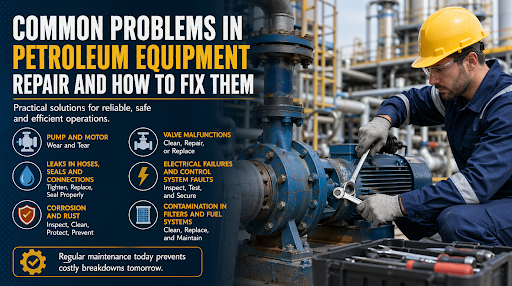
Why Reliable Equipment Matters in Petroleum Operations
In the petroleum industry, equipment failure is never a small issue. A leaking valve, a worn seal, or a faulty pump can slow production, create safety risks, and increase costs quickly. When repair work is delayed, one minor defect can turn into a major shutdown.
Strong maintenance practices protect more than machinery. They protect uptime, worker safety, product quality, and environmental compliance. Repair decisions must be practical, timely, and based on real operating conditions. A thoughtful approach to petroleum equipment repair helps companies reduce emergency callouts, extend asset life, and keep operations moving with fewer interruptions.
Wear and Tear in Pumps and Motors
Pumps and motors sit at the heart of many petroleum systems, so they are often the first components to show stress. Over time, bearings wear down, seals weaken, and internal surfaces lose efficiency. Operators may notice unusual vibration, rising energy use, overheating, or uneven flow rates.
Several factors usually cause the problem:
- poor lubrication
- contaminated fluids
- misalignment
- long operating hours without inspection
The fix starts with a proper diagnosis. Technicians should inspect bearings, couplings, seals, and mounting points before replacing parts blindly. Alignment should be checked with precision tools. Lubrication schedules should also be reviewed, because too little grease can be just as harmful as too much.
If the motor overheats repeatedly, airflow restrictions and electrical load should be examined. In many cases, the best result comes from combining part replacement with a review of the operating environment. Good petroleum equipment repair is not just about restoring function. It is about solving the reason the failure happened.
Leaks in Hoses, Seals, and Connections
Leaks are among the most common and costly issues in petroleum facilities. Even a small leak can create safety hazards, waste product, and damage nearby equipment. Often, they start as minor seepage around fittings, flanges, hoses, or gasket surfaces.
This usually happens because of aging materials, pressure fluctuations, poor installation, or chemical exposure. In rough operating environments, vibration can also loosen connections over time. Some teams make the mistake of tightening everything harder, but that can deform sealing surfaces and make the problem worse.
A better fix includes these steps:
- inspect the source carefully and confirm the exact leak point
- replace damaged seals, gaskets, or hose sections with compatible materials
- check pressure ratings and temperature limits
- clean mating surfaces before reassembly
- torque fittings to the manufacturer’s recommendation
Routine visual checks are valuable here. A small patch of residue or a slight odor can reveal a problem before it spreads. In petroleum equipment repair, leak control is not only about preventing product loss. It is also a direct part of keeping the site safer and more stable.
Corrosion and Rust in Metal Components
Petroleum equipment often operates in harsh environments where moisture, chemicals, salt, and heat weaken metal parts. Corrosion can appear on tanks, pipelines, fittings, valves, and support structures. At first, it may look cosmetic. Later, it can reduce wall thickness, weaken joints, and lead to serious failure.
Fixing corrosion requires more than sanding and repainting. Teams should inspect the affected component to determine whether the damage is superficial or structural. If the metal has lost too much integrity, replacement is safer than patching. Protective coatings, corrosion-resistant materials, and moisture control measures should then be used to prevent the issue from returning.
It also helps to review storage and cleaning practices. Water trapped after washing, poor ventilation, and incompatible chemical cleaners can all speed up corrosion. A preventive mindset saves money because replacing one compromised section early is easier than dealing with a full system failure later.
Valve Malfunctions and Flow Control Problems
Valves regulate pressure and flow throughout petroleum systems, so even one faulty unit can disrupt an entire process line. Common symptoms include sticking handles, slow response, internal leakage, inconsistent pressure, or total failure to open and close properly.
These issues often come from debris buildup, worn seats, damaged actuators, or lack of periodic cycling. In some operations, valves remain in one position for so long that corrosion or residue causes them to seize.
The most effective fix depends on the type of valve and the extent of the damage. Cleaning internal components may solve the issue when contamination is the main cause. In other cases, seals, seats, or actuators need replacement. If the valve body is cracked or badly corroded, a full replacement is usually the wiser option.
Technicians should also confirm that the valve matches the pressure, temperature, and chemical conditions of the system. A mismatched valve may seem functional at first but fail much earlier than expected. Careful petroleum equipment repair often involves correcting past selection mistakes, not just repairing visible damage.
Electrical Failures and Control System Faults
Mechanical problems are common, but electrical issues can be just as disruptive. Faulty wiring, damaged sensors, overloaded circuits, and unstable control panels can cause pumps, meters, and monitoring equipment to behave unpredictably. Sometimes the equipment appears to fail mechanically when the real problem is electrical.
Warning signs may include frequent tripping, delayed startup, false readings, intermittent shutdowns, or alarm activity that seems random. Electrical faults can damage connected components and create serious safety risks in flammable environments.
A safe and effective repair process should include isolation, testing, and documentation. Connections need to be checked for heat damage, corrosion, or looseness. Sensors should be calibrated, and damaged cable insulation should be replaced immediately. Control settings should also be reviewed to make sure they still match current operating needs.
Because petroleum sites often combine harsh conditions with strict safety requirements, electrical work should be handled by trained personnel using approved components. Quick fixes can create bigger hazards later. When petroleum equipment repair includes proper electrical troubleshooting, systems become more reliable over time.
Contamination Inside Filters and Fuel Handling Systems
Contamination is one of the quietest causes of equipment trouble. Dirt, water, sludge, and metal particles can enter fuel handling systems through storage tanks, transfer lines, worn components, or poor housekeeping practices. Once contamination spreads, filters clog faster, flow becomes restricted, and sensitive parts wear out sooner.
Operators may first notice reduced efficiency, pressure drops, unusual noise, or dirty samples during routine checks. If ignored, contamination can affect meters, pumps, injectors, and separators across the system.
The fix starts with identifying the source, not only replacing the filter. Filters should be changed on schedule and inspected for clues about the type of contamination present. Tanks may need cleaning, water drains may need servicing, and line flushing may be necessary to restore proper flow.
Clean handling practices make a major difference. Covered storage, dry transfer equipment, and regular sampling reduce the chance of repeat failures.
Keeping Repairs Effective for the Long Run
The best repair results come from combining fast action with long-term thinking. Petroleum systems are complex, and recurring faults usually point to a deeper issue in maintenance habits, part selection, or operating conditions. That is why reactive repair alone is rarely enough.
A smarter strategy includes regular inspections, clear maintenance records, staff training, and timely replacement of high-wear parts. It also means taking small symptoms seriously before they become expensive failures. Unusual heat, vibration, noise, or residue should trigger investigation, not delay.
When companies treat maintenance as a planned investment rather than an afterthought, they gain better reliability and lower lifetime costs. The strongest petroleum equipment repair programs focus on root causes, use quality replacement parts, and support technicians with accurate procedures. In a demanding industry where downtime is costly and safety is essential, that approach turns repair work into a real operational advantage. That discipline builds trust across operations, maintenance teams, and site leadership every day.
