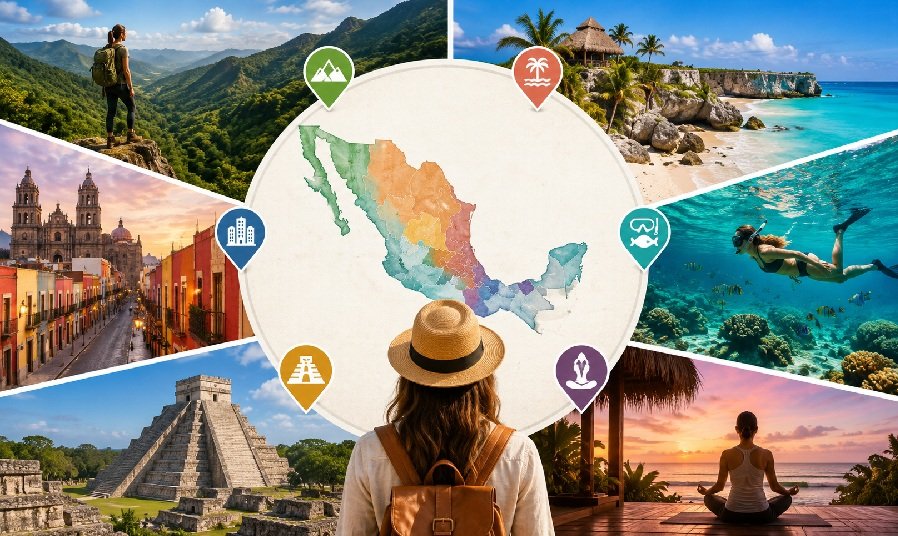
Mexico is not a destination where one simple recommendation works for every traveler. The country is too large, too regional, and too diverse for that. A person looking for a relaxed beach vacation may need a completely different place than someone planning a food-focused city break, a cultural route through historic towns, or a nature trip built around islands, cenotes, mountains, and coastlines.
That is why choosing where to go in Mexico should start with travel style rather than popularity. Cancun, Mexico City, Oaxaca, Puerto Vallarta, Los Cabos, Tulum, Guadalajara, and San Miguel de Allende are all well-known names, but they create very different trips. Some are better for easy resort comfort, some for local culture, some for nightlife, some for food, and some for slow exploration.
Beach Vacation or Cultural Trip?
For many travelers, Mexico first brings to mind beaches, resorts, and warm weather. The Caribbean coast is often the most convenient choice for this type of trip. Cancun, Playa del Carmen, Riviera Maya, and Tulum offer strong hotel infrastructure, many tours, airport access, restaurants, beach clubs, and day trips. This region works especially well for travelers who want a clear vacation structure and do not want to spend too much time solving logistics.
At the same time, Mexico is not only a beach destination. Mexico City offers a completely different experience, built around museums, historic neighborhoods, parks, architecture, markets, and an enormous food scene. Oaxaca is slower, more traditional, and deeply connected to regional cuisine, crafts, festivals, and local identity. Guadalajara offers a large-city atmosphere with strong cultural roots, while San Miguel de Allende is often chosen for its colonial architecture, walkable center, galleries, and relaxed pace.
The right choice depends on what the traveler wants to remember after the trip. If the main goal is rest, warm water, and easy planning, a beach region makes sense. If the main goal is food, history, neighborhoods, and everyday local atmosphere, the central and inland destinations may be more rewarding.
Caribbean Coast or Pacific Coast?
Mexico’s coastlines are not the same. The Caribbean side is known for turquoise water, white-sand beaches, cenotes, Mayan ruins, and a strong resort scene. It is one of the easiest regions for first-time visitors because the travel infrastructure is well developed and many routes can be organized from one base.
The Pacific coast feels different. Puerto Vallarta combines beach life with a real city atmosphere, mountain views, boat trips, local restaurants, and walkable neighborhoods. Los Cabos is more desert-like, polished, and dramatic, with luxury resorts, golf, ocean views, and a stronger focus on high-end relaxation. Smaller Pacific destinations can feel more local, less packaged, and better suited to travelers who prefer a slower rhythm.
Before booking, it is useful to compare both sides instead of assuming that all Mexican beach destinations offer the same kind of vacation. A broader travel guide to Mexico can help travelers understand how the main regions differ and which one fits their budget, season, and preferred pace.
Think About Time, Distance, and Route Logic
A good Mexico itinerary is not only about choosing beautiful places. It is also about choosing places that make sense together. Mexico is a large country, and distances can be significant. A traveler may want to combine Cancun, Mexico City, Oaxaca, and Los Cabos in one trip, but that kind of route usually requires flights, extra time, and careful planning.
For a first or shorter trip, it is usually better to build around one main region. For example, travelers can base themselves in Mexico City and add Puebla or Teotihuacan. They can stay on the Yucatan Peninsula and combine Cancun, Valladolid, Isla Mujeres, cenotes, or nearby ruins. They can choose Puerto Vallarta and explore beaches, coastal towns, and mountain scenery nearby.
This approach makes the trip more balanced. Instead of losing time to transfers, travelers get more time for actual experiences: meals, walks, beaches, markets, tours, viewpoints, and unplanned discoveries.
Match the Destination to the Season
Seasonality can change the experience in Mexico. Some months are better for beach weather, some for lower prices, and some for cultural events or greener landscapes. The dry season is often easier for outdoor plans, especially for beach vacations, but it also brings more demand and higher rates in many popular destinations.
The rainy season can still work well, especially for travelers who are flexible and understand the local pattern. In many places, rain does not necessarily mean a full day indoors. It may arrive later in the day and leave plenty of time for sightseeing or beach plans. However, for trips built around boat tours, diving, island hopping, hiking, or long outdoor days, the local weather pattern matters more.
Coastal routes also require more attention during hurricane season. This does not mean a traveler should automatically avoid those months, but refundable bookings, travel insurance, and flexible planning become more important.
Choose the Right Level of Structure
Another important decision is how organized the trip should be. Some travelers prefer all-inclusive resorts, airport transfers, and pre-booked excursions. Others want independent hotels, local restaurants, public transportation, and a flexible daily schedule. Mexico can support both styles, but not every destination is equally suited to both.
Cancun and Riviera Maya are strong for organized resort travel. Mexico City and Oaxaca are better for independent exploration, food, neighborhoods, museums, and walking routes. Puerto Vallarta can offer a middle ground, with enough tourism infrastructure to feel easy but enough local life to feel less isolated from the destination.
Before choosing a city or beach area, travelers should think honestly about their comfort level. Do they want to rent a car? Do they prefer tours? Do they want nightlife nearby? Do they need family-friendly hotels? Do they care more about food, nature, history, or beach quality? These questions often lead to a better destination choice than simply following the most famous option.
Plan With a Wider View of Mexico
The best Mexico trip is not always the most obvious one. A traveler who starts by comparing regions, travel seasons, transportation, and personal priorities is more likely to choose a destination that actually fits. Mexico can be a beach escape, a food journey, a city break, a cultural route, a nature trip, or a comfortable resort vacation, but each version needs a different plan.
Before finalizing a route, it helps to look at a complete Mexico destination guide and compare the main travel areas side by side. This gives a clearer picture of where to go, how long to stay, what to expect, and how to avoid building a trip around the wrong assumptions.
Mexico rewards travelers who plan with context. When the destination, season, pace, and travel style work together, the trip feels easier, richer, and more personal. Instead of trying to see everything, the smarter approach is to choose the right version of Mexico for this specific journey.