Introduction
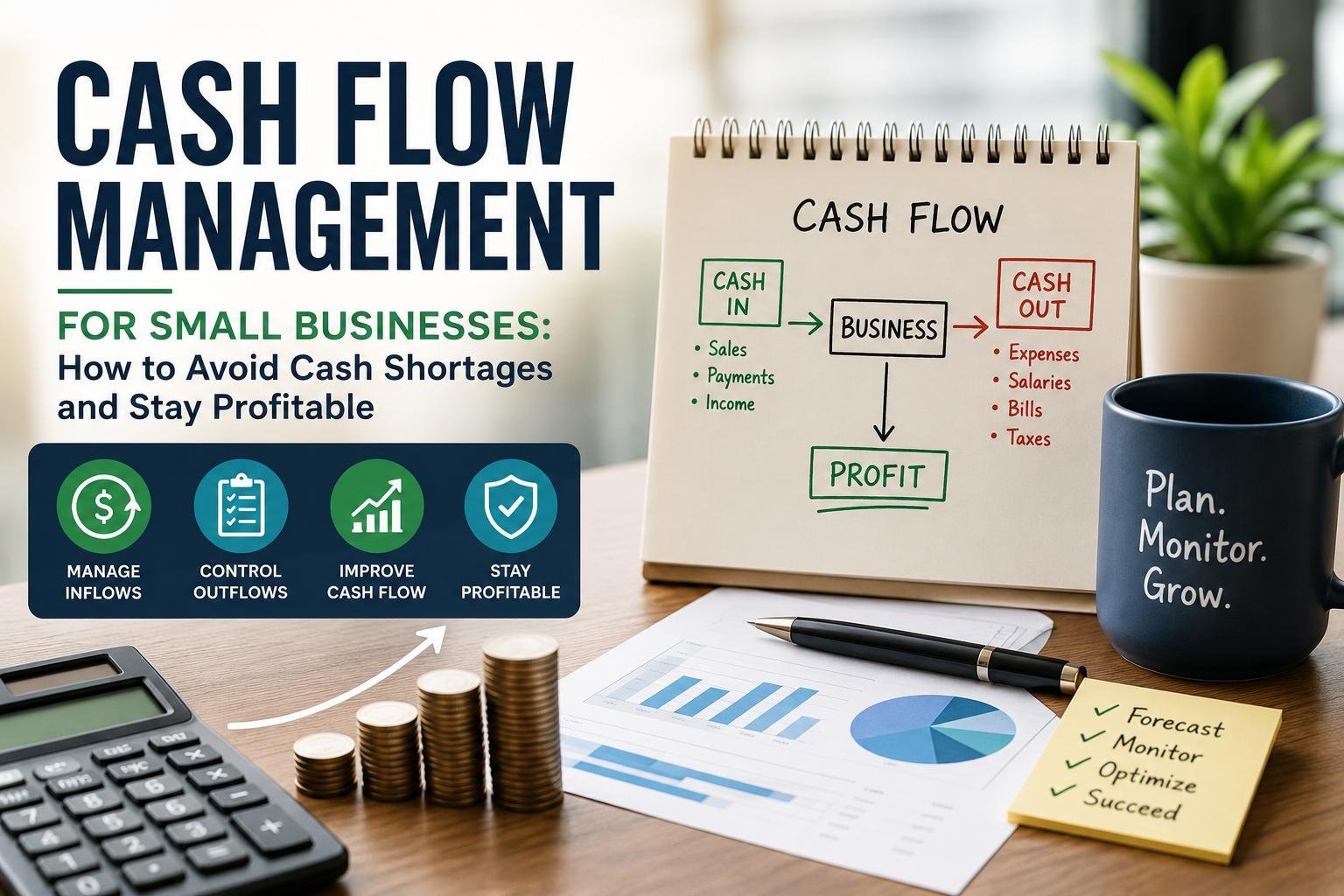
Cash flow is the bloodline of each small business. We may see companies report great sales and large profits yet at the same time have issues paying suppliers, employees, rent, or taxes if cash isn’t present when it is required. Many small businesses fall not because they don’t have customers or great products but because they go through long term cash crunches which in turn prevent them from meeting their financial responsibilities. Good cash flow management helps businesses with day to day operations, allows them to react to unforeseen charges, take advantage of growth issues and in the end achieve long term financial health.
Understanding what goes in and out of a business is a key issue for entrepreneurs, finance managers and business owners. What we call cash flow management is much more than just tracking profit it includes planning, monitoring, and controlling the time of cash in and out. Businesses which proactively work at their cash position are better able to weather seasonal variation, economic uncertainty, and delayed customer payments.
One out of the best practices is in the area of cash inflows and out flows which in turn allows business owners to maintain liquidity at the same time support sustainable growth. This guide goes over practical strategies for forecasting cash flow, reducing short term cash issues, dealing with late payments, improving collection methods, cutting expenses, and making better financial decisions.
Understanding Cash Flow Management
Cash flow management is the process of tracking, analyzing, and improving the flow of cash in and out of a business. Cash includes customer payments, loans, investment income and other receipts, cash out goes out for salaries, inventory purchase, rent, utilities, taxes, loan repayment, equipment buyouts and operating expenses. We try to see that there is enough cash to pay off debts at all times also at the same time put aside some for emergencies and future growth. Unlike profit which may report high from sales on credit, cash flow reports only what cash the business has in hand. A firm may report large profits yet still go into financial trouble if customers pay late or we have to pay out before we receive in. Thus, it is a business’ best interest to watch their cash flow instead of just looking at the profit reports. Good cash flow management gives you more financial options, improves the business’ ability to weather hard times, supports in the development of strategy and also in not having to turn to emergency loans when things get tough.
Grasping Cash Flow Forecasting
Cash Flow is what truly counts over Profit. Many business owners report that they think profit is the same as business success. While profit is important what we find is that positive cash flow is often even more so because businesses do not pay with what is reported as profit. For instance a company may report very large sales in a given month but if customers are given 60 day terms what the business will do is not see that cash for 2 months. At the same time the company is still on the hook for paying out employee salaries, supplier invoices, rent and taxes which are due right away. This creates a liquidity issue which may in turn cause the business to go into debt, delay payments, or shut down. Also a company may have strong cash flow which allows it to put out timely orders for inventory, improve relations with suppliers, put more into marketing, hire more people, and react quickly to chance opportunities. Also what we see is that consistent positive cash flow improves a business’ credibility with lenders and investors which in turn makes it easier to get financing when growth opportunities present themselves. This distinction is important for business owners to see and focus on liquidity in addition to profit which they may be putting all their attention on.
Common Causes of Low Cash in Small Businesses.
Cash flows dry up mostly as a result of poor planning which in turn may be due to poor financial management, weak credit control issues, over spending and inaccuracy in financial forecasts. Very often the issue is that of late customer payments, when at the same time expenses are still piling up. Also very common is the purchase of large quantities of inventory which in turn locks up large sums of cash in products that may not move off the shelves fast enough. Also what may not be so obvious is that rapid business growth may in fact create cash flow issues as we see with an increase in sales comes the need to buy in more inventory, hire more staff or expand which in turn uses up cash before we see a return from our customers. Also we see that poor budgeting and lack of emergency funds, seasonality, and unexpected repair bills all play a role in cash issues. Also at risk are businesses that put all their eggs in one basket i.e. which rely very heavily on a few large customers — should any of those go quiet or cancel we are in trouble. By understanding what causes these issues business owners are better able to spot the warning signs early and put in place preventive measures which in turn will stop a temporary cash issue from blowing out into a full scale financial crisis that puts the long term survival of the business at risk.
Creating an Effective Cash Flow Forecast
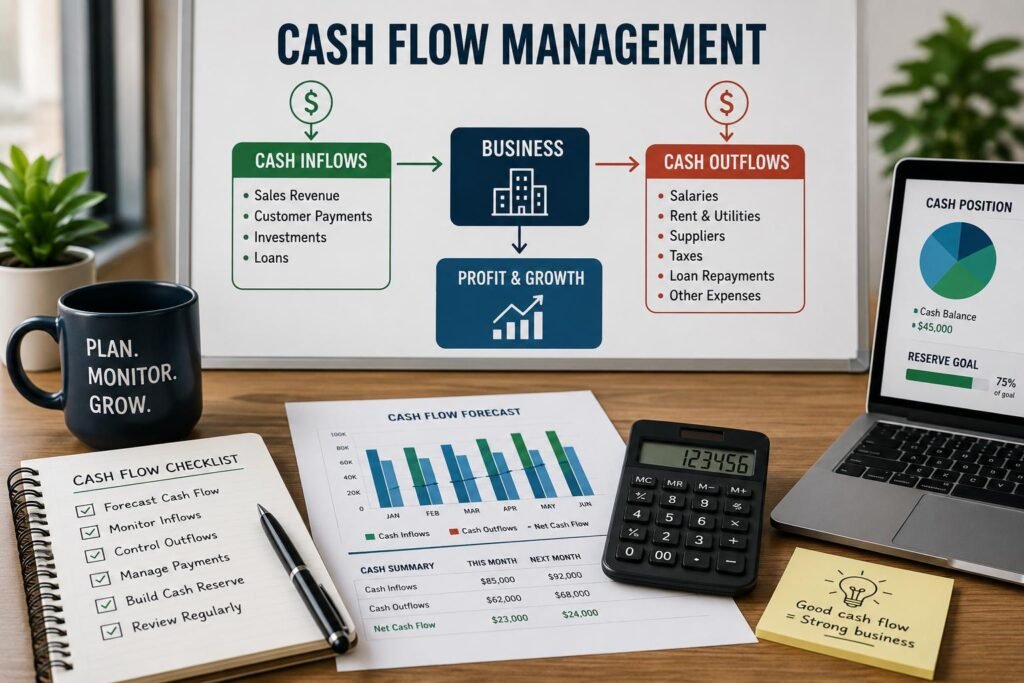
In the report which goes into Cash Flow Forecasting we discuss that which is perhaps the most useful tool for a company to use in order to avoid financial issues. A cash flow forecast which looks at what is to come in terms of cash in and out over weekly, monthly, quarterly, or annual periods is what we are looking at here. To put together an accurate forecast first you have to put a figure to what you expect in terms of customer payment, loan proceeds, investment income and any other sources of cash. Also you will have to look at what the outgoings are going to be which include payroll, rent, utility bills, purchase of inventory, loan repayments, insurance, taxes, maintenance of equipment and also planned capital expenditure. What you do is you put projected in comes up against what you are projecting to go out and this will show you what times of the year you may have a shortfall which in turn may require you to get in extra finance or to make spending changes. Also these forecasts should be done often as the real world business conditions almost never play out as you think they will. By reviewing them weekly or monthly businesses are able to react proactively instead of having a crisis because they ran out of cash. Reliability in these forecasts support good decision making, improve financial health of the company and also play a key role in long term planning.
Strategies for Improving Cash Inflows
Increasing business liquidity greatly with the speed and consistency of incoming cash, issue invoices as soon as the product or service is delivered instead of waiting few days or weeks. We put forth that which is clear in payment terms, which include multiple payment options, we install automated invoicing systems and electronic payment options which in turn will get customers to pay faster. We also put forward that which is the idea of giving small discounts to customers which pay early which in turn will get them to settle their invoices before the due date, also we put in place reasonable late payment penalties which in turn will reduce on unnecessary delays. Also we suggest that before you extend payment terms to new customers do a credit assessment which in turn will reduce the risk of bad debts. Also we see value in diversify revenue sources which in turn improve cash inflows and reduce dependence on a single customer or market segment. We see in subscription services, maintenance contracts, recurring billing models and customer loyalty programs which put in place more predictable income streams. Also we advise that you review accounts receivable reports regularly which will help to identify which invoices are past due early which in turn will allow you to follow up before collection issues become serious.
Controlling Cash Outflows without Hurting Operations
Managing effectively doesn’t always translate to aggressive cost cutting. Instead companies should thoughtfully put together spending plans which at the same time preserve operational efficiency and customer satisfaction. We can negotiate longer payment terms with suppliers which allow us to keep more cash in the business without at the same time harming supplier relationships. By base stock levels on accurate demand forecasts companies may reduce excess inventory which in turn reduces storage costs and cash tied up in products which don’t sell. Also regular review of expenses often brings to light to which there are unnecessary subscriptions, duplicated software services, inefficiency in utility use, or spending which is at a large degree discretionary and which does not in fact impact on productivity. At times of tight cash flow we can put off non-essential capital outlays which keep cash for critical operational needs. Also it is important for companies to put together annual budgets and to compare what they are spending against what was budgeted for at the go out to identify cost overruns early. Strategic expense management sees to it that cash at hand goes to revenue generating activities rather than into avoidable operational inefficiencies.
Managing Late Customer Payments
Late payments are a major issue for small businesses’ cash flow. Also large and profitable companies may see cash flow issues when customers pay after set terms. By setting out what is expected in terms of payment before we deliver products or services we can reduce issues down the line. Invoicing should include payment due dates, what methods of payment are accepted, what the penalty is for late payment and contact info for billing questions. We also put out automated payment reminders before and at due date which in turn helps maintain professional relationships with our customers. It is a good practice for businesses to have a structured collection process which includes a series of friendly reminders before we go to formal demand notices. Also we see that building strong customer relationships improve payment behavior which in turn means that generally satisfied customers will pay their invoices. For high risk customers we ask for partial deposits or that payments be made at milestone points before we finish a project which in turn reduces our exposure to large balances and at the same time improves our cash flow during the life of the project.
Building a Cash Reserve for Emergencies
Every business owner should run a cash reserve which covers several months of operation. We see unexpected events like equipment failure, economic recession, natural disasters, supply chain issues or sudden loss of business which can quickly eat up what little cash is on hand. Without emergency reserves which are put in place, companies may turn to expensive short term loans or put off important payments, which in turn damages financial health and business image. In setting up a reserve fund what is required is disciplined financial management which includes setting aside a part of what is earned each month into separate savings accounts. While at first it may seem that putting money into a reserve is a step back from growth, in the long term the financial security that it brings out ways the short term trade off. Also emergency cash reserves allow businesses to jump on a chance that comes their way, for instance buying out of season cheap stock, investing in growth, or quickly responding to market changes without at the same time putting at risk the here and now operations.
Using Technology to Improve Cash Flow Management.
Modern in accounting software we see a transformation of cash flow management which is a result of real time financial reporting, automatic report generation, and improved forecast tools. In the cloud based accounting we see that transactions are recorded in real time, invoices are generated, we have better customer payment tracking, bank accounts are reconciled and we get out cash flow reports with a minimal touch of man. Also we see that integration with banking systems which in turn gives us immediate access to what our available cash is at any given time which in turn helps business owners make better spending decisions all through the day. We have automated payment reminders, recurring billing systems, expense tracking apps, and financial dashboards which in total improve operation and also reduce admin errors. Also we are seeing artificial intelligence play a bigger role in which it identifies spending trends, predicts when we may have cash shortfalls and puts forth corrective action before we have a full scale financial issue. By investing in the right financial tech not only do we save time but also see to it that our decisions are better, we have more financial transparency and in the long term we see better cash management practices.
Monitoring Key Cash Flow Performance Indicators
Successful companies which do report on key cash flow metrics on a regular basis instead of just looking at income statements. We see operating cash flow as a measure of cash generated from core business operations and that it indicates whether day to day operations are producing enough liquidity. The current ratio which is current assets divided by current liabilities gives us a look into short term financial health. Accounts receivable turnover which looks at how well we are collecting customer invoices and inventory turnover which in turn looks at how fast inventory is selling into sales. Day’s sales outstanding which reports the average time it takes customers to pay their invoices and which helps us assess our collection efficiency. Free cash flow which is what is left over after we pay for operations and capital expenditures that which is put toward debt reduction, growth, or return to shareholders. By tracking these metrics which managers are able to identify financial issues as they come up, to evaluate the results of operational changes and to make decisions which are based in fact that in turn play to better financial health over the long term.
Best practices for sustained cash flow success.
Long term financial success is a result of developing a discipline in finance as opposed to reacting to financial crises. Business owners should go over cash flow reports often, keep accurate financial records, and put together real budget plans which should be revised as business conditions change. Also it is improved to separate business and personal finances which in turn reduces accounting errors. We should put in place clear credit terms, do regular financial reviews, maintain emergency funds, and watch out for unnecessary spending which all play a role in improving health of cash flow over time. Also businesses should communication proactively with suppliers, lenders, and customers when financial issues come up which usually results in flexible payment terms which in turn reduce financial stress. Also continuous financial education is key for business owners to understand what is going on in the market, tax issues, financing options and cash management tools which in support of sustainable growth.
Conclusion
Cash flow management is an issue of great importance to small business owners and finance managers. While profitability reports on a company’s long term health, it is positive cash flow which allows businesses to keep the doors open, pay what they owe, and pursue growth without the stress of money issues. By accurately forecasting cash flow, improving the collection of what is due, controlling expenses, better handling of customer payments, keeping emergency reserves, using accounting technology, and watching key financial indicators, businesses may greatly reduce their cash shortfalls. Robust cash flow management gives greater financial peace of mind, improves operational resilience, supports sustainable growth, and enables better strategic decision making. Businesses which put liquidity at the fore along with profitability are better able to weather economic storms and in that process build true financial stability and long term success.
Get more well researched information about Cash Flow Management for Small Businesses here.