
Introduction
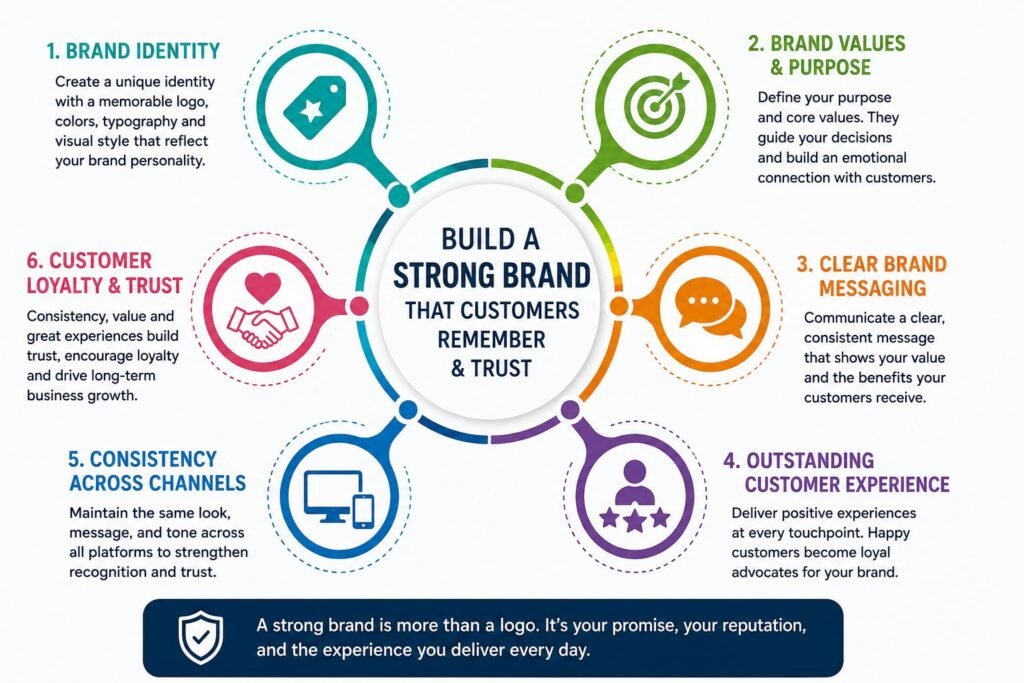
Today’s successful business is more than just about the quality of goods and services. Businesses are constantly exposed to thousands of ads, promotions and business messages every day, and it’s getting harder to get customers’ attention. Establishing a unique identity (recognition, remembrance and trust) is essential for business and can be achieved with a strong brand. It impacts a company’s image, sets expectations for customers and is a key factor in buying decisions.
Many business owners think that branding is just about developing a logo or picking colors for your business. Although it’s important, branding is more than just what it looks like. A brand is the personality, values, promises and customer experience of a business. It conveys the nature of business, its values and what makes it better than its rivals for customers.
When businesses invest their resources in building their brand identity, they tend to create a sense of loyalty among their customers, reap rewards in reputation and have better prospects into the future. It is possible for the business to be online, local or overseas; a memorable brand can be one of the most valuable assets of any company. By grasping the essence of branding, entrepreneurs can cultivate enduring connections with customers and build a robust brand presence in competitive markets.
Understanding Brand Identity
Creating a clear and recognizable brand identity is one of the key factors for effective branding. Brand identity is comprised of all the visible and emotional factors that define the customer’s perception of a business. This is about logos, logos colors, logo typography, logo messaging, logo tone of voice, logo interactions with customers, and even company values. All these put together form a distinct personality which customers will identify with the business.
Having a clear brand identity is crucial for customers to identify a company from its peers. For instance,, people may recognize big businesses, even before knowing the name, by their color, logo, or advertising approach. This type of recognition takes place over time with consistent and deliberate branding efforts.
Before creating their brand identity, it is essential for entrepreneurs to know the target audience they want to cater to. When businesses understand their customer’s preferences, challenges, lifestyle and expectations, they can develop branding elements that will resonate with their customers. When companies have a brand identity that matches with customer’s needs, it is more likely that they will create a connection with them and that they will eventually become loyal to the company.
This resource on brand identity elaborates on the concept and the role of brand identity in business strategy; it helps explain how business uses branding to distinguish itself and build relationships with customers.
Establishing Your Brand Purpose and Business Values
Brands are successful when they are based on clear purposes and meaningful values. Businesses are facing growing consumer pressure for making their operations more than just about making money. A company’s purpose is a reason for the existence of the business, and its values are the principles that guide the decisions and actions of the business. These factors can affect company cultures, customer interactions and business strategy.
Entrepreneurs must discover what it is that they want to do in their business and tell their customers about it. A company might focus on sustainability, affordability, innovation, community support, or fantastic customer support, for instance. These values must not just be on websites or promotional materials, they must be a way of doing business.
If the company’s values are clearly expressed in actions – customers tend to trust and get attached to the brand more. This emotional bond can be a strong selling point as people are likely to stay loyal to a brand that aligns with their values and goals.
Clear values also provide clarity for employees about what is expected of them and are a part of a consistent customer experience. These values serve as a compass for companies to make decisions and stay true to their brand and trusted.
Fundamentally Developing an Effective Logo and Visual Identity
Your logo may be the initial visual interaction that your customers have with your business. While a logo is just a small part of the brand, a strong logo is a key element of recognizing a brand. Remember a great logo is simple, flexible, meaningful, and easily identifiable on all media and marketing channels.
Intricate designs can be pretty, but rarely make an impact on customers. Simple logos can be more easily remembered and can be better adapted to websites, social media networks, business cards, product packaging and promotional material. The ideal logos are those that express a personality and values of the business and are also good-looking.
Color also is vital to branding. Customers can have different reactions to different colors. Colors can convey meaning such as trustworthiness and professionalism (blue), growth and sustainability (green), and excitement and energy (red). Colors ought to be selected according to the business image and expectations of the customers.
Typography, icons and visual style should match and reflect the logo to give a unified look to the visual identity. Sticking to these visual elements in all communications over time will enhance brand recognition and recall.
Clear and Consistent Brand Message
When it comes to brand marketing, it is the method that businesses employ to convey messages to customers in promotional materials, on the website, through social media, via email and during customer interaction. The right messaging enables customers to comprehend the business’s products and services, its audience, and its distinguishing qualities.
A lot of businesses are in trouble due to the mixed messages they send on various platforms. An ad might make it seem that the company is cheap and inexpensive, while another will make it seem that it’s luxurious and exclusive. If there are inconsistencies, it will cause confusion to customers and lessen the confidence in the brand.
It is important for entrepreneurs to set some guidelines for messages and decide on the company’s voice and tone and messaging style. Some brands like to use a formal and professional tone, whereas others use a casual and conversational tone. The style should be the same as what customers expect and be consistent from all channels.
A powerful brand message usually features a definite value proposition that communicates the advantages the customer gets when selecting the business. But a business shouldn’t just talk about the features of a product, it should talk about the solutions and outcomes that customers can get. When it comes to messaging, customers are more receptive to messages that solve their problems and that they feel are of value.
Provide an Outstanding Customer Experience
One of the most impactful parts of today’s branding is the experience that’s being provided to the customer. Each and every customer touch point becomes part of the customer’s brand experience. This encompasses such activities as web surfing, customer service, shopping, ordering, delivery, and customer complaints.
Recurring positive customer experiences build customer confidence and foster repeat sales. A lot of customers recall the customer service better than what the products were and how much they cost. One bad review can hurt a brand, particularly in today’s day and age of internet reviews and social media.
Weighing in on all aspects of the customer journey to look for room for improvement is crucial for entrepreneurs. Delivering fast responses, clear communication, reliability, and effective problem solving is a part of positive customer experience. It’s also important for employees to be familiar with the company’s values and customer service expectations for uniformity.
Creating outstanding customer experiences will make customers happier and more likely to recommend to others and refer. Happy customers can be brand advocates, turning their friends and family into your customers.
The Consistency of the Message Across all Marketing Channels
One of the most crucial rules for a successful brand is consistency. Customers connect with companies across several distribution channels such as websites, social media, e-mail newsletters, ads, packaging and brick-and-mortar stores. When each channel is unique or has different message consumers can become confused and/or lose faith in the business.
Consistent branding is the use of a consistent logo, colors, fonts, messaging and values throughout customer touch points. This repetition engrains the brand and makes it more memorable to customers. As time passes, customers start to make associations with various visual and emotional triggers and factors in relation to the brand/company.
Having brand guidelines can assist businesses to stay consistent in growth. These guidelines can cover logo usage guidelines, approved colors, writing styles, image preferences, customer communication guidelines and more. This is especially useful in cases where there are multiple employees, agencies or partners involved in marketing.
Consistency means not repetition or monotony. While it’s true that the world of social media is ever-changing, marketers can still develop great content and campaigns in a way that customers will recognize and trust.
How Branding Affect Customer Loyalty
Great brands sell to people based on emotion and are loyal. Customers who feel the brand is trustworthy and have a positive experience with a brand will be less inclined to switch to an alternative brand even if they do have one. Retaining customers can help companies reduce their customer acquisition costs and ensure a steady stream of revenue. By fostering customer loyalty, businesses can also reduce customer acquisition expenses and have a more stable income.
Brands may sometimes be synonymous with reliability and decreased risk for consumers. If you purchase from a reliable company, then you can be sure that the product or services that you have are going to satisfy your requirements. This trust will be crucial in companies where there is a lot of competition and various quality and services.
Repeat sales and increased customer lifetime value is another benefit of customer loyalty. They will be more willing to try new products/services that the company might also offer as they already trust the company. At times, existing customers can be the most lucrative part of a business’ customer base.
Practicing good service, providing a personalized experience and staying constantly engaged are all ways to foster loyalty among businesses. Customers will be more loyal to the brand and will talk about the brand when they feel appreciated.
Correlation between the Reputation of a Business and its Branding
Brand reputation is a gauge of the general view of a business as a result of experiences, reviews, media and customer interaction. Your reputation is like a magnet, it pulls the customers, investors, employees and business partners to you, but when your reputation is damaged, your growth opportunities are hurt.
Well, branding can make a huge difference in building the reputation as it sets customer’s expectation and conveys the values of businesses. Established companies which can sustain their promise over the years gain credibility and trust. On the other hand, if they don’t keep their word, they may lose customers’ trust in their business and the brand.
Reputation management has grown to be a much larger part of the online reviews and social media world. Transparency and accountability are vital parts of contemporary branding techniques, as consumers can easily post their comments and suggestions on the internet to a big number of individuals. Businesses need to be proactive in addressing customer concerns and being responsive to customer feedback in a timely and professional manner.
When products and prices are similar, a positive reputation can be a great competitive advantage in such competitive markets. When there are very small price differences, customers may opt for a brand that they are familiar with instead.
Branding as one of the Most Critical Aspects of a Business.
There are numerous traps that can arise during the branding process which can make a business’ brand weaker. One mistake that is often made is that logos, messages or visual identities change too often without any rhyme or reason. The brand is hard for consumers to identify and recall, due to constant changes.
Another error is to try to appeal to all of the audience instead of a specific audience. If the brands want to target and attract everyone, they will not succeed to make any meaningful contact with any targeted group of customers. It’s important to understand and appreciate the needs of the ideal customers to be successful in creating a brand.
When customers’ feedback isn’t taken into account, it can have a negative impact on branding. Customer opinions are important as they provide valuable data regarding the customer’s perception of the brand and areas of improvement. By interacting with customers, not only will you build a better relationship with them, but you’ll also build your company’s reputation.
Last but not least, there’s no consistency throughout channels. Consumers want the same experience in all content and touch points. Consistency throughout content and touchpoints is key for businesses. Trust is established through consistency and future development can be encouraged.
Conclusion
Building a brand that sticks in the customers’ mind and is trusted is a process of careful planning, consistency and commitment. Branding has to be more than a logo and design, it’s a value, a customer experience, communication mode and reputation. In saturated markets, with a large number of competing brands, brands are playing an important role in creating a more emotional touch point with customers and thereby getting a competitive edge.
Successful brands have a story, build great experiences for their customers and are consistent. All of these initiatives have a direct impact on customer retention, a positive reputation and long-term success of the business. It takes time to establish a memorable brand but it can bring benefits like high trust, improved customer relationships and sustainable growth opportunities.
In today’s cut-throat business, it’s not a choice to make when it comes to branding. It’s so basic an investment that is going to influence customers’ perception of businesses and customers’ willingness to stay loyal over time. Entrepreneurs can understand the basics of branding; implement them strategically to achieve greater visibility, credibility, and a successful brand.
Get more well researched information on how to Build a Strong Brand That Customers Remember and Trust here.