Introduction
The current high demand for cheap protein and sustainable food production made fish farming one of the key exportable segments of the global aquaculture industry. The 21st century aquaculture is no longer merely raising fish in ponds; it is making use of a carefully managed system that employs science, environment management and efficient farrowing techniques to maximize production. Improved methods allow farmers to enjoy increased fish survival rates, increased fish growth and increased profits when compared with the use of traditional methods. But, there are many factors that depend on each other in fish farming that help towards success, including preparing the ponds, management of water quality, feeding, stocking density, disease management, and harvesting. A proper knowledge and application of these elements can minimize losses and maximize productivity. This article aims to delve into practical and modern methods that fish farmers can employ to improve efficiency and promote sustainable fish production in small-scale and commercial fish farming practices.
Preparing and setting up ponds.
Fish pond preparation is the starting point and the initial activity of fish farming and directly affects the health and growth of fish since the beginning of the farming process. Ponds should be thoroughly cleaned, dried and disinfected before stocking any fish to ensure the removal of any pathogenic organisms, parasites, or potentially competing diseases which may exist in the pond. The pond must also be limed to maintain stable pH, soil fertility and to raise the water quality that is greatly beneficial. Farmers should also make sure that pond walls are solid and void of leaks, because this will help keep water in the pond. In the modern aquacultural environment, considerable care is taken to pond design, such as depth control and the appropriate water inlet and outlet designs, in order to allow water to run in and out of ponds. Organic or inorganic material may also be used as pond fertilizers to encourage the development of natural foods and the development of the early life stages of fish. If done properly, this creates a balanced ecosystem that helps promote better fish health and reduces stress and survival rates—essential in creating a highly productive pond.
Water Quality Management and Monitoring
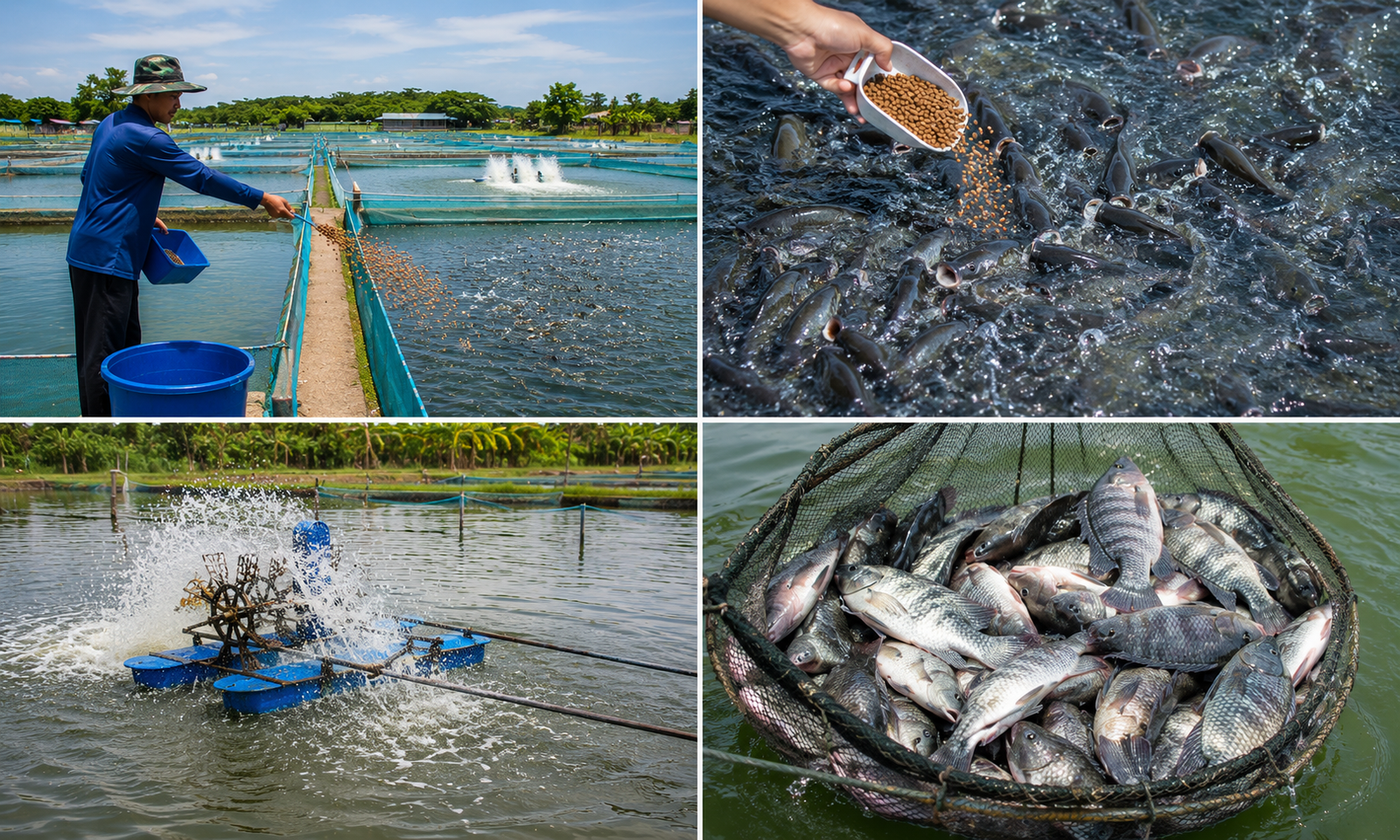
In aquaculture systems water quality is one of the most important parameters affecting the health, growth rate and mortality of the fish. Stress, disease outbreaks and lowered feeding efficiencies result from poor water conditions and have a negative impact on productivity. The water quality must be monitored and kept at optimum concentration on a regular basis for key parameter values like Dissolved Oxygen, pH level, Ammonia, temperature and turbidity. In intensive systems of livestock production with high stocking rates oxygen reduction is frequently encountered and is overcome by adding oxygen via aeration. Frequent water exchange further removes wastes and eliminates an unstable aquatic environment. Farmers should avoid overfeeding as uneaten feed decomposes and deteriorates water quality. Scientific knowledge is also incorporated into water management practices in modern fish farming techniques, that emphasizes controlled environment and continuous monitoring to better fish performance. High quality water will support faster fish growth, improve immune system, and save production cost in the long term by decreasing the amount of chemicals that will need to be added to water to maintain high quality levels.
The type and management of rations.
Feed is among the greatest expense items in fish farming and directly affects growth rate, feed conversion ratio, profitability, etc. Proper feeding programs provide a suitable balance of the proteins, carbohydrates, fats, vitamins and minerals that are necessary for optimum growth in the fish. Usually commercial floating or sinking feeds are used as required depending on the species or farming system. The frequency of feeding should be tailored based on fish size, age, and environmental conditions, and younger fish might need more frequent feedings as they have higher metabolic rates. Wasted resources and impacted water quality will result from overfeeding, and competition and growth will be compromised by underfeeding. In modern operations farmers are encouraged to use a demand feeding system or automatic feeding system to boost efficiency and save labour. Keeping an eye on fish behavior after they have started feeding will also help the farmer to detect the early signs of fish sickness as a sick fish will either decrease or completely cease eating. Appropriate nutritional management leads to increased farm profitability by means of better growth rates and feed utilization.
Stocking density is the number of fish placed in a pond, or tank, and is important for determining performances such as growth, survival rate, and overall productivity. High stocking causes fish stress, oxygen depletion and feeding competition, resulting in stunted growth and high mortality rates. However, low stocking density would cause considerable resource waste and loss of economic efficiency. Hence, the balance is of critical importance with regard to the maximum production. The optimum stocking rate will vary with fish species, pond size, fish water quality management ability, and feeding system. Aeration and water exchange technologies are frequently used in intensive or semi-intensive systems, where they help maintain a safe level of stocking density. Farmers can regulate fish stocks as needed by observing the fish in the ponds on a regular basis to determine how they are growing and acting. Good stocking management practices are essential in an aquaculture project as they can improve plant uniformity, decrease pathogen spread, and improve the harvest size of every acre stocked.
Advanced Products for Disease Prevention and Health Management
In fish cultivation, the best measure is cost-effective prevention of a disease rather than tackling the spread as it occurs once the disease actually attacks the fish, where losses may be high. The first line of defense against disease is good water quality, proper feeding do’s and don’ts and optimal stocking density. It is also important for the farmer to make sure they are getting fingerlings from a reputable hatchery, which will help to minimise the risk of infecting fingerlings when bringing them into the pond. Ongoing fish watching and monitoring of fish physical condition is vital to identification of the early signs of illness including fungal infections, bacterial diseases or parasitic infestation. New stocks should be quarantined prior to introduction into established stocks. Proper cleaning of feeding equipment and the area around feeding ponds is also good practice to avoid pond contamination. The use of vaccines and probiotics in contemporary aquaculture helps to enhance immunity and gut health. A proper disease control programme helps to safeguard the fish population, maintains regular production and helps to minimize the losses due to fish death and treatment costs.
Harvesting strategies and post harvesting handling.
The final phase of the fish farming cycle is harvesting, which is a process that needs to be carried out carefully, so as to ensure good quality and market value. An accurate determination of the correct time to harvest is essential, with smaller fish obtained when harvested too early and overcrowding, inefficient feed use and the higher potential risk of mortality from too late a harvest. It is advisable for farmers to regularly check the growth rate of the fish and choose the best time for harvest according to the needs of the markets and fish maturity. However, with larger systems, partial harvests such as secateurs can be used to ensure a steady supply of product and cash flow. Handling of fish in the harvesting process should be gentle to minimize fish stress and physical damages, affecting market quality. To maintain freshness of fish, clean nets and proper transport containers with sufficient amounts of oxygen are necessary. The post harvest management including icing and adequate palletize facilities safe the freshness of fish up till it reaches the consumer. Implementing efficient harvesting strategies allows for losses to be minimised and the fish to be delivered to the market in best condition, thus improving the profitability of the fish businesses.
Conclusion
Fish farming is a multifaceted activity, which requires not only the stocking of fish in water, but a systematic approach and application of scientific principles to guide the process. Pond preparation, water quality management, feeding programmes, stocking density management, disease maintenance and effective harvesting all are important steps that contribute to the overall pond productivity. Structured and evidence-based approaches are more likely to be followed by farmers who obtain higher survival, growth, and profitability. The modern aquaculture industry is continuously evolving, with new technologies and practices emerging to improve efficiency and sustainability. These enhanced techniques will help fish farmers lower risks, maximize resources, and provide an adequate supply of fish whenever demand rises in a competitive market.