The human body is a constant target of harmful microorganisms which include bacteria, viruses, and toxins. But despite this constant attack the body has a very efficient defense system which keeps it from getting sick. To that end we have antibodies which are very important elements of this system. These special proteins play key role in the identification and neutralization of what is harmful to the body which in turn keeps it healthy.
Antibodies which are put out by the immune system in response to what are known as antigens. Also they are very specific which means each antibody is for a certain pathogen. This specific action allows the immune system to react to a great variety of threats.
Understanding the function of antibodies gives us insight into the body’s defense systems which in turn stresses the value of a strong immune system from health based choices.
What Are Antibodies?
Antibodies also go by the term immunoglobulins; they are what B lymphocytes which are a type of white blood cell put out. Also they mainly put out these to identify and attach to what we term foreign or harmful substances which the body recognizes as such.
These in the blood and lymphatic systems are what these proteins patrol which is to say that they look out for foreign invaders. At the encounter of a antibody with its’ matching antigen the former bonds to the latter which may be to tag it for elimination or else put out of action right at the site of contact.
Antibodies play a key role in adaptive immunity which is what we call the branch of the immune system that targets and gives long term protection. They are also what enable the body to put forward very precise defense against pathogens.
Structure of Antibodies
Antibodies are designed with a very special structure which in turn allows them to do their job very well. Also they are mostly a ‘Y’ shape made up out of four protein chains two heavy chains and two light chains.
At the ends of the Y shaped structure are variable regions which bind to specific antigens. These regions are very adaptable which in turn allows the immune system to produce antibodies for a large variety of pathogens.
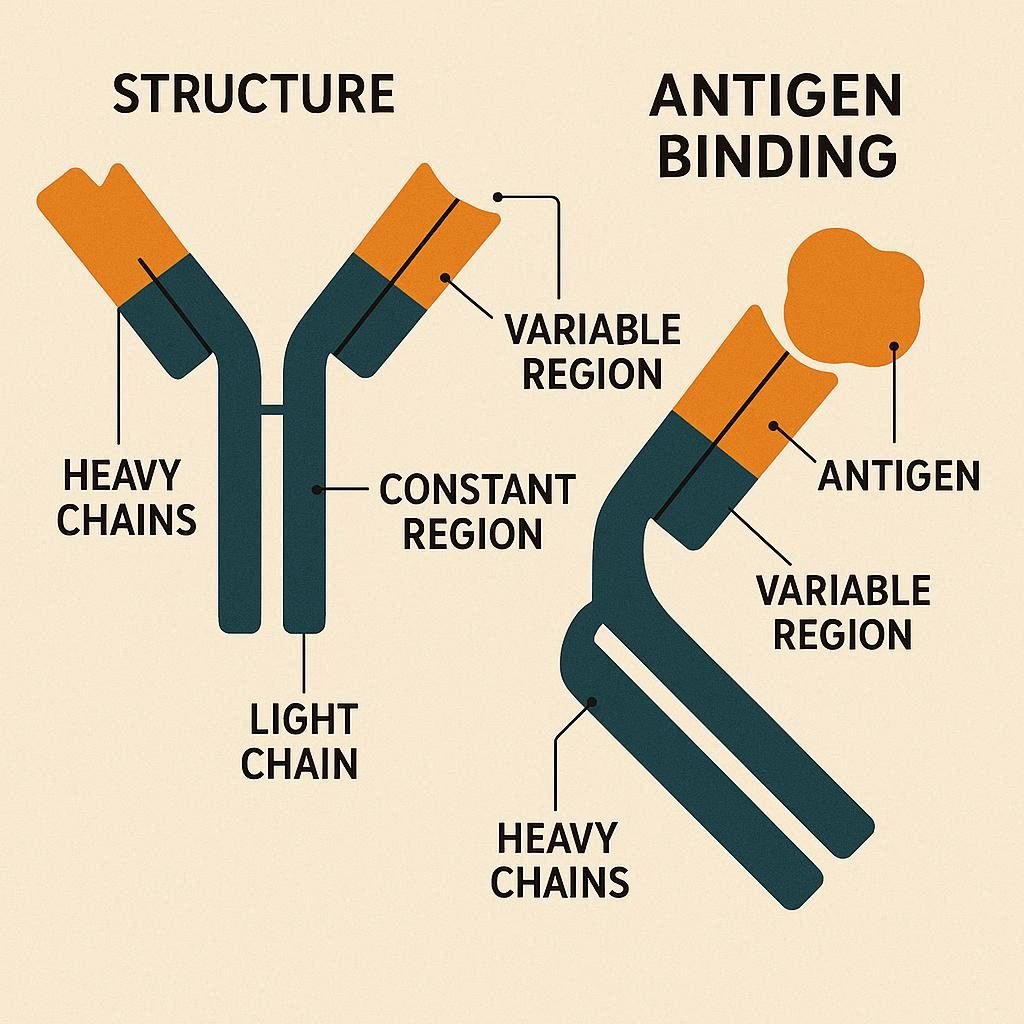
The base of the antibody which is known as the constant region determines what the antibody does in terms of the immune system. This structure also enables antibodies to identify what is a threat and also to coordinate its response for elimination.
How Antibodies Work
Antibodies in the body have a few different methods at their disposal to destroy foreign entities and also they do this is an extremely coordinated way and also in connection with other immune elements.
Antibodies mainly present in the form of neutralization. They bind to pathogens which in turn blocks pathogen’s ability to infect cells. Thus the spread of infection is prevented in the body.
Another key process in that which antibodies tag pathogens for identification by the immune cells like macrophages. This in turn improves the macrophages’ ability to engulf and destroy the invaders.
Antibodies set off the complement system which is a group of protein elements that play a role in the destruction of pathogens. That in turn results in the formation of what breaks down the cell walls of harmful microorganisms.
Types of Antibodies
There are different classes of antibodies which play specific roles in the immune response. These classes are determined by structure and function.
- Immunoglobulin G (IgG)
IgG is the main type of antibody found in the blood. It provides long term protection against pathogens which the body has already had before. Also IgG is able to cross the placenta which in turn gives newborns immunity.
- Immunoglobulin A (IgA)
IgA is present in mucous membranes which include that which lines the respiratory and digestive tracts. It plays a key role in the health of these areas by which the pathogens do not enter the body.
- Immunoglobulin M (IgM)
At the onset of infection IgM is the first antibody which is put out. It does very well at attaching to pathogens and setting off immune responses in the early stage of infection.
- Immunoglobulin E (IgE)
IgE plays a role in allergies and also in protection against parasites. It causes the release of chemicals like histamine that in turn cause inflammation.
- Immunoglobulin D (IgD)
IgD is not as well studied but we think it plays a role in B cell activation and immune response regulation.
Role of Antibodies in Immune Response to Repeat Exposure
In terms of what antibodies do, one of their key features is that of immune memory. Upon infection, the immune system forms a memory of the invading pathogen, with which it is better able to put up a rapid and effective fight should the same pathogen present itself again.
This memory is present in special cells which produce antibodies. Upon the body’s second encounter with the same antigen we see these cells put out great numbers of antibodies which in turn prevent the infection from taking hold.

Immune memory is what vaccines do they put in a non-disease causing version of a pathogen which in turn prompts the body to produce antibodies.
Factors That Affect Antibody Production
Production of antibodies and their performance is a result of many variables. To put out a robust immune response it is key to maintain optimal conditions.
Nutrition is very important in terms of antibody production. As for what we put in our body, vitamins like C, D, and minerals like zinc play key role in supporting the immune system.
Sleep also a key element. As we sleep the body goes to work on issues like the production and activity of immune cells which include those that produce antibodies.
Chronic stress is a factor which may break down our immune system’s ability to produce antibodies. We can see that through management of stress with relaxation methods our immune function may instead see an improvement.
Supporting a Healthy Antibody Response
Maintaining a healthy production of antibodies is a product of healthy lifestyle choices. A well balanced diet which includes lots of produce and lean proteins is what provides the right nutrients.
Regular physical activity increases circulation, which in turn causes immune cells and antibodies to move around the body better. Also exercise may see reduction of stress, which is very beneficial for immune health.
Sleep is a requirement for a strong immune system which in turn allows the body to repair and grow the cells that are key in immune response.
Hydration also plays a key role in that it supports the transport of nutrients and immune components within the body. By practicing these health tips people may see an improvement in their immune health.
Importance of Antibodies in Disease Prevention
Antibodies at large in the immune system’s strategy to fight diseases which is to identify out and neutralize harmful pathogens before they cause great damage. Also they play a role of recognizing which pathogens the body has been exposed to in the past thus providing long term protection.
A robust antibody response decreases your chance of getting sick and also sees you recover faster when you do fall ill. This also puts into focus the role of a healthy immune system.
Conclusion
Antibodies play a key role in the immune system which we put forth as very important for health. They are able to identify out and neutralize pathogens which is what in turn keeps us disease free.
Comprehending what antibodies do gives us great insight into the body’s defense systems. Also it stresses the role of proper nutrition, regular exercise, adequate sleep, and stress management in support of the immune system.
Through adoption of healthy lifestyle choices people may see an improvement in their immune response which in turn leaves their body better able to fight off infections. Also this info not only improves health outcomes but also grows a greater respect for the complex role of the human immune system.