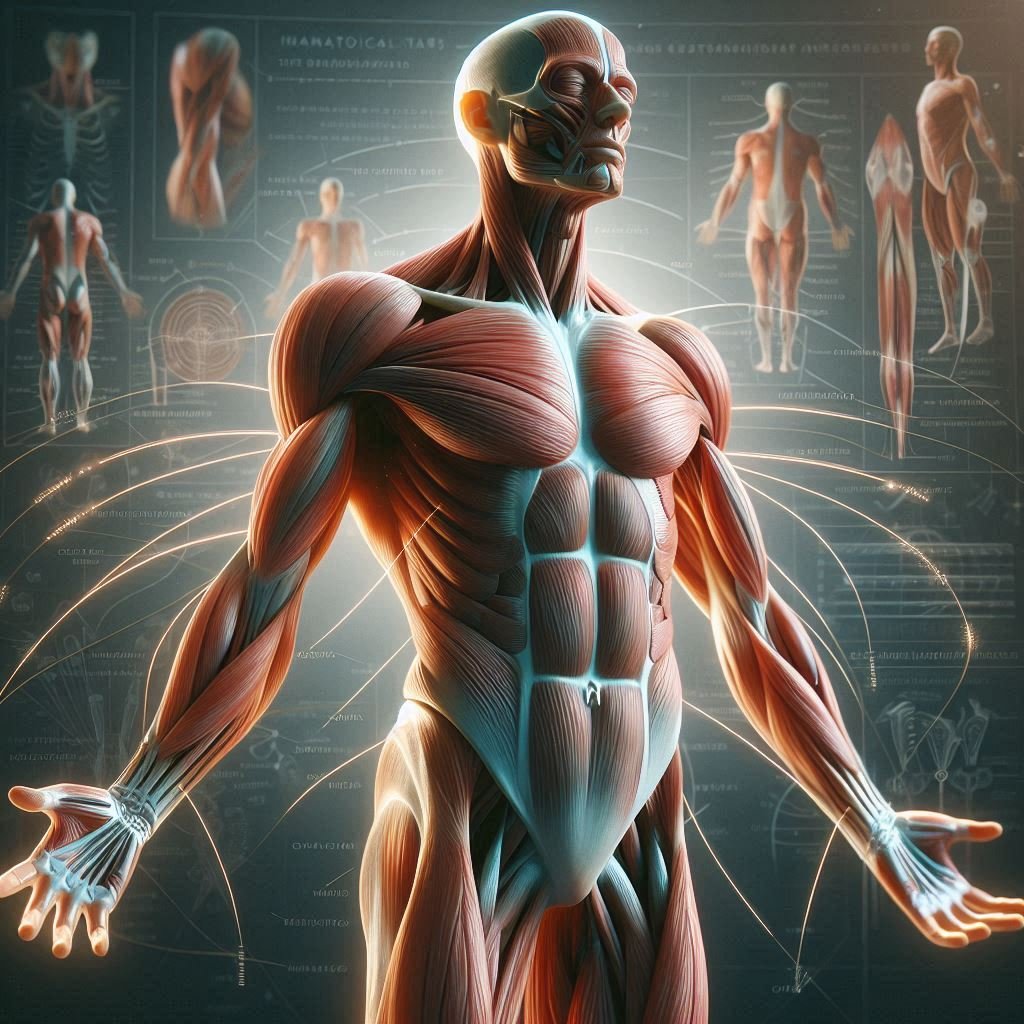
From picking up a book to running across a field, the body has a thousand motions at work all driven by tiny interactions in the cells of the muscles. Two important proteins are necessary for this process to take place: actin and myosin. The proteins provide the framework and mechanism that muscle uses to generate force and motion and they act together in a tightly coordinated fashion. The actin and myosin filaments interaction is much better understood and explains the generation of movement and how muscle strength is built at the cellular level. This is a microscopic process, but all physical activities carried out by the body are affected by this process. The analysis of structure and function now makes it possible to relate complex biological processes to the common movements in a simple and familiar manner.
The structure of the muscle fibres
Muscle fibers are a type of specialized cells capable of contracting and generating force. A single muscle fibre is made up of smaller subunits called myofibrils with segments called sarcomeres. These sarcomeres are the building blocks of the muscle contraction and consist of intertwined actin and myosin filaments. The grouping of these filaments is what gives muscles that striated appearance on a microscope, and is what allows it to contract.
The thin fibers, actin, run from the sides of the sarcomere toward the middle and the thick fibers, myosin, are in the middle. These filaments line up in just the right way so that they work well during contraction. This organization helps the actin and myosin filaments interact smoothly with each other to produce force. If there were no highly organised structure, then there would be no way to contract muscles.
Discuss the structure of Actin and Myosin Filaments
The proteins, actin and myosin, have different structures and functions in muscle contraction. Actin filaments are made up of globular proteins that are arranged in a long chain that form into a flexible structure that can move around the sarcomere easily. Myosin filaments, on the other hand, are thicker and have protruding heads that can attach to actin. This is an important part of the myosin head in movement.
Actin and myosin interaction happens because the myosin heads attach to certain sites on the actin filaments. There is a cross-bridge formed by this binding, and it is the beginning of the contraction process. The muscle contraction is caused by the myosin heads attaching, pulling and detaching the actin filaments repeatedly. This interaction is not haphazard but very controlled and will only contract when the body requires it to do so.
The theory known as the Sliding Filament Theory explains how muscles contract
The sliding filament theory explains the muscle contraction by actin and myosin filaments sliding over one another. This theory explains that the shortening of the lengths of the filaments is not responsible for the decrease in length, but rather the filaments are sliding toward each other, resulting in a reduction in sarcomere length and causing the muscle to contract. This process is directly caused by the interaction of actin and myosin filaments.
Myosin heads bind to actin and drag it towards the center of the sarcomere when the muscle is stimulated. This action shortens the sarcomere and creates force. As filaments keep sliding the whole muscle fiber gets shorter causing the muscle to move. This happens at the same time in millions of sarcomeres, which results in coordinated and powerful muscle contractions. The sliding filament theory is an explanation that can be easily understood and is simple to explain how the microscopic factors result in the macroscopic movements.
Cross-Bridge Cycle and Energy Use:
A series of events that happen when myosin and actin come together in the cross bridge cycle. The cycle consists of four steps: attachment, power stroke, detachment and reactivation. When it’s attached, the myosin head is capable of binding to the actin. During the power stroke, the myosin head swings and drags the actin filament in toward the middle of the sarcomere. This is the movement that produces the force and muscle shortens.
During the power stroke, the myosin head will release from actin which needs energy provided by ATP. ATP also supplies the energy to re-reset the myosin head for the next cycle. This repetition of attachment, movement and detachment enables muscles to repeat their contraction and thus maintain movement over time. Notice the importance of ATP in the energy metabolism/muscle function relationship: Without energy, the cross-bridge cycle cannot proceed.
Control of Actin and Myosin Interaction
The relation between actin and myosin is finely controlled to prevent muscles from contracting unless there’s a demand for it. Proteins associated with the actin filament, such as tropomyosin and troponin, regulate this regulation. Tropomyosin masks the binding sites on actin when it is not bound to myosin, in a resting muscle.
Upon stimulation of a muscle, calcium ions are released in the muscle cell and attach to troponin. This results in a shift of tropomyosin and activation of binding sites on actin for myosin binding. This law helps to prevent unnecessary or unintended muscle activity, only contracting when there are signals for it. This interaction needs to be co-ordinated and controlled precisely for movement and for muscle efficiency.
Making the connection between Molecular Process and Real World Movement
The interaction between the actin and myosin filaments is on a very microscopic level, but it’s still visible in all physical activities the body undertakes. Muscle fibers work together to create simple actions, like walking, lifting, or holding your posture. The strength and speed of these movements will rely on the effectiveness of the interaction between actin and myosin in the muscle cells.
For instance, in weightlifting, the repeated contractions enable the muscles to produce the necessary force to move heavy loads. In some types of exercise, like running, the actin and myosin stay interacting, allowing the muscle to work continuously without getting tired. The examples show how molecular mechanisms are linked to functional movement, and illustrate the relevance of the mechanisms of muscle contractions.
Muscle strength and performance
The efficiency of actin and myosin filament interaction has a direct effect on strength and performance of the muscles. This interaction can be improved through training and physical activity through more and larger muscle fibres, improved co-ordination and increased energy production. This causes a strengthening of the muscles and an increase in their ability to generate force.
Muscle structure and function changes also aid in performance enhancement. For example, resistance training can cause more myosin heads to be available for interaction, thus increasing the amount of force that can be generated. Likewise, increase in the efficiency of energy use through endurance training means that the cross-bridge cycle can be repeated for longer durations. Such adaptations illustrate the body’s ability to maximize the interaction of actins and myosins to respond differently to various physical demands.
Conclusion
Muscle contraction is the basic process that is required for movement and occurs through the interaction of actin and myosin filaments. The protein pairs act together to transform chemical energy into mechanical energy via the sliding filament mechanism and the cross-bridge cycle. This process is microscopic, but is the basis for all the movement in the body, from basic to complex physical activity. Once the understanding of the function of actin and myosin and their interaction is gained, one may appreciate the remarkable efficiency of the human body and the science involved in the motion of muscle.