
AI agents in business are transforming the way businesses operate. One of the latest developments is AI agents. These can not only answer questions and generate content, but also understand goals, evaluate information, make decisions and carry out tasks using integrated business systems. This means they can be used by organisations to improve productivity, automate repetitive tasks and streamline complex processes.
AI agents can be used across many areas of a business, from customer service to managing inventory, sales and software development. However, as they can perform actions there are risks around security, privacy, accuracy, permissions and accountability. By understanding the benefits and risks organisations can decide where they can use agentic AI.
What Are AI Agents in Business?
AI agents are intelligent systems that can complete specific goals. They can gather information, make decisions and complete actions. Unlike standard software, they can understand what you want them to do, identify what needs to be done, use tools and adapt their approach depending on what they find. An example would be if you asked an AI agent to research your competitors, they would gather relevant information, organise it and produce a summary.
Depending on how they are set up they can interact with databases, business systems, communication platforms and other tools. Some can just provide recommendations whilst others can update information and start approved processes. They will depend on the technology they are using, what information they have available and what permissions they have been given. They can be quite independent but should still be appropriately monitored.
Differences between Standard Chatbots and Basic Automation
Standard chatbots can answer questions and provide information. Basic automation can complete repetitive tasks following a set of rules. Whilst they can be useful they tend to have limited capabilities.
AI agents can be used for more flexible tasks. They can understand goals and complete multiple actions. For example, whilst a chatbot may tell a customer about your refund policy, an authorised agent could look up their order, find the relevant policy, create a refund request and submit it for approval. Find out more about AI agents from IBM.
12 Ways AI Agents can be used in Business.
1. Manage customer queries
AI agents in business can be used to help with customer service queries. They can answer common questions around orders, deliveries, products, payments and company policies. They can find relevant information, categorise queries, create tickets and pass complex queries to a member of staff. This makes managing customer requests easier, especially when employees need to apply strong customer service skills when handling complaints, explaining options and resolving issues that require a human response.
More advanced agents can complete multiple tasks. For example, they could look up an order and create a response to a delivery query. However, sensitive queries and unusual scenarios should be passed to members of staff.
2. Coordinate internal processes
Many processes are coordinated across different departments within a business. AI agents can help by tracking tasks, sending alerts, finding information and identifying what needs to be done.
An agent could track a purchase request and alert staff if any documents or approvals are missing. This can help reduce admin however important financial and management decisions should still follow an approval process.
3. Research business information
AI agents can help with researching information. They can find information around competitors, industry trends, customer preferences and opportunities. They can organise information from approved sources and create summaries to help staff understand relevant information.
They may also be used to monitor specific information sources. However, the information should be verified as AI can sometimes misunderstand information, use outdated sources and provide unsupported conclusions.
4. Help with software development
AI agents can help developers by reviewing code, identifying potential issues, creating documentation and helping with testing. They can also find relevant information around a project and suggest potential solutions.
Some agents can create code changes ready for review. This can help developers complete certain tasks more efficiently. However, the code will need to be reviewed by a member of staff, checked for security issues and tested.
5. Track inventory
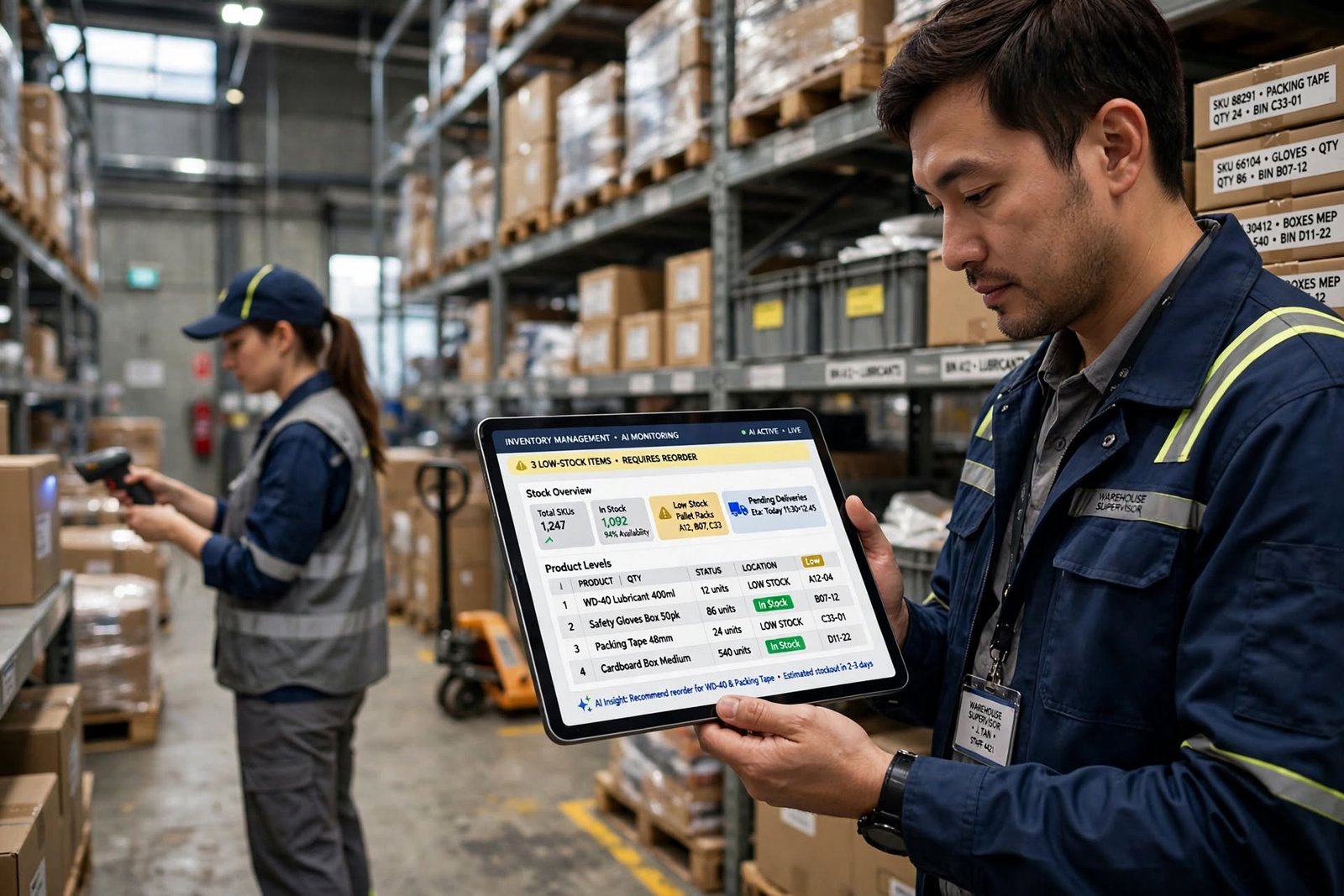
AI agents can help track stock. They can identify low stock, organise inventory and track deliveries. They can alert staff when products are running low on minimum stock and create reports.
They may also analyse past sales information to help predict demand. However, if the inventory information is incorrect or there are unexpected changes in demand this could impact the recommendations. Important purchasing decisions should be reviewed by a member of staff.
6. Help with sales
AI agents can help sales teams by organising customer queries, categorising leads, creating follow up messages and finding information from customer relationship management systems. This can help reduce admin and help manage opportunities.
They may also help with researching potential customers and creating information for sales meetings. However, important decisions around pricing, deals and negotiating with customers should be reviewed by a member of staff.
7. Help with financial admin
AI agents can help with organising expenses, finding transaction information, creating reports and identifying missing financial documents. This may help reduce the amount of time staff spend finding and reviewing information.
However, financial processes should have strong controls in place. Agents should not be authorised to make large payments, change bank details or commit to financial decisions without the correct approval. Important documents and calculations should be checked by a member of staff.
8. Help with Human Resources
AI agents can help with onboarding by organising tasks, answering common employee questions, creating training schedules and finding approved information from within the workplace. This can help reduce repetitive admin tasks.
They may also help with recruitment admin by organising applications and interviews. However, important decisions around recruitment, promotions and disciplinary should be made by a member of staff.
9. Help with procurement and suppliers
AI agents can help procurement teams by organising supplier information, comparing quotes, creating queries and tracking purchase requests. They may also help staff identify any outstanding deliveries and missing documents from suppliers.
This can help with coordinating procurement however choosing suppliers, negotiating contracts and making large purchasing decisions should be authorised by a member of staff. Businesses should also make sure they are not making any unauthorised financial commitments.
10. Help with marketing
AI agents can help with organising marketing schedules, creating draft content, researching industry trends and creating marketing reports. They can also help with organising routine tasks across different marketing platforms.
However, content created automatically may not be accurate or match the brands identity. Important content should be reviewed by members of the marketing team. Agents should not be able to make any unauthorised changes to official communication channels.
11. Improve logistics and delivery
AI agents can help with organising shipment information, tracking delivery updates, identifying delays and creating customer notifications. They may also gather information from different logistics platforms to give staff a better understanding of what is happening with deliveries.
For example, they could identify any delayed orders and create a report for the relevant department. However, unexpected disruptions and changes in delivery should be reviewed by a member of staff before any significant decisions are made.
12. Help with business intelligence
AI agents can find approved information, organise performance information, identify patterns and create reports for managers. This can help decision makers understand information around sales, expenses, inventory and customer activity.
Whilst this can help make information more accessible, reports created by AI may not be accurate or have unsupported conclusions. Important findings should be reviewed by managers before any strategic decisions are made around investments, staff and business.
Benefits of using AI agents in businesses.
- Improved productivity
AI agents can help reduce the time staff spend on repetitive tasks such as finding information, creating reports, organising information and coordinating processes. This means they can focus on more professional tasks.
They may also help reduce delays and improve coordination across multiple processes. However, organisations should assess whether they are actually improving productivity.
- Reduce costs
AI agents may help reduce admin costs by making current processes more efficient. They can help with customer queries, tracking inventory, creating reports and other repetitive tasks.
However there will be costs involved with setting them up such as subscription costs, integration, training, security and maintenance. Businesses should assess whether they will get the expected benefits.
- Faster processes
AI agents can find information and coordinate approved processes quicker than fully manual processes. This may help improve response times and help staff complete routine tasks more efficiently.
Some can also provide support outside of normal hours. However, they shouldn’t compromise accuracy, security or appropriate customer service.
- Improved access to information
AI agents can find approved information from integrated business systems and organise it into useful summaries. This can help staff avoid constantly switching between systems to find relevant information.
They can also create updates for processes and alert staff to any outstanding tasks. However, businesses should make sure their records are accurate and have the correct access controls in place.
Risks and Challenges of using AI Agents in Business.
- Security risks
AI agents integrated into business systems may have access to sensitive information and complete important processes. If they have incorrect permissions, insecure integrations and compromised credentials this can pose a risk.
There is also a risk of prompt injection where malicious instructions are hidden within external information. To reduce this risk businesses should use secure integrations, limit access, validate information and monitor agent activity.
- Too many permissions
Giving too many permissions can increase the impact of mistakes or misuse. For example, an inventory assistant shouldn’t automatically have permission to approve payments or change sensitive financial information.
Businesses should follow the principle of least privilege and give the agent just the permissions they need to complete their tasks. Any high impact tasks should also require authorisation from an authorised member of staff.
- Inaccurate outputs
AI agents may misunderstand instructions, find incorrect information or provide unsupported conclusions. As they can complete multiple connected tasks any mistakes made at the beginning may affect the rest.
Businesses should test agents before using them, monitor their performance and put in place validation processes. Any important tasks should be reviewed by a member of staff.
- Privacy and sensitive information
AI agents may need to process customer records, staff information, internal documents and other sensitive business information. If there are not the correct controls in place this information may be accessed or shared.
Organisations should have clear data access policies, appropriate security and understand how external AI providers process information. Only give the agent the information they need to complete their tasks.
- Accountability
If an agent makes a mistake or completes an unauthorised task businesses should understand who is responsible for managing the system. Just because an AI system is completing an activity doesn’t mean the organisation isn’t responsible.
Companies should keep logs of activity, identify who is responsible for overseeing the agent and have clear authorisation processes. Staff should also have the ability to intervene if the agent does something unexpected or is in a situation it isn’t responsible for.
Best Practice on the use of AI Agents in Business
- Define clear goals
Identify specific issues you want the AI agents to solve. For example reducing repetitive customer queries, improving inventory tracking or streamlining admin processes.
Compare agents to basic automation tools. Start with a few projects to make it easier to see the results and identify any issues.
- Set permissions and authorisation
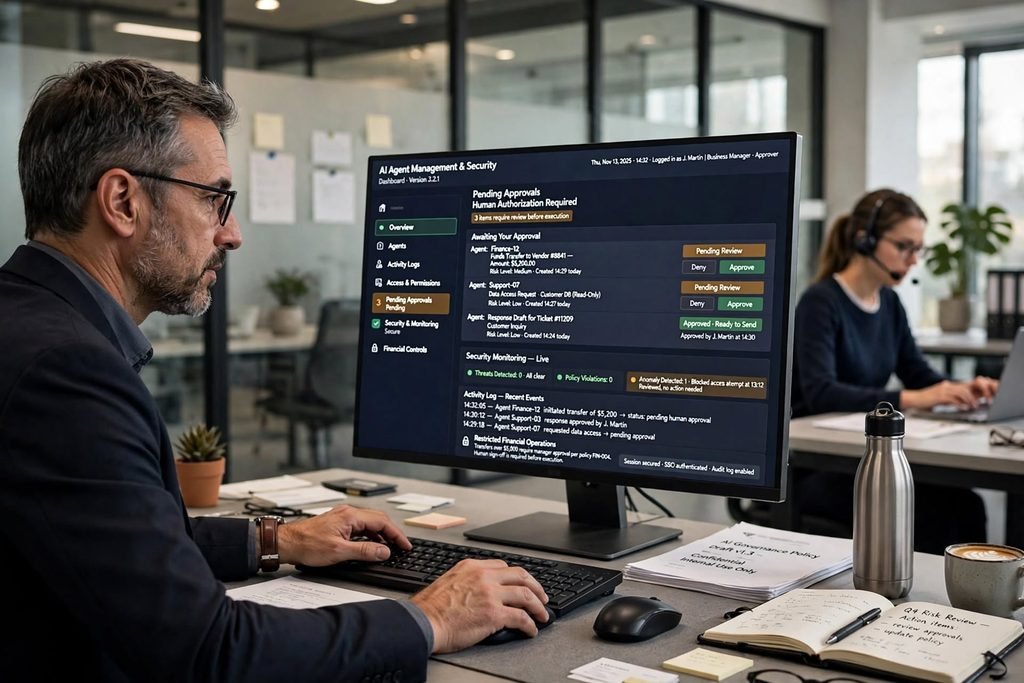
All agents should have clear roles and limited access to business systems. Decide what tasks they can complete without authorisation and what they need authorisation for.
Any financial transactions, sensitive customer information or important changes should have increased security. Businesses should also have processes in place to pause access if suspicious activity is identified.
- Monitor performance
Regularly review how accurate, secure, reliable and effective your agents are. Test them with unusual requests and situations where they need to recognise their limitations.
Monitoring will help identify any errors, investigate any unexpected activity and ensure they are still providing real value. Any important tasks should be traceable.
- Train staff
AI agents in business should be treated as tools to support employees rather than replace professional responsibility. Staff should understand how the agents work, what they can access and when they need to intervene. Regular training and knowledge sharing in the workplace can help employees learn from one another, understand security risks, recognise inaccurate outputs and follow appropriate escalation processes. This is particularly important when AI agents are being introduced into departments that handle sensitive business information and important operational decisions.
Treat AI agents as a tool to help staff. They shouldn’t be seen as replacing professional responsibility. It is especially important to have oversight when decisions are being made around customers, finances, staff and legal obligations.
The Future of AI agents in Business
As business systems become more capable of understanding instructions and coordinating processes AI agents are likely to become more important. In the future organisations may have multiple specialised agents to help different departments such as customer service, sales, procurement and inventory.
However, they will need to become more reliable, secure, have appropriate permissions and be accountable. Businesses will need to have good monitoring processes in place to ensure they aren’t completing any unauthorised actions. Organisations that can provide useful automation with strong governance and oversight will be best placed to benefit.
Conclusion
AI agents are providing new opportunities for businesses to improve productivity, streamline processes, manage information and automate certain tasks. They can be used across many areas of a business including customer service, sales, software development, inventory, marketing, finance, logistics and more.
Whilst there are many benefits to using them there are also risks around security, privacy, inaccurate outputs, too many permissions and accountability. They should be set up with clear goals, limited access, monitored and have the correct oversight. Ultimately they should be used to support staff and improve business processes.


