Most break-ins and package thefts don’t happen at the front door where a doorbell camera already watches. They happen at the side gate, the back fence, or the detached garage, spots that get overlooked when people plan their camera setup around the entrance alone. A single camera facing the driveway feels like coverage, but it often leaves the property’s actual vulnerable points completely dark.
Thinking through outdoor coverage as a full perimeter, rather than a single vantage point, changes how you approach camera placement and quantity. This guide walks through how to map out blind spots methodically and choose outdoor video surveillance cameras suited to each specific angle, rather than buying one camera and hoping it covers everything.
Mapping Your Property’s Actual Weak Points
Start by walking the perimeter of your property as if you were trying to get in without being seen from the street. Side yards, gaps between fences, and areas behind sheds or dense landscaping are the spots worth flagging first, since these are exactly where someone attempting entry would naturally go. Front-facing coverage matters, but it’s rarely the actual gap in most residential setups.
Once you’ve identified these weak points, prioritize based on ease of access. A side gate that leads directly to a back door deserves coverage before a far corner of the yard that’s harder to reach and less likely to be a realistic entry route. This kind of practical triage helps allocate camera placement to where it actually reduces risk, rather than spreading coverage evenly across areas with very different threat levels.
Overlap Coverage Instead of Isolated Views
A single camera per blind spot works, but overlapping fields of view between two adjacent cameras catches activity that might otherwise pass through a narrow, unmonitored gap between coverage areas. This matters most at corners, where one camera’s edge of frame meets another’s, since that boundary zone is often where footage quality or angle makes identification difficult.
Slightly adjusting camera angles so their fields of view overlap by even a few feet closes this gap without needing additional hardware, just careful positioning during installation.
Matching Camera Specs to Each Location’s Demands
Not every blind spot has the same lighting or distance requirements. A camera watching a narrow side yard at close range needs a wider field of view but less zoom capability, while a camera covering a long driveway or open backyard benefits from better optical range to identify details at distance. Buying identical cameras for every spot often means overpaying for features some locations don‘t need while under-serving others.
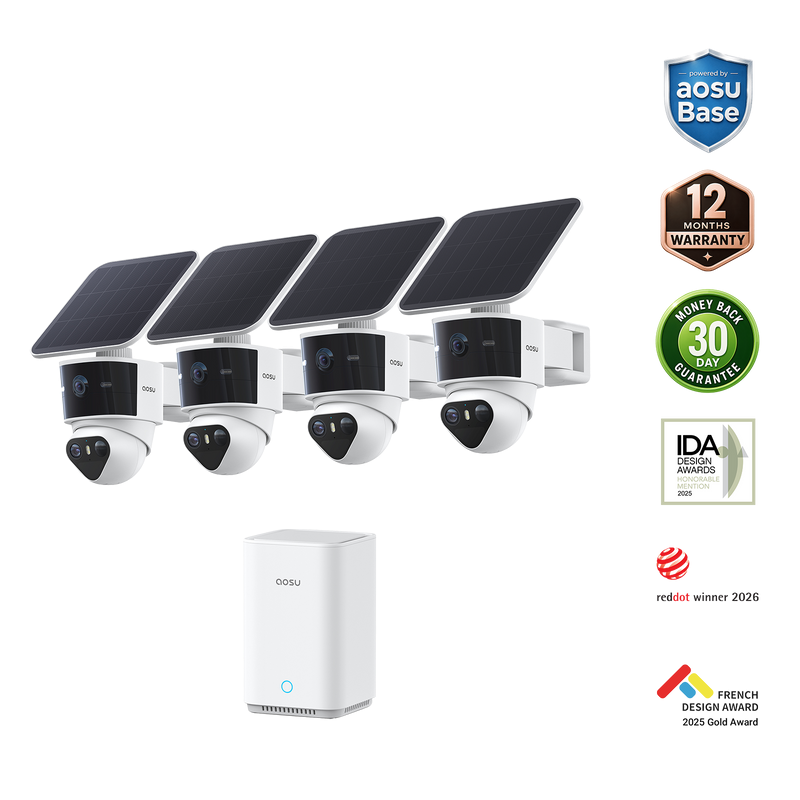
For locations with mixed lighting, deep shade during the day and total darkness at night, prioritize cameras with strong low-light and infrared performance. AOSU’s outdoor lineup includes models specifically suited to these variable conditions, which helps when a single property has both bright, exposed areas and darker, sheltered corners that need different handling.
Wiring and Power Planning Before Installation Day
Blind spots are often far from existing power outlets, which is exactly why they get skipped in initial installations. Planning power access, whether through a battery or solar option, or running a dedicated outdoor-rated extension, before mounting day prevents the common outcome of buying a camera and then discovering it can’t reach the location you actually need covered.
For anyone comparing full coverage setups, checking outdoor video surveillance cameras that offer flexible power options makes it easier to cover awkward spots without running new electrical lines across the yard.
Closing the Gaps That Actually Matter
Full property coverage comes from identifying real vulnerable points first, then matching camera specifications and power solutions to each one individually, rather than treating outdoor surveillance as a single generic purchase. Overlapping fields of view at corners and prioritizing realistic entry routes over convenient mounting spots make the biggest difference in actual security outcomes.
Walk your property one more time with this blind-spot mindset before your next camera purchase. The gaps you find are usually more revealing than any product spec sheet about what your setup actually needs.


This is a useful guide, especially the point about choosing a bag based on size, durability, and intended use. I also appreciate the emphasis on recyclable and reusable options, since businesses can make more responsible packaging choices without sacrificing practicality. The section on customization is particularly relevant for retailers looking to combine functionality with branding.
I really like reading through a post that can make men and women think. Also, thank you for allowing me to comment!
Nice post. I learn something totally new and challenging on websites