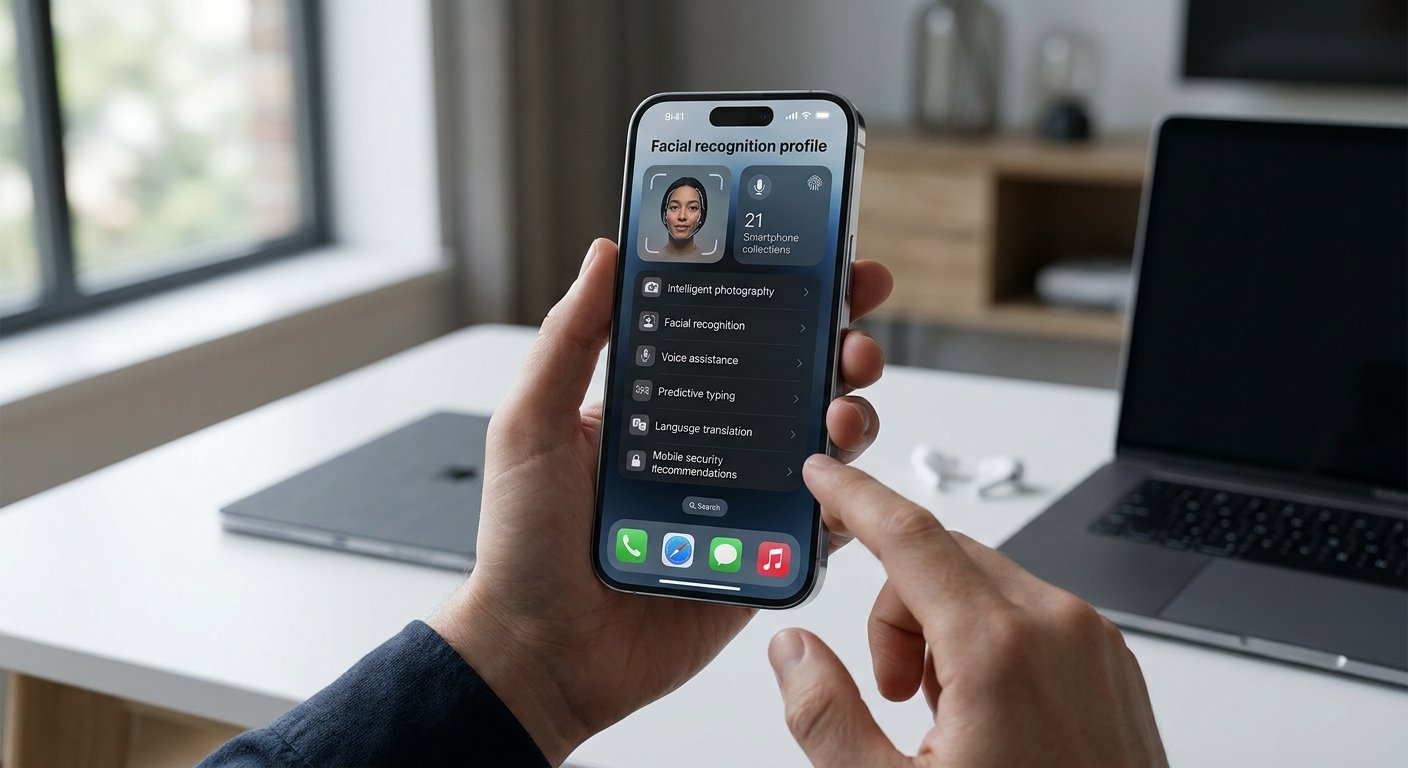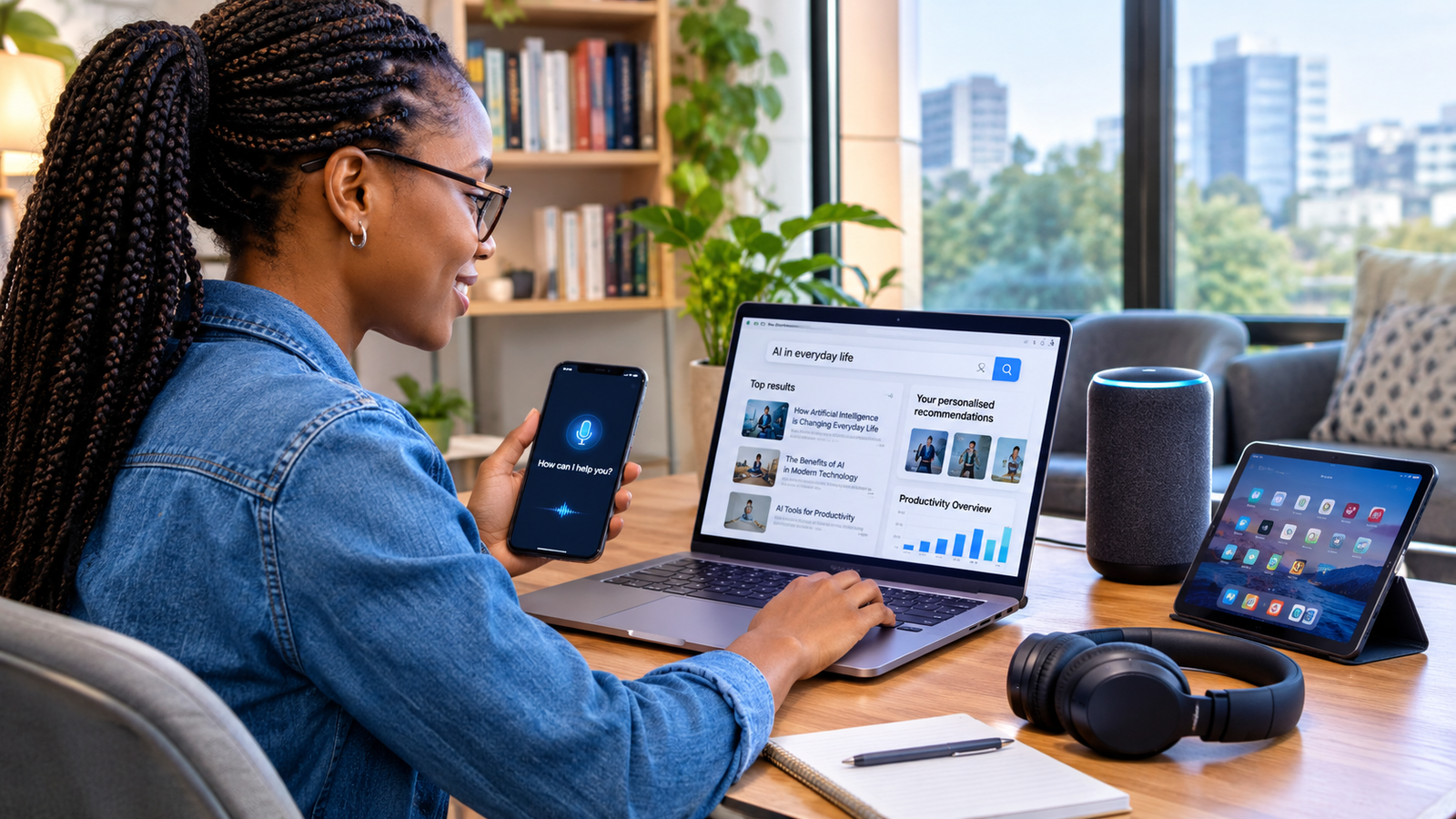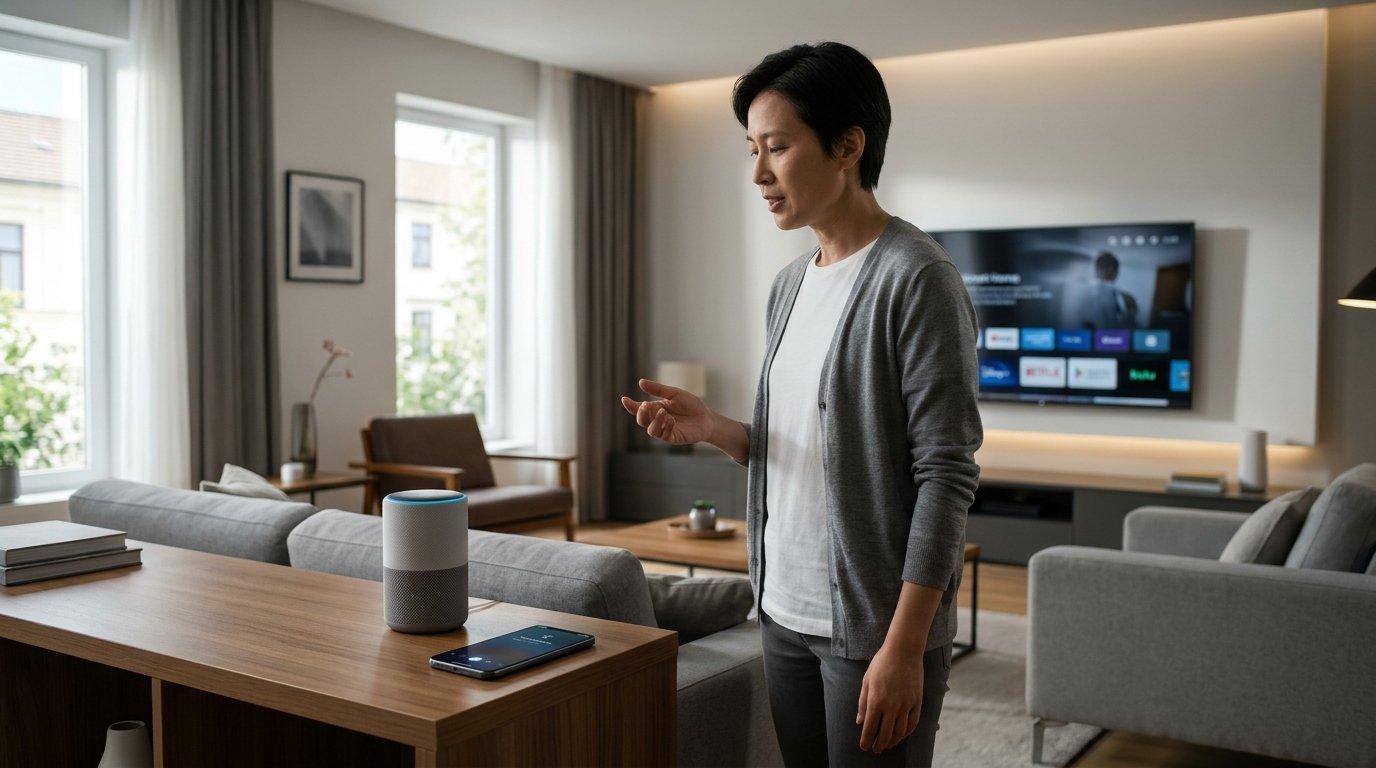
AI voice assistants use artificial intelligence to help people interact with smartphones, computers, home appliances and more. Previously we would have to interact with electronic devices by using buttons, menus etc. Now many devices can understand voice commands. This is due to the use of AI to enable machines to understand speech.
Voice assistants and smart devices are becoming more popular. They can help us with searching for directions on our smart phone, playing music on our smart speaker and more! This is done by using speech recognition, natural language processing, conversational AI, voice biometrics and machine learning.
Artificial Intelligence In Voice Assistants And Smart Devices
Voice assistants are computer systems which use AI to understand speech from the user. They will understand what the user is saying and give an appropriate response. Instead of typing commands, voice assistants will understand the user’s voice and know what to do. For example, if you ask your smartphone to set an alarm, it will understand and create an alarm.
Smart devices will use similar AI to understand users. Smart speakers, TVs, thermostats and home appliances can all have voice control. This lets users control their devices using voice. They can link with applications and online services to complete various tasks.
How AI Works With Voice Assistants
Voice assistants use various AI features to understand what the user wants. When a user speaks to their voice assistant, the voice will be picked up by the microphone. This will then be processed to identify what words are being said. The voice assistant will then decide whether to answer a question, find some information or carry out a task.
Popular voice assistants on smartphones and smart speakers use this technology. Users can ask the assistant for directions, set reminders, play music and control compatible devices. Modern AI Voice Assistants are more natural as you can just talk to them.
Speech Recognition
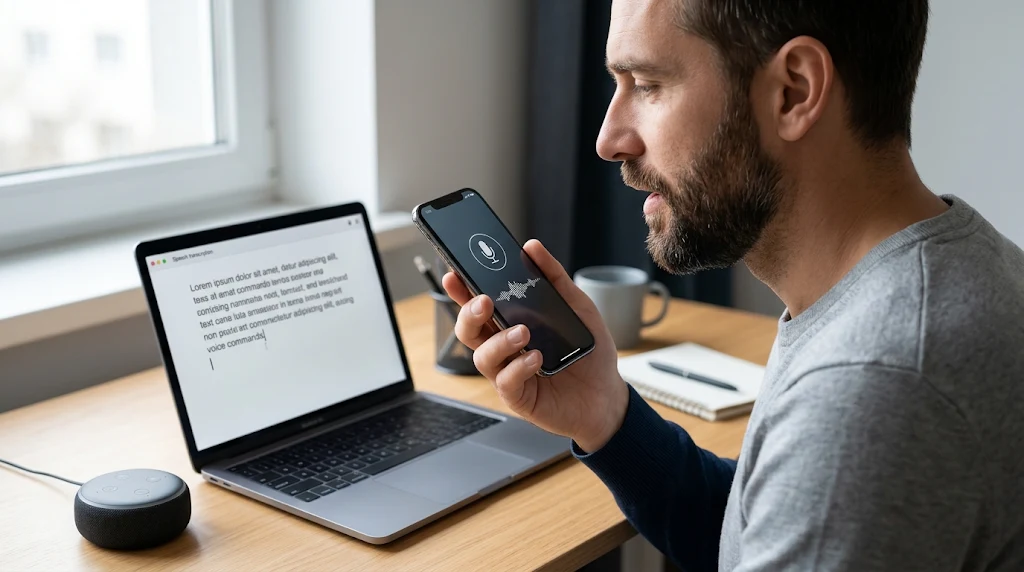
AI can be used to understand voice commands. This uses patterns in the audio to recognise what words are being said. This can be difficult as people will often have different accents, pronunciations and speeds of speech.
If you were to say ‘Remind me to call my teacher tomorrow’ the voice assistant will understand what you’re asking for and when you want to be reminded. This means you can talk naturally to the assistant.
Answering Questions
Voice assistants use AI to answer questions. If you ask your voice assistant about the weather, directions or any other topic, the voice assistant will understand the question and decide how to answer.
Depending on what the assistant can do it may look online, find information or use an AI language model to answer. Sometimes they may get confused and give incorrect answers.
Speech Recognition
Speech recognition allows computers to understand what words are being said. Modern speech recognition uses machine learning and deep learning to recognise different words, accents and pronunciations.
When someone speaks into a microphone their voice will be converted into digital data. The speech recognition will analyse this and try to identify what words are most likely. The AI technology will then understand what the user wants and give the right response. This means users can talk to digital devices.
Improving Accuracy
AI improves speech recognition by letting the system learn from lots of examples. Machine learning models will recognise patterns relating to sounds, words, accents and speech styles. Deep learning will also help the system differentiate between speech and background noise.
Modern voice assistants are much better at recognising different people’s voices. However accuracy can vary depending on how they are pronounced, background noise, language support and quality of recording.
Speech Recognition
Speech recognition can be used in many applications. Smart phones use it to let users type using their voice. Communication apps will use it to create captions.
Smart TVs use voice search to help users find movies and programmes. Voice controlled apps can also be used.
Natural Language Processing
Natural language processing (NLP) allows computer systems to understand human language. While speech recognition will identify words, NLP will help understand what they mean.
If you were to ask ‘Will it rain tomorrow?’ the system will understand you want to know the weather. If you say ‘Turn off the living room lights’ the assistant will understand what you want to do.
Understanding Context
Understanding context will help voice assistants understand follow up questions. If you ask ‘What’s the weather like in [city]?’ and then ask ‘What about tomorrow?’ the assistant will understand you’re referring to the same place.
Intent recognition will also help the assistant understand the difference between requests. If you ask your assistant to play music it will need to give a different response than if you asked it to explain how music streams work. By analysing the language and context AI systems can understand what you want.
Supporting Different Languages
NLP can help voice assistants understand different languages. Some systems can recognise speech, translate information and reply in different languages. This makes digital technology more accessible.
However supporting different languages can be challenging. Some languages and regional dialects won’t have as much digital training data. Having better language data and AI models can help.
Conversational AI
Conversational AI is systems designed to interact with humans using natural language. This uses speech recognition, natural language processing, machine learning and language generation.
Unlike basic voice control systems, conversational AI allows for more flexibility. Users can ask questions, explain what they want and give extra instructions. This makes voice assistants more useful.
Contextual Understanding
Conversational AI can understand context. If you ask your voice assistant to find a local restaurant and then ask “Which one is open now?” the system will understand you’re referring to the restaurants it found.
This can also help with tasks that require multiple instructions. You could ask your voice assistant to set a reminder, tell them what time and give extra details. The assistant will link this information together.
Personalised Recommendations
AI powered assistants can use available data to give personalized recommendations. For example, a music assistant may give song recommendations based on what you like. A digital assistant could give reminders based on an established schedule.
However, using AI voice assistants to provide personalised recommendations can also cause privacy issues. Users should understand how their devices collect, process and store their personal information. It is important to check privacy settings and understand how voice recordings and other personal data are being used by connected services.
Machine Learning
Machine learning allows computer systems to recognise patterns within data. This is important for voice assistants as understanding speech and language involves complex patterns.
Machine learning models are trained using examples of speech. This helps them understand relationships between words. This can help with understanding words, classifying requests and creating responses. This can also help with smart home automation and personalised recommendations.
Deep Learning
Deep learning uses artificial neural networks to process complex information. This is commonly used in modern speech recognition systems.
It can also be used with conversational AI and NLP. Large language models can help voice assistants understand questions and create responses. However they can give inaccurate information.
Voice Biometrics
Voice biometrics uses AI to analyse characteristics of someone’s voice. This can help identify or verify who someone is. Characteristics could include how they pronounce words.
This can help with verification systems and personalised smart devices. A compatible voice assistant could identify different people in the home and give personalised information. However voice recognition isn’t 100% accurate and can cause security issues.
Voice Verification
Voice verification can be used to verify someone’s identity. However the recordings and biometric data needs to be kept secure.
Organisations should implement the correct security measures and explain how the voice information is being collected and stored. Users should also have control over their personal information.
How AI Is Used In Smart Devices
AI is becoming an important part of connected electronic devices. Smartphones, smart speakers, TVs and home automation systems show how AI can be used to link voice commands with everyday tasks.
AI In Smart Phone Voice Assistants
Smartphones use AI voice assistants to help users ask for directions, search for information, set reminders, send messages and open applications.
Voice assistants are particularly useful if you aren’t able to use your touchscreen. You can dictate messages, ask for information and compatible hands free systems can help with navigation.
AI In Smart Speakers
Smart speakers allow you to access music, news, weather information and reminders using voice. They have microphones and wireless technology to interact with AI assistants.
Some smart speakers can also be used to control compatible devices in the home. Users can ask for changes to the lighting, heating and entertainment.
AI In Smart TVs
Smart TVs use AI to help you find content. You can use voice search to find movies, TV shows and applications.
AI can also be used to give personalized recommendations based on what you like watching. Some TVs have voice controls to change the volume.
AI In Home Automation Systems
AI voice assistants are becoming an important part of modern home automation systems, which connect compatible lighting, thermostats, security systems and home appliances. AI can be used to control these devices using voice commands, allowing users to manage different aspects of their homes without having to operate each device manually.
You could ask your voice assistant to turn off the kitchen lights or change the temperature. Smart home systems can also carry out automated tasks based on set schedules.
Benefits Of AI Voice Assistants And Smart Devices
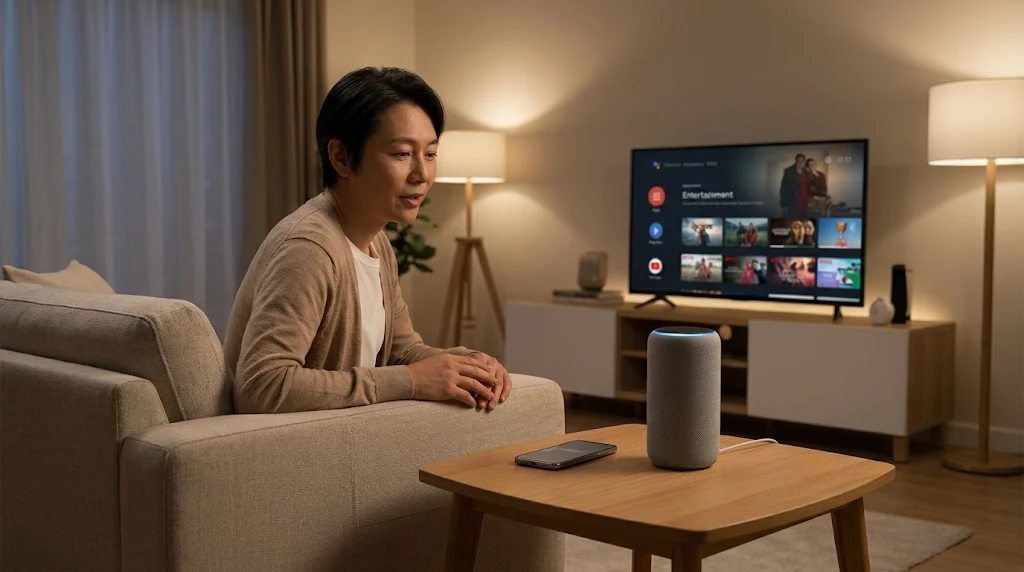
There are many benefits to using AI in voice assistants. It can make things more convenient, accessible and improve productivity. You can talk naturally to digital devices.
Voice technology can also be used as an alternative way to interact with electronic devices. If you struggle with using keyboards or touchscreens you could benefit from using voice commands, voice typing and receiving audio responses.
Hands Free
One of the most practical benefits of voice assistants is being able to dictate messages, ask for information, make supported calls and manage reminders hands free.
Voice assistants can also help you organise your schedule, set calendar events, set alarms and give reminders.
Accessible
Voice controlled technology can help those who struggle to use traditional controls. You can use voice commands to control your smartphone, computer, TV and compatible home appliances.
Older people or those with limited mobility could benefit from voice controlled home automation. However devices should have alternate controls for those who can’t use voice commands.
Challenges Of AI Voice Assistants
Despite the benefits there are still some challenges to using AI voice assistants. Background noise, unclear pronunciation and unfamiliar accents can cause the speech recognition to become less accurate. There can also be issues with the language.
AI can cause issues with accuracy. Conversational systems can get confused and give incorrect answers. Smart devices can also cause issues with internet connectivity, software errors and compatibility.
Privacy Issues
Voice assistants can cause privacy issues. Depending on the settings and services used, the device may process recordings, transcripts and other information.
Manufacturers should ensure this information is kept secure using the correct security measures. Users should check microphone permissions and know how their devices are processing voice information.
Internet Connectivity
Many voice assistants use cloud based services. This can cause issues if there are no internet connections.
Compatibility can also be an issue. Not all voice assistants will work with all smart appliances and applications.
The Future Of AI Voice Assistants
In the future AI voice assistants will likely improve. Speech recognition will be more accurate, language understanding will improve and connected devices will be better integrated. As machine learning and conversational AI improves, voice assistants may become more capable of understanding complex instructions and carrying out multiple tasks.
Multilingual capabilities will also improve making voice technology more accessible for those who speak different languages and dialects.
Improved Conversational Capabilities
Voice assistants may become more capable of understanding context and multi-step instructions. Users could organise their schedule, manage reminders and organise activities using continuous conversation.
This could make digital assistants more useful for education, communication and managing information. However accuracy will still be important.
Smarter Homes
As AI improves, connected devices may become more integrated. Voice assistants could help manage lighting, heating, entertainment and other compatible appliances.
This could make things more convenient in the home. However manufacturers should focus on cybersecurity, privacy and having reliable manual controls.
Conclusion
AI plays an important role in developing voice assistants, speech recognition and smart devices. Using machine learning, natural language processing, conversational AI and voice biometrics modern systems can recognise speech commands, understand what the user wants and carry out automated tasks.
This can be used with smart phone assistants, smart speakers, smart TVs and home automation systems. Users can search for information, organise their schedule, control home appliances and communicate hands free.
Despite there being challenges with privacy, security, accuracy and compatibility, AI will continue to improve. This will make voice technology more capable and accessible. As connected devices become more integrated in our lives AI will continue to transform how we communicate with technology and manage our daily activities.