Introduction
Generative Artificial Intelligence is changing the financial sector. This is due to the ability to create more realistic experiences for customers, automate processes and improve security. Unfortunately, fraudsters can now use Generative AI to create more realistic fraud. Frauds can now use AI to create realistic images, videos, voices, documents and texts. This means that fraudsters can create fake customers, impersonate financial staff and create fake digital identities. These fraud prevention tactics are no longer as effective as they once were. Financial institutions need to think about how they can detect suspicious behavior and keep customer information secure. It is essential to understand how Generative AI is affecting fraud within the financial industry. This means banks, payers and finance organizations can protect themselves.
How Generative AI is Changing Financial Fraud
Fraudsters are using Generative AI to plan and commit fraud. In the past many instances of fraud were not very well worded, had fake ID or easy to spot fake impersonation. Now, AI can be used to create more professional messages, realistic pictures, believable voices and fake documents. This can make fraud harder to spot as criminals can target customers that are not aware of modern threats. Fraudsters can use AI to personalize their attack. This means that customers can be targeted based on information collected from social media, public databases and previous compromised accounts. Financial institutions are now facing more targeted, automated and harder to detect threats. This means AI powered financial fraud is becoming an important issue.
AI Generated Identities
A huge concern with Generative AI is the increase in AI generated identities. Criminals can now create fake identities using real information. They can use this to create fake identities by combining real information such as stolen IDs and addresses with fake information. Using Generative AI they can create realistic profile photos, employment history, address and supporting documents. They can use these fake identities to open bank accounts, apply for loans, get a credit card or open accounts on digital finance platforms. This is different to traditional identity theft as they are creating a fake person that seems real. This can be challenging to spot as the information on the documents may look consistent. Financial institutions need to ensure they are doing more than just checking documents. They need to ensure they are checking that the person has a real history.
Voice Cloning and Deepfake Videos
Voice cloning and deepfake videos are changing how criminals target financial institutions. Using relatively simple AI tools criminals can clone a person’s voice using recordings, interviews, social media videos or other public recordings. They can use this to impersonate a customer requesting funds to be transferred or a senior member of staff. Deepfake video technology can create realistic versions of people. This can be used during video calls to impersonate a company director. They can instruct an employee to transfer money into a fake account. This can be a challenge as criminals can use voices that customers know and realistic looking videos.
Fake Documents and Phishing Attacks
Criminals can use Generative AI to create realistic documents and advanced phishing attacks. They can create fake bank statements, payslips, employment letters, ID and other documents. Some of these documents may look consistent with real information. They can have realistic logos and formatting. Phishing attacks are becoming more personalized and professional. They can impersonate banks, payers, financial advisors and government agencies to ask customers for their passwords, verification codes or banking information. They may create a sense of urgency by informing customers that there are suspicious transactions, account limitations or security updates. Due to AI being able to create lots of personalized messages criminals can target more people. They will not have any grammatical errors or obvious issues.
How Financial Institutions Prevent Financial Fraud Using AI
Whilst Generative AI can create new security issues financial institutions are using advanced technologies to detect fraud. Security systems now include AI, machine learning, biometrics and digital investigations. These systems will look at various factors to detect suspicious behavior. They will not just rely on the information provided during account setup. They will look at various factors to see if the individual is linked to the account. This can include checking ID, facial features, customer behavior and detecting unusual patterns. Some systems will look at how genuine the digital interactions are. This can help financial institutions detect more advanced fraud whilst still providing easy digital banking. However, it is important that the data is accurate, the systems are regularly updated, there are good security policies in place and they can detect new types of AI deception.
1. AI Verification
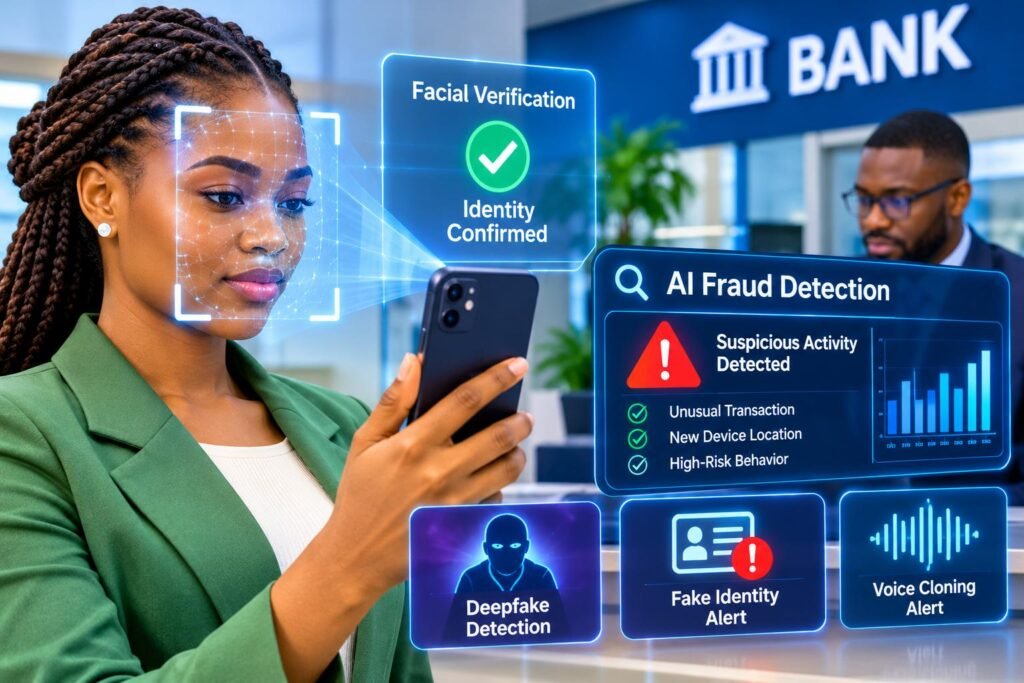
AI verification can help financial institutions detect if customers are who they say they are. During digital on boarding customers may be asked to provide ID documents issued by government. They will also need to complete a facial verification. The AI can look at the information provided and compare the photo to the live facial recognition. This can detect any issues. Advanced verification systems can detect unusual features in the documents. This can include altered photos, incorrect fonts, suspicious image edits and fake ID information. Machine learning models can help detect patterns associated with previous fraudulent applications. This can be useful if banks have lots of digital applications. However, verification systems should not just rely on one match. Combining document verification with independent verification can help prevent criminals using AI generated images and fake information.
2. Biometric Verification
Biometric verification can help prevent fraud related to deepfakes. Instead of using passwords or personal numbers banks can use facial recognition, finger prints and other biological features to confirm they are who they say they are. However, due to deepfake technology being developed biometric systems need to detect if they are a real person. Liveness detection can be used. This looks for factors that would indicate if the person is real rather than a photo, video, mask or AI generated face. Customers may be asked to move their head, blink, follow on screen instructions or complete other verification tasks. More advanced systems will look at micro expressions, textures and other features. Combining biometric verification with effective liveness detection can make impersonation harder. However, systems need to be regularly updated.
3. Behavioral Analysis
Behavioral analysis can help banks detect suspicious behavior. Using AI systems, they can look at how customers usually interact with their accounts. This can include how they type, where they log in from, device information, how often they transact, how they browse and when they usually carry out activities. If the interaction is significantly different it can highlight that further verification is needed. For example if an account holder usually transfers small amounts in a specific area but suddenly tries to transfer a large amount from an unknown device and location. Whilst this does not guarantee fraud it can justify further security checks. This can be useful if criminals have obtained real customer credentials. Just because they have the password does not mean they will be able to act like the account holder would online. Combining behavioral factors with transaction monitoring can help detect unusual behavior quicker.
4. Digital Forensics
Digital forensics can be used to investigate suspicious digital information. If a customer submits a suspected deepfake video, voice cloning or fake documents during a financial transaction the forensics can look at the technical information. This can include looking at the metadata of the image, audio features, video inconsistencies, file history and evidence of editing. AI detection systems can look for unusual visual features, unnatural facial expressions, lighting issues and unusual audio features. Investigators can also compare the suspicious information to verified information from trusted sources. This can be important if the financial institution needs to understand how the fraudulent transaction took place. However, deepfake detection can sometimes be unreliable. As Generative models are constantly improving.
Detecting AI Generated Financial Fraud
Despite improved fraud prevention technology it can be challenging to determine if customers are real or AI generated. Generative AI tools are becoming easier, cheaper and more advanced. This means criminals can create realistic fake identities and impersonation without having advanced technical knowledge. Detection systems may also struggle to detect fraud created using newer AI models as they won’t be included in the training data. False positives can also occur. This can mean genuine customers are highlighted as suspicious due to unusual behavior, poor quality images, accessibility issues and changes in usual banking behavior. This can cause frustration for customers due to excessive verification. However, if there isn’t enough verification there is a higher chance of financial loss. Financial institutions need to ensure they find the right balance between security, accuracy, ease of use and privacy. It is also important to understand that no individual detection tool can detect all AI deceptions.
Limitations of Detection Systems
Detection systems can process large amounts of information quickly. However they are not completely reliable. AI models rely on quality training data. If they do not recognize new fraud tactics they may not be able to detect them. They may also provide incorrect results if they receive unusual customer information. Deepfake detection tools can also create false alerts. Genuine videos may have issues with compression, lighting and unusual facial expressions. Biometric systems may also struggle with customers that have changed their facial appearance or cannot take clear images. Criminals can take advantage of these issues. They can experiment with different AI generated information until they find ways to avoid detection. Financial institutions need to ensure they are monitoring how well their security systems are working. Detection models should be regularly updated. Detection tools should not be the sole decision makers for fraud prevention.
Human Verification
Human verification is essential as fraud often involves psychological manipulation, unusual situations and decisions that automated systems may not fully understand. Employees can investigate suspicious behavior, contact customers via independent verified channels and determine if the transaction is genuine. If an employee receives an urgent request to transfer funds from someone claiming to be a senior member of staff they should follow an established process. They should not approve the request just because they sound genuine. Banks can also add extra approval processes for high value transactions, changes to account details and unusual payments. Combining human verification with detection can help investigate complex situations. Employees should be regularly trained on voice cloning, deepfake impersonation, phishing and synthetic identity fraud to identify signs.
Best Practice for Improved Financial Fraud Prevention
Financial institutions will need to have a strong fraud prevention strategy in place. A multi factor verification process should be put in place. This will ensure customers are verified using multiple independent factors. Banks should also have tighter approval processes for high risk transactions. This can include large transfers, changes to beneficiary information and requests relating to sensitive customer information. Regular security testing and updated AI detection models should be in place to detect any weaknesses. Financial organizations should also have clear processes in place for reporting suspicious interactions and investigating any deepfake incidents. Employees should understand that urgent requests, familiar voices and realistic video calls do not guarantee authenticity. Customers should also be provided with practical security advice to help them spot phishing messages, keep their authentication secure and verify any unexpected requests through official banking channels.
The Future of Generative AI and Financial Fraud Prevention
As criminals and financial institutions use more advanced technology the relationship between Generative AI and financial security will develop. Future fraud prevention systems will use real-time biometric verification, behavioral intelligence, device verification and advanced deepfake detection. Financial institutions may also use AI to create new fraud situations. This can help them test their security systems and detect any weaknesses. However, financial fraud will never be completely eradicated. Banks should invest in staff training, have reliable verification processes, work closely with technology providers and share relevant information. Regulation and responsible data handling will become more important as more customer information is collected. Overall, financial institutions will need to be able to quickly adapt their security processes.
Conclusion
Generative AI and deepfake technology are changing the way fraud occurs within the financial industry. This is due to the ability to create more realistic impersonation, fake documents, phishing and social engineering. This can cause issues with traditional security measures used within banking. However AI can provide financial institutions with powerful tools to detect suspicious identities, analyze customer behavior, verify biometric information and investigate manipulated digital information. Tools such as AI verification, liveness detection, behavioral analysis and digital forensics can greatly improve fraud prevention. However automated systems should not be relied upon. They should always be combined with human judgment, independent verification and regular security improvements. Financial institutions that have advanced technology, staff awareness, customer education and effective risk management will be best placed to protect financial transactions.
Get more well researched information about Generative AI and deepfake technology here.