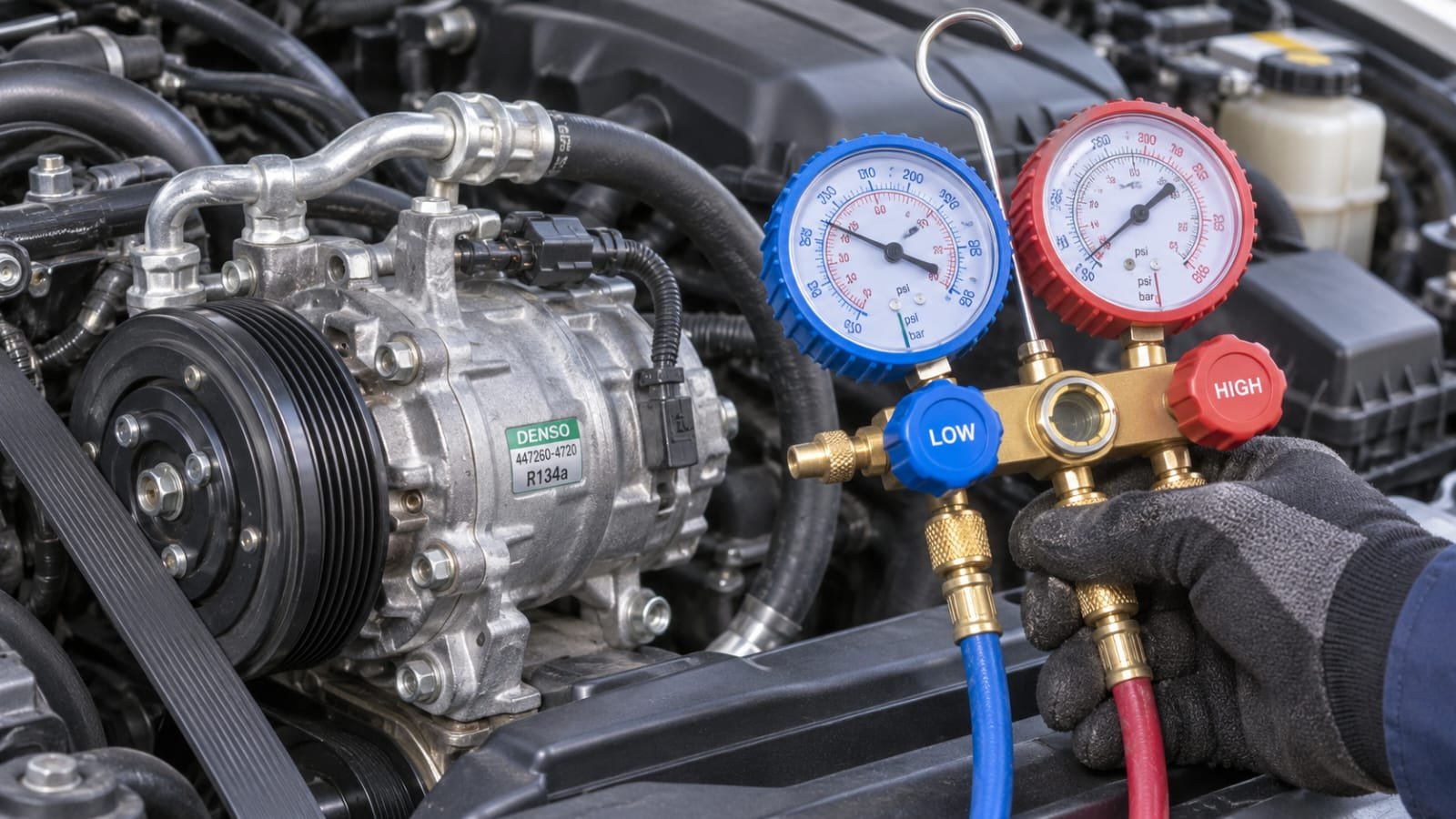
A failing AC compressor is one of the most common reasons a car’s air conditioning stops blowing cold. Most drivers assume the refrigerant is low, and often that is true. But if a recharge only helps for a few days, or the system makes strange noises, the compressor, which circulates refrigerant through the whole system, is frequently the real culprit. Catching the problem early can save you from a far more expensive repair.
This guide explains the warning signs of a failing compressor, what typically causes it, how to confirm the diagnosis, and how to choose a replacement that fits and lasts.
What the AC Compressor Does
The compressor is the heart of a vehicle’s air conditioning system. Driven by the engine belt, it pressurizes refrigerant (usually R134a or R1234yf in modern vehicles) and pushes it toward the condenser, where heat is released. Without proper compression, the refrigerant cannot cycle, and the cabin never cools.
Common Signs of a Failing AC Compressor
- Warm or weakly cooled air. If the vents blow air that is only slightly cool or fully warm even at the lowest temperature setting, the compressor may no longer build enough pressure.
- Grinding, squealing or rattling noises. Worn internal bearings or pistons often produce noise that appears when the AC is switched on and fades when it is off.
- A clutch that does not engage. When you press the AC button, you should hear a distinct click and see the center of the compressor pulley start to turn. If it stays still, the clutch, a fuse, a relay or the compressor itself may be at fault.
- Refrigerant or oil leaks. Oily residue around the compressor body, shaft seal or hose connections points to a leak. A low charge from leaks can starve the compressor of lubricating oil.
- Cycling on and off rapidly. Short cycling can come from incorrect pressure, a failing pressure switch or internal wear.
- A seized compressor or damaged belt. A compressor that locks up can make the drive belt squeal or break and, in severe cases, affect other engine accessories.
Why Compressors Fail
- Lack of lubrication. Refrigerant carries compressor oil. Leaks or an incorrect oil amount lead to wear and overheating.
- Contamination. Moisture, debris or metal particles from a previous failure circulate through the system and damage new parts.
- Wrong refrigerant charge. Overcharging or undercharging forces the compressor to work outside its design range.
- Clutch or electrical faults. A worn clutch coil, bad relay or damaged wiring can mimic a compressor failure.
- Age and mileage. Seals harden and internal parts wear over time, especially in hot climates with heavy AC use.
Is It the Clutch or the Compressor?
Not every no-cold-air complaint requires a full replacement. In many cases only the clutch has failed, and the two problems look similar from the driver’s seat. Before you buy parts, read this practical breakdown of how to tell AC compressor clutch failure from compressor failure.
How to Diagnose the Problem
- Visual check. Inspect the belt, the pulley and the compressor body for damage, oil traces or wobble.
- Check fuses and relays. A blown fuse is the cheapest fix and the first thing to rule out.
- Listen for clutch engagement. With the engine idling and AC on max, the clutch should click and spin.
- Measure system pressure. A manifold gauge set shows low-side and high-side pressures. Readings that stay near-equal, or that never change when the AC is on, suggest weak compression.
- Look for contamination. Black debris or metallic flakes in the refrigerant or oil mean the whole system needs flushing.
Repair or Replace?
A clutch-only fault, a loose connector or a low charge can often be repaired. When the compressor has internal damage, is seized or has leaked heavily, replacement is the sensible route. If metal debris is present, also replace the receiver-drier or accumulator and flush the lines, otherwise the new unit will fail early.
How to Choose a Replacement Compressor
- Match the OE number. Use the original part number, or a verified cross-reference, for your exact make, model and year.
- Check the mounting and connections. Pulley type and groove count, mounting points and the port and connector layout must match your vehicle.
- Confirm refrigerant and oil compatibility. Use the refrigerant and compressor oil type specified for your system.
- Choose a reliable supplier. Consistent quality control, clear fitment data and good packaging matter more than the lowest price.
If you are sourcing parts for a specific vehicle, a dedicated supplier makes matching much easier. Semor offers a wide range of automotive AC compressors, including options for popular Japanese models, so you can search by application and compare before ordering.
Final Replacement Tips
- Replace the receiver-drier or accumulator and the expansion valve or orifice tube together with the compressor.
- Add the correct amount of oil, and evacuate the system to remove moisture before recharging.
- Test the system after installation and re-check for leaks.
Conclusion
A failing AC compressor usually announces itself with warm air, odd noises or a clutch that will not engage. Diagnose carefully, rule out simple electrical faults, and replace the compressor together with the parts that protect it. Doing so will bring back cold air and help the new unit last. For vehicle owners, workshops and distributors looking for dependable cooling components, visit Semor Auto Parts to explore the full range.