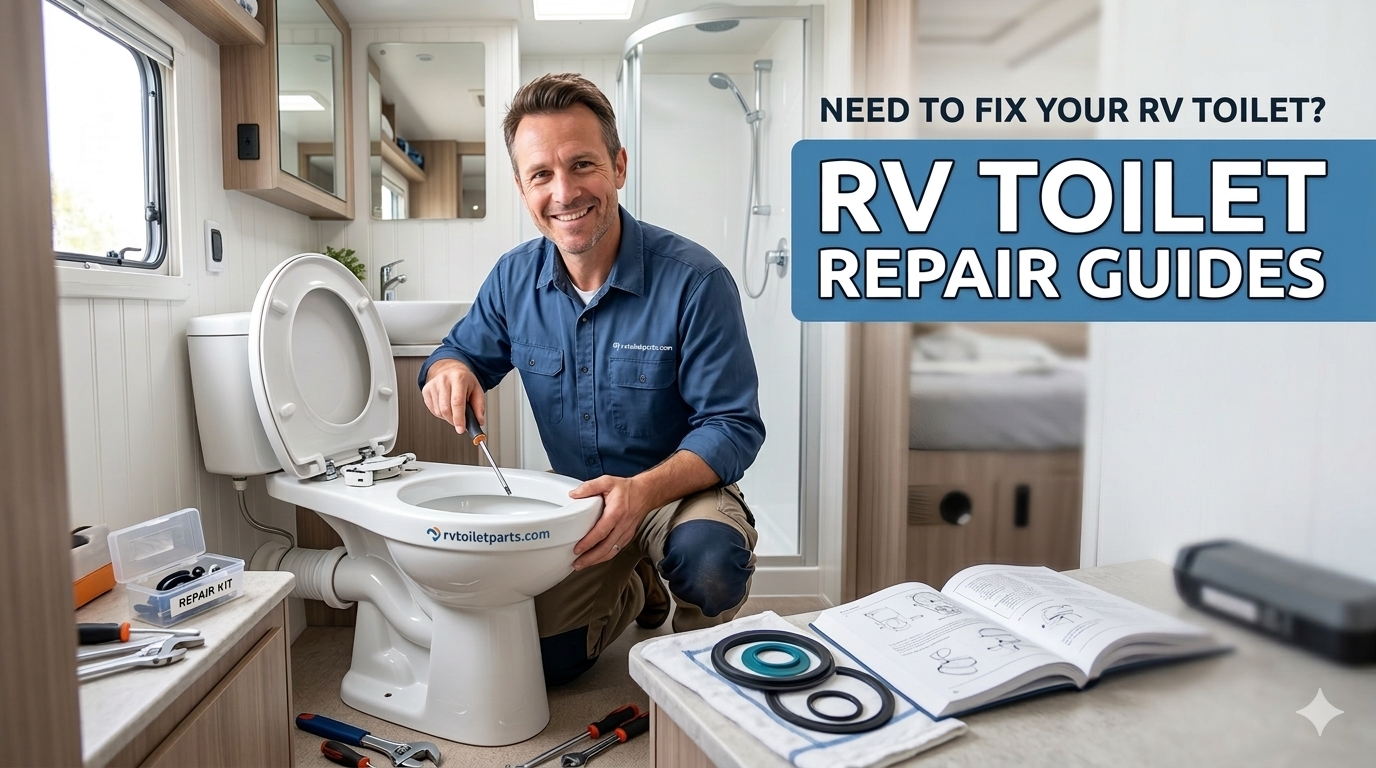
RV toilets, most commonly Thetford cassette toilets, rely on a handful of components including the slide valve, seat, holding tank and sealing rings. Regular cleaning with cassette chemicals and timely replacement of worn parts keeps the system working properly. Most parts can be replaced at home without calling in a professional.
If you own a caravan or motorhome, you already know the toilet is one of those fittings you rarely think about until something goes wrong. A sticking slide valve, a cracked seat or a persistent odour can turn a trip into a hassle fast. Understanding how your RV toilet works, and what to do when parts wear out, will save you time and money over the life of your van.
This guide covers the basics of RV toilet systems, the parts most likely to need attention, and how to choose the right replacement components for your setup.
How Does an RV Toilet Work?
Most caravans and motorhomes use a cassette toilet system, with Thetford being one of the most widely fitted brands across the Australian market. Unlike a standard household toilet connected to sewer, a cassette toilet stores waste in a removable holding tank, known as the cassette, which sits in an external compartment of the van.
The system typically includes:
- A ceramic or plastic bowl
- A slide valve that opens and closes between the bowl and the holding tank
- A seal or bayonet ring that keeps the slide valve watertight
- A removable cassette (holding tank) with its own flush water supply and level indicator
When the slide valve is opened, waste drops into the cassette below. Once full, the cassette is removed from the external hatch and emptied at a dump point, usually with the help of a hose adaptor.
This design is compact and suited to caravans because it doesn’t need a connection to mains sewerage, but it does mean a few parts are working hard every time the toilet is used, and they do wear over time.
Common RV Toilet Parts That Need Replacing
Caravan toilets go through a lot of use, particularly on longer trips, and certain components are more prone to wear than others. Knowing what each part does helps when deciding what to keep on hand.
Slide valve and bayonet ring
The slide valve is opened and closed with every flush, so the seal around it is one of the first things to wear. A worn slide valve or bayonet ring can cause leaks between the bowl and cassette, or allow odours to escape. Replacement slide valve kits and bayonet rings are designed to restore a tight seal without needing to replace the whole toilet.
Toilet seat and holding tank
Over years of use, seats can crack, and the holding tank itself can degrade or develop cracks that lead to leaks. A toilet fresh-up or service kit generally includes a new holding tank, seat and cover, giving the toilet a refresh without the cost of a full replacement unit.
Cassette toilet chemicals
Chemicals aren’t a repair item, but they’re part of regular maintenance. They help break down waste, control odour and keep the holding tank sanitary between dumps. Products vary in formulation, including blue and green concentrates, so it’s worth checking which is suited to your disposal method, for example, whether your local dump point is septic safe.
Hose adaptors
A hose adaptor connects the cassette outlet to a sewer or dump point hose, making emptying more straightforward and reducing the chance of spills. These are a low cost item worth keeping in the van as a spare.
Hand pump basins
While not part of the toilet system itself, a hand pump basin is often used alongside caravan plumbing for handwashing, drawing water via a manual pump rather than a powered system. Useful for vans with limited power supply or for free camping setups.
Can You Replace RV Toilet Parts Yourself?
In most cases, yes. Fresh-up kits, seats, slide valves and bayonet rings are generally designed for straightforward installation using basic tools, without needing to remove or replace the entire toilet unit. Thetford’s parts, in particular, are built to be modular, so a worn component can usually be swapped out on its own.
That said, it pays to work through the installation steps carefully and check the compatibility of each part before starting. If you’re ever unsure, it’s worth checking the manufacturer’s fitting instructions or asking a chandlery or caravan parts supplier for guidance specific to your toilet model.
Choosing the Right Replacement Parts for Your Caravan Toilet
Not all cassette toilets are built the same, even within the same brand, so compatibility matters. Before ordering parts, check:
- Your toilet model number, usually found on a plate or sticker on the unit
- The tank capacity of your cassette, particularly if you’re buying chemicals, as dosage depends on tank size
- Whether the slide valve or bayonet ring matches your toilet’s design, as older and newer models can differ
Choosing the right RV plumbing supplies for your specific setup reduces the risk of leaks, poor seals or parts that simply don’t fit.
Looking After Your RV Toilet Between Trips
A few habits help extend the life of your caravan toilet and reduce how often parts need replacing:
- Rinse the bowl and cassette after each trip, particularly before long periods of storage
- Use the recommended dosage of cassette chemicals rather than guessing
- Check seals and valves periodically for stiffness or cracking, especially before a long trip
- Store the cassette with the cap slightly loose to prevent pressure build up during storage, if recommended by the manufacturer
Catching a worn seal or a sticking valve early is usually far simpler, and cheaper, than dealing with a full leak partway through a trip.
Where to Find RV Toilet Parts
Keeping a few spare parts on hand, such as a bayonet ring, a slide valve kit or a bottle of cassette chemical, means you’re not caught out mid trip. At Boat Hut, we stock a practical range of Thetford caravan plumbing supplies, including fresh-up kits, slide valve components, hose adaptors and cassette chemicals, so you can keep your RV toilet in good working order without unnecessary downtime.
Looking after your RV toilet doesn’t need to be complicated. Knowing the key components, checking compatibility before you buy, and keeping on top of basic maintenance will go a long way toward avoiding problems on the road. If a part does wear out, having the right RV toilet parts ready to go means a straightforward fix rather than a trip-ending issue.
Frequently Asked Questions
How often should I replace the slide valve on my cassette toilet?
There’s no fixed schedule, as it depends on how often the toilet is used and how well it’s maintained. If you notice stiffness when opening or closing the valve, or signs of leaking around the seal, it’s a good time to check the bayonet ring and consider a replacement kit.
Can I use any cassette chemical in my Thetford toilet?
Most cassette chemicals are compatible with standard cassette toilets, but check the tank capacity and dosage instructions on the product. If your dump point requires septic safe products, look for a chemical labelled accordingly, such as a green concentrate.
Do I need a professional to replace caravan toilet parts?
Generally no. Fresh-up kits, seats and valve components are designed for straightforward DIY installation. If your toilet model is older or uses a non-standard fitting, it’s worth checking compatibility first or seeking advice from a caravan parts supplier.
What’s the difference between a fresh-up kit and buying a new toilet?
A fresh-up kit replaces the holding tank, seat and cover, giving the toilet a refresh at a lower cost than a full replacement unit. It’s a practical option if the ceramic bowl and overall toilet body are still in good condition.
Where can I buy replacement parts for my RV toilet?
Caravan plumbing supplies, including Thetford parts, are available through specialist retailers such as Boat Hut, which stocks a range of toilet kits, valves, chemicals and hose adaptors suited to most cassette toilet setups.