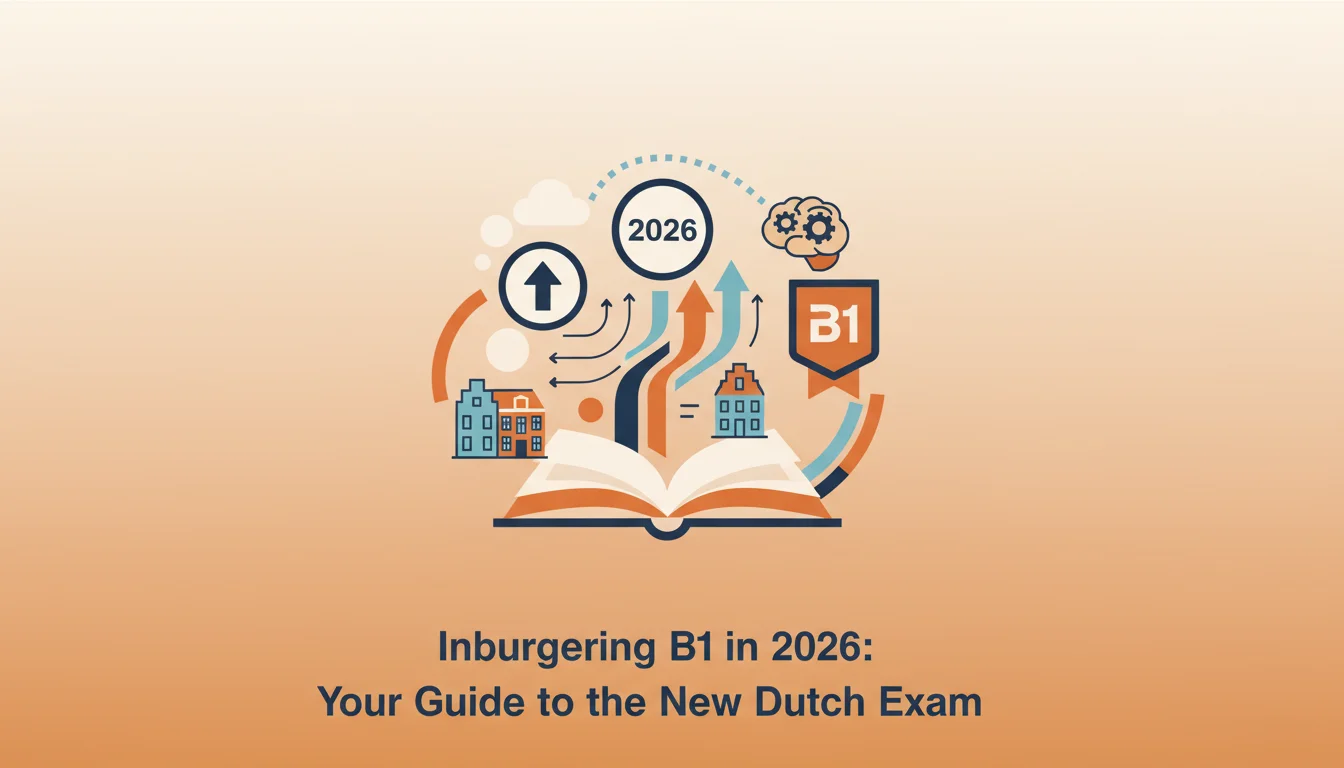
For expatriates, refugees, and immigrants moving to the Netherlands, the civic integration process represents one of the most significant administrative and educational challenges of their relocation journey. While the Dutch are famous for their high level of English proficiency, the government strictly mandates that newcomers integrate into the local culture and language. This legal requirement culminates in a comprehensive assessment designed to prove that a candidate can function independently in Dutch society. Navigating the inburgering exam requires a deep understanding of its specific modules, as each one tests a completely different skill set and utilizes a unique testing format. To approach this challenge strategically, many candidates turn to dedicated inburgering prep platforms to familiarize themselves with the testing environment before the actual exam day. This article provides an extensive breakdown of the core inburgering components: Reading, Writing, Speaking, Listening, and Knowledge of Dutch Society (KNM), offering detailed insights into what candidates can expect and how they are evaluated.
Reading Comprehension (Lezen): Navigating Dutch Texts
The reading exam (Lezen) evaluates a candidate’s ability to comprehend written Dutch across a variety of contexts that one would typically encounter in daily life and work in the Netherlands. Depending on the law under which you are integrating (the 2013 law at the A2 level, or the 2021 law at the B1 level), the complexity of the texts will vary significantly.
During this computerized, multiple-choice exam, candidates are presented with a wide array of documents. These can include formal letters from the local municipality (gemeente) or the tax authorities (Belastingdienst), workplace emails, newspaper clippings, safety manuals, and advertisements. The primary challenge in the reading module is not necessarily understanding every single word, but rather time management and the ability to extract relevant information quickly.
Candidates are tested on their ability to grasp the main idea of a text, find specific details (like a date, time, or location), and infer the tone or purpose of the message. For instance, you might be shown a letter from a housing association detailing upcoming maintenance and asked what specific action the tenant needs to take. Effective preparation for this module involves developing strong scanning and skimming techniques. Instead of reading the text line by line, successful candidates read the questions first, identify keywords, and then scan the text to locate the answers. Building a strong foundational vocabulary of high-frequency Dutch words is critical here, as is understanding common transitional words (such as echter, daarom, and tenzij) which often dictate the logical flow of the text.
Listening Comprehension (Luisteren): Decoding Spoken Dutch
The listening exam (Luisteren) is frequently cited by candidates as one of the most difficult modules due to the natural speed of spoken Dutch, the presence of background noise in the audio clips, and the variety of regional accents used. This module tests your ability to understand spoken Dutch in realistic, everyday scenarios.
Candidates will watch short video clips or listen to audio fragments. These scenarios typically involve conversations in places like a supermarket, a doctor’s office, a schoolyard, or an office environment. After listening to the fragment, candidates must answer multiple-choice questions. A significant challenge here is that the spoken Dutch often includes colloquialisms, filler words (like hoor, hè, and nou), and sentences where words are slurred together, which is characteristic of natural speech.
To succeed in the listening module, active listening practice is essential. Passive listening—such as having Dutch radio on in the background—is not enough. Candidates must train themselves to listen for the core message while filtering out irrelevant background noise. Questions often revolve around identifying the main problem being discussed, the relationship between the speakers, or the outcome of the conversation. It is crucial to practice with authentic Dutch media and utilize specialized preparation materials that simulate the exact format and audio quality of the official DUO exams.
Speaking Proficiency (Spreken): Finding Your Voice The speaking module (Spreken) evaluates active language production. Unlike traditional language tests where you might converse with a human examiner, the Dutch inburgering speaking exam is conducted entirely on a computer with a headset and a microphone. This artificial environment can be highly stressful, and overcoming test anxiety is a major component of preparation.
The structure of the speaking exam is divided into two distinct parts. In the first part, candidates watch a video of a person asking a question and must record a short, relevant, and grammatically correct response. For example, a character might say, “I am going to the supermarket. Do you need anything?” The candidate must formulate a response on the spot. In the second part, candidates are often given a scenario and must initiate a conversation or provide a longer explanation, such as describing their last holiday or explaining why they are late for an appointment.
Graders evaluate the recordings based on several criteria: relevance (did you actually answer the question?), vocabulary, pronunciation, and sentence structure. Minor grammatical errors are often forgiven if the message is clearly understandable, but completely missing the point of the prompt will result in lost points. The best way to prepare is to practice speaking aloud, recording your own voice, and employing the “shadowing” technique where you repeat native audio immediately after hearing it to improve your intonation and rhythm.
Writing Skills (Schrijven): Structuring Your Thoughts The writing exam (Schrijven) tests a candidate’s ability to communicate effectively in written Dutch. For this module, you are required to produce written text based on specific prompts. Depending on the test center and the specific exam level, this may be done on a computer or with pen and paper.
The assignments usually reflect practical writing tasks. You might be asked to fill out a complex form, write a short message to a neighbor asking them to feed your cat, or draft a formal email to your boss requesting time off. The evaluation focuses heavily on whether you have addressed all the points required by the prompt, the logical structure of your text, vocabulary usage, and grammatical accuracy—particularly Dutch word order, which is notoriously tricky when dealing with subordinate clauses.
A critical strategy for the writing exam is to keep it simple. Many candidates lose points because they attempt to translate complex, poetic sentences directly from their native language into Dutch. It is far safer to use short, clear, and structurally sound sentences. Memorizing standard phrases for opening and closing both formal (Geachte heer/mevrouw) and informal (Beste, Groetjes) correspondence is a highly effective way to secure easy points and demonstrate cultural competence in written communication.
Knowledge of Dutch Society (KNM): Beyond the Language The final core component, Kennis van de Nederlandse Maatschappij (KNM), translates to Knowledge of Dutch Society. This is not a language test per se, although it is conducted entirely in Dutch. Instead, it evaluates your understanding of the country’s social, political, geographical, and historical landscape.
The KNM exam covers a vast syllabus divided into several themes: Work and Income, Living in the Netherlands, Health Care, Education, Politics and the Constitution, and History and Geography. You will be asked questions about how to navigate the healthcare system (e.g., knowing that you must visit a huisarts before seeing a specialist in a hospital), the structure of the education system, the role of the King, and important historical events like World War II and the flood of 1953.
Furthermore, the KNM exam tests your understanding of Dutch social norms and values. Questions often involve scenarios dealing with equality, freedom of speech, direct communication, and workplace etiquette. To pass this module, candidates must move beyond memorizing facts and try to understand the underlying principles of Dutch society. Reading the official study materials, watching Dutch documentaries, and engaging in discussions about Dutch current events are excellent ways to prepare for this multifaceted examination. Together, these five components form a rigorous but entirely achievable assessment that ultimately paves the way for successful long-term integration into the Netherlands.
Life After Inburgering: How Passing the Exam Impacts Your Dutch Residency and Citizenship
The moment the final results appear in your DUO portal confirming that you have successfully passed all components of the inburgering exam, a profound wave of relief washes over you. For months, or perhaps years, your life has been heavily influenced by vocabulary lists, practice tests, and the looming deadline of civic integration. Whether you tackled the curriculum through self-study or utilized comprehensive inburgering prep resources to guide you, the achievement is monumental. However, passing the exam is not the end of the journey; rather, it is the key that unlocks the next crucial phases of your life in the Netherlands. From securing permanent residency to applying for Dutch citizenship, and from expanding your professional horizons to deepening your social integration, completing your civic integration mandate fundamentally transforms your legal and social standing within the country.
The Administrative Relief: Securing the Inburgeringsdiploma Upon passing the final required module—whether that is Reading, Writing, Speaking, Listening, KNM, or the labor market orientation (MAP/ONA)—the Dienst Uitvoering Onderwijs (DUO) will officially register your success. Shortly thereafter, you will receive an invitation to collect your Inburgeringsdiploma. This document is far more than a certificate of language proficiency; it is a legally binding document that proves to the Dutch government that you have fulfilled your civic duties.
For those who are “inburgeringsplichtig” (legally obliged to integrate, such as partners of Dutch citizens or refugees), securing this diploma means avoiding hefty financial fines and potential negative consequences for your current residence permit. The immediate administrative relief of no longer having a ticking clock hanging over your head allows you to shift your focus from sheer compliance to long-term planning and genuine settlement in the Netherlands.
Upgrading Your Status: The Path to Permanent Residency For many expatriates, the most immediate and tangible benefit of passing the integration exams is the ability to upgrade their temporary residence status. If you are residing in the Netherlands on a temporary permit—such as a Highly Skilled Migrant (Kennismigrant) visa or a spouse/partner visa—your right to live in the country is inherently tied to a specific condition (e.g., keeping your job or remaining in your relationship).
Once you have lived in the Netherlands for five consecutive years (and meet other conditions, such as having a sufficient and sustainable income), holding an Inburgeringsdiploma allows you to apply to the Immigration and Naturalisation Service (IND) for a Permanent Residence Permit (Regulier Onbepaalde Tijd) or an EU Long-Term Resident permit.
Obtaining permanent residency is a massive turning point. It severs the dependency on your employer for your visa status. If you hold a Highly Skilled Migrant visa and lose your job, you typically only have three months to find a new employer who holds recognized sponsor status, or you must leave the country. With permanent residency, you have unrestricted access to the Dutch labor market. You can work for any employer, start your own business without applying for a complex entrepreneur visa, or even take time off between jobs without fear of deportation. The integration diploma is the mandatory bridge between temporary, conditional living and permanent, secure settlement.
The Ultimate Step: Applying for Dutch Citizenship (Naturalization) For expats looking to make the Netherlands their forever home, the integration diploma is the primary prerequisite for naturalization (becoming a Dutch citizen). Generally, after five years of uninterrupted legal residency (or three years if you are married to or registered partners with a Dutch national), you can apply for a Dutch passport.
Citizenship offers benefits that permanent residency does not. First and foremost, it grants you the right to vote in national elections (Tweede Kamer), allowing you to have a direct say in the political future of the country. It also provides you with a Dutch passport, one of the most powerful travel documents in the world, offering freedom of movement across the entire European Union.
When applying for citizenship, the IND will check your DUO records to verify that you have passed the required civic integration exams. Once your application is approved—a process that can take up to a year—you will be invited to a naturalization ceremony at your local municipality, where you will declare your allegiance to the Netherlands and officially become a citizen. It is important to note that the Netherlands has strict rules regarding dual nationality, and you may be required to give up your original nationality depending on your personal circumstances and country of origin.
Professional Expansion and Economic Independence Beyond the legal and bureaucratic benefits, mastering the Dutch language to the level required by the integration exams dramatically expands your professional horizons. In major cities like Amsterdam, Rotterdam, and The Hague, it is entirely possible to work in an “English bubble,” especially in IT, finance, or multinational corporate sectors. However, this severely limits your career mobility.
Holding an integration diploma proves to potential employers that you have a functional grasp of the language and a solid understanding of Dutch workplace culture. It opens up opportunities in small and medium-sized enterprises (SMEs), government agencies, healthcare, and education—sectors that strictly require Dutch proficiency. Furthermore, it allows for better networking. The ability to participate in informal office banter at the coffee machine or understand internal company communications without relying on translation tools makes you a more integrated and valued member of any professional team.
Social Integration and Breaking the Expat Bubble Finally, passing the inburgering exams significantly impacts your daily social life. The Netherlands is a society built on local participation. Whether it is attending the annual meetings of your Homeowners’ Association (Vereniging van Eigenaren – VvE), participating in parent-teacher conferences at your child’s local school, or simply having a meaningful conversation with your neighbors, speaking the language breaks down invisible social barriers.
Expats who do not learn the language often complain of feeling isolated or finding it difficult to make Dutch friends. The knowledge gained through the KNM module helps you understand Dutch directness, the cultural emphasis on consensus (the “polder model”), and local traditions. The language skills acquired empower you to consume local news, understand the nuances of the society you live in, and transition from being a permanent tourist to an active, engaged member of the community. In essence, life after inburgering is when true integration begins; the exam is not the finish line, but rather the foundation upon which your Dutch future is built.